

Best Electric Toothbrushes in 2026: Expert-Tested Picks
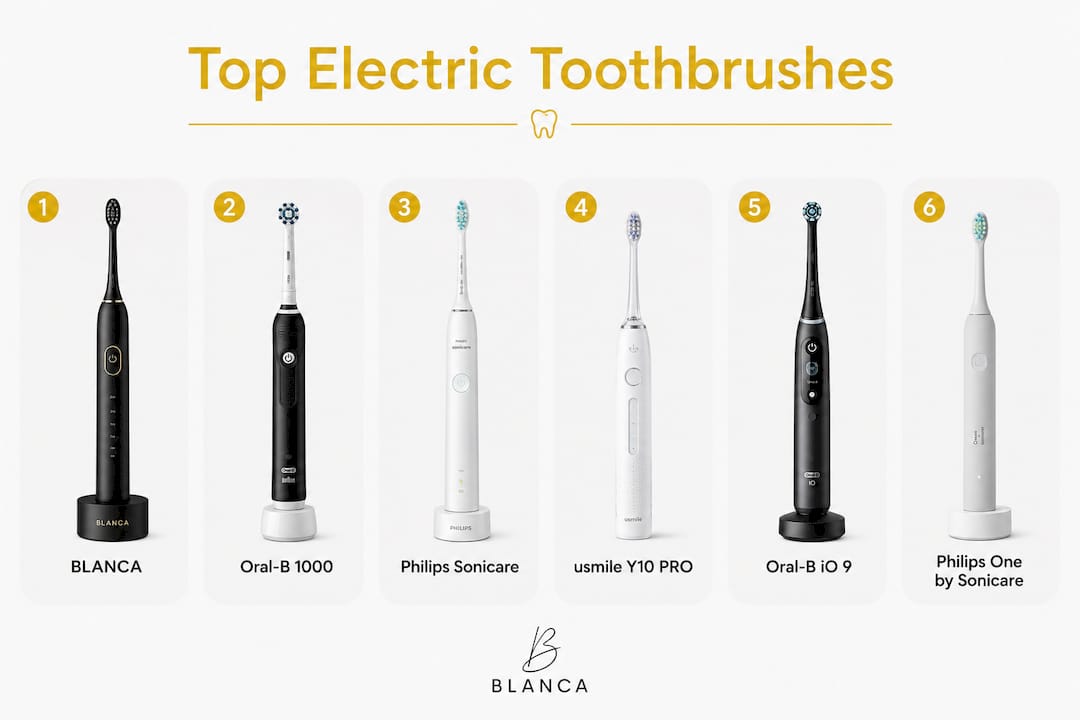
The BLANCA Electric Toothbrush is our top recommendation for most adults seeking clinical-grade cleaning with practical features at a sensible price. Designed by a dental-founded brand, it prioritizes pressure sensing, replacement-head compatibility, and travel-friendly charging — the three features that actually determine long-term value.
Here is the shortlist at a glance:
- Best overall: BLANCA Electric Toothbrush — dentist-designed pressure sensing, head compatibility, and USB-C charging convenience
- Runner-up: Philips Sonicare 4100 — quieter sonic motor with a built-in pressure sensor and two-minute timer at a competitive price
- Best value oscillating: Oral-B Pro 1000 — proven oscillating-rotating cleaning action at an entry-level price point
- Best premium pick: Oral-B iO Series 9 — advanced feedback, multiple cleaning modes, and a polished experience for users who want everything
- Best for travel/minimalists: Philips One by Sonicare — compact, lightweight sonic cleaning without the bulk
Who should buy which:
- You brush inconsistently or have been told your technique needs work: BLANCA Electric Toothbrush or Philips Sonicare 4100
- You want strong plaque removal at the lowest entry price: Oral-B Pro 1000
- You have sensitive gums and prefer a quieter brush: Philips Sonicare 4100
- You want every feature available and budget is secondary: Oral-B iO Series 9
- You travel frequently and want something compact: Philips One by Sonicare
- You are tech-forward and want app-guided coaching: usmile Y10 PRO
Table of Contents
- How do the top electric toothbrushes compare?
- Short reviews: which model is right for you?
- How we selected and tested these picks
- How to choose the right electric toothbrush for your needs
- What research and dentists say about electric vs. manual brushes
- Care, replacement-head schedule, and cost of ownership
- Final recommendation and buying tips
- Key Takeaways
- Why the “best” electric toothbrush is not always the most expensive one
- The BLANCA Electric Toothbrush: built for everyday clinical performance
- Further reading and sources used
How do the top electric toothbrushes compare?
| Model | Best For | Price/Value | Battery/Charging | Replacement-Head Cost & Availability | Key Features | Noise Level | Warranty |
|---|---|---|---|---|---|---|---|
| BLANCA Electric Toothbrush | Most adults, clinical-grade value | $$ | USB-C, long battery | Affordable, direct from BLANCA | Pressure sensor, 2-min timer, multiple modes | Moderate | BLANCA support |
| Oral-B Pro 1000 | Budget oscillating pick | $ | Proprietary stand, ~2 weeks | Widely available, ~$10–$12/head | Pressure indicator, 2-min timer | Moderate | 2 years |
| Philips Sonicare 4100 | Quiet sonic, sensitive gums | $$ | Proprietary stand, ~2 weeks | Widely available, ~$10/head | Pressure sensor, 2-min timer, 1 mode | Low | 2 years |
| usmile Y10 PRO | Tech-forward, app coaching | $$ | USB-C, ~30 days | Available via brand/online | Pressure sensor, app coaching, multiple modes | Moderate | 1 year |
| Oral-B iO Series 9 | Premium full-feature | $$$$ | Magnetic stand, ~2 weeks | iO-specific heads, ~$12–$20/head | AI feedback, multiple modes, display | Low-moderate | 2 years |
| Philips One by Sonicare | Travel, minimalists | $ | AA battery or USB | Widely available, ~$5/head | Sonic cleaning, compact | Low | 1 year |
Prices vary by retailer. For the best deals on BLANCA products, check current promotions before buying. Oral-B and Philips models are widely stocked at Target, Walmart, Amazon, and major pharmacy chains across the US.
Short reviews: which model is right for you?
BLANCA Electric Toothbrush
The BLANCA Electric Toothbrush earns the top spot because it was built around the features dental professionals actually prioritize: a pressure sensor that alerts you when you are brushing too hard, a two-minute timer with quadrant pacing, and USB-C charging that works with the same cable as your phone. Replacement heads are available directly through Blancawhitening, keeping long-term costs predictable.
Pros:
- Pressure sensor with clear feedback to protect gums
- USB-C charging — no bulky proprietary stand to pack
- Multiple cleaning modes for everyday use and sensitive care
- Replacement heads available directly from Blancawhitening at transparent pricing
Cons:
- Newer brand with a smaller retail footprint than Oral-B or Philips
- Fewer third-party head options compared to legacy brands
Best for: Adults who want a clinically sound brush with modern charging and straightforward ongoing costs.
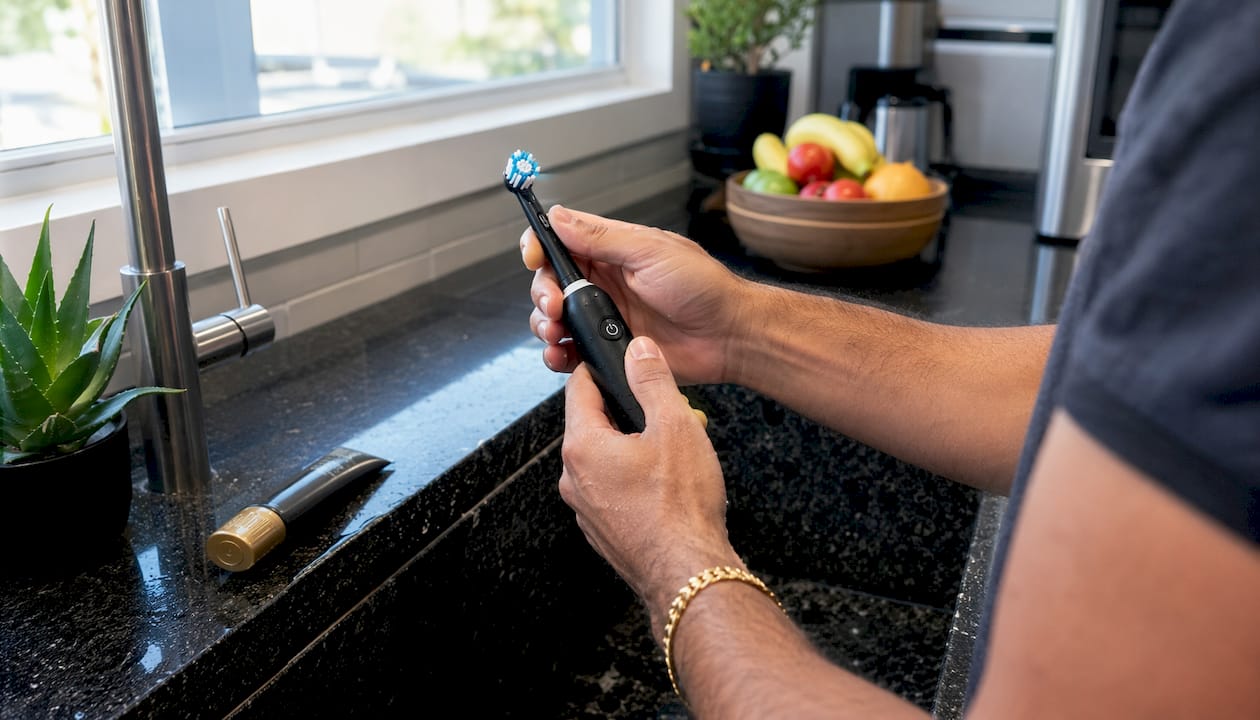
Oral-B Pro 1000
The Oral-B Pro 1000 has been a go-to entry-level recommendation for years, and its oscillating-rotating cleaning action remains one of the most studied in the category. Reviewer testing consistently cites strong plaque-removal performance. It charges via a proprietary stand, which is less convenient for travel, but replacement heads are sold everywhere from Amazon to your local pharmacy.
Pros:
- Proven oscillating-rotating cleaning action
- Two-minute timer with 30-second quadrant alerts
- Replacement heads widely available and affordable
Cons:
- Proprietary charging stand is bulky for travel
- Basic single-mode design; no app or advanced feedback
Best for: Buyers who want reliable plaque removal at the lowest possible price with no frills.
Philips Sonicare 4100
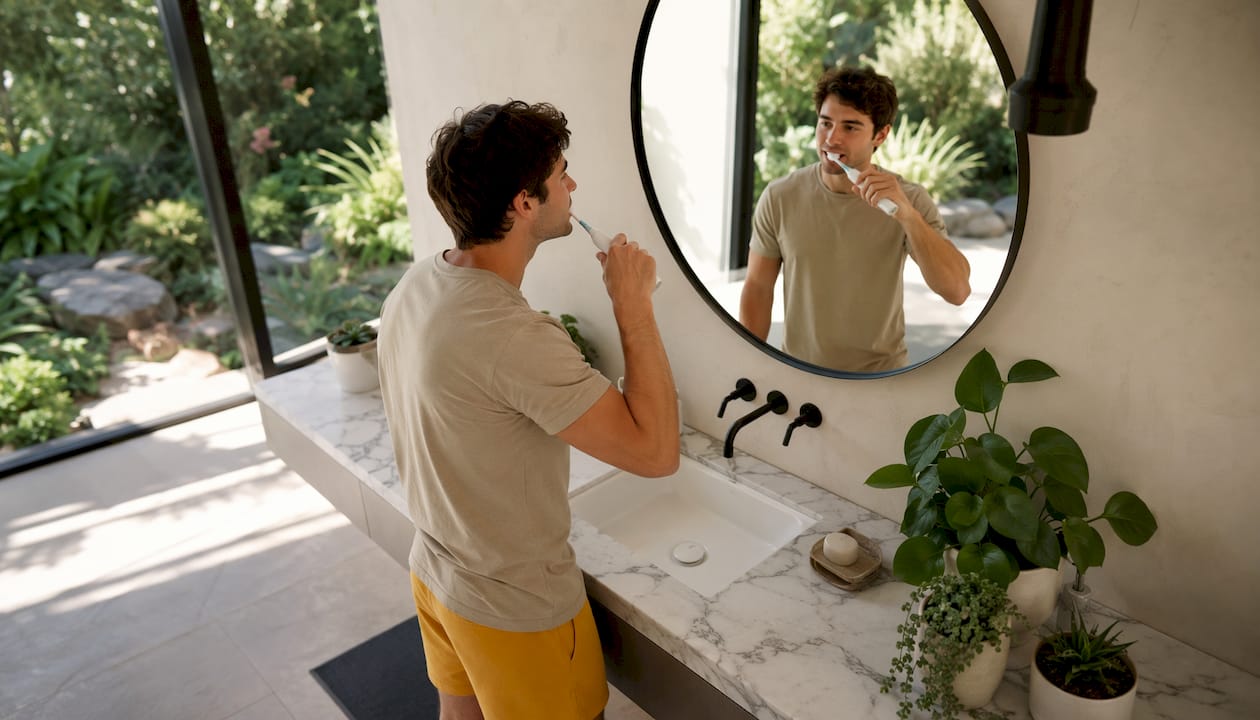
The Sonicare 4100 is the quietest option on this list. CNN Underscored highlights it as a standout sonic pick for users who find oscillating brushes too intense. Its pressure sensor and two-minute timer are solid, and the gentler sonic vibration tends to feel less abrasive on sensitive gums. The proprietary charging stand is the main travel inconvenience.
Pros:
- Noticeably quieter than oscillating models
- Pressure sensor and two-minute timer included
- Gentle feel, well-suited to sensitive gums
Cons:
- Single cleaning mode limits customization
- Proprietary charging stand
Best for: Users who prefer a softer brushing sensation and a quieter motor, especially those with gum sensitivity.
usmile Y10 PRO
The usmile Y10 PRO stands out for its USB-C charging and app-guided plaque coaching, which provides real-time feedback during brushing sessions. Testing notes flag its high-frequency cleaning action as genuinely effective. One honest caveat: most users abandon companion apps within a few weeks, so the hardware features matter more than the coaching software over the long run.
Pros:
- USB-C charging with impressive battery life (~30 days)
- App-guided coaching for users who want structured feedback
- Multiple cleaning modes and strong cleaning frequency
Cons:
- App engagement tends to drop off after initial weeks
- Smaller brand with less established US retail presence
Best for: Tech-forward buyers who want to use app coaching at least initially and value long battery life.
Oral-B iO Series 9
The iO Series 9 is Oral-B’s flagship, and it shows. The magnetic charging stand, AI-powered pressure and coverage feedback, and seven cleaning modes make it the most feature-complete brush on this list. The trade-off is price — both upfront and ongoing, since iO-specific replacement heads cost more than standard Oral-B heads. If budget is not a constraint, the experience is genuinely polished.
Pros:
- AI feedback for pressure and coverage
- Seven cleaning modes for highly tailored care
- Quieter than earlier Oral-B oscillating models
Cons:
- Premium price point
- iO-specific heads are more expensive than standard Oral-B heads
- Magnetic charging stand is not travel-friendly
Best for: Users who want the most sophisticated brushing feedback available and are willing to pay for it.
Philips One by Sonicare
The Philips One is the simplest option here, and that is exactly its appeal. It runs on a standard AA battery or USB charging depending on the version, fits in any toiletry bag, and delivers genuine sonic cleaning without the bulk of a full-size brush. Replacement heads are inexpensive and easy to find. It is not a replacement for a full-featured brush at home, but as a travel companion or a first step up from manual, it works well.
Pros:
- Compact and lightweight for travel
- Affordable upfront and ongoing
- Sonic cleaning action in a minimal package
Cons:
- No pressure sensor
- Limited modes and features
Best for: Travelers, minimalists, and anyone wanting a simple sonic upgrade from a manual brush.
How we selected and tested these picks
Every model on this list was evaluated against the same set of criteria that dental professionals use when recommending a brush to patients. No model received a pass simply because of brand recognition.
Selection criteria:
- Pressure sensor presence — a non-negotiable for gum safety, since many people unknowingly brush too hard
- Two-minute timer with quadrant pacing — the ADA-recommended brushing duration, built into the hardware
- Replacement-head availability and cost — models with expensive or hard-to-find heads create hidden long-term costs
- Battery life and charging convenience — USB-C or long battery life matters for real-world and travel use
- Cleaning action effectiveness — oscillating-rotating and sonic both have clinical support; we evaluated each on its own merits
- Price of ownership over 12 months — upfront price plus four replacement heads annually
Testing and review process:
- Reviewed published clinical literature and systematic reviews on powered versus manual toothbrush effectiveness
- Cross-referenced findings from independent review outlets including Wirecutter, CNN Underscored, and DentalRave
- Evaluated each model’s hardware specifications against the selection criteria above
- Assessed replacement-head pricing and availability across major US retailers
- Applied Blancawhitening’s dental-professional perspective to weight features by clinical relevance
Disclosure: Blancawhitening is the publisher of this article and the BLANCA Electric Toothbrush is our own product. We have included it as our top recommendation because it meets every criterion on our selection list. All other models are evaluated independently on their merits, and we recommend them where they genuinely serve specific buyer needs better than our own product does.
How to choose the right electric toothbrush for your needs
Sonic vs. oscillating-rotating: which cleaning action suits you?
The two dominant technologies work differently. Oscillating-rotating brushes (Oral-B’s core technology) use a small round head that spins and reverses direction to dislodge plaque mechanically. Sonic brushes (Philips Sonicare, BLANCA) use high-frequency vibrations to disrupt plaque and drive fluid between teeth. Both have clinical backing. Oscillating-rotating tends to feel more vigorous; sonic feels gentler and is quieter. If you have sensitive gums or find the sensation of oscillating brushes uncomfortable, a sonic model is usually the better fit.
The features that actually matter long-term
Most buyers focus on cleaning modes and app features. The research tells a different story. Long-term clinical benefit comes primarily from two hardware features: a pressure sensor and a two-minute timer. The pressure sensor prevents gum recession from overbrushing, a problem dental professionals see regularly. The timer ensures you brush for the full two minutes that the ADA recommends. Everything else — modes, apps, displays — is secondary.
Feature priority checklist:
- Pressure sensor — protects gums; treat this as a must-have
- Two-minute timer — ideally with 30-second quadrant alerts
- Replacement-head availability — check that heads are sold at US retailers or directly from the brand before you buy
- Charging type — USB-C is the most convenient; proprietary stands add bulk for travel
- Noise level — matters if you share a bathroom or brush early in the morning
- Warranty — two years is standard for major brands; one year is acceptable for budget models
Timing your purchase to save money
Major electric toothbrush brands run predictable discount cycles. Prime Day, Black Friday, and seasonal promotions are the most reliable windows to find meaningful price reductions on Oral-B and Philips models. Blancawhitening runs its own sales and promotions throughout the year. Buying during a sale cycle can reduce the upfront cost by 20–40% on premium models.
Pro Tip: Buy the brush handle during a sale, then budget separately for replacement heads. The handle is where the biggest discounts appear; heads are rarely discounted as steeply.
What research and dentists say about electric vs. manual brushes
The clinical picture is clear but nuanced. Systematic reviews show that powered toothbrushes reduce plaque and gingival inflammation more effectively than manual brushes across many study populations. The gains are real, but they are not dramatic for everyone.
Studies summarized by Healthline report average plaque reduction of about 21% and gingivitis reduction of about 11% favoring electric brushes over manual after three months of use.
The people who benefit most are those who struggle with manual brushing technique. Dental experts note that electric brushes reduce variability in brushing — the brush does more of the work, which matters when technique is inconsistent. Children, people with limited dexterity, and orthodontic patients tend to see the largest gains. Adults who already brush with excellent technique and consistent two-minute sessions see smaller incremental improvements.
For a deeper look at how the two approaches compare, Blancawhitening’s electric vs. manual comparison covers the clinical evidence in detail.
Pressure sensors deserve specific mention here. Clinician-focused review outlets stress that many people brush with far more force than necessary, and that sustained overbrushing causes gum recession that is difficult to reverse. A pressure sensor that provides visible or audible feedback is one of the most clinically meaningful features you can have in a brush, regardless of which model you choose.
Care, replacement-head schedule, and cost of ownership
Replacement heads should be swapped every three months, or sooner if the bristles show visible wear. This is not a marketing recommendation — frayed bristles clean less effectively and can be harder on gum tissue. Four heads per year is the standard annual budget.
Annual replacement-head cost by model
| Model | Head Type | Approx. Cost Per Head | Annual Cost (4 heads) |
|---|---|---|---|
| BLANCA Electric Toothbrush | BLANCA-compatible | Available from Blancawhitening | See replacement heads |
| Oral-B Pro 1000 | Standard Oral-B round | ~$10–$12 | ~$40 |
| Philips Sonicare 4100 | Sonicare C2/C3 | ~$10 | ~$40 |
| usmile Y10 PRO | usmile-specific | ~$10 | ~$40 |
| Oral-B iO Series 9 | iO-specific | ~$12–$20 | ~$48 |
| Philips One by Sonicare | One-specific | ~$5 | — |
The iO Series 9’s iO-specific heads are the most expensive on this list. If long-term cost matters to you, that is worth factoring into the purchase decision alongside the higher upfront price.
Daily and monthly maintenance
Daily:
- Rinse the brush head thoroughly after each use and shake off excess water
- Store the brush upright in open air — enclosed cases trap moisture and encourage bacterial growth
- Do not share brush heads between users
Monthly:
- Remove the brush head and clean the connection point on the handle with a damp cloth
- Check bristle condition — if tips are visibly splayed, replace the head early
- Wipe down the charging stand or cable connection to prevent mineral buildup
For a broader look at how brushing fits into a complete oral care routine, Blancawhitening’s oral care habits guide covers daily and weekly practices that support long-term gum and enamel health.
Final recommendation and buying tips
The BLANCA Electric Toothbrush is our top pick for most adults. It covers every feature that clinical evidence and dental professionals identify as meaningful — pressure sensing, a two-minute timer, multiple cleaning modes, and USB-C charging — at a price point that makes ongoing ownership practical. For readers who want a quieter sonic option, the Philips Sonicare 4100 is the strongest runner-up. For pure value on an oscillating brush, the Oral-B Pro 1000 remains hard to beat.
Practical buying tips:
- Buy from the brand’s official site or a verified US retailer (Amazon, Target, Walmart, Best Buy) to ensure warranty coverage
- Avoid third-party “bundle” listings that include non-OEM heads — generic heads vary widely in quality
- Time your purchase around Prime Day or Black Friday for the best discounts on Oral-B and Philips models; check Blancawhitening’s promotions page for BLANCA deals
- Match the brush to your actual needs: if gum sensitivity is your main concern, prioritize a pressure sensor and a softer sonic action over extra cleaning modes
One last point: if you already brush with consistent technique for a full two minutes twice a day, the incremental clinical gain from switching to electric is modest. The biggest benefit goes to people whose brushing is inconsistent — and that is most of us.
Key Takeaways
The BLANCA Electric Toothbrush is the top-recommended pick for most adults because it combines a pressure sensor, USB-C charging, and transparent replacement-head pricing in a dentist-designed package.
| Point | Details |
|---|---|
| Pressure sensor is the priority feature | A pressure sensor prevents gum recession from overbrushing and is the most clinically important feature to look for. |
| Electric brushes show measurable gains | Studies report plaque reduction of about 21% and gingivitis reduction of about 11% favoring electric over manual after three months. |
| Replacement-head cost adds up | Budget for four heads per year; iO Series 9 heads cost more annually than Philips One heads. |
| USB-C charging matters for travel | USB-C or long battery life (usmile Y10 PRO, BLANCA) is far more convenient than proprietary charging stands. |
| Blancawhitening’s top pick | The BLANCA Electric Toothbrush earns the top recommendation for clinical features, modern charging, and value-conscious ownership. |
Why the “best” electric toothbrush is not always the most expensive one
The premium end of the electric toothbrush market is genuinely impressive. The Oral-B iO Series 9 has AI-powered coverage mapping, a full-color display, and seven cleaning modes. It is a well-engineered product. But after years of watching how people actually use these brushes, the pattern is consistent: the features that change oral health outcomes are the ones built into the hardware, not the ones that live in an app.
Most people stop using companion apps within weeks. The timer and pressure sensor, by contrast, work every single time you pick up the brush — no phone required, no login, no notification to dismiss. A brush that costs $40 and has both of those features will outperform a $250 brush used without them.
The other underrated factor is replacement-head cost. A brush that locks you into $20-per-head proprietary replacements costs more over three years than a premium handle with affordable heads. Blancawhitening designed the BLANCA Electric Toothbrush with this in mind: the heads are available directly from the brand, priced to make consistent replacement realistic rather than something you put off.
If you are brushing with excellent technique already, the honest answer is that any brush with a timer and a pressure sensor will serve you well. The goal is not to own the most sophisticated brush. The goal is to brush consistently, gently, and for the right amount of time — and the right brush makes that easier to do every day.
The BLANCA Electric Toothbrush: built for everyday clinical performance
The BLANCA Electric Toothbrush was designed by dental professionals who know which features actually move the needle on oral health. It delivers pressure sensing, a two-minute timer with quadrant pacing, multiple cleaning modes, and USB-C charging in one package — without the premium markup of flagship models from legacy brands.
Replacement heads are available directly from Blancawhitening, so you are never hunting for compatible heads or paying inflated prices at the pharmacy. For US buyers, the brush ships with straightforward warranty support and a return policy that reflects the brand’s confidence in the product.
Browse the full oral care collection or go straight to the BLANCA Electric Toothbrush product page to check current pricing, available colors, and bundle options. If you are pairing a new brush with a whitening routine, the best sellers collection shows what other customers are buying alongside it.
Further reading and sources used
- Healthline: Electric toothbrush vs. manual — Summary of clinical studies comparing electric and manual brushes, including plaque and gingivitis reduction figures.
- PMC meta-analysis: Powered vs. manual toothbrush effectiveness — Peer-reviewed meta-analysis of randomized controlled trials comparing powered and manual toothbrush outcomes.
- Wirecutter/NYT: Best electric toothbrush — Long-form independent testing and review covering hardware features, app engagement, and charging convenience.
- DentalRave: Best electric toothbrushes — Clinician-focused review covering pressure sensor importance and oscillating-rotating performance.
- CNN Underscored: Best electric toothbrushes — Consumer-facing testing and recommendations covering the Sonicare 4100 and other top models.
- Tannlegetidende: Electric powered vs. manual efficiency review — Systematic review of powered versus manual toothbrush clinical effectiveness across study populations.
- ABC News: Are electric toothbrushes better than manual ones? — Expert commentary on which user groups benefit most from switching to electric.
- The Telegraph: Best electric toothbrushes — Buying guidance covering sale cycles, replacement-head costs, and long-term ownership value.
- ADA Mouth Healthy: Brushing your teeth — American Dental Association guidance on brushing technique, duration, and toothbrush selection.
- Blancawhitening: Electric vs. manual toothbrush comparison — Blancawhitening’s own clinical comparison of electric and manual brushing effectiveness.
- Starboard Dental: How to support optimal gum health — Clinical guidance on gum-health practices, including the role of gentle brushing and pressure control.