

Canadian Dental Guidelines for Whitening: 2026 Guide
Canadian dental guidelines on whitening define teeth bleaching as a regulated cosmetic and medical procedure that requires professional oversight when peroxide concentrations exceed safe thresholds. Health Canada and provincial dental regulatory bodies together set the legal and clinical boundaries for every whitening product sold or applied in Canada. Understanding these rules protects your enamel, your gum health, and your money. Whether you plan to whiten at home or visit a clinic, knowing where the lines are drawn makes the difference between a safe result and a preventable complication.
What are the Canadian dental guidelines for whitening?
Canadian dental whitening standards operate on two levels: federal product safety rules from Health Canada, and provincial practice regulations from each province’s dental regulatory college. Both layers apply to you, and they do not always align.
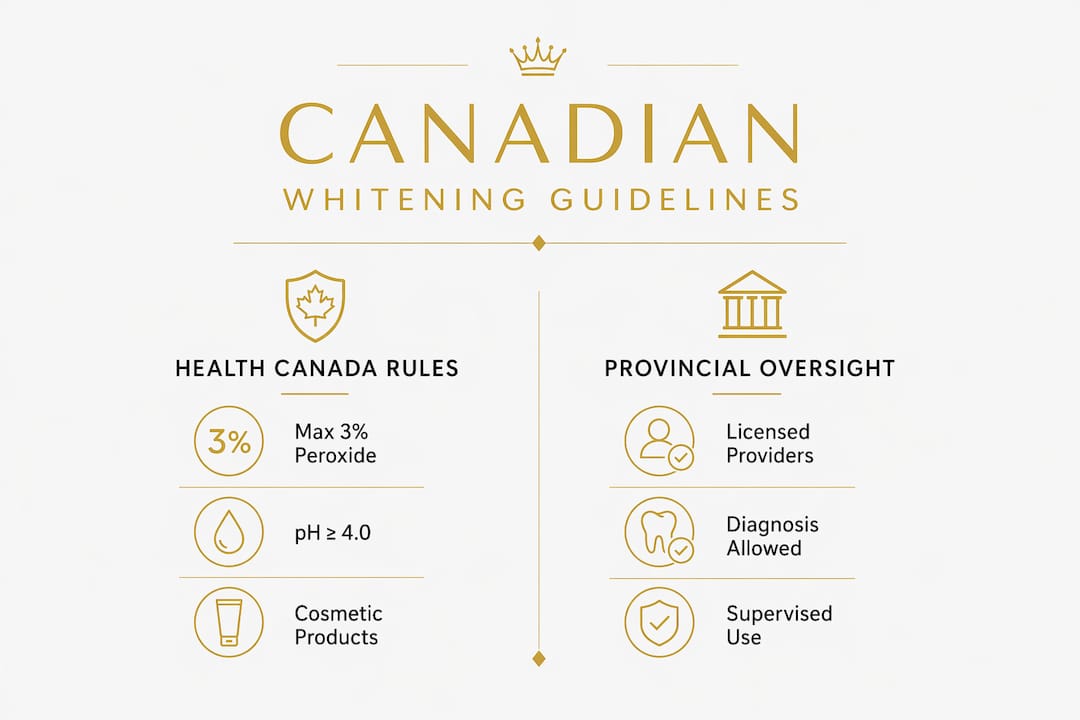
Health Canada classifies whitening products at or below 3% hydrogen peroxide as cosmetics, subject to standard notification requirements. Products above that threshold must submit clinical safety studies before reaching shelves. That distinction matters because most retail strips and gels stay at or below 3% precisely to avoid the clinical study requirement.
Health Canada also mandates a pH floor of 4.0 for all whitening products. Any gel more acidic than that can soften enamel over time, which is why the rule exists. Exact peroxide concentration labeling is required, with no approximations accepted. That standard of documentation is stricter than many countries apply.
Provincial dental regulatory bodies govern who can legally perform whitening services, and the rules vary significantly by region. In some provinces, only licensed dentists or dental hygienists under supervision may apply higher-concentration gels. In others, whitening salons operate in a gray zone.
Here is how the three main provider categories compare under Canadian rules:
| Provider type | Max peroxide allowed | Diagnosis capability | Regulatory oversight |
|---|---|---|---|
| Licensed dental clinic | Up to 38% (supervised) | Full oral exam and X-rays | Provincial dental college |
| Whitening salon | Low-strength gels only | None | Limited or none |
| Over-the-counter retail | ≤3% (cosmetic threshold) | None | Health Canada cosmetics |
Pro Tip: Before buying any whitening product in Canada, check the label for exact hydrogen peroxide percentage and a pH value above 4.0. If either is missing, that is a compliance red flag.
Whitening salons use low-strength gels and basic precautions. They suit healthy mouths with minor surface stains only. They cannot diagnose decay, gum disease, or other oral conditions that would make whitening unsafe.
Why should you consult a dentist before whitening in Canada?
A pre-whitening dental exam is the single most protective step a Canadian can take before starting any bleaching treatment. Canadian dental professionals recommend a thorough oral exam including X-rays and soft tissue assessment to rule out decay, gum disease, or sensitivity risks before any whitening begins. Skipping this step is where most whitening complications originate.
Several specific conditions make whitening risky without prior dental clearance:
- Active decay or demineralized enamel: Peroxide penetrates weakened enamel faster, reaching the dentin layer and causing sharp, lasting sensitivity.
- Gum disease or recession: Exposed root surfaces do not respond to bleaching the same way enamel does, and irritation is more severe.
- Existing dental restorations: Bleaching does not whiten crowns, fillings, veneers, or implants. Whitening natural teeth around untreated restorations creates uneven coloration that is difficult to correct.
- Severe sensitivity: Whitening without a sensitivity management plan can worsen nerve irritation for weeks.
Understanding gum health before whitening is not optional. Healthy gum tissue acts as a natural barrier against gel leakage onto soft tissue. Inflamed or receding gums increase the surface area exposed to peroxide, raising the risk of chemical burns and prolonged soreness.
Pro Tip: Tell your dentist about any crowns, fillings, or veneers before whitening. Your dentist can map which teeth have restorations and set realistic expectations for your final shade.
Professional whitening in Canada can use hydrogen peroxide up to 38% under dental supervision. That concentration delivers faster, deeper stain removal than any retail product. The tradeoff is a higher risk of sensitivity and gum irritation, which trained dental professionals manage with buffered gels and custom protective barriers.
What whitening products can Canadians legally use at home?
At-home whitening products available to Canadians without a prescription must stay at or below 3% hydrogen peroxide to qualify as cosmetics under Health Canada rules. That limit shapes the entire retail whitening market. Products above that level require clinical safety data, which is why you will not find high-concentration gels on pharmacy shelves.
The pH requirement is equally important. Acidic whitening gels with a pH below 4.0 can soften enamel and increase long-term susceptibility to staining and decay. Compliant products use buffered or neutral pH formulas that deliver peroxide without eroding the enamel surface. This is the chemistry behind why professional-grade gels preserve enamel while some low-cost kits do not.
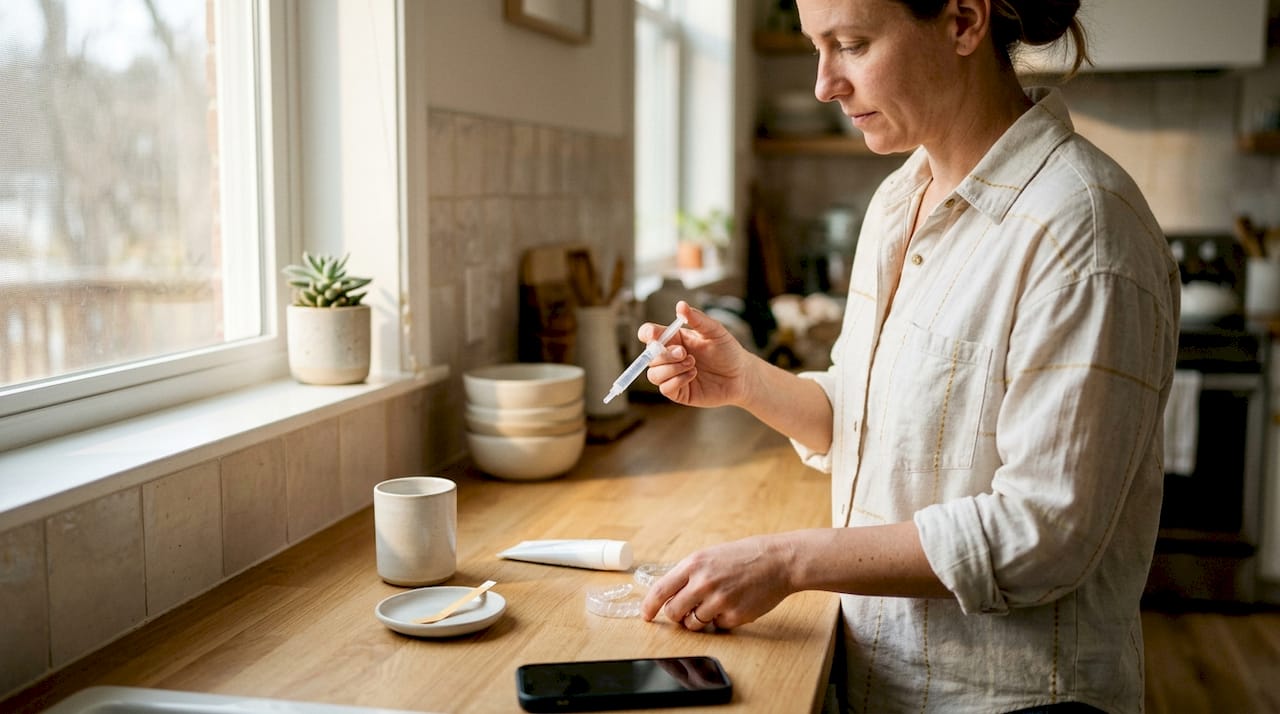
There is also a meaningful difference between professional take-home kits and standard retail products. Dentists can prescribe take-home trays with higher peroxide concentrations than the 3% retail ceiling, because those kits fall under supervised dental care rather than cosmetic product rules. Custom-fitted trays reduce gel leakage and soft tissue irritation in ways that generic boil-and-bite trays and strips cannot replicate.
Here is a practical comparison of at-home product categories:
| Product type | Peroxide range | Tray fit | pH compliance | Best suited for |
|---|---|---|---|---|
| Retail strips | ≤3% | No tray | Varies by brand | Mild surface stains |
| Retail gel trays | ≤3% | Generic fit | Varies by brand | Moderate stains |
| Dentist take-home kit | Above 3% (supervised) | Custom fitted | Buffered, compliant | Deeper discoloration |
Pro Tip: If you have sensitive teeth, look for retail products that include potassium nitrate or fluoride in the formula. These ingredients help calm nerve sensitivity during and after treatment.
The distinction between surface whitening and chemical bleaching is critical. Whitening toothpastes and polishing products remove surface stains through abrasion. Only peroxide-based bleaching lightens the internal color of the tooth. If your goal is a shade change rather than stain removal, you need a peroxide product, not a whitening toothpaste.
How do you whiten safely at home under Canadian dental standards?
Safe at-home whitening follows a clear sequence. Rushing any step or stacking treatments increases sensitivity and reduces results. Follow these steps to stay within best whitening practices for Canada:
- Get a dental clearance first. Book an exam before starting any bleaching treatment. Your dentist will check for decay, gum disease, and existing restorations that affect your whitening plan.
- Choose a Health Canada compliant product. Confirm the label lists an exact hydrogen peroxide percentage at or below 3% and a pH above 4.0. Avoid products with vague concentration claims.
- Start with the shortest recommended wear time. Most retail strips and trays suggest 30 minutes per session. Starting shorter reduces sensitivity while your teeth adjust.
- Space your treatments. Do not use whitening products every day for weeks without a break. Dental professionals recommend spacing sessions to allow enamel to remineralize between applications.
- Use a desensitizing toothpaste throughout your treatment cycle. Toothpastes containing potassium nitrate or stannous fluoride reduce nerve sensitivity when used daily alongside whitening.
- Avoid staining foods and drinks for at least one hour after each session. Coffee, red wine, and dark berries re-stain teeth faster immediately after whitening when enamel pores are temporarily more open.
- Pause and see your dentist if you experience sharp, lasting pain. Mild sensitivity is normal. Sharp pain that persists for more than 24 hours signals a problem that needs professional evaluation.
Combining in-office treatment with custom take-home trays and desensitizing kits often produces the best outcomes. Dental professionals call this a hybrid approach. It uses the speed of professional bleaching and the gradual maintenance of home products to achieve lasting results with fewer side effects.
For readers managing sensitivity, the science-backed guide to whitening for sensitive teeth covers ingredient selection and treatment spacing in detail. Knowing your sensitivity baseline before you start is the most underused protective step in at-home whitening.
Key Takeaways
Canadian dental whitening standards require Health Canada product compliance, a pre-whitening dental exam, and proper treatment spacing to achieve safe, effective results at home.
| Point | Details |
|---|---|
| Health Canada product threshold | Retail whitening products must stay at or below 3% hydrogen peroxide and maintain a pH above 4.0. |
| Pre-whitening dental exam | A professional oral exam including X-rays rules out decay, gum disease, and restoration conflicts before bleaching. |
| Restorations do not whiten | Crowns, fillings, and veneers do not respond to bleaching and must be assessed before treatment to avoid uneven results. |
| Provincial rules vary | Each province sets its own rules for who can legally apply whitening treatments, so check your local dental college’s guidance. |
| Hybrid approaches work best | Combining in-office bleaching with custom take-home trays and desensitizing products delivers the most consistent outcomes. |
What I have learned from years inside Canadian dental whitening
The biggest mistake I see Canadians make is treating whitening as a purely cosmetic purchase rather than a dental decision. They pick a product based on packaging, skip the dental exam, and then wonder why their teeth ache or why the results look patchy around their crowns. The regulations exist for exactly this reason.
One thing the marketing rarely tells you: light-assisted or “power” whitening devices do not necessarily produce better results than standard bleaching under professional care. The light is often more theater than chemistry. What actually drives results is peroxide concentration, contact time, and enamel health. Focus on those three variables.
I also want to push back on the idea that professional whitening is always out of reach. A single in-office session combined with a dentist-prescribed take-home kit often costs less over time than repeated cycles of retail products that deliver modest results. The math changes when you factor in the number of boxes you go through chasing a shade that low-concentration gels cannot reach.
My honest advice: get the exam, choose a compliant product, and be patient with the process. Whitening is not a one-session fix. The people who get the best results treat it as a maintenance routine, not a one-time event.
— Blanca
Blancawhitening’s at-home whitening collection for Canadian standards
Blancawhitening was founded by dental professionals who understood exactly where the Canadian regulatory lines fall. Every product in the at-home whitening collection is designed to meet Health Canada’s safety requirements, with formulas that respect the pH and concentration thresholds that protect your enamel.
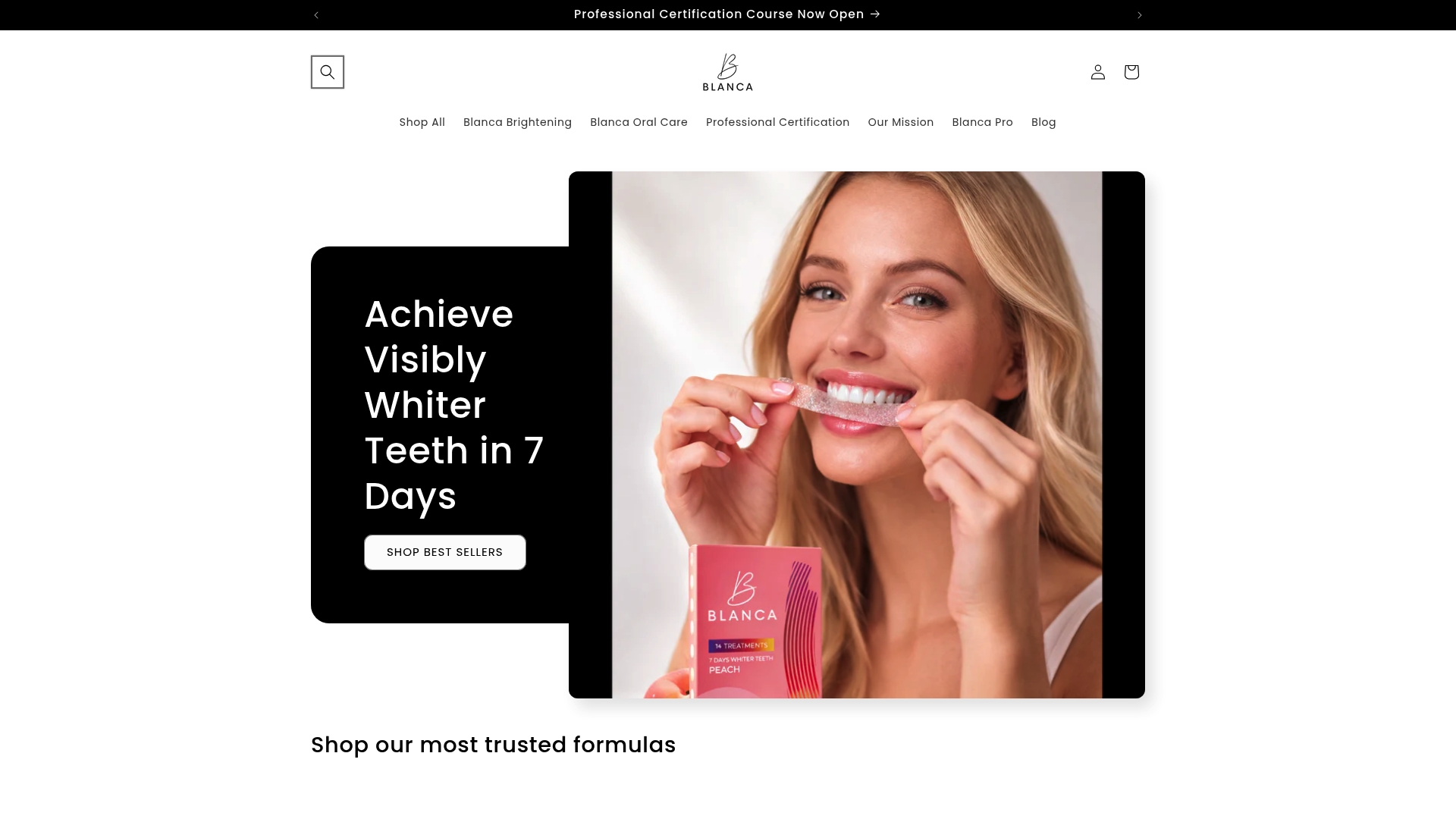
If you are ready to start a whitening routine that aligns with professional whitening guidelines in Canada, Blancawhitening’s kits give you clinically backed ingredients without needing a prescription. The collection includes strips, trays, and supporting oral care products built for consistent, safe use. Check the best sellers to see which products Canadian customers trust most for at-home results.
FAQ
What is the peroxide limit for whitening products in Canada?
Health Canada sets the limit at 3% hydrogen peroxide for cosmetic whitening products sold without a prescription. Products above that concentration require clinical safety studies before they can be marketed.
Do I need a dentist’s approval before whitening at home in Canada?
Canadian dental professionals recommend a full oral exam before any whitening treatment to check for decay, gum disease, and existing restorations. Skipping this step increases the risk of sensitivity and uneven results.
Will whitening strips change the color of my crowns or fillings?
Peroxide-based bleaching does not affect crowns, fillings, veneers, or implants. Whitening only changes the shade of natural tooth enamel, which can create visible color differences if restorations are not assessed first.
Are whitening salons in Canada safe to use?
Whitening salons use low-strength gels and suit healthy mouths with minor stains only. They cannot diagnose underlying oral conditions, making them a higher risk option for anyone with sensitivity, gum disease, or existing dental work.
How do I manage sensitivity during at-home whitening?
Use a toothpaste containing potassium nitrate or stannous fluoride daily throughout your whitening cycle, start with the shortest recommended session time, and space treatments to allow enamel to remineralize between applications.