

How to Whiten Teeth After Dental Work Safely
Teeth whitening after dental work is defined as the process of brightening natural tooth enamel following restorative or cosmetic dental procedures, with the critical constraint that restorations like crowns, veneers, and fillings do not respond to bleaching agents. This distinction matters because whitening only affects natural enamel and leaves restorations unchanged, which can create visible color mismatches if the sequence is wrong. Dental professionals use the term “shade management” to describe the full process of coordinating whitening with restoration color selection. Getting that sequence right protects both your investment in dental work and the appearance of your smile.
How does teeth whitening interact with dental restorations?
Restorations are non-porous by design. Crowns, veneers, porcelain fillings, and composite bonding contain no enamel structure, so peroxide-based whitening agents cannot penetrate their surface. The bleaching chemistry that lifts stains from natural dentin and enamel simply has no pathway into ceramic or composite materials.
The practical consequence is significant. Whitening after restorations can produce a permanent shade mismatch, where your natural teeth brighten but your restorations stay the same color. Correcting that mismatch typically requires replacing the restorations entirely, which adds both cost and chair time.
Here is how common restorations respond to whitening agents:
- Porcelain crowns: No color change. Porcelain is fully non-porous and chemically inert to peroxide.
- Ceramic veneers: No color change. The surface may temporarily appear cleaner, but the underlying shade is fixed.
- Composite resin fillings: No lightening. Composite can absorb staining over time but does not bleach.
- Tooth-colored bonding: No color change. Bonding material is composite-based and behaves the same way.
- Amalgam fillings: No color change. Metal-based fillings are unaffected by bleaching chemistry.
One detail many people miss: whitening gel cannot penetrate plaque either. Gel applied over plaque produces uneven, patchy results on natural teeth. Thorough brushing and flossing before any whitening session is not optional. It is the baseline that makes whitening work uniformly.
When is the best time to whiten teeth relative to dental work?
The correct sequence is to whiten first, then place restorations. This approach gives your dentist an accurate target shade for matching crowns, veneers, or bonding to your newly brightened natural teeth. Reversing that order creates the mismatch problem described above.
The timing protocol dental professionals follow looks like this:
- Complete whitening before any restorative procedure. Whiten your natural teeth to the desired shade before scheduling crown placement, veneer bonding, or composite work.
- Wait 2 to 4 weeks after whitening before shade selection. Shade rebound causes teeth to naturally darken by roughly 50% within the first 3 to 6 months. Matching restorations too early means the final shade will look mismatched once the teeth settle.
- Allow full healing before any post-work whitening. If you have already had restorations placed and want to whiten remaining natural teeth, wait until soft tissue has healed completely, typically 4 to 6 weeks after the procedure.
- Consult your dentist before starting. Your dentist can assess whether whitening is appropriate given the location and type of your restorations.
Shade rebound is the most underestimated variable in this process. Waiting for stabilization before matching restoration color is the single step that prevents the most costly aesthetic mistakes.
Pro Tip: Take a photo of your teeth immediately after whitening and again at the 4-week mark. The visual difference will show you exactly how much rebound occurred, which helps your dentist select the most accurate restoration shade.
What safe whitening methods are recommended after dental work?
Two primary options exist for teeth whitening post dental work: professional in-office treatment and at-home kits. Each has a distinct role depending on where you are in your treatment timeline.
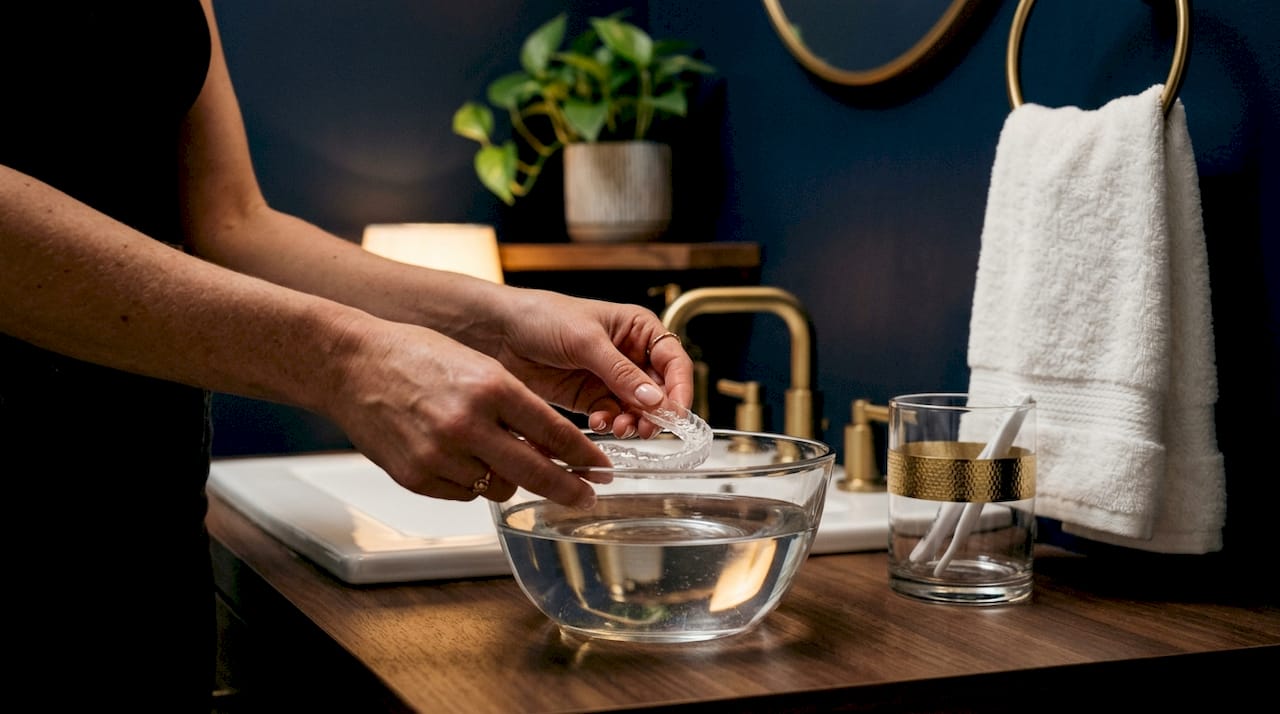
| Method | Best use case | Concentration | Key consideration |
|---|---|---|---|
| Professional in-office whitening | Initial whitening before restorations | High (hydrogen peroxide) | Fast results; requires dentist supervision |
| Custom tray with carbamide peroxide gel | Maintenance after restorations are placed | Low (10%–16% carbamide peroxide) | Gradual, gentle, and lower sensitivity risk |
| Whitening strips | Occasional touch-up on natural teeth only | Moderate | Cannot reach restoration margins evenly |
The low-and-slow approach using low-concentration carbamide peroxide in custom-fitted trays is the safest long-term method for people with restorations. It reduces the risk of pulpal inflammation and dentinal hypersensitivity compared to repeated high-concentration in-office sessions. Custom trays also fit precisely around restoration margins, minimizing gel contact with gum tissue.
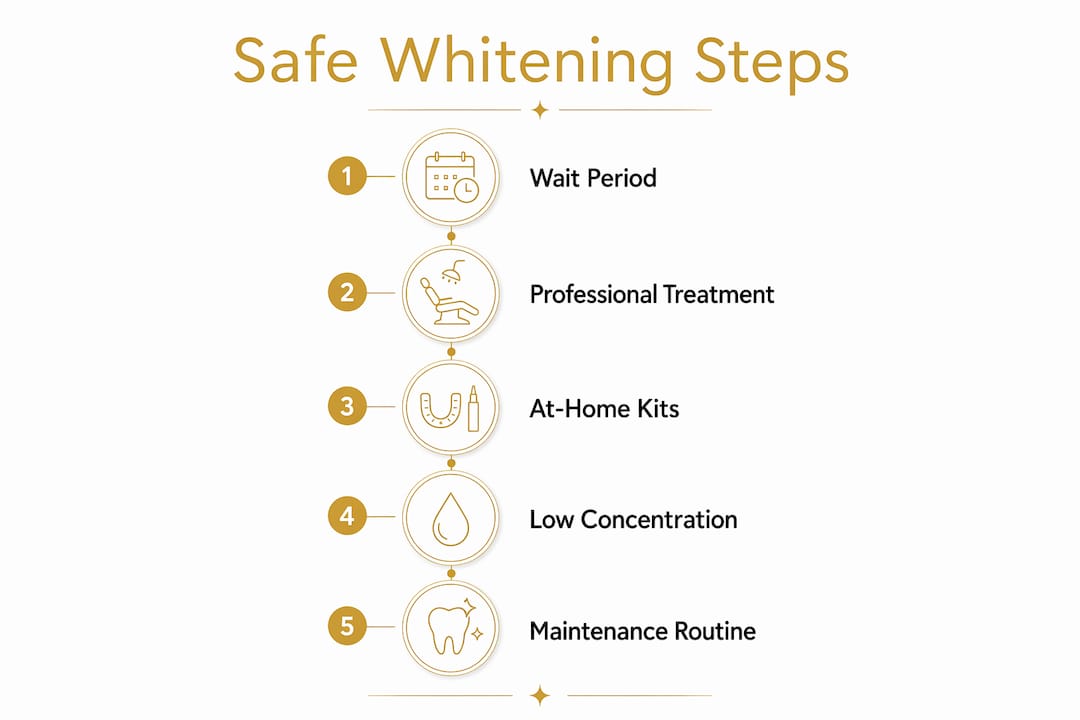
For people who want to whiten teeth at home after dentistry, the key is choosing a product with a low peroxide concentration and wearing trays for the recommended time only. Overuse does not produce faster results. It produces sensitivity and potential damage to enamel.
Pro Tip: Ask your dentist to note your current restoration shades in your chart before you begin whitening. That record becomes your reference point if you ever need to replace a restoration later.
How to maintain whitened teeth long term after dental work
Long-term whitening maintenance after dental work requires a structured routine, not sporadic treatments. The goal is to prevent stain buildup before it becomes visible, which is far easier than reversing significant yellowing.
Effective stain management combines professional cleaning every 6 months with consistent monthly at-home touch-ups using whitening trays. This combined cycle maintains brightness longer than whitening alone because professional cleaning removes calculus and surface staining that home products cannot address.
Key habits that protect your results:
- Monthly touch-ups with custom trays. Monthly at-home whitening prevents gradual stain accumulation before significant yellowing requires a full re-treatment.
- Adjust frequency based on lifestyle. Coffee, red wine, and tea accelerate staining. People who consume these regularly benefit from touch-up whitening every 3 to 6 months rather than every 6 to 12 months.
- Schedule professional cleanings every 6 months. Cleanings remove plaque and tartar that trap surface stains and block whitening gel from working evenly.
- Stop whitening at the first sign of sensitivity. Tooth sensitivity or gum irritation are clear signals to pause treatment and consult your dentist before continuing.
- Use a soft-bristle toothbrush. Abrasive brushing wears enamel and makes teeth more prone to staining over time.
The gold standard for maintenance has shifted toward regular, lower-dose home care rather than periodic intense in-office bleaching. Consistent low-level maintenance is gentler on enamel and more effective at preserving results over years.
What are the most common whitening mistakes after dental work?
The most costly mistake is whitening natural teeth after restorations are already placed without understanding that the restorations will not change color. People assume the gel will brighten everything uniformly. It does not. The result is a two-tone smile that requires restoration replacement to fix.
The second most common error is matching restoration shades too soon after whitening. Shade rebound is real and predictable. Matching a crown or veneer to freshly whitened teeth, before the 2 to 4 week stabilization window, almost guarantees a visible mismatch within months.
Assuming restorations will whiten along with natural teeth is the single most expensive mistake in cosmetic dentistry. Whitening agents have no effect on porcelain, ceramic, or composite materials. If you whiten after restorations are placed, you are brightening only the natural teeth around them. The restorations stay exactly the same shade they were on the day they were bonded. The only fix for a shade mismatch caused by post-restoration whitening is to replace the restorations at full cost.
A third mistake is ignoring sensitivity signals. Stopping whitening immediately when “zingers” or gum irritation appear is not optional. Continuing through sensitivity risks pulpal inflammation and enamel damage that takes months to resolve. If a shade mismatch has already occurred, consult your dentist about whether the degree of difference warrants replacing the restoration or whether strategic touch-up whitening on surrounding natural teeth can reduce the contrast.
Key Takeaways
Whitening teeth after dental work requires correct sequencing, a stabilization wait of 2 to 4 weeks, and a consistent low-dose maintenance routine to protect both natural enamel and existing restorations.
| Point | Details |
|---|---|
| Restorations do not whiten | Crowns, veneers, and fillings are non-porous and unaffected by peroxide-based whitening agents. |
| Whiten before restorations | Whitening natural teeth first gives your dentist an accurate shade target for matching new restorations. |
| Wait 2–4 weeks for stabilization | Shade rebound causes significant darkening in the first months; matching too early creates visible mismatches. |
| Use low-concentration home trays | The low-and-slow carbamide peroxide method is the safest long-term option for people with restorations. |
| Maintain with monthly touch-ups | Monthly at-home whitening combined with 6-month professional cleanings prevents stain buildup effectively. |
What I’ve learned from years of shade management
The question I hear most often is some version of “Can I just whiten everything at once?” The honest answer is no, and the reason matters more than the rule itself. Restorations are permanent in their shade the moment they are bonded. Natural teeth are not. That asymmetry is the core challenge of whitening after dental work, and most people do not learn about it until they are already looking at a mismatch.
What I have found works best is treating whitening as part of the treatment plan from the start, not as an afterthought. When patients come in for a crown or veneer consultation, the whitening conversation should happen in that same appointment. Sequencing whitening before restorations and building in the stabilization window costs nothing extra. Skipping it can cost thousands in replacement work.
The other thing I want to be direct about: maintenance plans need to be personal. A patient who drinks two cups of coffee daily and a glass of red wine most evenings will see staining return faster than someone who drinks mostly water. A fixed schedule of “whiten every 6 months” does not serve everyone equally. Pay attention to your own staining patterns and adjust your touch-up routine accordingly. Your smile is not a one-size-fits-all situation, and your whitening plan should not be either.
— Blanca
Blancawhitening’s at-home solutions for post-dental whitening
Blancawhitening was built by dental professionals who understand exactly what people with restorations need: gentle, effective whitening that works on natural enamel without stressing treated teeth or surrounding tissue.
The at-home whitening collection includes kits formulated with low-concentration peroxide gels suited for people managing shade maintenance around crowns, veneers, or fillings. Pair whitening with Blancawhitening’s oral care essentials, including electric toothbrushes and water flossers, to keep enamel clean and gum tissue healthy between sessions. A clean baseline makes every whitening session more effective and more uniform. Check current offers on the Blancawhitening sales page to find the right kit for your maintenance routine.
FAQ
Can you whiten teeth after fillings?
Yes, but whitening will only affect your natural teeth, not the fillings themselves. If the fillings are visible when you smile, whitening may create a noticeable color contrast between your natural teeth and the restoration.
How long after dental work can you whiten teeth?
Dental professionals recommend waiting 4 to 6 weeks after restorative procedures to allow soft tissue to heal fully before beginning any whitening treatment.
Why do my teeth look uneven after whitening near a crown?
Crowns are non-porous and do not respond to bleaching agents, so your natural teeth brighten while the crown stays its original shade. The only way to correct a visible mismatch is to replace the crown to match the new tooth color.
What is the safest whitening method for people with dental restorations?
The low-and-slow method using custom-fitted trays with low-concentration carbamide peroxide gel is the safest option. It minimizes sensitivity risk and allows precise application around restoration margins.
How often should I do touch-up whitening after dental work?
Most people benefit from maintenance whitening every 6 to 12 months, with more frequent touch-ups every 3 to 6 months for those with stain-prone diets or habits.