

PAP Whitening Explained: Your Complete Safety Guide
PAP whitening is defined as a peroxide-free teeth whitening method that uses phthalimidoperoxycaproic acid to oxidize surface stains without generating harmful free radicals. Unlike traditional hydrogen peroxide treatments, PAP targets chromogen molecules directly, which means your enamel and pulp tissue face far less chemical stress. With pap whitening explained clearly, you can make a genuinely informed decision rather than relying on marketing claims. Blancawhitening was founded by dental professionals specifically to bring this kind of science-backed clarity to everyday oral care.
How does PAP whitening work chemically?
PAP whitening works through targeted oxidation. The molecule phthalimidoperoxycaproic acid attaches to colored stain compounds on your enamel surface and breaks their chemical bonds, making them colorless. Crucially, this process does not release reactive oxygen species (ROS), the unstable free radicals that peroxide treatments generate.
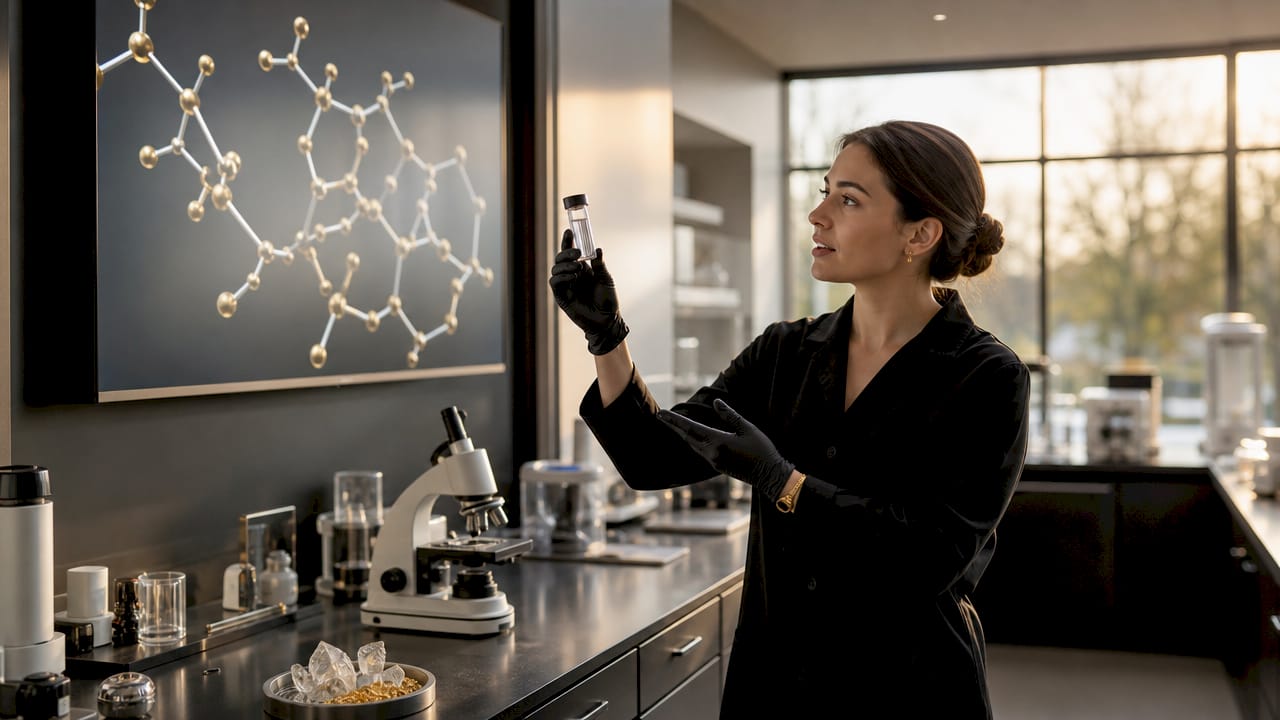
Traditional hydrogen peroxide whitening depends entirely on free radical chemistry. Those free radicals penetrate enamel and dentin, which explains why peroxide causes sensitivity in 30–50% of users in clinical trials, compared to near zero with PAP. That gap is not a minor footnote. It represents a fundamentally different risk profile.
PAP’s molecular size is also larger than hydrogen peroxide. That size limits how deeply it can penetrate tooth structure, which keeps its action focused on extrinsic, surface-level stains. In vitro studies confirm that PAP outperforms 37.5% hydrogen peroxide on the whitening index while preserving enamel structure. That result surprises most people who assume stronger chemistry always wins.
“PAP oxidizes stain molecules without producing reactive oxygen species, which means it whitens teeth effectively while leaving enamel morphology and pulp tissue intact. This mechanism is the core reason PAP is recommended for sensitivity-prone individuals.”
Key differences in the chemistry:
- Free radical production: Peroxide produces ROS; PAP produces none.
- Enamel penetration: Peroxide penetrates deeply into dentin; PAP stays at the enamel surface.
- Sensitivity mechanism: Peroxide irritates pulp nerve endings through ROS; PAP does not activate this pathway.
- Stain target: Both oxidize chromogens, but PAP focuses on extrinsic stains only.
What are the clinical benefits and limitations of PAP whitening?
PAP whitening delivers real, visible results, but the timeline is gradual by design. Initial shade improvement appears within 1–2 weeks, with optimal results typically reached at the 3–4 week mark. That pace is slower than in-office peroxide treatments, which can whiten several shades in a single session. The tradeoff is a significantly gentler experience for your teeth and gums.
The clinical benefits are well supported:
- Reduced sensitivity. Because PAP does not generate free radicals, it avoids the nerve irritation that makes peroxide whitening uncomfortable for so many people.
- Enamel safety. Formulations buffered to a neutral or slightly acidic pH (5.5–7.0) show no measurable enamel erosion in laboratory studies.
- Remineralization support. PAP formulations that include hydroxyapatite and potassium citrate actively rebuild enamel microhardness and calm nerve sensitivity simultaneously.
- Gum comfort. Users with receding gums or thin enamel tolerate PAP far better than peroxide-based gels.
The limitations are equally worth knowing. PAP is not the right tool for intrinsic stains. Discoloration caused by tetracycline antibiotics, fluorosis, or trauma sits inside the dentin layer. Hydrogen peroxide penetrates deeper and remains the clinical standard for those cases. PAP’s larger molecule simply cannot reach that depth.
PAP is also not appropriate for everyone without precautions. Dental professionals recommend that people with active cavities, gum disease, or severely compromised enamel address those conditions first. Whitening over untreated decay or open gum tissue creates unnecessary risk regardless of the whitening agent used. Read more about gum health before whitening to understand why that step matters.
Pro Tip: If you have sensitive teeth and want to check whether PAP is right for you, review the science-backed options for whitening with sensitive teeth before starting any treatment.
How to use PAP whitening safely and effectively at home
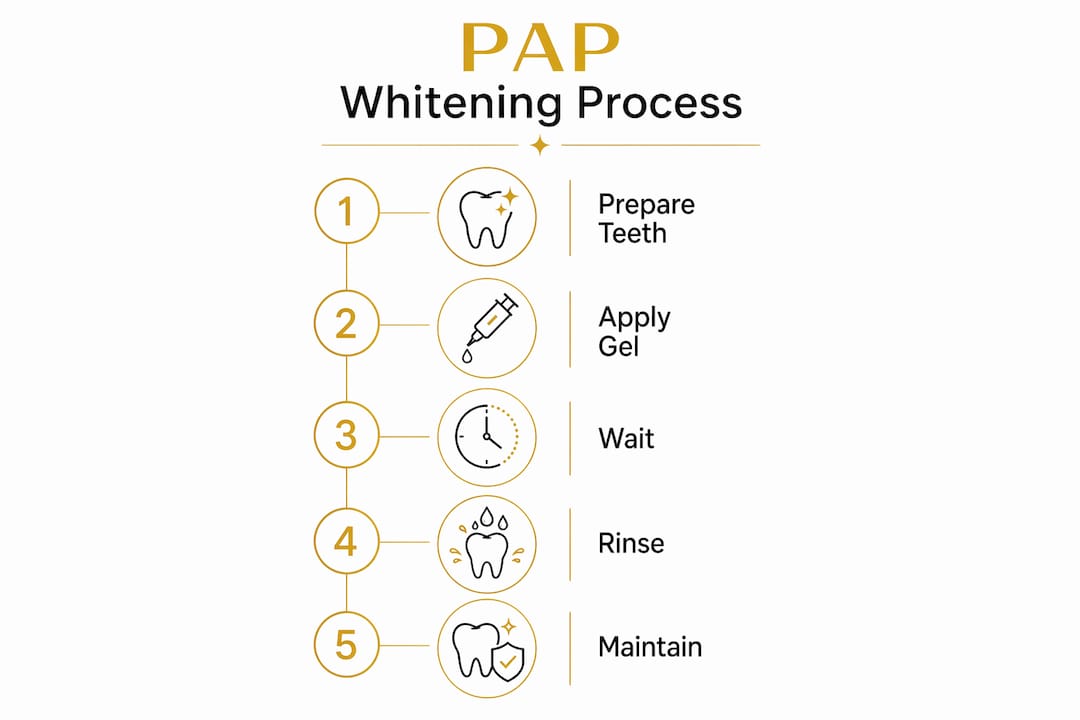
Safe and effective at-home PAP whitening starts with choosing the right product formulation. The pH of your whitening gel matters more than most people realize. Gels buffered between pH 5.5 and 7.0 show no enamel damage in controlled studies, while low-pH PAP gels reduce enamel microhardness even without peroxide. Always check the product label or brand website for pH information before purchasing.
Practical guidelines for safe home use:
- Check pH first. Choose a gel formulated between pH 5.5 and 7.0. Below that range, enamel erosion risk rises regardless of the active ingredient.
- Follow the recommended duration. Most at-home PAP treatments are designed for 10–30 minutes per session. Do not extend application time hoping for faster results.
- Avoid gum contact. Apply gel carefully to tooth surfaces only. Gum tissue is more porous than enamel and absorbs whitening agents more readily.
- Treat oral health issues first. Cavities, cracked teeth, and active gum inflammation should be addressed by a dentist before any whitening treatment begins.
- Skip the LED light. Clinical trials found no statistical improvement in whitening efficacy when LED devices were used alongside PAP gels. The gel formulation does the work, not the light.
Pro Tip: Consistency matters more than intensity with PAP whitening. Daily application at the correct duration for 3–4 weeks produces better results than sporadic extended sessions.
After your treatment cycle, maintaining results is straightforward. Avoid staining foods and drinks like coffee, red wine, and dark berries in the first 48 hours after each application. Learn more about maintaining whitening results to protect your investment over time.
How does PAP compare to other whitening methods?
Understanding where PAP fits in the broader whitening landscape helps you choose the right approach for your specific situation. The table below compares PAP, at-home peroxide gels, and professional in-office treatments across the factors that matter most.
| Factor | PAP (at-home) | Peroxide gel (at-home) | In-office professional |
|---|---|---|---|
| Active ingredient | Phthalimidoperoxycaproic acid | Hydrogen or carbamide peroxide | High-concentration peroxide |
| Sensitivity risk | Near zero | 30–50% of users | High |
| Enamel safety | Preserved at correct pH | Risk of erosion with extended use | Highest risk; requires professional supervision |
| Effective on intrinsic stains | No | Partially | Yes |
| Time to visible results | 1–2 weeks | Days to 1 week | Single session |
| Optimal results | 3–4 weeks | 2–3 weeks | Immediate to 1 week |
| Best for | Sensitive teeth, enamel wear | Moderate staining, faster results | Severe or intrinsic discoloration |
For people with professional cosmetic whitening needs, in-office peroxide treatments deliver the fastest and most dramatic results. The tradeoff is higher sensitivity risk and cost. PAP fills the gap for people who want meaningful whitening without the discomfort. It is the best choice when enamel condition and comfort are the priority, not raw speed.
The longevity of whitening results also varies by method. In-office treatments can last 6–12 months with good maintenance habits. At-home PAP results are comparable when you follow consistent application and aftercare routines. The science on enamel damage from whitening treatments reinforces why PAP’s gentler mechanism is worth the slower timeline for many people.
Key Takeaways
PAP whitening is the most enamel-safe at-home whitening method available, delivering visible results in 1–2 weeks without the free radical chemistry that causes sensitivity in peroxide treatments.
| Point | Details |
|---|---|
| PAP mechanism | PAP oxidizes surface stains without releasing free radicals, protecting enamel and pulp tissue. |
| Sensitivity advantage | Peroxide causes sensitivity in 30–50% of users; PAP clinical trials show near-zero sensitivity rates. |
| pH is critical | Choose gels buffered between pH 5.5 and 7.0 to avoid enamel erosion regardless of active ingredient. |
| Timeline expectation | Expect initial results in 1–2 weeks and optimal whitening at 3–4 weeks with consistent daily use. |
| Know the limits | PAP does not treat intrinsic stains; peroxide or professional treatment is required for deep discoloration. |
What I’ve learned from watching PAP whitening evolve
I have followed PAP’s rise in the whitening market closely, and the most important shift I have noticed is not in the chemistry. The chemistry has been solid for years. The real change is in consumer expectations. People are increasingly unwilling to accept sensitivity and enamel damage as the price of a brighter smile. That shift is healthy, and PAP is a direct response to it.
What concerns me is the formulation gap. Not all PAP products are created equal. A PAP gel at pH 4.0 is not safer than a well-formulated peroxide gel. The active ingredient is only part of the story. I always tell people to ask for pH data before buying any whitening product. If a brand cannot or will not share that number, that tells you something important about their transparency.
My personal recommendation for anyone with sensitive teeth or early enamel wear is to start with a PAP formulation that includes hydroxyapatite. That combination whitens and remineralizes simultaneously, which is genuinely rare in oral care. The results are gradual, but your enamel will thank you six months from now. For people chasing dramatic results from deep intrinsic staining, PAP alone will disappoint. Be honest with yourself about what you are treating before you commit to a method.
— Blanca
Blancawhitening’s approach to PAP-based whitening
Blancawhitening was built by dental professionals who wanted at-home whitening to be as safe as it is effective. The PAP-based formulations in the at-home whitening collection combine phthalimidoperoxycaproic acid with hydroxyapatite and potassium citrate, the same combination that clinical studies link to enamel remineralization and nerve desensitization. Every product is buffered to a safe pH range and designed for the treatment durations that research actually supports.
Blancawhitening publishes formulation details openly because transparency is the foundation of trust. If you are ready to start whitening with an enamel-first approach, browse the best-selling whitening products or check current offers on the sales page. Your smile should get brighter without your enamel paying the price.
FAQ
What does PAP stand for in teeth whitening?
PAP stands for phthalimidoperoxycaproic acid, a non-peroxide bleaching agent that oxidizes surface stains on enamel without releasing free radicals.
Is PAP whitening safe for sensitive teeth?
Yes. PAP is specifically recommended for people with tooth sensitivity, receding gums, or thin enamel because it does not generate the reactive oxygen species that cause nerve irritation in peroxide treatments.
How long does PAP whitening take to show results?
Initial shade improvement typically appears within 1–2 weeks, with optimal results reached at the 3–4 week mark when used consistently as directed.
Does PAP whitening work on all types of stains?
PAP works effectively on extrinsic stains from coffee, tea, wine, and food. It does not treat intrinsic stains such as tetracycline discoloration, where hydrogen peroxide or professional treatment is required.
Do I need an LED light with my PAP whitening kit?
No. Clinical trials found no statistically significant improvement in PAP whitening results when LED devices were added. The gel formulation and consistent application are what produce results.