

Questions to Ask Before Whitening Teeth: Safety Guide
Teeth whitening is a clinical procedure, not a simple cosmetic fix, and the questions to ask before whitening teeth determine whether your results are safe, lasting, and worth the investment. Temporary sensitivity is the most common side effect, and it affects a meaningful portion of people who whiten without proper preparation. Dental professionals follow clinical guidelines around hydrogen peroxide concentrations and desensitizing agents like potassium nitrate to reduce that risk. Asking the right questions before you start puts you in control of your outcome.
1. What dental health questions should you ask before whitening?
A dental checkup before whitening is the single most important step you can take. Cavities, gum disease, cracks, and enamel erosion all create pathways for whitening gel to reach sensitive tissue. Whitening over untreated problems does not just reduce your results. It can cause real pain.
Pre-whitening assessment is as much about clinical safety as cosmetic planning. A dentist who spots decay before treatment prevents you from masking a problem that will only get worse. Whitening gel penetrates enamel and can irritate the pulp directly if untreated cavities or cracks are present, causing severe pain.
Ask your dentist these specific questions before scheduling any whitening treatment:
- Do I have any cavities, cracks, or gum disease that need treatment first?
- Is my enamel thick enough to handle peroxide-based agents safely?
- Do I need a professional cleaning before I start?
- Are any of my existing restorations, such as crowns or fillings, in areas that will show when I smile?
- What is the condition of my gum tissue right now? Understanding gum health before whitening matters because inflamed gums absorb gel and increase irritation risk.
Pro Tip: Schedule a professional cleaning at least one week before starting any whitening treatment. Clean enamel absorbs whitening agents more evenly, which means better results with less product.
2. What should you ask about whitening product options and effectiveness?
Not all whitening products deliver the same results, and understanding the differences protects you from wasted money and unnecessary discomfort. The main categories are professional in-office treatments, dentist-supervised at-home kits, and over-the-counter strips or gels. Each varies in peroxide concentration, application time, and level of professional oversight.
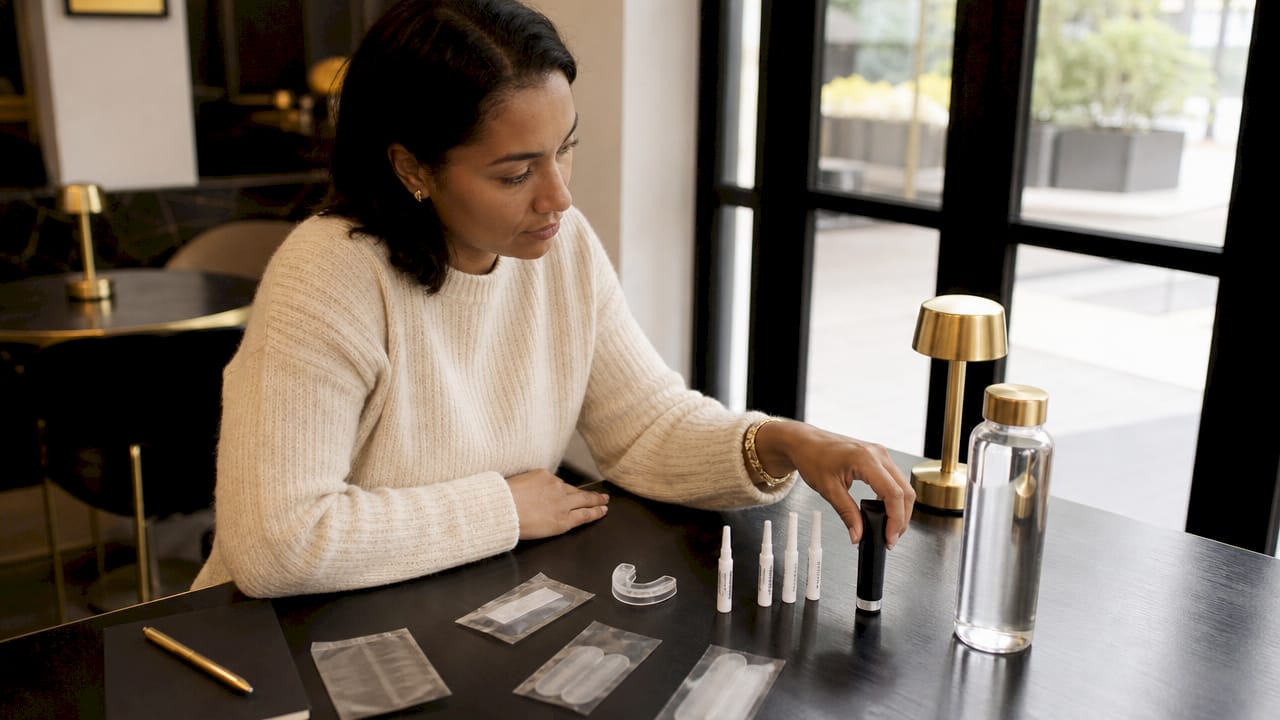
Moderate hydrogen peroxide concentrations of 25–35% achieve whitening results comparable to higher concentrations while causing less tooth sensitivity. That finding matters because many people assume stronger automatically means better. It does not. Simplified single-application approaches actually reduce patient sensitivity without sacrificing whitening efficacy.
One fact that surprises many people: whitening agents do not change the color of crowns, veneers, bridges, or fillings. Those restorations stay the same shade while your natural teeth lighten. If you have visible restorations in your smile zone, ask your dentist whether they need replacement for a uniform result.
Ask these questions when evaluating your product options:
- What concentration of hydrogen peroxide does this product use, and is it appropriate for my sensitivity level?
- Will this treatment affect my existing crowns, veneers, or fillings?
- Is light activation included, and does it actually improve results?
On that last point: LED, halogen, or laser light activation generally does not improve whitening outcomes and may increase sensitivity. The light is often a marketing feature, not a clinical one. You can also explore the at-home vs. professional comparison to understand which format fits your situation.
The type of staining you have also shapes your outcome. Extrinsic stains from coffee, tea, and wine respond well to peroxide-based whitening. Intrinsic stains, which sit inside the tooth structure, may require restorative options rather than bleaching alone.
Pro Tip: Strictly following product instructions maximizes results and minimizes discomfort. More product or longer use increases discomfort without producing better whitening.
3. What questions should you ask about managing whitening side effects?
Sensitivity is the most common side effect of teeth whitening, and knowing how to manage it separates a smooth experience from a painful one. Temporary tooth sensitivity typically lasts about two days after treatment. That is normal and expected.
What is not normal is persistent pain, gum burns, or swelling. Those signs require prompt professional evaluation, not more whitening gel. Knowing the difference before you start means you will recognize when to pause and when to call your dentist.
The most effective way to reduce whitening sensitivity is to prepare your teeth before treatment begins. Using a desensitizing toothpaste containing potassium nitrate for at least two weeks before whitening significantly improves tolerance. Potassium nitrate and sodium fluoride desensitizing agents reduce bleaching-related sensitivity without affecting your whitening results.
Ask your dentist or product provider these safety questions for whitening side effects:
- What desensitizing agents do you recommend, and when should I start using them?
- How long should sensitivity last, and at what point should I stop treatment?
- Are there any DIY methods I should avoid that could damage my enamel?
- What are the warning signs that mean I need to contact you immediately?
Avoiding unverified DIY methods matters here. Baking soda pastes, lemon juice, and activated charcoal are popular online but lack clinical backing and can erode enamel over time. Stick to products with recognized desensitizing ingredients and clear usage guidelines. For more on managing sensitivity during whitening, clinical guidance exists for people with naturally sensitive teeth.
4. Who should avoid or delay teeth whitening?
Whitening is not appropriate for everyone, and knowing the contraindications before you start protects your long-term dental health. Certain groups face higher risks, and for them, delaying or modifying treatment is the right call.
-
Children under 16. Children under 16 should generally not whiten because their tooth pulp is large and more sensitive, which increases the risk of nerve irritation. Enamel and pulp development in youth directly affects whitening suitability.
-
Pregnant and breastfeeding individuals. Pregnant and breastfeeding individuals should postpone elective whitening. Systemic changes during these periods create safety concerns that outweigh cosmetic benefits.
-
People with thin enamel. Thin enamel offers less protection between the whitening agent and the sensitive dentin layer beneath. If your dentist has noted enamel erosion, whitening requires extra caution or a modified approach.
-
People with high baseline sensitivity. If cold drinks or sweet foods already cause sharp pain, standard whitening protocols will likely worsen that sensitivity. Lower-concentration products and extended desensitizing preparation are the safer path.
-
People with certain dental restorations. If crowns, veneers, or large fillings sit in visible areas of your smile, whitening your natural teeth creates a color mismatch. Discuss restoration replacement with your dentist before committing to whitening.
For those with thin enamel or high sensitivity, lower-concentration at-home systems used with desensitizing agents often deliver acceptable results with far less discomfort than in-office high-concentration treatments. The goal is a brighter smile without compromising the health of your teeth.
Key takeaways
Asking the right questions before whitening teeth is the most reliable way to protect your oral health and get results that actually last.
| Point | Details |
|---|---|
| Get a dental checkup first | Cavities, cracks, and gum disease must be treated before any whitening begins. |
| Match concentration to your sensitivity | Moderate hydrogen peroxide (25–35%) delivers effective whitening with less discomfort. |
| Prepare with desensitizing toothpaste | Use potassium nitrate toothpaste for at least two weeks before treatment to reduce sensitivity. |
| Know what whitening cannot do | Crowns, veneers, and fillings do not respond to whitening agents and may need replacement. |
| Recognize who should wait | Children under 16, pregnant individuals, and those with thin enamel should delay or modify treatment. |
What I’ve learned from years of watching people whiten without asking the right questions
The most common mistake I see is people treating whitening like a skincare product rather than a clinical procedure. They buy a kit, skip the dentist, and then wonder why their gums burn or why one tooth looks darker than the rest. That darker tooth usually has a crown. Nobody told them whitening would not touch it.
The second mistake is chasing intensity. People assume that a higher peroxide concentration or a longer treatment time will get them whiter faster. Clinical evidence says otherwise. Moderate concentrations work just as well, and overuse creates sensitivity that forces people to stop treatment entirely, which means they end up with uneven results.
What actually works is preparation. Two weeks of desensitizing toothpaste, a clean bill of oral health from your dentist, and a product matched to your actual sensitivity level. That combination produces results that last and a process that does not hurt. Shortcuts skip the preparation and create the problems.
The questions you ask before you start are not bureaucratic steps. They are the difference between a treatment that works and one that sets you back. Trust the clinical process. It exists for good reason.
— Blanca
Blancawhitening’s approach to safe, effective whitening
Blancawhitening was founded by dental professionals who understood that most whitening problems start before the first application. Every product in the Blancawhitening line reflects that thinking, from clinically backed whitening agents to oral care tools that prepare your mouth for treatment.
Whether you are starting with at-home whitening options or looking for a complete oral care routine that supports your results, Blancawhitening builds each product around the same principle: safety first, brightness second. The best-selling collection includes whitening strips, electric toothbrushes, and water flossers, all designed to work together. Browse the full range and find the right starting point for your smile.
FAQ
Is a dentist consultation required before whitening?
A dentist consultation before whitening is not legally required for over-the-counter products, but it is strongly recommended. Untreated cavities, gum disease, or enamel erosion can turn a routine whitening session into a painful experience.
How long does whitening sensitivity last?
Tooth sensitivity after whitening typically lasts about two days. Sensitivity lasting longer than that, or accompanied by gum burns or swelling, requires professional evaluation.
Can whitening damage my enamel?
Whitening used correctly and at appropriate concentrations does not permanently damage enamel. Overuse, unverified DIY methods, and ignoring pre-existing enamel erosion are the real risks. Learn more about enamel safety and whitening from a clinical perspective.
Will whitening work on my crowns or veneers?
Whitening agents do not change the color of crowns, veneers, bridges, or fillings. If these restorations are visible in your smile, discuss replacement options with your dentist before whitening your natural teeth.
Who should not whiten their teeth?
Children under 16, pregnant and breastfeeding individuals, and people with thin enamel or untreated dental problems should delay or avoid whitening until those conditions are addressed.