

How to Keep Your Water Flosser Clean and Working Right
Clean a water flosser by rinsing the tip and exterior after every use, emptying and washing the reservoir on a regular schedule, and running a monthly descaling cycle with white vinegar. Replace tips regularly every few months. That’s the whole routine., and skipping any one piece is usually why a unit starts smelling musty or losing pressure.
- Daily: rinse tip and wipe exterior
- Weekly: wash the reservoir with warm water and mild soap
- Monthly: descale with a vinegar solution and inspect tips
Watch for warning signs between cleanings: mold, black flakes, a sour smell, or a noticeable drop in water pressure all mean it’s time for an unscheduled deep clean. Blancawhitening, a Canadian dental-led oral care brand, builds its maintenance advice on the same product-support standards manufacturers publish, though your exact model may have its own quirks worth checking against manufacturer instructions first.
Key Takeaways
A water flosser stays sanitary and effective when you rinse it daily, wash the reservoir weekly, and descale it monthly with a vinegar solution.
| Point | Details |
|---|---|
| Daily habit matters most | Rinsing the tip and emptying the reservoir after every use prevents most mold and odor problems. |
| Monthly vinegar cycle | A one-part vinegar to two-parts water solution run through the unit clears mineral scale and biofilm. |
| Black residue means deep clean now | Dark flakes signal biofilm mixed with scale and call for immediate descaling, not routine cleaning. |
| Replace tips regularly every few months. | Swap sooner if you notice cracks, discoloration, or a smell that survives cleaning. |
| BLANCA supports the full routine | The BLANCA Water Flosser and its replacement tips are built for this exact maintenance schedule. |
Table of Contents
- Water Flosser Cleaning Step One: The Outside, Tip, and Handle
- How Often Should You Wash the Water Flosser Reservoir?
- How Do You Descale the Internal Parts of a Water Flosser?
- When Should You Sanitize or Replace Water Flosser Tips?
- What Causes Black Residue, Mold, or Low Pressure in a Water Flosser?
- Water Flosser Maintenance Schedule and Storage Tips
- Why Trust These Cleaning Steps?
- The Part of Water Flosser Care Nobody Wants to Hear
- Get a Flosser Built for Easier Cleaning and Real Replacement Parts
- Frequently Asked Questions
- Sources
Water Flosser Cleaning Step One: The Outside, Tip, and Handle
The parts that touch your mouth and hands need attention every single time you use the device, not just when you remember. This is the easiest habit to build because it takes under a minute.
- Run a short cycle of plain water through the unit right after flossing to clear out any leftover debris in the tip and hose.
- Remove the tip and rinse it under warm running water.
- Wipe down the handle and exterior housing with a soft, damp cloth and a small amount of mild dish soap.
- Skip anything abrasive. Scouring pads and harsh cleaners can scratch the housing and degrade seals over time.
- Never submerge the base unit, motor housing, or any electrical component. Water only touches the reservoir, tip, and hose.
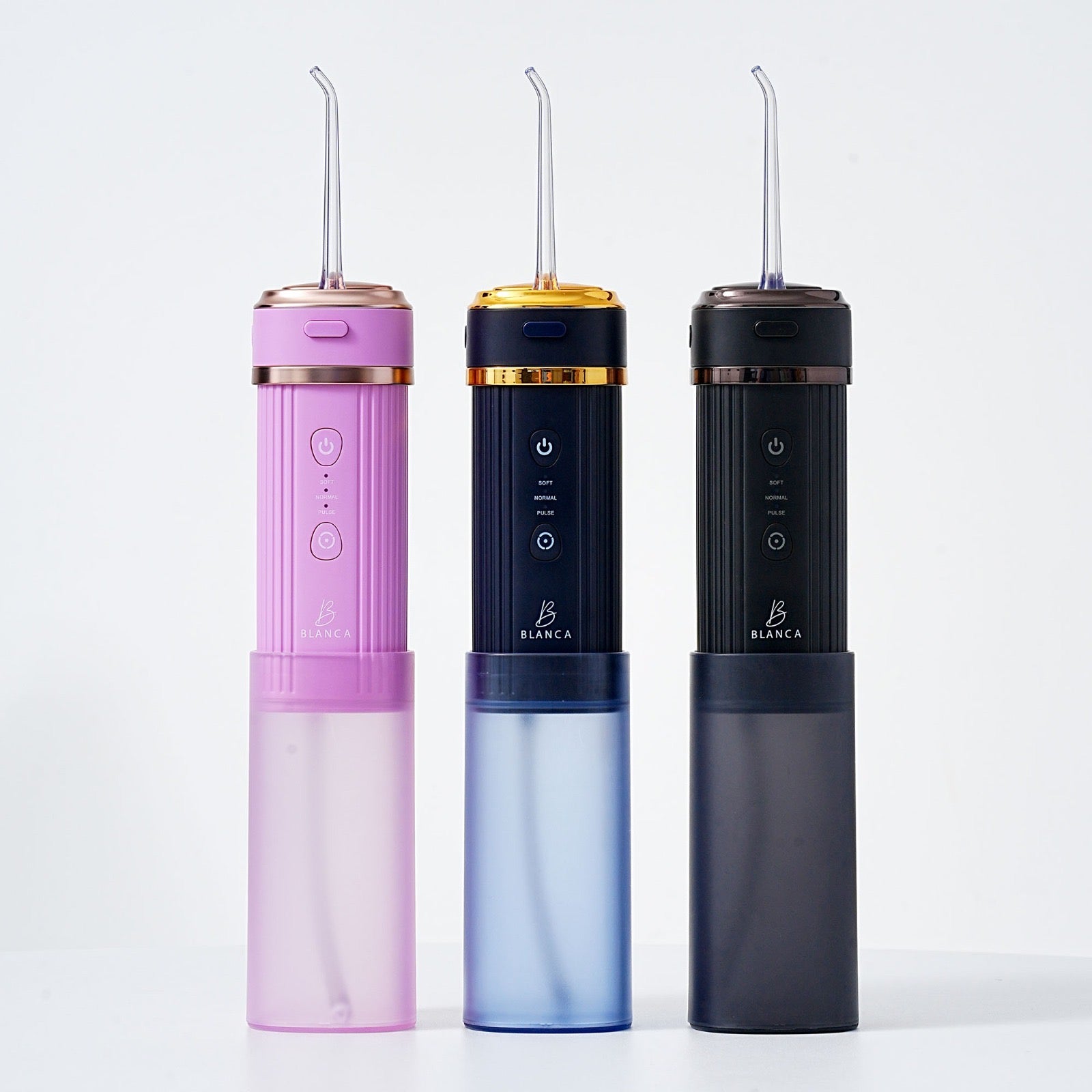
Some removable tips and reservoir lids are dishwasher-safe on the top rack, but that varies by model. Check the manufacturer guidance for your specific BLANCA Water Flosser or equivalent unit before tossing parts in with your dinner plates.
Pro Tip: Keep a small dish of white vinegar solution near the sink and drop the tip in for two minutes after your evening flossing session. It turns a weekly chore into a thirty-second habit.
How Often Should You Wash the Water Flosser Reservoir?
The reservoir is where mold and biofilm actually take hold, because it holds standing water and sits at room temperature for hours between uses. Dental hygienists point to daily emptying as one of the simplest ways to cut that risk, since leaving water sitting in the tank gives bacteria time to establish a film on the plastic walls.
Your reservoir routine breaks into three tiers:
- After every session: empty any leftover water and leave the lid open so the inside can air-dry.
- Weekly: wash the reservoir with warm water and a few drops of mild dish soap, swirling it around the interior, then rinse until no suds remain.
- Monthly: soak the reservoir in a mix of one part white vinegar to two parts water for roughly five minutes to break down mineral scale and any early biofilm.
If vinegar’s smell bothers you or you’re cleaning a unit for someone with sensitive skin, a diluted hydrogen peroxide rinse followed by a thorough water flush works as an alternative for the reservoir specifically. Whichever method you choose, BLANCA’s own guidance emphasizes airing the reservoir out fully before the next fill, since a damp, sealed tank is exactly the environment mold prefers.
How Do You Descale the Internal Parts of a Water Flosser?
Mineral deposits build up inside the pump and hose long before you can see them, and they’re usually the real reason a flosser that used to blast plaque away starts feeling weak. A monthly descaling cycle clears that scale before it turns into a real pressure problem.
- Mix a descaling solution of one part white vinegar to two parts warm water and fill the reservoir.
- Attach a tip, hold the unit over a sink, and run the solution through until the reservoir is empty.
- Refill the reservoir with plain water and run it through completely.
- Repeat the plain water cycle two to three more times until you can’t smell or taste any vinegar.
- Let all removable parts air-dry fully before reassembling.
Wirecutter’s reviewer coverage backs monthly vinegar deep-cleans as the routine dental hygienists most often recommend, specifically because vinegar’s acidity dissolves the calcium and magnesium deposits that plain soap and water can’t touch.
Rinsing matters as much as the descaling itself. Manufacturer support pages consistently stress running several clean-water cycles after any vinegar flush, because leftover residue can leave an unpleasant taste or, in some cases, irritate sensitive gums. Before you run vinegar through any unit, check the product support page for your specific model. Some cordless or battery-powered designs carry warnings against vinegar in certain internal chambers, and a corrosive descaler that isn’t vinegar can damage seals that vinegar itself would leave untouched.
When Should You Sanitize or Replace Water Flosser Tips?
Tips take the most direct wear of any part on your flosser, and they’re also the piece most likely to harbor bacteria if you let them sit too long between cleanings.
- Soak removable tips in a one-to-two vinegar-to-water mix for about five minutes, then rinse thoroughly under running water.
- Let tips air-dry completely before storing them or putting them back on the handle. Trapped moisture is what encourages regrowth.
- Replace tips every three to six months as a general rule, matching the cadence manufacturers commonly recommend for hygiene and performance.
- Swap a tip sooner if you notice cracking, cloudy discoloration, or a smell that survives a full soak and rinse.
Because tips are a wear item rather than a one-time purchase, keeping a spare set on hand means you’re never tempted to stretch a cracked tip past its useful life. BLANCA’s replacement tips are built to fit the brand’s own flosser line, which makes restocking simple once you’ve settled into a schedule.
What Causes Black Residue, Mold, or Low Pressure in a Water Flosser?
Black flakes in the reservoir or hose are almost never a cosmetic issue. They typically point to biofilm mixed with mineral scale, and reviewer testing consistently identifies this combination rather than harmless residue from your water supply. Seeing it should trigger an immediate deep clean, not a shrug.
- Black residue or visible mold: run a full vinegar descaling cycle immediately, followed by multiple clean-water rinses, and inspect the tip for the same buildup.
- Persistent smell after cleaning: stop using the unit and contact manufacturer product support. A smell that survives a proper descale can signal a problem inside the pump that a home cleaning cycle won’t reach.
- Low pressure: check the tip and hose for visible blockages first, then run a descaling cycle, since mineral scale narrowing the internal lines is the most common cause.
Pro Tip: If you have hard water and notice scale building up faster than once a month, switching to distilled water for daily fills cuts down how often you need a full descaling cycle.
Water Flosser Maintenance Schedule and Storage Tips
A little consistency beats an occasional deep scrub. Here’s the rhythm that keeps most units running well past their first year:
-
Daily: rinse the tip, run a plain water cycle, wipe the exterior, and empty the reservoir.
-
Weekly: wash the reservoir with warm water and mild soap.
-
Monthly: run a full vinegar descaling cycle and inspect tips for cracks or discoloration.
-
Every three to six months: replace tips, or sooner if you spot wear.
Store the unit somewhere ventilated, like an open bathroom shelf rather than a closed, humid cupboard, and always leave the reservoir lid open between uses so trapped moisture can escape. Give the hose and seals a quick visual check during your monthly clean. Cracked, brittle hosing is one of the few issues cleaning alone can’t fix.
Why Trust These Cleaning Steps?
This routine mirrors the guidance dental professionals and manufacturer support teams already give, not a shortcut version of it.
- Blancawhitening was founded by dental professionals building oral care products around clinically grounded practices, not marketing shortcuts.
- The three-step structure here (exterior, reservoir, internal parts) matches the format used across manufacturer product-support content, so it applies whether you own a BLANCA unit or another brand.
- Soaking methods for removable tips echo oral appliance cleaning guidance used for retainers and mouthguards, which supports the vinegar-soak approach as safe for small plastic components generally.
- Reviewer coverage citing dental hygienists backs the monthly vinegar cadence as a widely recommended standard, not a brand-specific opinion.
The Part of Water Flosser Care Nobody Wants to Hear
Most people treat their water flosser like a toothbrush cup: rinse it occasionally, ignore it otherwise, and assume running water through it is basically self-cleaning. It isn’t. A reservoir that sits half-full overnight, week after week, is a small stagnant pool, and biofilm doesn’t need much time to establish itself.
The conventional advice usually stops at “clean it now and then,” which is exactly vague enough to guarantee it never happens. What actually works is treating the daily rinse as non-negotiable and the monthly vinegar cycle as a calendar appointment, not a someday task. Skipping the daily habit is what turns a five-minute monthly job into a stubborn odor problem that no amount of vinegar seems to fully solve.
If you take one thing from all of this, prioritize the reservoir over everything else. The exterior wipe-down matters for hygiene, but the reservoir is where neglect actually breeds bacteria. Get that habit locked in first, and the rest of the routine falls into place with far less effort than you’d expect.
Get a Flosser Built for Easier Cleaning and Real Replacement Parts
A cleaning routine only works as well as the device it’s built for. Some flossers make descaling a fight with hard-to-reach seams or tips that don’t come apart cleanly, which turns a five-minute monthly task into a frustrating one. The BLANCA Water Flosser is designed with straightforward disassembly in mind, so the routine in this guide is actually simple to run every month, not just simple to read about.
Because BLANCA is dental-led, the water flosser pairs naturally with the rest of a real oral care routine, including the brand’s electric toothbrush and at-home whitening options if a brighter smile is part of your goal. When it’s time to replace tips on the three-to-six-month cadence covered above, BLANCA’s replacement tips are sized to fit the unit directly, so you’re not hunting for a compatible part. Check current tip availability and pick up a spare set before your next tip shows signs of wear.
Frequently Asked Questions
How often should you clean a water flosser? Rinse the tip and wipe the exterior after every use, wash the reservoir weekly, and run a full vinegar descaling cycle once a month.
What’s the best solution for water flosser cleaning? A mix of one part white vinegar to two parts warm water handles both the reservoir and internal lines. Rinse thoroughly with plain water afterward.
Can you put vinegar in a water flosser? Yes, diluted white vinegar is the standard descaling agent most manufacturers and dental hygienists recommend, but check your specific model’s product support page for any exceptions before running it through the unit.
Why is there black residue in my water flosser? Black flakes usually mean biofilm has combined with mineral scale inside the reservoir or hose. Run a vinegar descaling cycle right away and inspect the tip for the same buildup.

How often should you replace water flosser tips? Most manufacturers, including BLANCA, recommend replacing tips every three to six months, or sooner if you notice cracking, discoloration, or a lingering odor.
Sources
- You’re Probably Not Cleaning Your Water Flosser As Often As You Should. Here’s How It’s Done.