

Whitening Schedule Recommended for a Brighter Smile
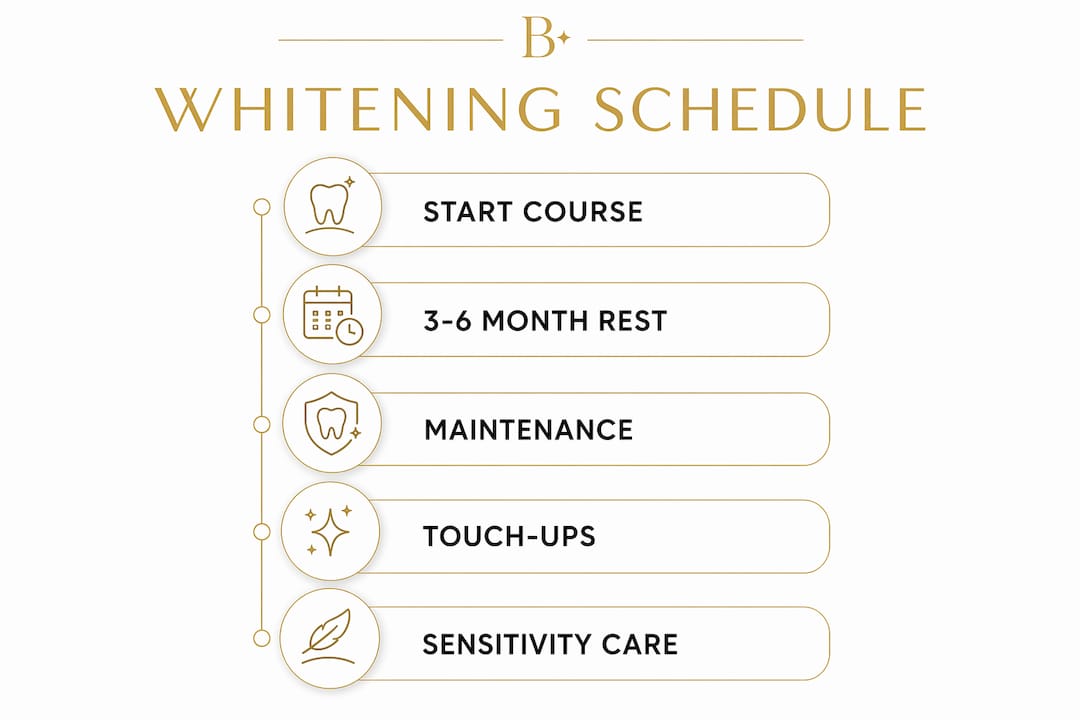
A safe and effective teeth whitening schedule is defined as an initial treatment course followed by maintenance sessions spaced months apart to protect enamel and prevent sensitivity. Dental professionals refer to this as a “whitening cycle,” and the whitening schedule recommended by most dentists follows two phases: an active brightening phase and a long-term maintenance phase. Professional treatments should be spaced 6–12 months apart to preserve enamel integrity. At-home products typically require a 7–14 day initial course, followed by touch-ups every 3–4 months. Getting this timing right protects your enamel, reduces sensitivity, and keeps your results lasting as long as possible.
How often should professional whitening appointments be scheduled?
Professional in-office whitening delivers the strongest peroxide-based treatments available, which is exactly why spacing matters. Repeating treatments too soon causes tooth dehydration and significant sensitivity. That is not a minor inconvenience. It signals that enamel is under stress and needs recovery time.
The standard dental whitening plan for in-office treatments looks like this:
- Initial treatment: One or two in-office sessions to reach your target shade
- Follow-up timing: Schedule the next full treatment 6–12 months later
- Result longevity: Professional results last from 6 months to 2 years, depending on oral hygiene and lifestyle habits
- Sensitivity check: If you experience lingering sensitivity after a session, extend the gap before your next appointment
- Dental cleaning first: Schedule a professional cleaning before each whitening session to remove surface plaque and allow even product penetration
Individual factors shift this timeline. People with naturally thin enamel or existing sensitivity may need to wait closer to 12 months between full treatments. Those with strong enamel and minimal staining habits may comfortably return at the 6-month mark.
Pro Tip: Schedule your professional whitening appointment 4–6 weeks before a major event, like a wedding or reunion. This gives any post-treatment sensitivity time to resolve and lets your shade fully stabilize before the big day.
What is the recommended schedule for at-home whitening products?
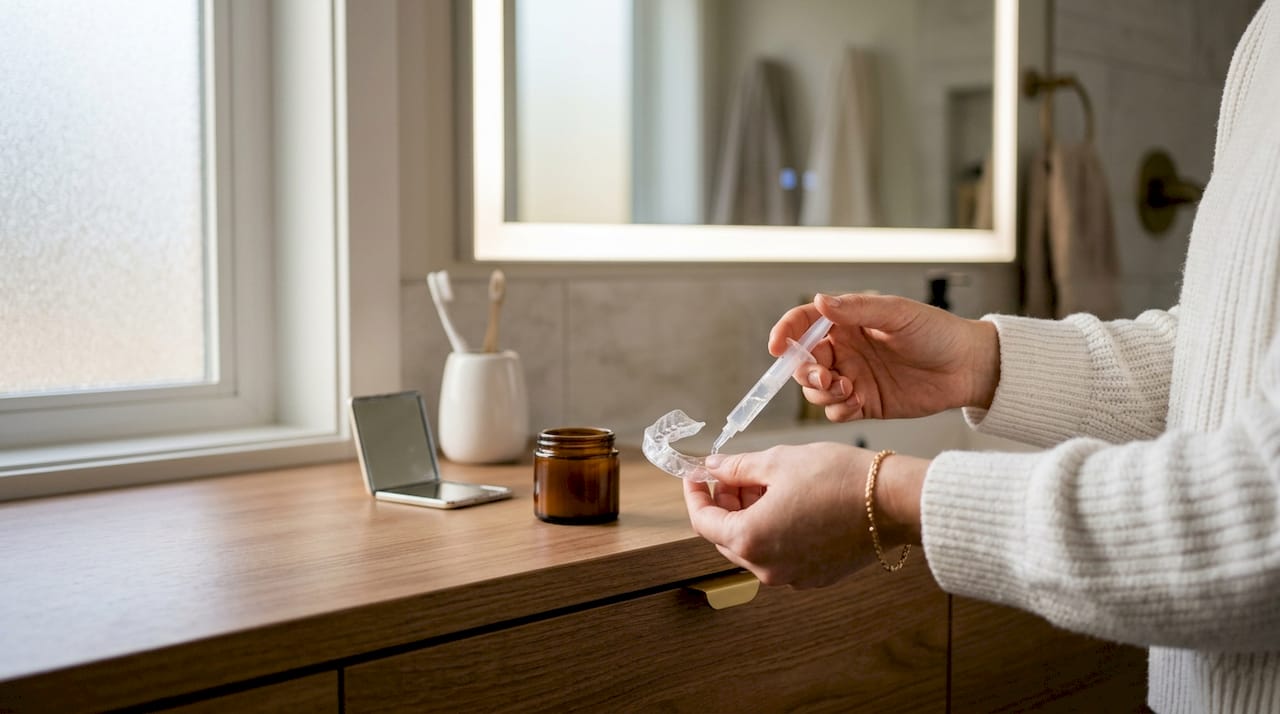
At-home whitening products, including strips and custom tray kits, follow a different rhythm than in-office treatments. The peroxide concentration is lower, which means the initial course takes longer but carries less risk of acute sensitivity. At-home strips and trays are typically used daily for 7–14 days to complete an initial course, with noticeable shade improvement by the end.
A practical at-home dental whitening plan follows these steps:
- Complete the initial course. Use your strips or tray kit daily for the full 7–14 days as directed on the packaging. Do not cut the course short, even if you see early results.
- Rest your enamel. Wait at least 3–6 months before repeating a full course. This gap allows enamel to remineralize and reduces cumulative sensitivity risk.
- Use touch-ups strategically. After the initial course, one brief session every 3–4 months is enough to maintain your shade without stressing enamel.
- Follow product instructions exactly. Overusing whitening strips and abrasive toothpastes erodes enamel over time. The packaging guidelines exist for a reason.
- Consult a dentist before starting a new cycle. A quick check confirms your enamel is ready for another round, especially if you have had sensitivity in the past.
Dentist-prescribed at-home kits can be used safely once or twice yearly with occasional touch-ups. Over-the-counter products should follow packaging instructions for safe use every few months.
Pro Tip: If you experience sensitivity during an at-home course, switch to an alternate-day schedule instead of stopping entirely. Sensitive formulations with lower peroxide concentrations also reduce discomfort without sacrificing results. Blancawhitening’s whitening for sensitive teeth guide covers the best options for this approach.
How do individual factors affect your whitening schedule?
No single whitening frequency works for everyone. Enamel density, baseline tooth color, and sensitivity levels all determine how often whitening is appropriate for you personally. A slow, steady approach protects long-term enamel health far better than aggressive, frequent treatments.
Key factors that shape your personal whitening timeline include:
- Enamel condition. Thinner enamel absorbs peroxide more readily, which increases sensitivity risk. People with naturally thin enamel need longer gaps between treatments and lower-concentration products.
- Baseline tooth color. Teeth with deeper intrinsic staining (often from tetracycline or fluorosis) require more sessions to shift shade, but pushing too hard too fast causes more harm than good.
- Tooth sensitivity. Active sensitivity before whitening is a red flag. Whitening on already-sensitive teeth without addressing the root cause worsens the problem. Check out why gum health matters before starting any whitening program.
- Lifestyle habits. Coffee, red wine, and smoking all accelerate staining. People with these habits typically need more frequent maintenance touch-ups, not more frequent full courses.
- Existing dental restorations. Whitening does not affect crowns, veneers, or fillings. If you have restorations on visible teeth, whitening the surrounding natural teeth can create uneven shading. Assess your dental work before scheduling any whitening cycle.
- Oral hygiene routine. Consistent brushing, flossing, and regular dental cleanings extend whitening results and reduce how often you need to repeat treatments.
What maintenance strategies help sustain whitening results safely?
Maintaining your results between treatments is where most people lose ground. The goal is not to keep whitening aggressively. The goal is to manage minor surface stains before they deepen into the enamel. Whitening is a maintenance cycle, not a permanent state, and treating it that way protects both your results and your enamel.
Maintenance frequency by lifestyle
| Lifestyle profile | Recommended touch-up frequency |
|---|---|
| Minimal staining habits, strong enamel | Every 4–6 months |
| Moderate coffee or tea drinker | Every 2–3 months |
| Heavy coffee, wine, or tea drinker | Every 6–8 weeks (brief sessions only) |
| Smoker or tobacco user | Monthly light touch-ups, dentist review every 6 months |
| Post-professional treatment maintenance | Every 3–4 months with at-home strips |
Beyond touch-up sessions, daily habits carry significant weight. Practical strategies that extend your results include:
- Rinse after staining foods and drinks. Water rinsing within 30 minutes of coffee, wine, or tea reduces surface stain buildup. This single habit meaningfully extends whitening longevity.
- Schedule dental cleanings every 6 months. Regular cleanings remove surface stains before they penetrate deeper into enamel, reducing how often you need active whitening treatments.
- Avoid abrasive whitening toothpastes daily. These products work by physical abrasion, not peroxide chemistry. Daily use wears enamel over time. Reserve them for 2–3 uses per week at most.
- Pair whitening with a complete oral care routine. Brushing, flossing, and water flossing keep the gum line and enamel surface clean, which helps whitening agents work more evenly. Learn more about maintaining your whitening results between treatments.
What are common misconceptions about teeth whitening schedules?
The most damaging myth in teeth whitening is that more frequent treatments equal better results. Whitening every month does not produce a progressively brighter smile. It produces enamel thinning, chronic sensitivity, and a translucent appearance that signals structural damage, not brightness.
“Whitening is not a one-time fix or a monthly habit. It is a cycle with an active phase and a rest phase. Skipping the rest phase is where most people cause real, lasting harm to their enamel. The goal is to reach your desired shade and then protect it, not to keep pushing past it.”
The 2-2-2 Rule offers a practical guardrail for at-home whitening. This guideline recommends avoiding whitening for more than two consecutive weeks, limiting use to twice weekly during maintenance, and spacing full treatment cycles to allow enamel recovery. It is a simple framework that prevents the most common scheduling mistakes.
Sensitivity management is the other area where most people go wrong. Many people stop whitening entirely after experiencing sensitivity, when the better approach is to slow down, not stop. Switching to a lower-concentration product, using a remineralizing toothpaste with fluoride between sessions, and extending the gap between applications all reduce sensitivity without abandoning your whitening plan. Understanding whether whitening damages enamel helps you make informed decisions about your schedule.
Pro Tip: Apply a fluoride or hydroxyapatite toothpaste immediately after each whitening session. These ingredients help remineralize enamel and significantly reduce post-treatment sensitivity.
Key Takeaways
A safe whitening schedule requires an initial treatment course, a rest period of at least 3–6 months, and light maintenance touch-ups timed to your lifestyle and enamel condition.
| Point | Details |
|---|---|
| Professional treatments | Space in-office whitening 6–12 months apart to protect enamel and prevent dehydration. |
| At-home course timing | Complete a 7–14 day initial course, then wait 3–6 months before repeating a full cycle. |
| Maintenance touch-ups | Brief sessions every 3–4 months sustain results without stressing enamel between full courses. |
| Individual factors matter | Enamel density, sensitivity, lifestyle habits, and dental restorations all shape your personal schedule. |
| Maintenance habits extend results | Rinsing after staining drinks and scheduling cleanings every 6 months reduces how often you need to whiten. |
What I have learned from years of watching people whiten
Most people come to whitening with the wrong mental model. They treat it like a sprint: whiten hard, get bright fast, then stop. The results from that approach fade within weeks, and the enamel pays the price.
What actually works is treating whitening like a long-term routine, not a single event. The people I have seen maintain genuinely bright smiles for years are not the ones who whitened the most aggressively. They are the ones who completed a proper initial course, waited, and then used brief touch-ups to stay ahead of staining. They also made small daily choices, like rinsing after coffee and keeping up with dental cleanings, that most people overlook entirely.
The other thing I would stress is this: get a dental consultation before you start any whitening program, especially if you have not had one recently. Whitening on top of undetected decay or gum inflammation does not just fail to work. It can make existing problems significantly worse. A 20-minute checkup before you begin protects both your results and your overall oral health.
Patience is the skill that separates people who get lasting results from those who keep starting over. A gradual, well-spaced whitening cycle is not the slow option. It is the option that actually holds.
— Blanca
Blancawhitening’s approach to your whitening routine
Building a whitening routine that lasts takes the right products and a plan you can actually follow.
Blancawhitening was founded by dental professionals who understand that effective whitening and enamel safety are not competing goals. Every product in the at-home whitening collection is formulated with clinically backed ingredients designed to deliver real shade improvement without compromising enamel health. Whether you are starting your first whitening course or looking for a reliable maintenance routine, Blancawhitening offers strips, trays, and oral care essentials built for every stage of the whitening cycle. Check the current whitening deals to find the right product for your schedule and budget.
FAQ
How often should you whiten your teeth?
Professional in-office treatments should be repeated every 6–12 months. At-home strips and trays require a 7–14 day initial course, followed by touch-ups every 3–4 months.
Can you whiten your teeth too often?
Yes. Whitening too frequently causes enamel thinning, tooth dehydration, and chronic sensitivity. The 2-2-2 Rule recommends no more than two consecutive weeks of use, twice weekly during maintenance, with adequate spacing between full cycles.
How long do whitening results last?
Professional whitening results last 6 months to 2 years depending on oral hygiene and lifestyle habits. People who limit staining foods and maintain regular dental cleanings keep their results longer.
Does whitening work on crowns or veneers?
Whitening agents do not affect crowns, veneers, or fillings. Using whitening products when you have visible restorations can create uneven shading between natural teeth and dental work.
What is the best whitening schedule for beginners?
A teeth whitening schedule for beginners starts with a 7–14 day at-home course using a low-to-moderate concentration product, followed by a 3–6 month rest period before any repeat treatment.