

How Often Should You Replace Your Toothbrush?
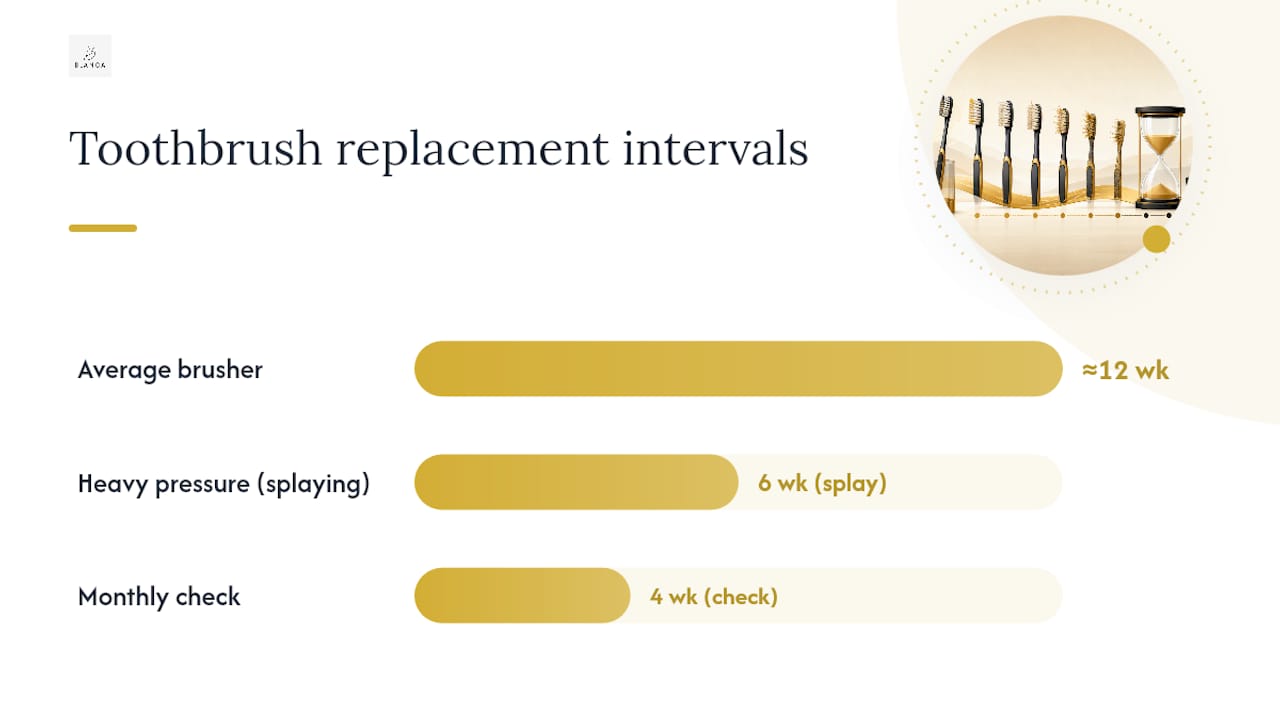
The American Dental Association recommends replacing your toothbrush every 3–4 months, or sooner if the bristles are frayed. That single rule covers most adults most of the time. A few situations push that timeline earlier: splayed or bent bristles, a recent serious illness like strep throat, a toothbrush a child has chewed, or one that has been accidentally contaminated.
Three low-effort ways to stay on schedule:
- Set a repeating calendar reminder every few months on your phone
- Write the purchase date on the handle with a permanent marker
- Sign up for a brush-head subscription that auto-delivers regularly on a cycle
Key Takeaways
Replacing your toothbrush every 3–4 months, or sooner when bristles show wear, is the single most reliable way to maintain effective plaque removal and protect gum health.
| Point | Details |
|---|---|
| ADA/CDC baseline | Replace every 3–4 months; frayed bristles mean replace immediately, regardless of age. |
| Visual signs trump the calendar | Splayed, bent, or flattened bristles signal replacement before the 3-month mark arrives. |
| Electric heads follow the same rule | Replace electric brush heads regularly every few months; indicator bristles are a reminder, not a guarantee. |
| Storage and drying matter | Store upright, air-dry before sealing in a case, and never share bristles between users. |
| Blancawhitening replacement heads | BLANCA replacement brush heads fit the BLANCA electric toothbrush and support a 3-month cadence. |
This article is general information, not a substitute for advice from a qualified doctor. Consult a qualified healthcare professional about your own circumstances before acting on anything here.
Table of Contents
- Why replacing your toothbrush on schedule protects your oral health
- When should you replace a toothbrush sooner than 3–4 months?
- Do manual and electric brush heads need replacing at different times?
- How often should kids and special-needs brushers replace their toothbrush?
- How to store and care for your toothbrush between replacements
- Simple reminder systems that keep you on a 3-month replacement schedule
- How to dispose of old toothbrushes and travel safely with electric ones
- Why brushing pressure changes how often you need to replace a brush
- A note from Blanca on building a replacement routine that actually sticks
- Fresh brushes, on schedule, from Blancawhitening
- Sources
Why replacing your toothbrush on schedule protects your oral health
Worn bristles do not clean teeth effectively. When bristles splay outward or lose their shape, they slide over plaque rather than disrupting it, raising the risk of gum inflammation and early-stage cavities. A PubMed Central review on toothbrush contamination confirms that microorganisms can survive on bristles under certain conditions, which is one reason proper storage and timely replacement both matter.
Beyond plaque removal, a brush that has accumulated debris and microbial load over months carries a hygiene cost that rinsing alone does not fully address. Storing your brush upright so it air-dries between uses slows that process, but it does not stop it. Replacement is the reset.
Key reasons worn brushes fall short:
- Splayed bristles reduce contact with the tooth surface and gum line
- Degraded bristle tips are less effective at removing plaque from between teeth
- Accumulated debris on bristles can reintroduce bacteria to the mouth
- Reduced cleaning efficiency means you may brush longer without better results
When should you replace a toothbrush sooner than 3–4 months?
The 3–4 month baseline assumes average brushing habits and no unusual circumstances. Several situations call for an earlier swap.
Visual signs that mean replace now:
- Bristles are permanently bent, splayed outward, or curved away from center
- The bristle tips look frayed or flattened rather than rounded
- Color-indicator bristles have faded completely (though fading alone is not the only signal)
After illness:
Dental clinic guidance distinguishes between mild colds and more serious infections. Augusta University’s Jagwire health resource notes that replacing a toothbrush after a significant oral infection or a confirmed contagious illness like strep throat is a reasonable precaution, while a routine cold may not always require an immediate swap. When in doubt, replacing is the lower-risk choice.
Accidental contamination:
- Dropped in the toilet: replace immediately
- Chewed by a pet: replace immediately
- Shared with another person: replace immediately
Pro Tip: If you press hard when you brush, your bristles will splay in 4–6 weeks rather than 3 months. Check bristle shape monthly, not just at the 3-month mark.
Do manual and electric brush heads need replacing at different times?
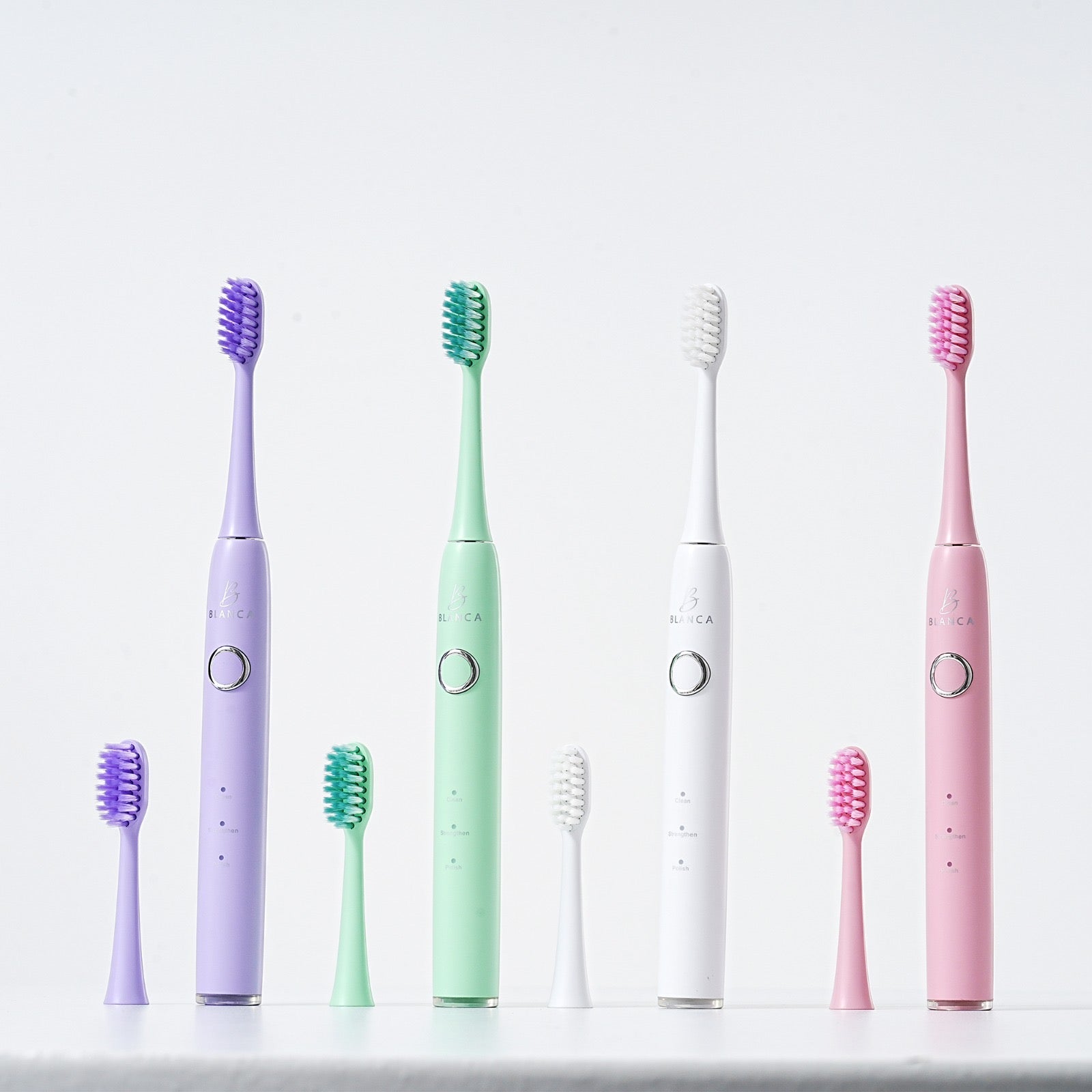
Both manual toothbrushes and electric toothbrush heads follow the same core rule: replace roughly every 3 months, or sooner when wear appears. The delivery mechanism differs; the replacement cadence does not.
Electric brush heads often feature color-indicator bristles that fade as a reminder. Cleveland Clinic notes that these indicators are helpful but not definitive. Mechanical wear that reduces plaque removal can appear before the indicator dye fades, so a quick visual check each month matters more than waiting for the color to disappear.
What to watch for on electric heads specifically:
- Bristle tufts that have spread beyond the head’s original footprint
- Reduced vibration feel against teeth (can signal motor-bristle interface wear)
- Any visible damage to the neck or attachment point
BLANCA replacement brush heads are designed to fit the BLANCA electric toothbrush and are available for reorder on a schedule that aligns with the 3-month guideline.
How often should kids and special-needs brushers replace their toothbrush?
Children generally need more frequent replacements than adults. Toddlers and young children often chew bristles, bite down on the brush head, or cannot rinse and spit effectively, all of which accelerate wear and raise hygiene concerns. Replace a child’s brush as soon as bristles show any deformation, regardless of how recently it was purchased.
Specific groups who benefit from closer monitoring:
- Children under 6: Supervise brushing until they can spit reliably; replace the brush whenever bristles show chewing damage or splaying
- Orthodontic patients: Braces create more surface area for plaque to accumulate, and the brush works harder around brackets and wires, wearing bristles faster
- People with reduced dexterity: Grip adaptations or assistive handles can change brushing pressure in ways that accelerate wear; caregivers should inspect bristles monthly
How to store and care for your toothbrush between replacements
Correct storage extends the useful life of bristles and limits microbial buildup between replacements. The steps are simple and take no extra time once they become habit.
- Rinse the brush thoroughly under running water after every use to remove toothpaste and debris
- Store it upright in a holder so air circulates around the bristles
- Keep it away from other brushes to prevent cross-contamination between household members
- Never seal a damp brush in a closed travel case; Cleveland Clinic’s guidance confirms that a wet brush in a closed container accelerates microbial growth
Pro Tip: If you travel frequently, let your brush air-dry for at least 30 minutes before sealing it in a travel case. A dry brush travels far more hygienically than a damp one.
Keeping brushes from touching each other in a shared holder is a small detail that matters. Bristle-to-bristle contact transfers bacteria between users, even when everyone in the household is healthy.
Simple reminder systems that keep you on a 3-month replacement schedule
The most common reason people use a toothbrush too long is not indifference. It is forgetting. Dentists cited in Time note that many patients replace brushes only at dental visits, roughly every 6 months, leaving a gap of several weeks or more where bristle performance has already declined.
Low-effort systems that close that gap:
- Set a repeating phone alarm or calendar event every 90 days labeled “replace toothbrush”
- Write the month you opened the brush on the handle with a permanent marker
- Use a brush-head subscription service that ships new heads every 3 months automatically
- Tie replacements to a seasonal cue: the start of each new season is roughly every 3 months
Subscription delivery removes the decision entirely. You receive new heads on schedule, and the old ones go in the trash without any mental tracking required.
How to dispose of old toothbrushes and travel safely with electric ones
Disposal: Standard plastic toothbrush handles are not accepted in most curbside recycling programs. They go in household trash. Some brands and specialty recycling programs accept old handles; check TerraCycle for a mail-in option if reducing plastic waste is a priority for you.
Traveling with an electric toothbrush:
TSA allows electric toothbrushes in both carry-on and checked bags. For devices with installed lithium batteries, TSA recommends carry-on rather than checked luggage. Spare or uninstalled lithium batteries must travel in carry-on only.
Practical packing steps:
- Use the travel-lock feature if your toothbrush has one, to prevent accidental activation
- If there is no travel lock, pack the brush in a hard-shell case to protect the head and prevent the motor from running against bag contents
- Allow the brush to air-dry before sealing it in any case
Why brushing pressure changes how often you need to replace a brush
Technique matters as much as time. Clinical dental professionals treat the 3-month rule as a baseline for average brushers, but people who press hard when they brush will often see bristle splaying in half that time. Aggressive scrubbing does not clean teeth more effectively; it wears bristles faster and can abrade enamel over time.
Practical adjustments that protect both bristles and enamel:
- Choose a soft-bristle brush; medium and hard bristles are rarely necessary for effective plaque removal
- Hold the brush with a pen grip rather than a fist grip to reduce unconscious pressure
- Consider a pressure-sensing electric toothbrush, which alerts you when you are pressing too hard
- Check bristle shape monthly; splaying before the 3-month mark is a direct signal to lighten your touch
Pro Tip: If your bristles splay within 6 weeks consistently, that is a sign of heavy pressure, not a sign you need a tougher brush. Soften your technique first.
A note from Blanca on building a replacement routine that actually sticks
The 3–4 month rule is straightforward, but the gap between knowing it and acting on it is where most people lose ground. Linking your brush replacement to a fixed calendar date, a seasonal change, or an automatic delivery removes that gap entirely. At Blancawhitening, we designed our oral care line around the idea that good habits should be easy to maintain, not just easy to start.
Fresh brushes, on schedule, from Blancawhitening
Staying on a 3-month replacement schedule is straightforward when the right tools are within reach. The BLANCA electric toothbrush is built for daily use with soft bristles and a pressure-sensing design that protects enamel while delivering consistent cleaning. When it is time to swap heads, BLANCA replacement brush heads are available for reorder so you never have to hunt for a compatible fit.
Every BLANCA oral care product is developed by dental professionals with long-term oral health in mind, not just a single purchase. Browse the full Blanca oral care collection and pick up replacement heads on a schedule that matches the ADA guideline. Your next replacement date is 3 months from today.
Sources
- Toothbrushes | American Dental Association
- How Often Should You Change Your Toothbrush? — Cleveland Clinic
- PMC article on toothbrush contamination
- How Often Should You Replace Your Toothbrush? — Time
- Electronic Toothbrush | Transportation Security Administration