

Whitening Maintenance Between Sessions: 2026 Guide
Keeping your smile bright between whitening sessions comes down to three things: timing your touch-ups correctly, building consistent daily habits, and managing the lifestyle factors that accelerate staining. Get all three right, and professional results that might otherwise fade in six months can last two years or more. Miss even one, and you’re back in the chair sooner than necessary, with more sensitivity to show for it.
Effective whitening maintenance between sessions is not about applying more product more often. It’s about protecting the brightness you’ve already achieved while giving your enamel the recovery time it needs. The sections below cover every element of a sound maintenance routine, from safe treatment intervals to diet, sensitivity management, and professional care.
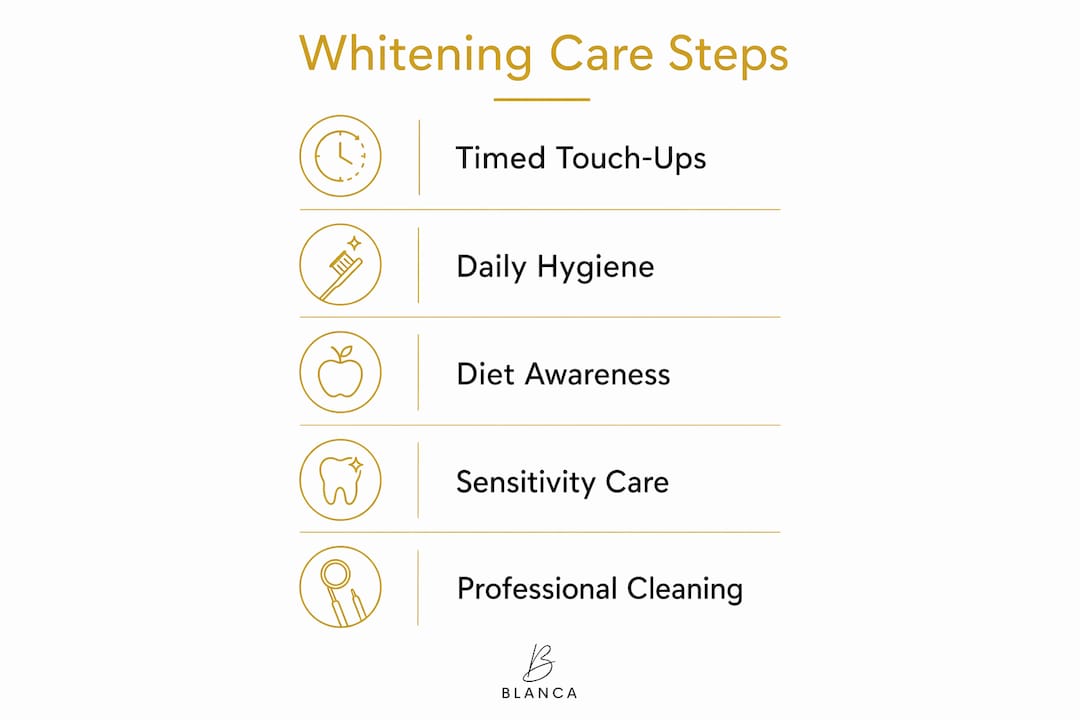
Core elements of a complete whitening maintenance routine:
- Timing: Space professional sessions semi-annually or annually; use take-home trays for touch-ups periodically according to your dentist’s advice
- Daily hygiene: Brush twice daily with fluoride toothpaste, floss daily, and rinse after staining foods
- Diet management: Limit coffee, tea, red wine, and dark sauces; use straws and rinse promptly
- Sensitivity management: Use desensitizing toothpaste with potassium nitrate; pause treatment if discomfort appears
- Professional care: Schedule cleanings every six months to remove tartar and reset enamel for whitening
- At-home products: Rely on dentist-prescribed custom trays over generic strips for safer, more even coverage
- Monitoring: Track shade changes with monthly photos to catch early fading before it requires a full re-treatment
Pro Tip: Catching a one-shade shift early and doing a single-night touch-up is far gentler on your enamel than waiting until you need a full treatment cycle. Early intervention keeps sensitivity low and results consistent.
Table of Contents
- How often should you whiten between sessions?
- Daily oral hygiene habits that extend your whitening results
- How your diet affects how long whitening results last
- Managing sensitivity and other risks during whitening maintenance
- Professional maintenance and touch-up protocols that actually work
- Clinically backed insights for smarter whitening upkeep
- Blancawhitening makes whitening upkeep simple and clinically sound
- Key Takeaways
How often should you whiten between sessions?
The single most common mistake people make with whitening upkeep is treating too frequently. Professional in-office whitening is safe when spaced to allow enamel to fully recover between high-concentration treatments. In-office systems use strong peroxide concentrations, which deliver dramatic results but also require the longest recovery window.
For at-home maintenance, dentist-prescribed take-home trays with appropriate peroxide concentrations are the right tool. Periodic touch-ups lasting just a few nights, scheduled by your dentist, are typically sufficient to keep results looking fresh. The exact interval depends on your diet, lifestyle, and how sensitive your teeth tend to be.
Over-the-counter whitening strips occupy a different tier. They should be limited to one or two full treatment cycles per year. Using strips monthly leads to uneven whitening, gum irritation, and compounded peroxide exposure when layered on top of professional treatments.
Safe frequency guidelines at a glance:
- Professional in-office bleaching: once every 6–12 months
- Custom take-home trays (touch-up): every 3–6 months, a few nights per session
- Over-the-counter strips: 1–2 full cycles per year, spaced at least 4–6 months apart
- Whitening toothpaste: safe for daily use as part of your regular routine
- Whitening pens: every 2–3 months for minor spot maintenance
Daily oral hygiene habits that extend your whitening results
Consistent daily care is the foundation of any long-term whitening maintenance plan. Brushing twice daily with fluoride toothpaste removes surface debris before it has a chance to settle into enamel, and professional cleanings every six months remove the tartar and surface stains that brushing alone cannot reach.
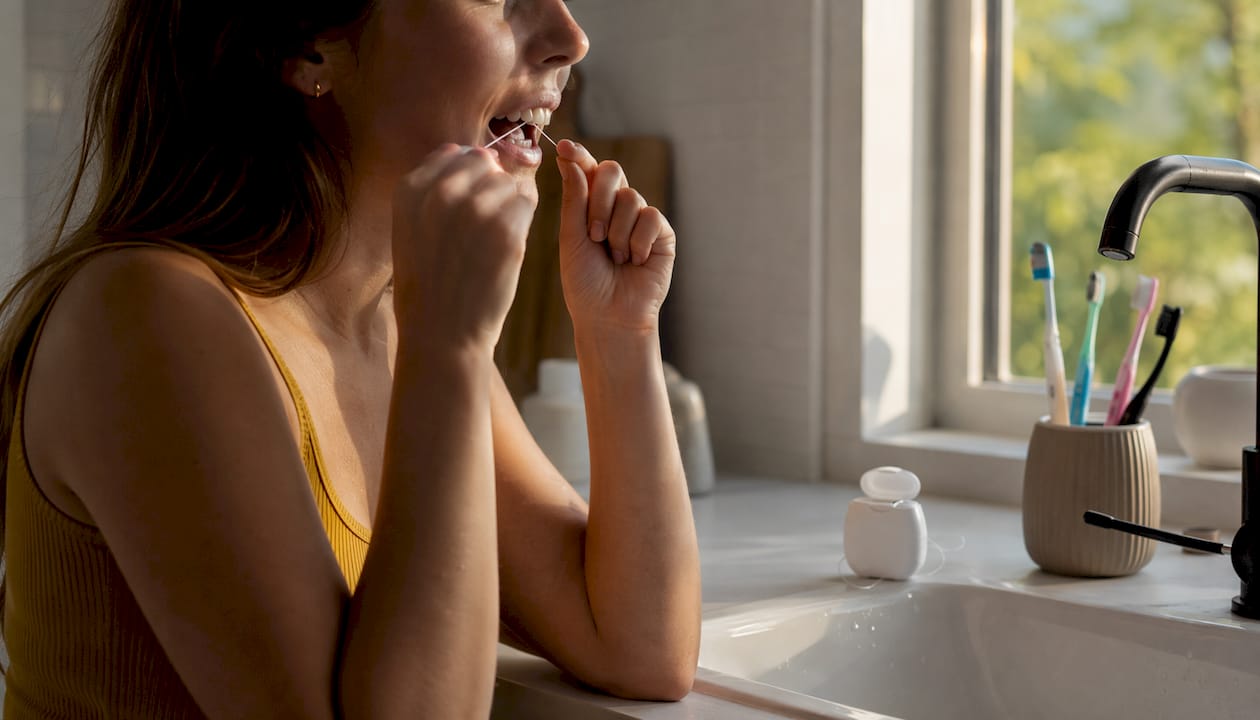
Flossing daily matters more than most people realize for whitening longevity. Plaque that accumulates between teeth creates a surface that absorbs pigment faster than clean enamel, so interdental cleaning directly affects how evenly your results hold. A water flosser can make this step easier and more thorough, especially around the gumline where staining tends to concentrate.
Rinsing with water immediately after consuming staining foods or beverages is one of the simplest habits with a measurable payoff. You don’t need a special rinse, just water within a few minutes of consumption. A gentle whitening toothpaste used a few times per week can also slow surface stain accumulation without the abrasivity that damages enamel over time.
Daily oral care best practices:
- Brush twice daily with a fluoride toothpaste using a soft-bristled brush
- Floss once daily, or use a water flosser for thorough interdental cleaning
- Rinse with water immediately after coffee, tea, wine, or dark sauces
- Use a low-abrasivity whitening toothpaste two to three times per week
- Schedule professional cleanings every six months to remove tartar and polish surface stains
- Avoid brushing immediately after acidic foods or drinks; wait at least 30 minutes
How your diet affects how long whitening results last
Diet is the variable with the most direct impact on how quickly your whitening results fade. Coffee, tea, red wine, and deeply pigmented sauces like soy sauce and tomato-based condiments all deposit chromogens, the color compounds that bind to enamel and cause gradual discoloration. Heavy coffee or tea consumers may see noticeable fading within a few months, while people who limit these beverages can often stretch results to two years or beyond.

The first 48 hours after a whitening session are the highest-risk window. Enamel is temporarily more porous during this period, making it significantly more susceptible to absorbing stains. Sticking to lighter-colored foods and beverages during this window protects the investment you just made.
For everyday habits, two practical strategies make a real difference: using a straw for dark beverages to minimize contact with the front teeth, and rinsing with water promptly after consumption. Neither requires giving up your morning coffee. They just reduce how much pigment actually reaches your enamel.
Pro Tip: If you drink coffee or tea daily, keep a glass of water nearby and rinse immediately after finishing. This one habit, done consistently, can meaningfully extend the time between touch-ups for heavy stain consumers.
Foods and habits that accelerate staining:
- Coffee and tea (especially without a straw)
- Red wine
- Dark-colored sauces: soy sauce, balsamic vinegar, tomato sauce
- Berries and deeply pigmented fruits
- Tobacco and smoking products, which cause some of the fastest and most stubborn staining
- Carbonated dark sodas
Managing sensitivity and other risks during whitening maintenance
Tooth sensitivity is the most common side effect of whitening, and it becomes more likely when treatments are too frequent or concentrations are too high. Between 15% and 78% of whitening patients experience some degree of sensitivity, with the range reflecting how much individual enamel health, peroxide concentration, and treatment frequency all interact. Mild, temporary sensitivity after a session is normal. Persistent or worsening discomfort is a signal to pause and reassess.
Desensitizing toothpaste containing potassium nitrate and fluoride is the most practical first-line response. Potassium nitrate works by calming the nerve signals inside the tooth, while fluoride supports enamel remineralization. Using it for a week before and after whitening sessions reduces the severity of sensitivity for most people. If sensitivity appears mid-treatment, reducing wear time or pausing for a few days typically resolves it without abandoning the treatment entirely.
A pattern worth knowing: dentists use the term “bleachorexia” to describe the habit of whitening far more often than enamel can tolerate. Over-whitening does not produce whiter teeth. It produces thinning enamel, a chalky or translucent appearance, and chronic sensitivity that makes future treatments harder to tolerate. The goal of whitening maintenance is stain management, not continuous bleaching.
Preventive measures and when to seek professional advice:
- Use desensitizing toothpaste with potassium nitrate for one week before and after sessions
- Reduce wear time or pause treatment at the first sign of significant discomfort
- Avoid very hot or cold foods and beverages for 24–48 hours after whitening
- Learn about whitening side effects before starting a new treatment cycle
- Consult your dentist if sensitivity persists beyond 72 hours or if you notice white spots on enamel
- Never exceed recommended treatment frequency, even if results have faded faster than expected
Professional maintenance and touch-up protocols that actually work
A professional cleaning before each whitening session is one of the most underused strategies in whitening maintenance. Removing plaque and tartar first allows whitening gel to penetrate enamel evenly, producing better results and reducing the need for more frequent treatments. Tartar is highly porous and absorbs stains faster than natural enamel, so leaving it in place before a whitening session means the gel is working around an obstacle.
Custom take-home trays prescribed by a dentist are consistently more effective for ongoing maintenance than over-the-counter alternatives. Because they’re molded to your exact dental anatomy, the gel distributes evenly across all tooth surfaces and stays off gum tissue, reducing irritation. Generic strips, by contrast, don’t conform to the curves between teeth, which leads to uneven coverage and higher gum contact.
The most effective long-term approach combines an annual or semi-annual in-office session with dentist-prescribed take-home trays for touch-ups in between. Your dentist can also adjust gel concentration and wear time based on how your enamel responds over time, which is something no over-the-counter product can offer.
Professional maintenance best practices:
- Schedule a professional cleaning before each in-office whitening session
- Use dentist-prescribed custom trays for touch-ups every 3–6 months
- Ask your dentist to evaluate enamel health at each cleaning appointment
- Follow a recommended whitening schedule tailored to your lifestyle and enamel condition
- Limit over-the-counter strips to supplemental use only, not as a primary maintenance method
- Keep take-home gel stored in the refrigerator to preserve peroxide stability
Clinically backed insights for smarter whitening upkeep
The most effective long-term whitening maintenance strategy is proactive, not reactive. Waiting until teeth have fully relapsed to their original shade means starting the entire bleaching process over, which requires stronger treatments and carries higher sensitivity risk. A micro-maintenance approach, catching early shade shifts and addressing them with minimal product, keeps results consistent with far less enamel exposure.
Monthly photo monitoring is a practical way to track shade changes before they become significant. When you compare a current photo against your baseline, a one-shade shift is visible long before it becomes noticeable in the mirror. At that point, a single-night touch-up with a custom tray is all it takes to restore brightness, rather than a full multi-week cycle.
One clinical detail that surprises many people: dental restorations, including porcelain veneers, crowns, and composite bonding, do not respond to whitening agents. Whitening must be completed before any restorative dental work, with a two-week stabilization period afterward to allow shade to settle before the restoration is color-matched. Whitening after a restoration is already placed creates a mismatch between your natural teeth and the fixed material.
Biannual professional cleanings function as a reset for whitening longevity. They remove the calculus buildup that blocks gel penetration and polish away surface stains that dull enamel between sessions, restoring brightness without any additional bleaching agent.
Pro Tip: Take a standardized photo of your smile in the same lighting each month. When you notice a one-to-two-shade shift compared to your baseline, a single-night touch-up with your custom tray is all you need. This approach keeps sensitivity minimal and avoids the need for full re-treatment cycles.
Blancawhitening makes whitening upkeep simple and clinically sound
Maintaining your whitening results between sessions requires the right products at every stage, from daily hygiene to targeted touch-ups. Blancawhitening was built by dental professionals specifically for this kind of ongoing care, combining clinically backed formulas with products designed to work together as a complete system.
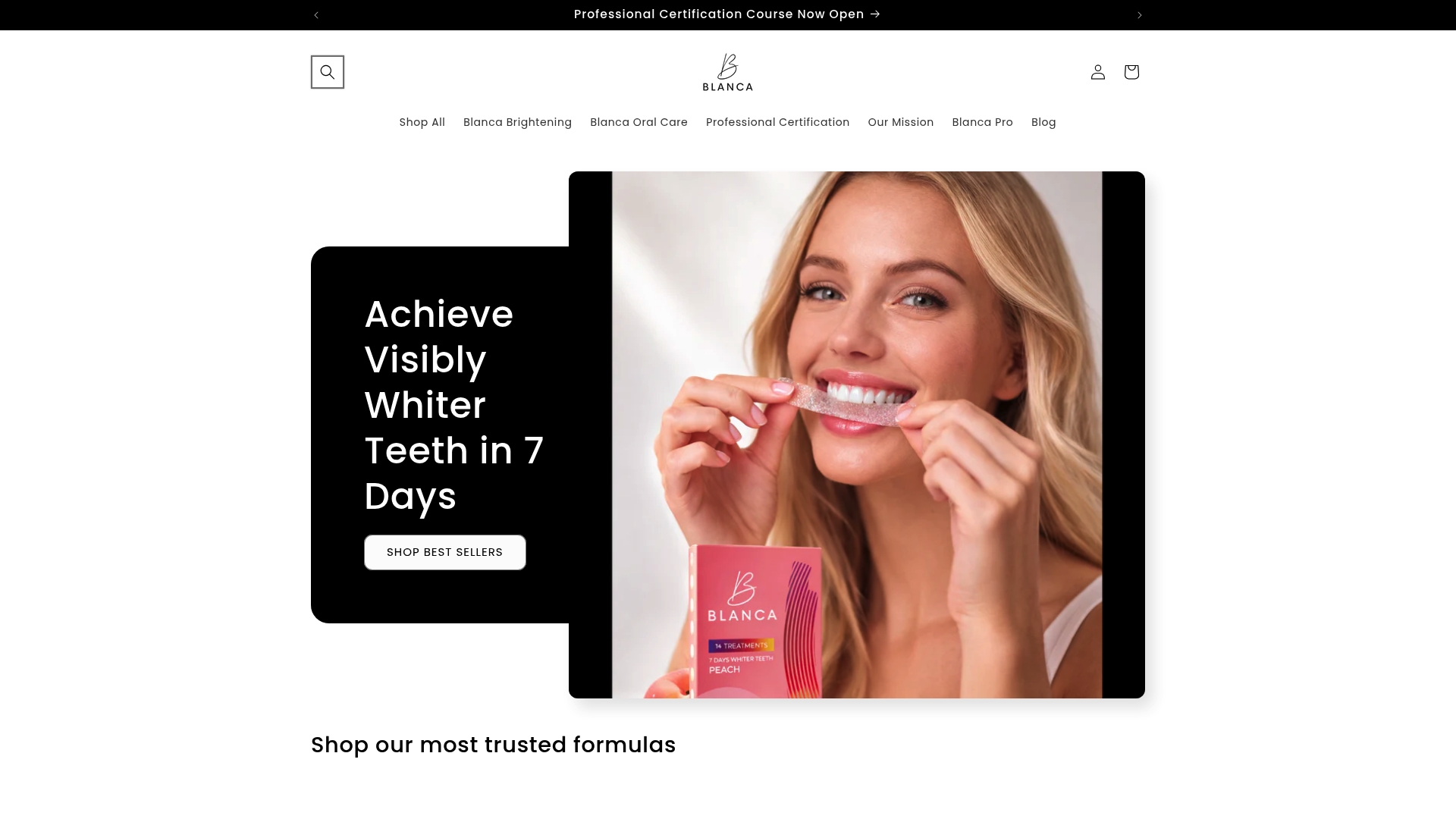
The at-home whitening strips from Blancawhitening are formulated for safe, effective touch-ups between professional sessions, available in Arctic Mint, Blush Berry, and Golden Peach flavors to make the routine something you’ll actually stick to. Pair them with the Blanca Electric Toothbrush and Blanca Water Flosser for the kind of daily hygiene routine that genuinely extends results. Every product is designed with enamel safety in mind, so you’re protecting your smile while maintaining it. Browse the full oral care collection to build a maintenance routine that fits your lifestyle.
Key Takeaways
Effective whitening maintenance between sessions requires timed touch-ups, consistent daily hygiene, dietary awareness, and professional oversight to protect enamel and extend results safely.
| Point | Details |
|---|---|
| Safe treatment intervals | Professional sessions every 6–12 months; take-home tray touch-ups every 3–6 months. |
| Daily hygiene is foundational | Brush twice daily with fluoride toothpaste and floss daily to prevent stain buildup between sessions. |
| Diet drives fading speed | Coffee, tea, red wine, and tobacco accelerate discoloration; rinsing promptly and using straws reduces impact. |
| Sensitivity requires a proactive response | Desensitizing toothpaste with potassium nitrate and reduced treatment frequency manage sensitivity before it worsens. |
| Blancawhitening supports every stage | Clinically formulated strips, electric toothbrushes, and water flossers from Blancawhitening work together to maintain results safely. |