

Protect Your Gums: Why Dentists Choose Soft Over Medium Bristles
Soft bristles are the right choice for the vast majority of adults, and the clinical evidence backs that up clearly. Medium bristles can be acceptable only for people with excellent brushing technique, no gum recession, and no sensitivity, and even then, checking with a dentist first is smart. This guide walks through the research, the risks, and exactly how to brush once you’ve picked your brush.
TL;DR:
- Medium bristles may remove slightly more plaque initially but pose a higher risk of gum recession and tissue trauma over time, especially with increased brushing force.
- Soft bristles distribute pressure better, adapt to gum contours, and significantly reduce abrasion risk, making them safer for most users with sensitive or receding gums.
- Brushing force surpasses bristle stiffness in impact; forces over three to four newtons greatly increase abrasion risk regardless of bristle type.
- People with sensitivity, recession, or gum disease should always choose soft bristles, while medium options require professional approval and are not generally recommended.
- Proper technique and gentle pressure are more critical for oral health than bristle stiffness, emphasizing the importance of mindful brushing habits.
Table of Contents
- Soft vs Medium Bristles: What the Clinical Research Shows
- How Bristle Stiffness Actually Wears Down Gums and Enamel
- Choosing Between Soft and Medium: A Practical Decision Guide
- Brushing Technique Matters More Than Bristle Choice
- Why Blanca Builds Around Soft Bristles
- Our Take: Protect the Gums First, Every Time
- Find Your Fit: Blanca’s Soft-Bristle Toothbrushes
- Sources
Soft vs Medium Bristles: What the Clinical Research Shows
The data on soft vs medium bristles isn’t a simple “one wins” story, and that’s exactly why so many people pick the wrong brush based on how it feels rather than what it actually does to their gums.
A randomized trial comparing the two found that both medium and soft toothbrushes significantly reduced plaque, gingival inflammation, and bleeding on probing, with all differences statistically significant (P < 0.0001). Interestingly, the medium bristle group showed larger median reductions in plaque index, gingival index, and bleeding scores than the soft group in that particular study. On paper, medium looks like the stronger cleaner.
But plaque removal is only half the equation. Multiple clinical reviews link harder bristles to greater gingival recession and soft-tissue trauma, while soft bristles deliver comparable plaque control with meaningfully lower abrasion risk. That’s the trade-off in a nutshell: medium may edge out soft on short-term index scores, but it does so while putting more mechanical stress on gum tissue and root surfaces.
Where the studies agree:
- Both bristle types work when used with proper technique and consistent daily brushing.
- Firmer bristles correlate with higher rates of tissue trauma and recession over time.
- Professional guidance consistently favors soft bristles as the safer default.
- Bristle labeling isn’t standardized. What one brand calls “soft” may measure closer to another brand’s “medium.”
Where the studies diverge:
- Some trials show medium outperforming soft on plaque and gingivitis indices in the short term.
- In vitro wear testing found the difference between soft and medium abrasion was small or not statistically significant at typical brushing forces, only becoming pronounced under heavier pressure.
That second point matters more than it sounds. A study measuring abrasive dentine wear found that medium bristles caused significantly more wear than soft bristles at 4 newtons of force, but at 1 to 3 newtons (closer to how most people actually brush) the difference shrank to statistically insignificant. In other words, the risk from medium bristles isn’t constant. It scales with how hard you press.
There’s also a durability problem with these trials worth naming directly: most run for a matter of weeks, not years. Short study windows can capture a plaque-index bump from medium bristles without capturing the slow-motion recession that firmer bristles can contribute to over a decade of daily use. Toothbrush design also varies enormously between studies, which is part of why results aren’t perfectly consistent across the research.
Given that mix, the ADA recommends soft-bristled toothbrushes for the general population specifically because they clean effectively while minimizing the risk of wearing down enamel and gum tissue. When a modest plaque-score advantage has to be weighed against irreversible tissue damage, soft wins that trade every time for most people.
How Bristle Stiffness Actually Wears Down Gums and Enamel
Bristle stiffness comes down to diameter, and diameter is what determines how much a bristle bends versus how much force it transfers directly into your gums and tooth surface. Under ISO 12582 classification, soft bristles typically measure around 0.15 to 0.2 millimeters in diameter, medium bristles run roughly 0.2 to 0.25 millimeters, and hard bristles exceed that. A thinner bristle flexes more on contact, spreading force across a wider area and adapting to the curve of your gumline. A thicker bristle resists bending, which concentrates pressure into a smaller contact point.
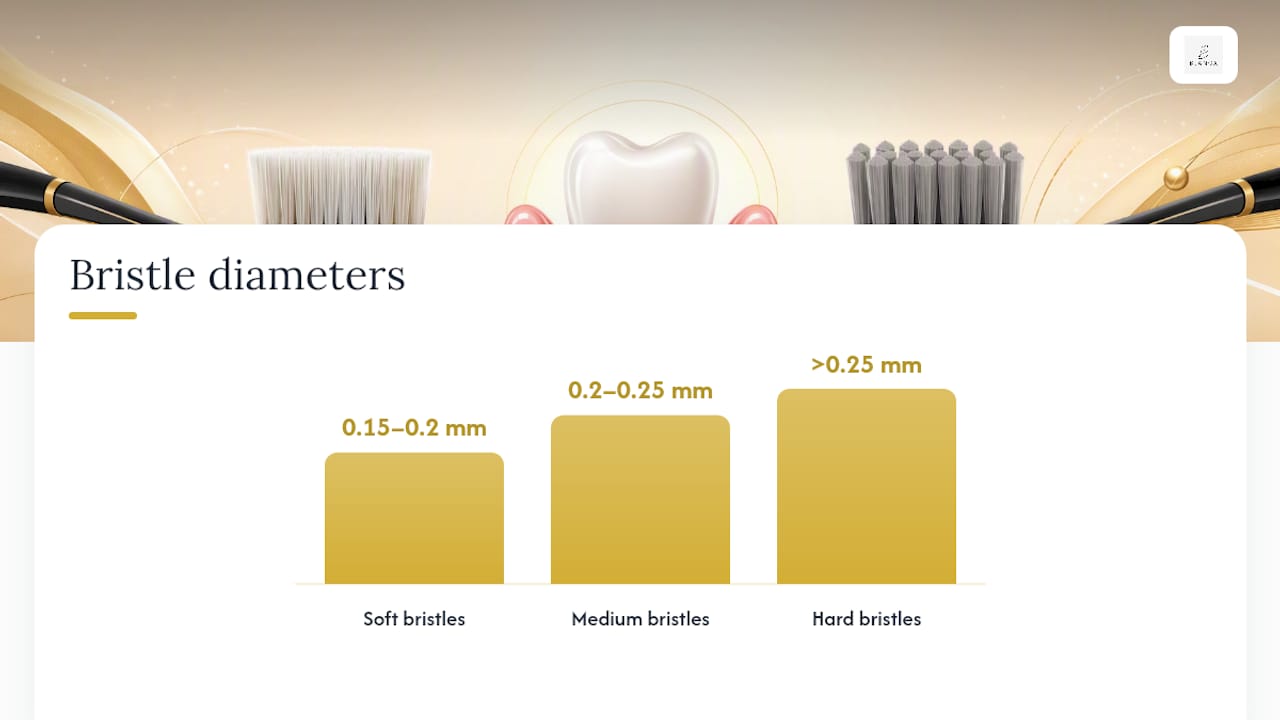
That deflection difference is the entire mechanism behind abrasion risk. When a stiff bristle meets resistance (your gumline, an exposed root surface, a tooth with thinning enamel) it doesn’t give the way a soft bristle does. The force has to go somewhere, and it goes into the tissue.
What this means in practice:
- Soft bristles adapt to tooth and gum contours, distributing pressure instead of concentrating it.
- Medium bristles hold their shape under pressure, which is why they can feel “more effective” even when the actual cleaning difference is small.
- Wear testing shows the gap between soft and medium abrasion widens sharply as brushing force increases, particularly past 3 to 4 newtons.
- People with thin enamel, exposed dentin, or receding gums have far less biological margin for that extra force.
Pro Tip: If your current toothbrush still looks straight and stiff after a month of daily use, that’s often a sign you’re not pressing hard enough to flare the bristles, which is actually a good thing. Bristles that splay outward within a few weeks usually mean you’re brushing too hard, regardless of whether the brush is labeled soft or medium.
If you already have exposed root surfaces, diagnosed recession, or sensitivity to cold and pressure, softer bristles aren’t just a preference. They’re the option with a real safety margin built in.
Choosing Between Soft and Medium: A Practical Decision Guide
Bristle hardness isn’t a personality trait, it’s a decision you can make based on a short list of facts about your own mouth. Here’s how to work through it.
- Choose soft bristles if you have any tooth sensitivity. Sensitivity to cold, sweets, or pressure often signals thinning enamel or exposed dentin, both of which need gentler mechanical contact.
- Choose soft bristles if you have gum recession, even mild. Exposed root surfaces are softer than enamel and wear faster under firm bristles.
- Choose soft bristles if you’re recovering from periodontal surgery or scaling and root planing. Healing tissue needs minimal mechanical stress during recovery.
- Choose soft bristles if you brush children’s teeth or your own with a heavy hand. Aggressive brushers get far more benefit from a forgiving bristle than from a firmer one.
- Consider medium bristles only if you have no sensitivity, no recession, demonstrably light and controlled brushing technique, and your dentist has specifically signed off on it. Even then, medium is a preference, not a clinical requirement.
- Watch for warning signs that mean it’s time to switch or book an appointment: bleeding gums that persist beyond a week of gentler brushing, visibly receding gumlines, new sensitivity to hot or cold, or notches forming near the gumline on your teeth.
If you’re unsure which category you fall into, soft bristles carry essentially no downside for a healthy mouth, while medium carries real downside for a compromised one. That asymmetry is why soft is the default and medium is the exception.
Brushing Technique Matters More Than Bristle Choice
Here’s something that gets buried under all the bristle debate: your technique and pressure probably matter more than whether your brush is labeled soft or medium. Clinical commentary on abrasive wear points out that pressure-induced tissue damage is cumulative, and that technique outweighs bristle hardness when it comes to actual plaque control. A soft brush used with a death grip can still do damage. A medium brush used with a feather touch may do less harm than you’d expect.
Measured brushing forces in real people average around 2 to 3 newtons, which is well within the range where soft and medium bristles perform similarly on abrasion. The safety gap only opens wide once force climbs higher, which happens more often than most people realize, especially with dry brushing or a rushed morning routine.
How to brush without overdoing it:
- Hold the brush the way you’d hold a pen, not a fist. A death grip is the most common driver of excess pressure.
- Use small circular or gentle Bass-style strokes along the gumline rather than aggressive back-and-forth scrubbing.
- Brush for two full minutes, covering each quadrant systematically so you’re not compensating for rushed sections with harder pressure.
- Consider an electric toothbrush, since many models include pressure sensors that cut power or pulse a warning when you press too hard.
- Replace your brush or brush head every three months, or sooner if bristles start to splay, since worn bristles lose the flexibility that makes soft bristles protective in the first place.
Pro Tip: Try brushing one time with your eyes closed and your non-dominant hand. It forces you to slow down and pay attention to pressure instead of running your usual habit on autopilot, and most people are surprised at how much lighter “enough” pressure actually feels.
If bleeding, sensitivity, or visible gum changes don’t improve within a couple of weeks of adjusting pressure and switching to soft bristles, that’s a signal to see a dentist rather than keep experimenting on your own.
Why Blanca Builds Around Soft Bristles
We design our brushes around soft bristles as the standard, not the downgrade, because the evidence consistently favors protecting gum tissue over chasing marginal plaque-score gains. A brush that cleans well but wears down your gumline over five years isn’t actually the better choice, even if it scored better in a six-week trial.
Blanca’s manual and electric toothbrushes use soft, rounded-tip filaments designed to flex against the gumline instead of gouging into it, paired with a head shape sized to reach back molars without forcing you to angle in with extra force. That combination lets the brush do the adapting, instead of asking your gums to.
Soft bristles aren’t a compromise for people who “can’t handle” a firmer brush. They’re the version of clean that doesn’t cost you tissue you can’t grow back.
Our Take: Protect the Gums First, Every Time
If you take one thing from this guide, make it this: soft bristles should be your default, and medium bristles are a narrow exception reserved for people with clean dental checkups and light hands, ideally confirmed by their own dentist. The plaque-score edge medium sometimes shows in short trials just isn’t worth trading against a gumline that doesn’t regenerate once it recedes.
Pair whichever brush you choose with gentle technique and regular checkups, since a good bristle choice paired with heavy-handed brushing still leads to the same problems you were trying to avoid.
— Blanca
Find Your Fit: Blanca’s Soft-Bristle Toothbrushes
Unlike razor-thin marketing claims about “deep clean” firm bristles, Blanca’s toothbrush lineup is built entirely around the soft-bristle standard the research actually supports. That’s the practical payoff for you: instead of guessing which “soft” label to trust across competing brands, you get a brush engineered from the start to match ADA guidance rather than reverse-engineered to feel aggressive on the shelf.
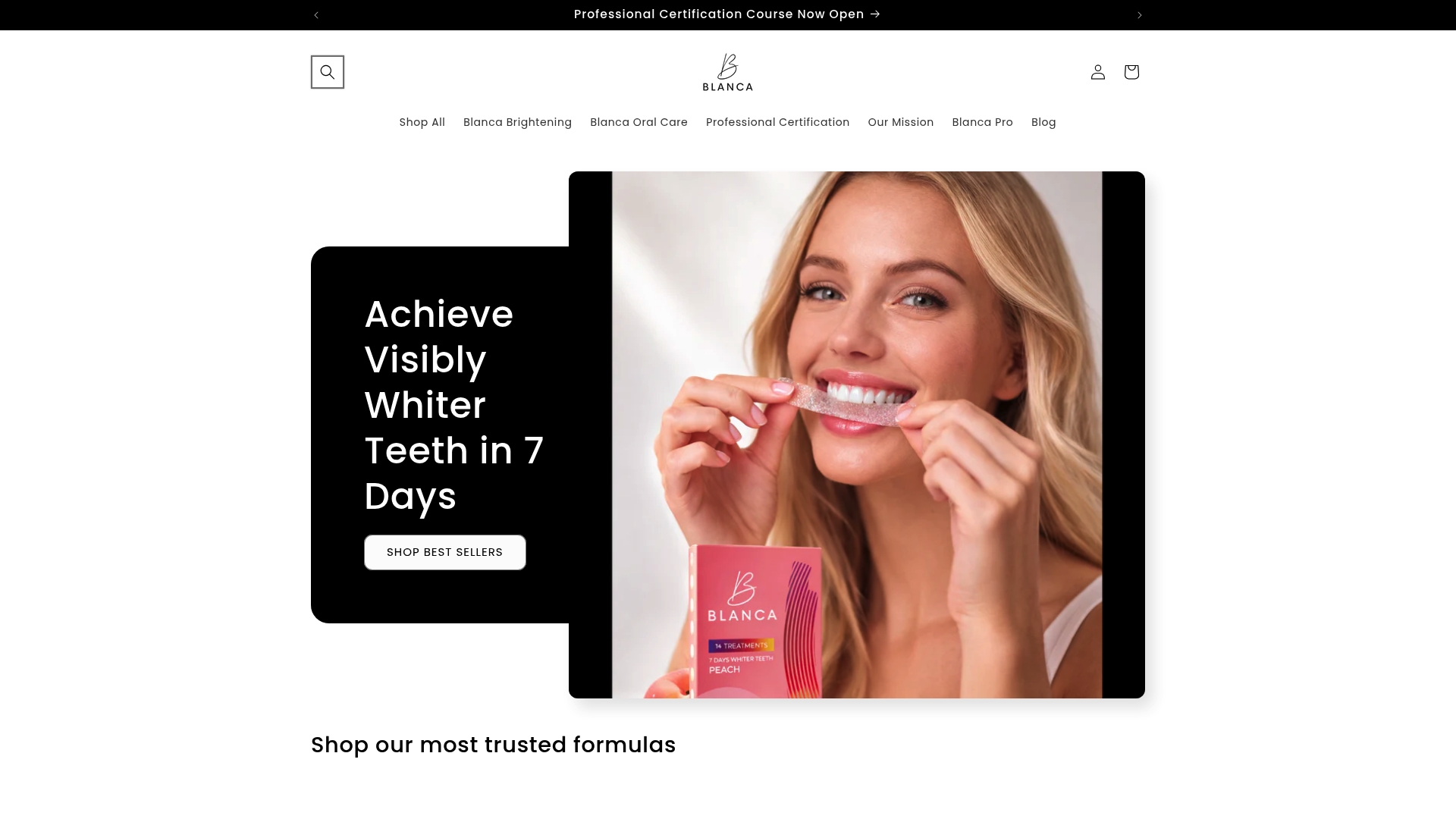
The BLANCA MANUAL TOOTHBRUSH uses soft, rounded-tip filaments and a compact head shape suited to daily use for anyone with normal sensitivity or mild gum concerns. If you deal with sensitivity, recession, or you’re recovering from dental work, the BLANCA ELECTRIC TOOTHBRUSH adds built-in pressure control on top of the same soft-bristle philosophy, which takes the guesswork out of “am I pressing too hard” entirely. Browse the full oral care collection to pair either brush with compatible replacement heads, and pick the option that matches where your gums are right now, not where you wish they were.
Sources
- Comparative Efficacy of Medium and Soft Toothbrushes in Plaque Removal and Gingivitis Control
- Effect of toothbrush bristle stiffness and toothbrushing force on the abrasive dentine wear
- ADA resources: toothbrushes