

Preventing Gum Irritation While Whitening Your Teeth
Gum irritation during teeth whitening is defined as chemical inflammation of the gingival tissue caused by direct contact with peroxide-based whitening agents. Preventing gum irritation during whitening is not about avoiding whitening altogether. It is about controlling exactly where the gel goes, what formula you use, and how you prepare your mouth before treatment. The good news: with the right technique and product choices, you can whiten teeth without gum irritation and get real results without the redness, soreness, or blanching that many people experience.
Why does whitening cause gum irritation?
Gum irritation during whitening is caused primarily by whitening gel contacting soft gingival tissue, not by the whitening agent itself acting on teeth. Incorrect application technique is the root cause in the vast majority of cases. This distinction matters because it means the problem is preventable, not inevitable.
Gum irritation occurs in 5–15% of professional in-office whitening cases where gel contacts the gums, but drops below 5% when custom-fitted trays are used at home. That gap reflects how much application method matters. Overloading a tray with gel, using a poorly fitted strip, or skipping a gum barrier all push the peroxide directly onto tissue that was never meant to absorb it.
Transient soreness affects 55–75% of people after whitening. Most gum irritation resolves within 24–48 hours without any treatment. That timeline is reassuring, but repeated exposure without correcting the technique leads to cumulative inflammation that takes longer to heal.
| Whitening method | Gum irritation rate | Typical resolution time |
|---|---|---|
| Professional in-office treatment | 5–15% | 24–48 hours |
| Custom-fitted home trays | Under 5% | 24–48 hours |
| Poorly fitted or overloaded trays | Higher risk | Longer with repeated use |
Pro Tip: If you notice white or pale patches on your gums immediately after whitening, that is gel blanching. Rinse with water right away. The discoloration is temporary and fades within an hour, but it signals you are using too much gel or your tray does not fit properly.
What product formulas and techniques reduce gum sensitivity?
The formula inside your whitening gel matters as much as how you apply it. Neutral or buffered pH whitening gels cause substantially less gum irritation than acidic formulations, even at the same peroxide concentration. Gels with a pH above 6.5 cause significantly less mucosal irritation than acidic alternatives. Acidic gels strip the protective mucin layer from gum tissue, making it more vulnerable to chemical burns from the peroxide.

Desensitizing agents like potassium nitrate and fluoride work by calming the nerve pathways inside the tooth and reducing fluid movement through dentinal tubules. These are the microscopic channels that run from the tooth surface to the nerve. Products that include these ingredients alongside the whitening agent give you a gentler experience without sacrificing results.
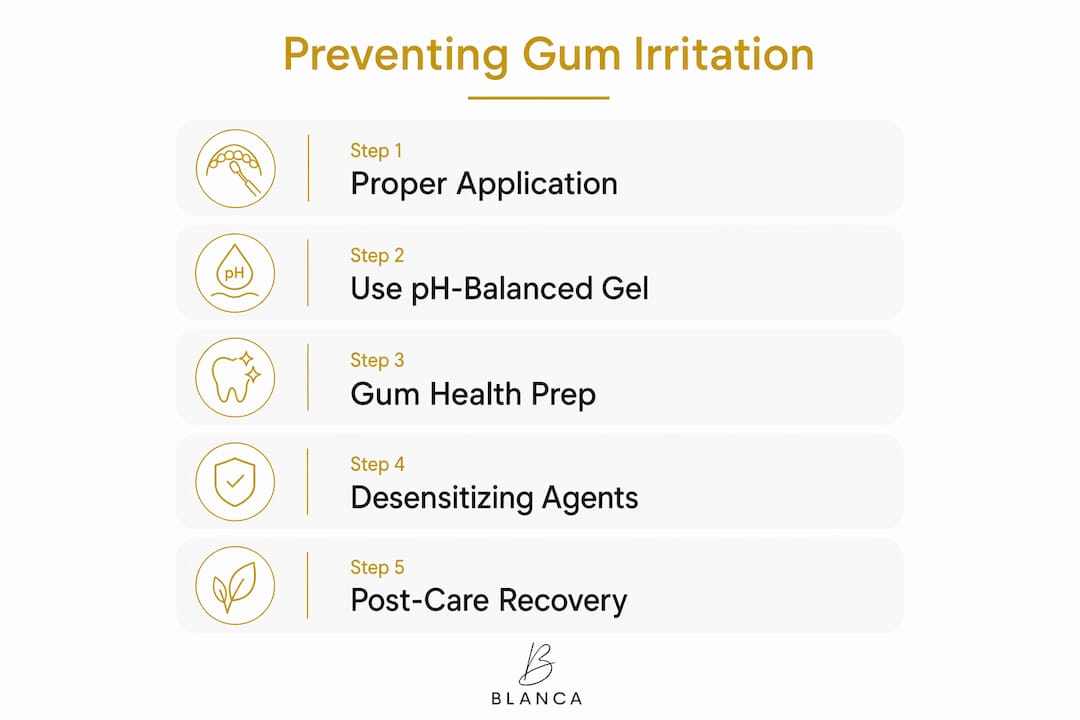
Custom-fitted trays prevent gel overflow onto the gums far more effectively than standard strips or generic trays. A well-made custom tray has reservoirs that hold the gel against the tooth surface and create a physical barrier at the gum line. Generic trays flex and shift, pushing gel into the sulcus, which is the narrow groove where the tooth meets the gum.
Application volume is the most commonly misunderstood variable. Follow these guidelines every time you whiten:
- Use a pea-sized amount per tooth space. Overfilling trays is the single most common cause of gel blanching and gum irritation.
- Seat the tray slowly. Press from the front teeth backward to push excess gel toward the back of the tray, not toward the gum line.
- Wipe away overflow immediately. Use a clean fingertip or cotton swab to remove any gel that squeezes out before it contacts the gums.
- Follow the recommended wear time exactly. Longer is not better. Extended contact time increases irritation risk without improving whitening results.
- Choose pH-balanced formulas. Look for products that list potassium nitrate or fluoride as active ingredients alongside the peroxide.
Pro Tip: For a professional cosmetic whitening consultation, ask your provider specifically about the gel’s pH level. Most people never ask, and most providers will not volunteer the information unless prompted.
How should you prepare your gums before whitening?
Gum health before whitening is the most overlooked factor in preventing irritation. Pre-existing gum disease or oral damage significantly increases the risk of irritation during whitening. Inflamed or infected gum tissue absorbs peroxide faster and reacts more severely. Treating any active gum disease before starting a whitening regimen is a clinical standard, not an optional step.
A structured pre-whitening routine takes about two weeks and makes a measurable difference in comfort. Follow these steps in order:
- Schedule a dental exam. Confirm that your gums are healthy and free of gingivitis or periodontitis before applying any whitening agent.
- Switch to a soft-bristled toothbrush. Firm bristles abrade the gum line and create micro-tears that make tissue more reactive to peroxide. The Blanca Electric Toothbrush uses gentle oscillation that cleans effectively without traumatizing the gum margin.
- Use a desensitizing toothpaste for two weeks. Toothpastes containing potassium nitrate or stannous fluoride build up a protective layer inside the dentinal tubules, reducing sensitivity during treatment.
- Avoid acidic foods and beverages for 48 hours before whitening. Citrus, vinegar-based dressings, and carbonated drinks temporarily soften enamel and irritate gum tissue, making both more reactive.
- Floss daily. Plaque buildup at the gum line creates a reservoir for whitening gel to pool against soft tissue. Clean gum margins reduce that risk significantly.
Gum health matters as a foundation for any cosmetic whitening treatment. Skipping the preparation phase and going straight to whitening is the fastest way to turn a routine cosmetic treatment into a painful experience.
How do you recover from gum irritation after whitening?
Post-whitening care determines how quickly your gums recover and whether irritation becomes a recurring problem. The first step after removing your tray is to rinse thoroughly with cool water. This dilutes and removes residual peroxide from the gum surface before it can cause further chemical irritation.
Anti-inflammatory mouth rinses and desensitizing gels soothe irritated gums and accelerate recovery. Ingredients like aloe vera, chamomile extract, and fluoride varnishes reduce inflammation and discomfort in the hours following treatment. These are not luxury additions. They are practical tools that shorten recovery time and protect tissue between sessions.
Recovery after whitening also depends on what you eat and drink. Protect healing gum tissue with these post-treatment habits:
- Avoid hot beverages for at least two hours. Heat dilates blood vessels in inflamed tissue, increasing discomfort and slowing recovery.
- Skip acidic foods for 24 hours. Citrus, tomatoes, and vinegar-based foods irritate already-sensitized gum tissue.
- Apply a fluoride rinse before bed. Fluoride supports enamel remineralization and reduces the nerve sensitivity that often accompanies gum irritation.
- Use a cold compress on the outside of your cheek if swelling or significant soreness develops. Cold reduces inflammation and provides relief within minutes.
- Allow adequate time between sessions. Scheduled breaks between whitening treatments allow gum tissue and enamel to recover fully. Continuous whitening without rest periods leads to cumulative sensitivity that compounds with each session.
Pro Tip: Supporting your gum health between whitening sessions with oral health chewables that contain remineralizing and anti-inflammatory ingredients can reduce baseline sensitivity before your next treatment.
A recommended whitening schedule builds in recovery time as a non-negotiable part of the process, not an afterthought. People with sensitive gums should treat recovery phases as mandatory, not optional.
Key Takeaways
Preventing gum irritation during whitening requires precise application technique, pH-balanced gel formulas, healthy gums before treatment, and structured recovery periods between sessions.
| Point | Details |
|---|---|
| Application technique is the primary cause | Gel contacting gum tissue, not the whitening agent itself, causes most irritation. |
| Custom trays reduce irritation risk | Custom-fitted trays keep gel on teeth and cut gum irritation rates to under 5%. |
| pH-balanced formulas protect soft tissue | Gels with a pH above 6.5 cause significantly less gum irritation than acidic alternatives. |
| Prepare gums before whitening | Treat active gum disease and use desensitizing toothpaste for two weeks before starting. |
| Recovery periods prevent cumulative damage | Scheduled breaks between sessions allow gum tissue to heal and prevent sensitivity buildup. |
What I’ve learned about whitening and gum health after years of seeing it done wrong
Most people who experience gum irritation during whitening blame the product. The product is rarely the problem. The problem is almost always the process. People overfill their trays, skip the preparation phase, and treat whitening like a sprint when it is a marathon. The results are predictable: red, sore gums that make the whole experience feel unsafe, even when the product itself is perfectly formulated.
The insight that changed how I think about this is simple: gradual whitening with recovery time consistently outperforms aggressive, rapid whitening in both comfort and long-term results. People who whiten every night for two weeks often end up with more sensitivity and less satisfaction than those who whiten every other day for three weeks. The tissue needs time to recover. Enamel needs time to remineralize. Rushing that process does not accelerate results. It just creates pain.
The other thing I see constantly is people skipping the dental exam. If you have undiagnosed gingivitis, whitening will make it worse. That is not a risk worth taking for cosmetic results. Get your gums checked first. It takes one appointment and removes the biggest variable from the equation.
For anyone with genuinely sensitive gums, the best whitening options for sensitive teeth involve lower peroxide concentrations, shorter wear times, and desensitizing agents built into the formula. That combination delivers results without the discomfort that makes people give up on whitening entirely.
— Blanca
Blancawhitening products designed for sensitive gums
Blancawhitening was built by dental professionals who understand that effective whitening and gum comfort are not competing goals. Every product in the Blancawhitening lineup is formulated with gum safety in mind, from pH-balanced whitening gels to oral care tools designed for sensitive tissue.
The at-home whitening collection includes options specifically suited to people with sensitive gums, with controlled peroxide concentrations and application formats that minimize gel overflow. Pair any whitening treatment with products from the Blanca Oral Care range, including desensitizing and soothing formulas that support gum recovery between sessions. If you are ready to start, the best sellers page is the fastest way to find what other people with sensitive gums are using and trusting.
FAQ
What causes gum irritation during teeth whitening?
Gum irritation is caused by whitening gel contacting soft gingival tissue directly. Incorrect application technique, overfilled trays, and poorly fitted strips are the most common reasons this happens.
How long does gum irritation last after whitening?
Gum irritation typically resolves within 24–48 hours without any treatment. Rinsing with cool water and avoiding acidic foods speeds up recovery.
Can I whiten my teeth if I have sensitive gums?
Yes, but you need a tailored approach. Use lower-concentration peroxide gels, custom-fitted trays, and desensitizing toothpaste for two weeks before starting treatment.
Does the pH of whitening gel really matter?
pH is one of the most important and least discussed variables in whitening safety. Gels with a pH above 6.5 cause significantly less gum irritation than acidic formulations, even at the same peroxide strength.
How often should I whiten if my gums are sensitive?
Recovery phases between sessions are non-negotiable for sensitive individuals. Whitening every other day rather than daily, and taking a full week off between treatment cycles, prevents cumulative irritation and tissue inflammation.