

Overuse Whitening Risks Explained: Protect Your Enamel
Overuse whitening risks are defined as the structural and biological damage caused when peroxide-based whitening agents are applied too frequently or at concentrations beyond what enamel and gum tissue can safely tolerate. The most common consequences include enamel demineralization, increased tooth sensitivity, and chemical irritation of gum tissue. Dental professional guidelines recommend whitening no more than once every 4–6 months to prevent these outcomes. Understanding where the line falls between effective whitening and teeth whitening overdoing it is the first step toward protecting your long-term dental health.
What are the overuse whitening risks to your teeth?
Excessive whitening causes measurable, physical changes to tooth structure. Improper use of hydrogen peroxide or carbamide peroxide produces enamel surface roughness, reduced microhardness, and demineralization. These are not cosmetic inconveniences. They represent a weakening of the hard outer shell that protects your dentin and dental pulp from bacteria and temperature changes.
Tooth sensitivity is the most immediate signal that something has gone wrong. Peroxide molecules penetrate enamel and reach the microscopic channels inside dentin, stimulating nerve endings and causing sharp or lingering pain. Clinical studies show 60%–75% of patients experience mild to moderate sensitivity during whitening. When that sensitivity persists well after a treatment cycle ends, it signals overuse rather than a normal side effect.

Gum tissue is equally vulnerable. High peroxide concentrations can cause chemical burns and cytotoxic effects on oral soft tissues and dental pulp. Whitening gel that contacts gum tissue for extended periods causes localized inflammation, and in serious cases, soft tissue necrosis. The risk rises sharply when people use ill-fitting trays or leave strips on longer than directed.
The key variables that determine damage are peroxide concentration and treatment frequency. Higher concentrations produce faster results but leave less margin for error. More frequent treatments compound the damage before enamel has time to remineralize. Both factors together create the conditions for irreversible enamel damage that no whitening product can reverse.
- Enamel demineralization: Repeated peroxide exposure strips minerals from enamel, reducing its hardness and protective capacity.
- Dentinal hypersensitivity: Peroxide reaches nerve-rich dentin through weakened enamel, causing pain to heat, cold, and pressure.
- Gum chemical burns: Gel contact with soft tissue causes redness, swelling, and in severe cases, tissue damage.
- Pulp inflammation: High-concentration agents used without professional guidance raise the risk of pulpitis and, in extreme cases, pulp necrosis.
Pro Tip: Wait at least 30 minutes after any whitening treatment before brushing. Enamel temporarily softens after peroxide exposure, making it more vulnerable to abrasion from toothbrush bristles.
How do you recognize signs of whitening overuse?
The earliest signs of whitening overuse are visible and physical. Knowing what to look for lets you stop damage before it becomes permanent. Over-whitening pushes enamel and gums beyond physiological limits, and the body signals this in predictable ways.
Chalky or opaque patches on the tooth surface indicate localized demineralization. Translucency at the edges of front teeth, particularly the biting edges, is a sign that enamel has thinned significantly. Both are visual indicators of enamel damage that require a dental assessment rather than another whitening session.
Color mismatch is another overlooked sign. If you have crowns, veneers, or composite bonding, those restorations do not respond to peroxide. Aggressive whitening of natural teeth creates a visible shade gap between your natural teeth and your dental work. This is a clear signal to consult a dentist before continuing. For guidance on whitening safely around restorations, the Blancawhitening resource on whitening after dental work covers the key considerations.
- Chalky enamel: White, opaque patches that appear dull rather than bright indicate mineral loss.
- Translucent tooth edges: Thinned enamel at biting surfaces shows through as a grayish or see-through appearance.
- Persistent sensitivity: Pain that continues days after a treatment ends, rather than resolving within hours, signals nerve irritation from overuse.
- Gum redness and recession: Inflamed, receding gum tissue around treated teeth points to chemical irritation.
- Uneven shade: Blotchy or inconsistent color across teeth suggests uneven enamel thickness from repeated treatments.
Temporary sensitivity and gum irritation are normal during a whitening cycle. Symptoms that persist, worsen, or include swelling and sharp pain require professional evaluation. Persistent sensitivity may also indicate undiagnosed cavities or micro-cracks that allow peroxide to reach dental nerves, raising the risk of needing a root canal if left untreated.
What are the safe usage guidelines to avoid whitening risks?
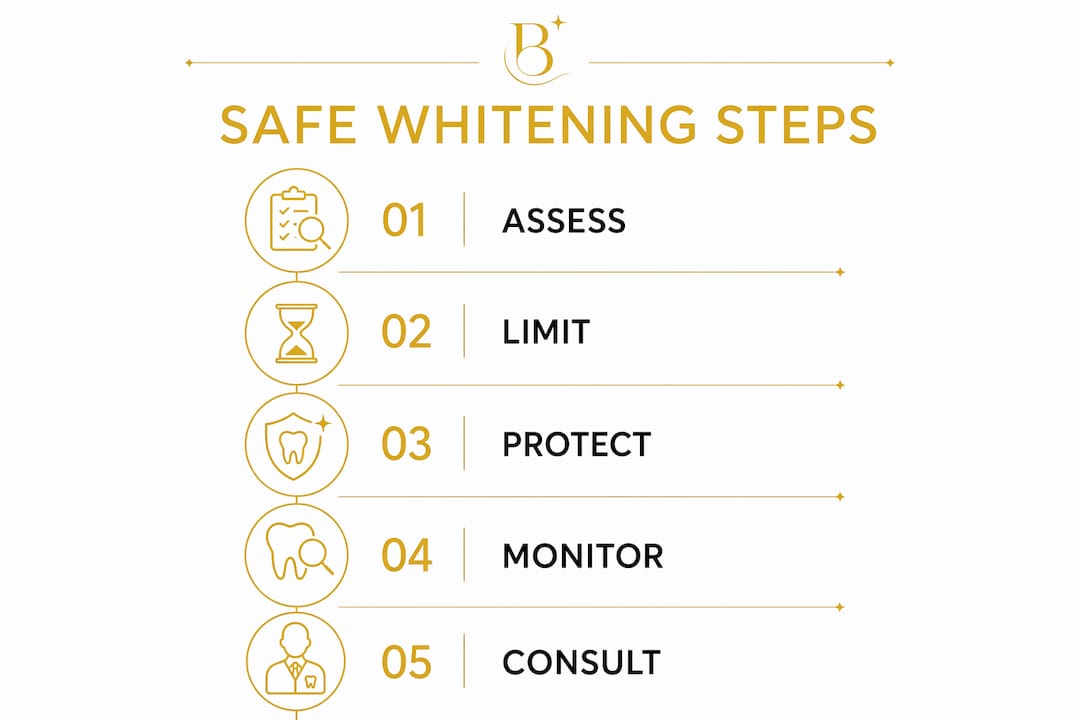
Safe whitening is not complicated, but it does require following a consistent protocol. The most common examples of overuse whitening damage come from people who skip intervals, use products incorrectly, or combine multiple whitening methods at once.
Recommended frequency and timing
Dental professional guidelines set the minimum interval between whitening cycles at 4–6 months for at-home treatments. This interval gives enamel time to remineralize and gum tissue time to recover. Treating more frequently does not produce whiter teeth. It produces weaker enamel and greater sensitivity.
Choosing the right product
Professional dentist-supervised whitening with custom trays produces less sensitivity and better safety outcomes than over-the-counter or DIY methods. Custom trays fit precisely, preventing gel from contacting gum tissue. Over-the-counter strips and gels are safe when used as directed, but the margin for error is smaller. For a detailed breakdown of how to structure a safe whitening routine, the Blancawhitening guide on whitening best practices is a practical starting point.
What to avoid entirely
DIY natural whiteners like lemon juice and baking soda cause acid erosion and abrasion that permanently damages enamel. Paradoxically, this erosion exposes more yellow dentin beneath, making teeth appear darker over time. No clinical evidence supports these methods as safe or effective.
| Safe practice | Why it matters |
|---|---|
| Whiten every 4–6 months | Allows enamel remineralization between cycles |
| Wait 30 minutes before brushing | Prevents abrasion of temporarily softened enamel |
| Use properly fitted trays | Keeps gel off gum tissue and reduces chemical burns |
| Avoid acidic DIY methods | Prevents irreversible acid erosion of enamel |
| Confirm gum health first | Reduces irritation risk and improves treatment safety |
Pro Tip: Before starting any whitening cycle, review a pre-whitening safety checklist with your dentist. Undiagnosed cavities or gum disease significantly raise the dangers of excessive whitening.
What are the safest whitening options for sensitive teeth?
Sensitivity does not disqualify you from whitening. It means you need a different approach. The long-term effects of whitening on sensitive teeth depend almost entirely on the concentration of the agent used and how well gum health is managed beforehand.
Gum health must be optimal before whitening begins. Inflamed or receding gums expose root surfaces that have no enamel covering, making them highly vulnerable to peroxide irritation. Treating gum disease before whitening is not optional. It is the baseline requirement for a safe treatment.
Low-concentration whitening strips and gels are the most appropriate starting point for people with sensitivity. They work more slowly but cause significantly less nerve stimulation. The efficacy of low-concentration whitening strips for extrinsic discoloration is well-supported in clinical research, making them a credible option rather than a compromise. For a science-backed comparison of options, Blancawhitening’s guide to whitening for sensitive teeth covers the relevant evidence.
- Low-concentration peroxide strips: Effective for surface stains with minimal sensitivity risk when used as directed.
- Dentist-supervised custom tray whitening: The safest method for people with a history of sensitivity or existing dental work.
- Non-peroxide whitening options: Products using alternatives like PAP (phthalimidoperoxycaproic acid) reduce sensitivity while still addressing surface discoloration.
- Cosmetic coverings: Veneers or bonding address discoloration that whitening cannot fix, such as intrinsic staining from tetracycline or fluorosis.
- Spacing treatments further apart: Extending intervals beyond the standard 4–6 months gives sensitive enamel additional recovery time.
Understanding whether whitening products are safe for your specific situation depends on your baseline enamel thickness, gum health, and the presence of any restorations. A dentist can assess all three before you begin.
Key Takeaways
Overusing whitening products causes enamel demineralization, persistent sensitivity, and gum damage that no whitening treatment can reverse, making safe frequency and proper technique the most critical factors in any whitening routine.
| Point | Details |
|---|---|
| Whitening frequency limit | Whiten no more than once every 4–6 months to allow enamel to remineralize. |
| Brush timing after whitening | Wait at least 30 minutes before brushing to avoid abrading softened enamel. |
| Recognize overuse signs | Chalky enamel, translucent edges, and persistent sensitivity require a dental visit. |
| Avoid DIY acid methods | Lemon juice and baking soda erode enamel permanently and worsen discoloration. |
| Prioritize gum health first | Inflamed or receding gums must be treated before any whitening cycle begins. |
What I’ve learned from watching people overdo whitening
The most common mistake I see is treating whitening like a skincare product you apply until you see results. Teeth whitening is a dental procedure. The enamel you have is the enamel you keep for life. There is no regenerating it once it is gone.
People often assume that if a two-week treatment works, a six-week treatment works better. That logic does not apply here. Beyond a certain point, you are not removing more stain. You are removing enamel. The whitening product side effects people complain about most, including sharp sensitivity and gum soreness, are the body’s way of communicating that the process has gone too far.
The other pattern I find genuinely concerning is the combination approach: strips in the morning, whitening toothpaste twice a day, and a whitening mouthwash at night. Each product alone may be within safe limits. Together, they create cumulative peroxide exposure that exceeds what enamel can handle. No single product label warns you about the combined effect.
My honest advice is to pick one whitening method, follow the recommended schedule, and give your teeth time to respond. Patience produces better results than intensity. A recommended whitening schedule built around your dental health is always more effective than an aggressive one built around impatience.
— Blanca
Blancawhitening’s approach to safe, effective whitening
Blancawhitening was built by dental professionals who understand that a brighter smile should never come at the cost of your enamel or gum health. Every product in the Blancawhitening line is formulated with clinically backed concentrations designed to whiten effectively while staying within safe physiological limits.
Whether you are starting your first whitening cycle or looking for a gentler option after experiencing sensitivity, the Blancawhitening at-home whitening collection includes strips and systems calibrated for real-world use. For those focused on maintaining gum health alongside whitening, the Blancawhitening oral care range supports the full routine. Every product comes with clear usage guidance so you never have to guess about frequency, timing, or concentration.
FAQ
What is the safe frequency for teeth whitening at home?
Dental professional guidelines recommend whitening no more than once every 4–6 months. Whitening more frequently risks enamel weakening and permanent sensitivity.
What are the most common whitening product side effects?
Temporary tooth sensitivity and gum irritation are the most common side effects. Symptoms that persist beyond the treatment cycle or include swelling and sharp pain require a dental evaluation.
Can overdoing whitening permanently damage your teeth?
Yes. Repeated overuse causes enamel demineralization and reduced microhardness that cannot be reversed. Chalky patches, translucent tooth edges, and chronic sensitivity are signs of permanent structural damage.
Are natural DIY whitening methods like lemon juice safe?
No. Lemon juice and similar acidic agents erode enamel through acid dissolution, which paradoxically makes teeth appear more yellow over time by exposing the darker dentin layer beneath.
When should you see a dentist about whitening sensitivity?
See a dentist if sensitivity persists for more than a few days after a treatment ends, if you notice gum recession or swelling, or if you experience sharp pain. Persistent sensitivity may indicate cavities or micro-cracks that require treatment before whitening continues.