

Floss Before Brushing: 3 Steps Tonight to Lock in Fluoride
Floss before you brush, not after. Flossing first physically removes plaque and food debris trapped between teeth, which clears the way for fluoride from your toothpaste to actually reach those spaces rather than sliding past them. This sequence lines up with NHS guidance and clinical trial data.
TL;DR:
- Flossing before brushing improves fluoride penetration and leads to greater plaque removal than brushing first, with statistically significant results.
- Proper flossing technique involves gently curving the floss into a C-shape against each tooth, using a fresh section for every gap to avoid re-depositing plaque.
- Avoid rinsing with water immediately after brushing to allow fluoride to form a protective layer on enamel and maximize its cavity-fighting benefits.
- Traditional string floss works best for tight contacts, but water flossers or interdental brushes are preferable for braces, wider gaps, or implants.
- Consistency in the floss-first routine and using the right tools increases the effectiveness of oral hygiene and supports long-term dental health.
Table of Contents
- Why Floss-First Beats Brushing First, According to the Research
- Step-by-Step Flossing Technique You Can Use Tonight
- Which Interdental Tool Fits Your Mouth: Floss, Picks, Brushes, or Water Flossers?
- Why You Shouldn’t Rinse Right After Brushing
- When to Adjust the Order or the Tools
- Your Three-Step Routine, Starting Tonight
- Blancawhitening’s Take on Sequence, Gum Health, and Your Smile
- Build the Floss-First Routine With the Right Tools
- Sources
Why Floss-First Beats Brushing First, According to the Research
The evidence on this isn’t a matter of opinion. A randomized crossover trial tracked 25 dental students who flossed and brushed in different orders on different days, measuring plaque and fluoride levels each time. When participants flossed before brushing, they showed significantly greater interdental plaque reduction and higher fluoride concentration between their teeth than when they brushed first and flossed second.
That second finding matters more than it might seem. Toothpaste delivers fluoride to strengthen enamel and fight decay, but fluoride can only work where it makes contact. If plaque and debris are still wedged between your teeth when you brush, the fluoride in your toothpaste never really reaches those surfaces. Flossing first breaks up that debris, so the fluoride paste your brush spreads around actually penetrates the spaces where cavities most often start.
The NHS recommends this same order and walks through the technique step by step. Harvard Health takes a slightly softer stance, noting flossing can technically happen before or after brushing, but still emphasizes that the technique and consistency matter most. Cleveland Clinic splits the difference, too. It says flossing once daily, preferably at night, is the non negotiable habit, while flossing first offers a modest but real edge.
Here’s the mechanism in plain terms:
- Floss dislodges plaque and trapped food particles from between teeth.
- Brushing right after spreads fluoride toothpaste into those now-cleared spaces.
- Fluoride bonds more effectively with enamel that isn’t blocked by leftover debris.
- The result is measurably lower interdental plaque and better fluoride uptake, according to the PubMed trial.
The floss-first group in that trial showed statistically significant improvements in both plaque reduction and fluoride concentration, which is a rare combination in oral care research. Most studies find one benefit or the other. This one found both.
Step-by-Step Flossing Technique You Can Use Tonight
Good technique matters as much as good sequence. Here’s how to floss the way dental professionals actually recommend, based on guidance from the NHS and the American Dental Association’s MouthHealthy resource.
- Tear off about 30 to 45 centimeters of floss, enough to wrap around your middle fingers with a fresh section for each tooth.
- Leave roughly 3 to 4 centimeters of working floss between your fingers, taut but not stretched thin.
- Guide the floss between two teeth using a gentle side-to-side motion, never snapping it down onto the gum.
- Curve the floss into a C-shape against one tooth, sliding it up and down beneath the gumline.
- Repeat the C-shape against the neighboring tooth before moving to the next gap.
- Use a clean section of floss for each new space to avoid redepositing plaque you just removed.
The most common mistake people make is sawing the floss straight down and back up like a rope, which can bruise or cut the gum tissue. The C-shape curve, hugging one tooth surface at a time, protects your gums while still reaching the plaque a straight motion misses entirely.
Pro Tip: If your floss keeps shredding at the same spot, it usually means you’re using the same worn segment on too many teeth. Advance to a fresh piece every two or three gaps.
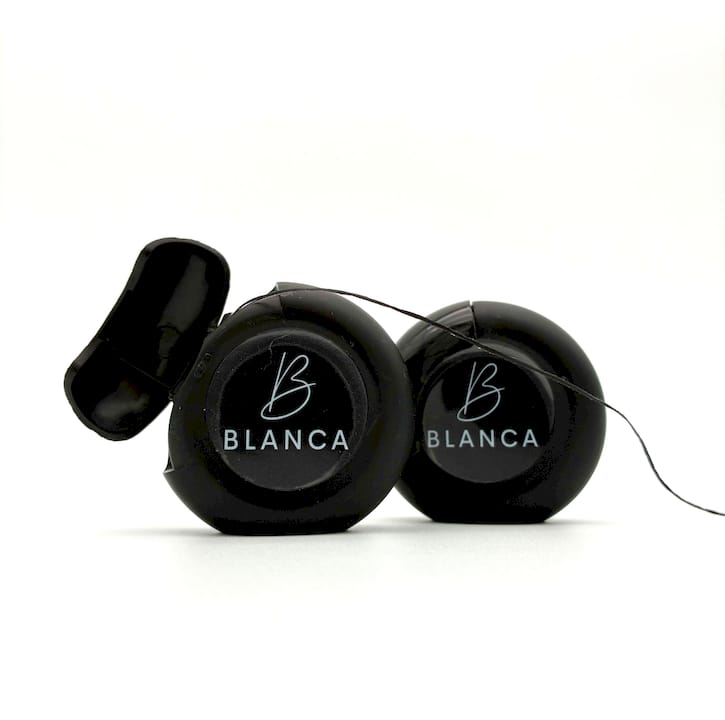
Once you’ve flossed every gap, move straight into brushing thoroughly with a fluoride toothpaste alternative. Nighttime is an ideal window, since it’s the last chance to clear your teeth before hours of reduced saliva flow overnight.
Which Interdental Tool Fits Your Mouth: Floss, Picks, Brushes, or Water Flossers?
Traditional string floss remains the best option for tight contacts between teeth, since it conforms closely to the tooth surface in a way rigid tools can’t match. But it isn’t the only legitimate choice, and clinicians generally agree the best tool is the one you’ll actually use every night.
- String floss: ideal for naturally tight spaces; requires more dexterity and practice.
- Floss picks: faster and easier to handle one-handed, though less thorough around curved tooth surfaces.
- Interdental brushes: work better than floss for wider gaps, bridges, or around dental implants.
- Water flossers: useful for braces, limited dexterity, or gum sensitivity, and pair well with the floss-first routine described above.
Harvard Health’s guidance on flossing technique points out that people with braces, implants, or wider gaps often see better plaque removal with interdental brushes or water flossers than with standard floss. If you’re deciding between traditional string and a water-based approach, comparing water flossing against manual flossing side by side can help you settle on what actually fits your routine. And if tight contacts between your teeth are the issue, a guide to floss types built for close spacing breaks down which material glides best without shredding.
Why You Shouldn’t Rinse Right After Brushing
Spit out the excess toothpaste, but skip the water rinse. This is one of the most overlooked details in oral care, and it directly affects how much benefit you get from the floss-first sequence.
Fluoride toothpaste leaves a thin protective layer on your enamel after brushing. Rinsing immediately with water washes that layer away before it has time to work. The NHS is explicit on this point: spit, don’t rinse.
- Floss before brushing to clear interdental plaque.
- Brush for two minutes with fluoride toothpaste, reaching every surface.
- Spit out the excess, but leave the residual fluoride film in place.
- Avoid water, mouthwash, eating, or drinking for at least 30 minutes afterward.
Skipping the rinse is a small change with an outsized payoff: it’s free, takes zero extra time, and directly extends the window fluoride has to strengthen your enamel. Aim to floss once daily, ideally at night, and brush twice daily for two minutes each session.
When to Adjust the Order or the Tools
The floss-first rule holds for most healthy adults, but a few situations call for different tools or a modified approach.
- Braces: interdental brushes or a water flosser often clear debris around brackets more reliably than string floss; coordinate with your orthodontist on frequency.
- Bleeding gums: continue flossing gently. Bleeding on early attempts usually reflects existing gum inflammation rather than damage from the floss itself, and it typically settles within one to two weeks of consistent care. If it persists past that, see a dentist.
- Limited dexterity: floss picks, floss holders, or a water flosser reduce the fine motor demands of traditional string floss.
- Implants: interdental brushes are generally gentler around implant abutments than tightly pulled floss.
Your Three-Step Routine, Starting Tonight
Floss before you brush. That’s the entire principle, and everything else is refinement around it.
- Floss every gap using the C-shape technique, working from a fresh section of floss as you go.
- Brush for two full minutes with fluoride toothpaste, covering every surface.
- Spit out the excess toothpaste, skip the water rinse, and let the fluoride sit.
Do this every night, brush again each morning, and keep up with regular dental visits. Consistency matters more than perfection, but getting the order right gives every session a little more payoff.
Blancawhitening’s Take on Sequence, Gum Health, and Your Smile
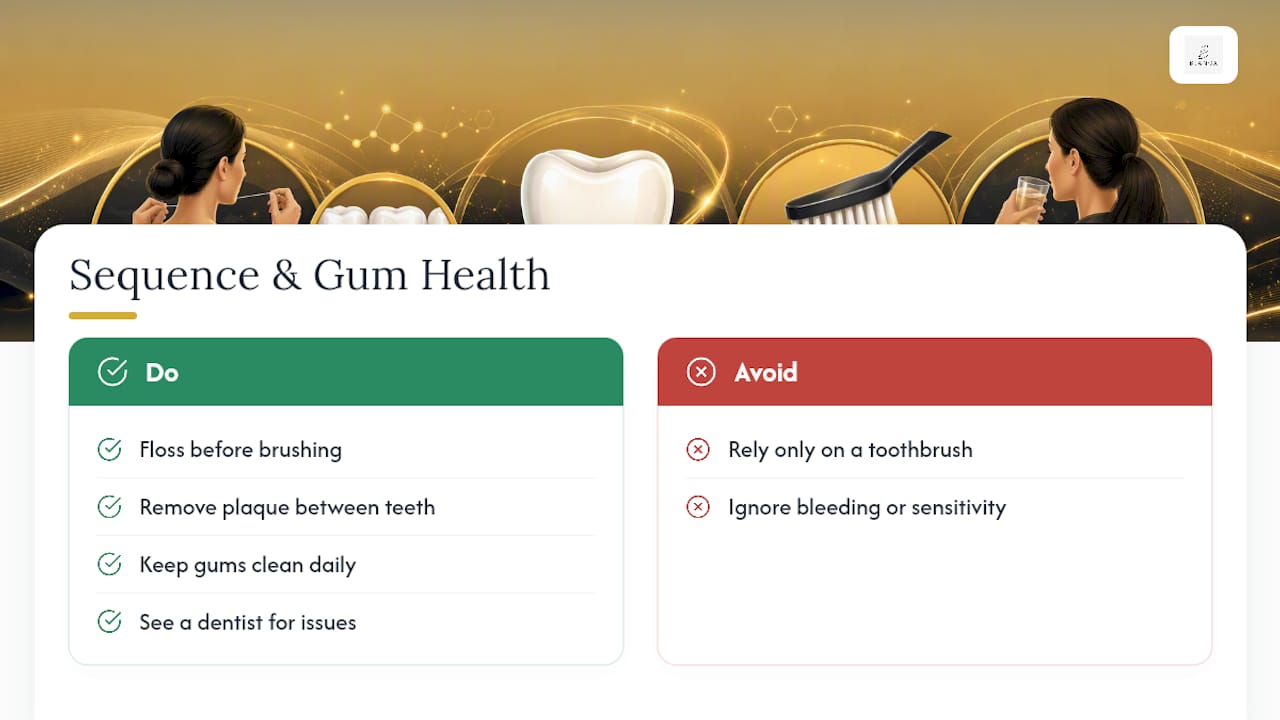
The advice aligns with expert perspectives that emphasize the mechanics behind a healthy mouth, not just surface shine. Sequence matters because plaque buildup between teeth doesn’t just threaten enamel. It also dulls the appearance of a whitened smile over time, since discoloration and buildup tend to collect fastest in the spaces a toothbrush alone can’t reach.
Clean gums and plaque-free interdental spaces are the foundation any whitening routine needs to actually last. If you’re dealing with persistent bleeding, sensitivity, or a dental condition beyond general hygiene, talk to your dentist. This guidance covers the general routine, not a diagnosis for your specific mouth.
— Blanca
Build the Floss-First Routine With the Right Tools
Getting the sequence right is only half the equation. The other half is having tools that make flossing something you’ll actually stick with instead of skip on tired nights. Blancawhitening’s oral care collection is built around exactly that floss-first, fluoride-protecting routine described above, from floss designed to glide through tight contacts to water flosser replacement tips for anyone managing braces or sensitive gums.
Pair your flossing routine with a manual toothbrush or electric toothbrush designed to clear debris right after you floss, while the fluoride in your toothpaste still has clear access to every surface. If you’re also maintaining a whitening routine, keeping this sequence consistent is one of the simplest ways to protect your results between treatments. Browse the at-home teeth whitening collection to see how a clean, floss-first routine and a whitening plan work together, and check current offers on the best sellers page to build out your routine tonight.
This article is general information, not a substitute for advice from a qualified doctor. Consult a qualified healthcare professional about your own circumstances before acting on anything here.
Sources
- Flossing before or after brushing? (PubMed trial)
- How to keep your teeth clean - NHS
- Rinse, brush, floss, scrape, and repeat - Harvard Health