

Oral Care Habits for a Brighter, Healthier Smile
Oral care habits for brighter smiles are defined as the daily hygiene practices, dietary choices, and professional treatments that prevent staining, protect enamel, and keep teeth visibly white. The American Dental Association identifies brushing twice daily with fluoride toothpaste, flossing once daily, and scheduling professional cleanings every six months as the foundation of effective oral health. These habits do more than prevent cavities. They directly determine how bright and confident your smile looks every day. This article breaks down the most effective practices, backed by dental science, so you can build a routine that actually works.
1. What are the best daily brushing habits for brighter smiles?
Brushing is the single most important habit in any whitening dental routine. Effective oral hygiene requires two minutes of brushing in the morning and at night, plus one minute of flossing. That five-minute daily commitment is enough to prevent most common dental diseases.
Think of brushing as thorough cleaning, not quick scrubbing. Use a soft-bristled toothbrush and apply gentle circular motions across all tooth surfaces, including the backs of molars and the gumline. Pressing too hard does not clean better. It wears down enamel and pushes gums back over time.
One detail most people miss: do not rinse with water immediately after brushing. Spit out the toothpaste, but leave the fluoride film on your teeth. That residual fluoride strengthens enamel and reduces cavity risk throughout the day.
- Brush for exactly two minutes, twice daily
- Use a soft-bristled toothbrush with fluoride toothpaste
- Apply gentle circular strokes, not back-and-forth scrubbing
- Spit after brushing, but skip the water rinse
- Replace your toothbrush head every three months
Pro Tip: An electric toothbrush removes plaque more consistently than a manual one, especially along the gumline where stains tend to build. The Blanca electric toothbrush is designed with enamel-safe oscillating action to make this easier.
2. How to floss correctly for cleaner, whiter teeth
Flossing removes plaque and food debris from between teeth, where your toothbrush cannot reach. Plaque left in those spaces hardens into tartar, which attracts new stains and contributes to gum disease. Flossing once daily, ideally before bed, prevents that buildup from taking hold overnight.
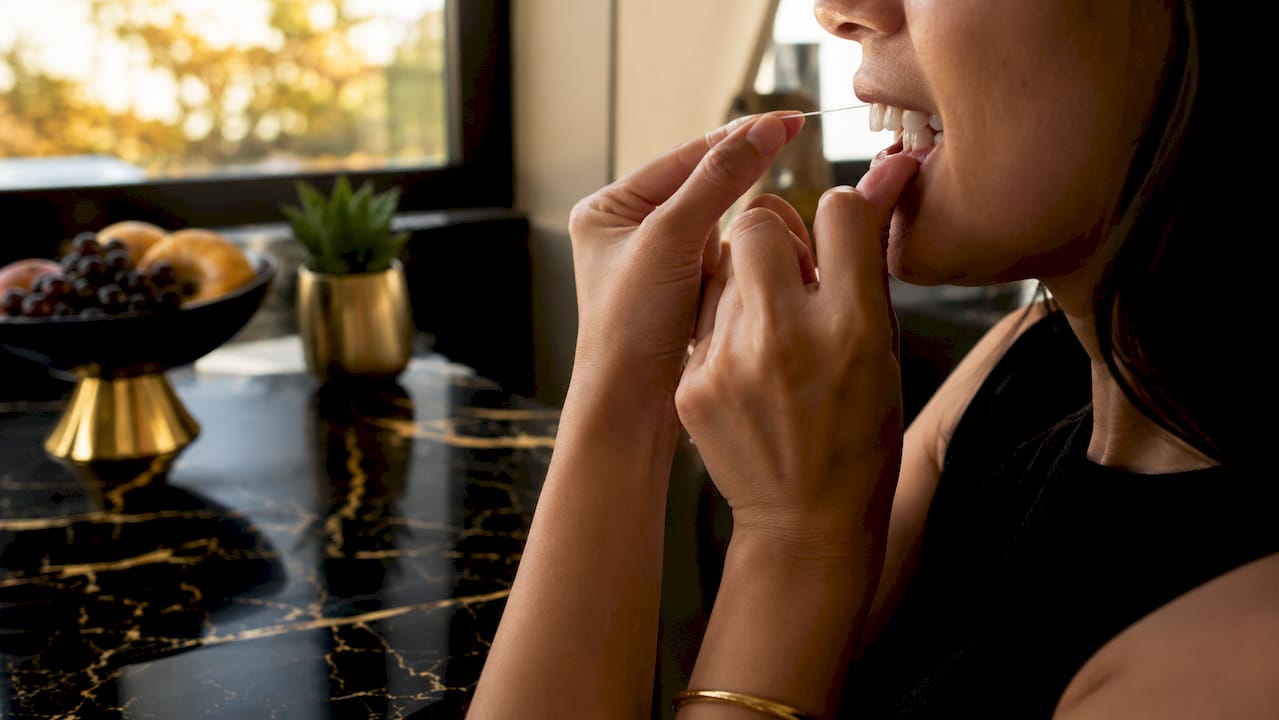
Slide the floss gently between each tooth and curve it into a “C” shape against the tooth surface. Move it up and down rather than snapping it into the gum. Snapping causes gum irritation and bleeding, which discourages people from continuing the habit.
If traditional floss feels awkward, a water flosser delivers a pressurized stream of water that clears debris from between teeth and below the gumline. Interdental brushes are another solid option for people with wider gaps or dental work like bridges.
3. Why brushing timing matters more than most people realize
Brushing immediately after eating acidic foods increases enamel erosion risk. Acids from food and drink temporarily soften enamel, and brushing during that window accelerates damage. That damage leads to increased sensitivity and faster staining.
Wait 30–60 minutes after eating or drinking before you brush. During that window, your saliva naturally neutralizes acids and begins remineralizing softened enamel. Rinsing with plain water right after a meal speeds up that process without causing harm.
This timing rule is especially relevant after coffee, citrus juice, or soda. Those are the drinks most likely to soften enamel and leave staining compounds behind. Waiting before brushing protects the enamel while still clearing residue.
4. How does diet affect the brightness of your smile?
What you eat and drink is the second biggest factor in tooth brightness, after brushing. Certain foods and beverages contain chromogens, which are color compounds that bind to enamel and cause staining. The most common culprits are coffee, tea, red wine, dark sodas, soy sauce, and tomato-based sauces.
Rinsing with plain water immediately after consuming staining beverages washes chromogens away before they settle into enamel. Using a straw with coffee or iced tea reduces direct contact with tooth surfaces. These two habits alone make a measurable difference in long-term brightness.
Enamel-supporting foods also matter. Cheese raises the pH in your mouth and reduces acid damage. Crunchy vegetables like carrots and celery act as mild mechanical cleaners. Apples stimulate saliva flow, which naturally rinses teeth between meals.
- Rinse with water after coffee, tea, or red wine
- Use a straw for cold staining beverages
- Eat cheese, carrots, or apples as enamel-friendly snacks
- Limit frequent snacking to reduce repeated acid exposure
- Avoid dark sauces when possible, or rinse promptly after
Pro Tip: Time your coffee or tea consumption right before your next brushing window. That way you get the enjoyment without letting staining compounds sit on your teeth for hours.
5. How smoking and acidic drinks damage tooth brightness
Smoking causes dark, stubborn stains that are among the hardest to remove. Tar and nicotine penetrate enamel and accumulate in microscopic surface pores, creating discoloration that resists standard whitening toothpastes. Quitting smoking is the single most effective lifestyle change for long-term tooth brightness.
Acidic drinks, including sparkling water, sports drinks, and citrus juices, erode enamel over time. Thinner enamel reveals more of the yellow dentin layer underneath, making teeth look darker regardless of surface staining. Limiting these drinks and rinsing with water after consuming them slows that process significantly.
The combination of smoking and acidic drinks is particularly damaging. Acid opens enamel pores, and nicotine fills them. Addressing both habits together produces far better results than tackling either one alone.
6. What professional oral care practices support a brighter smile?
Professional dental cleanings every six months are the backbone of long-term brightness maintenance. Tartar acts as a magnet for surface stains. A hygienist removes tartar and polishes away surface discoloration that daily brushing cannot reach. Skipping cleanings allows stain-attracting buildup to accumulate steadily.
Professional whitening delivers faster and longer-lasting results than at-home methods. A single 30-minute in-office session can noticeably brighten teeth, with results lasting six months to two years depending on your habits. At-home whitening strips and trays work well for maintenance but cannot match the concentration or speed of in-office treatment.
One important rule: treat any gum disease or cavities before starting whitening. Whitening agents applied to unhealthy gums or compromised enamel cause irritation and uneven results. Your dentist can confirm your mouth is ready before treatment begins.
After professional whitening, the habits in this article become even more important. Avoiding staining foods for 48 hours post-treatment, brushing consistently, and using a whitening toothpaste for maintenance all extend how long your results last. Read more about post-whitening care strategies to protect your investment.
7. How to choose the right toothpaste for your goals
Toothpaste choice directly affects both brightness and enamel health. Whitening toothpastes lighten teeth by one to two shades over several weeks. They work best as a maintenance tool after professional whitening, not as a primary brightening method.
Enamel-protective toothpastes contain compounds like hydroxyapatite or fluoride at higher concentrations. These formulas rebuild weakened enamel and reduce sensitivity, which is especially useful if you consume acidic foods regularly. Sensitive toothpastes use potassium nitrate or stannous fluoride to block the microscopic channels in dentin that cause pain.
Avoid toothpastes with highly abrasive ingredients, such as activated charcoal in large concentrations. Abrasive formulas can scratch enamel over time, creating a rougher surface that actually attracts more stains. Check the Relative Dentin Abrasivity (RDA) rating when possible. A rating below 70 is considered safe for daily use.
8. What a complete daily oral care checklist looks like
A consistent daily routine is what separates people who maintain bright smiles from those who see results fade quickly. The routine does not need to be complicated. It needs to be complete.
- Morning: Brush for two minutes with fluoride toothpaste. Spit, do not rinse. Drink water before coffee.
- After meals: Rinse with water. Wait 30–60 minutes before brushing if you consumed acidic food or drink.
- Evening: Floss between all teeth. Brush for two minutes. Use an antibacterial mouthwash if recommended by your dentist.
- Weekly: Check your toothbrush bristles for fraying. Replace the head every three months.
- Every six months: Schedule a professional cleaning and dental checkup.
Tongue cleaning is an underrated addition to this routine. Bacteria on the tongue contribute to bad breath and can redeposit onto teeth after brushing. A tongue scraper takes ten seconds and meaningfully improves overall oral hygiene.
Hydration also plays a role. Saliva is your mouth’s natural defense against bacteria and acid. Drinking enough water throughout the day keeps saliva production steady, which protects enamel between brushing sessions.
9. Nighttime brushing is the most critical habit of the day
Brushing before sleep is the single most important brushing session of the day. Saliva flow drops significantly during sleep, removing the mouth’s primary defense against bacteria. Any plaque or food debris left on teeth overnight has hours to cause damage without interference.
Skipping the nighttime brush even occasionally allows bacteria to produce acids that attack enamel while you sleep. That repeated exposure accelerates both decay and discoloration. If you only brush once a day, make it at night.
Pairing nighttime brushing with flossing creates a clean environment in your mouth for the full sleep cycle. That combination is the most efficient five minutes you can spend on your dental health. Check out small daily habits that compound into lasting results over time.
Key Takeaways
Consistent oral care habits, including proper brushing technique, daily flossing, smart dietary choices, and regular professional cleanings, are the most reliable path to a brighter, healthier smile.
| Point | Details |
|---|---|
| Brush for two minutes, twice daily | Use fluoride toothpaste and a soft-bristled brush; skip the water rinse after. |
| Floss every night before bed | Removes plaque between teeth that brushing misses and prevents tartar buildup. |
| Wait before brushing after acidic foods | A 30–60 minute wait protects softened enamel from erosion and staining. |
| Rinse with water after staining drinks | Washing away chromogens before they settle reduces long-term discoloration. |
| Schedule professional cleanings twice yearly | Tartar removal and polishing maintain brightness that home care cannot achieve alone. |
What I’ve learned about building habits that actually stick
Most people approach oral care as a chore they rush through. That mindset is the root cause of most preventable dental problems. The habits that produce genuinely bright smiles are not complicated. They are just done consistently and done correctly.
The mistake I see most often is brushing immediately after breakfast, especially after orange juice or coffee. People feel like they are being diligent, but they are actually brushing acid into softened enamel. Waiting even 30 minutes changes the outcome entirely.
Whitening products are also misused more than almost any other oral care category. Overusing whitening strips or high-concentration gels without professional guidance causes sensitivity and uneven results. Whitening works best as a periodic treatment layered on top of solid daily habits, not as a substitute for them. Gum health matters too. Whitening on inflamed or compromised gums leads to irritation and patchy results. Addressing gum health first is not optional.
The habits with the biggest payoff are the boring ones: brushing at night, flossing consistently, rinsing after coffee, and showing up for your cleaning appointments. Those four things, done reliably, outperform any single product or treatment. Build the routine first. Then add whitening on top of a clean foundation.
— Blanca
Blancawhitening products built around these habits
The habits in this article work best when paired with tools designed for the job. Blancawhitening was founded by dental professionals specifically to make clinically backed oral care accessible at home.
The Blancawhitening oral care collection includes electric toothbrushes with enamel-safe oscillating heads, water flossers for thorough interdental cleaning, and at-home whitening systems formulated with peroxide-based agents at dentist-recommended concentrations. Every product is designed to complement the daily habits described here, not replace them. Browse the full whitening range to find the right tools for your routine and your goals.
FAQ
How often should I brush and floss for a brighter smile?
Brush for two minutes twice daily using fluoride toothpaste, and floss once daily before bed. That five-minute routine is clinically shown to minimize disease and support long-term brightness.
Why should I wait before brushing after eating?
Acidic foods and drinks temporarily soften enamel. Brushing within that window accelerates erosion and increases staining risk. Waiting 30–60 minutes allows saliva to neutralize acids and reharden enamel before you brush.
Do whitening toothpastes actually work?
Whitening toothpastes lighten teeth by one to two shades over several weeks. They are most effective as a maintenance tool after professional whitening, not as a standalone brightening treatment.
How does smoking affect tooth brightness?
Tar and nicotine penetrate enamel pores and cause deep, stubborn staining that standard whitening products struggle to remove. Quitting smoking is the most effective single lifestyle change for maintaining tooth brightness.
How often do I need professional dental cleanings?
Every six months is the standard recommendation. Professional cleanings remove tartar, which attracts surface stains, and polish away discoloration that daily brushing cannot address on its own.