

Is It Normal for Gums to Bleed After Water Flossing?
Mild bleeding the first week you use a water flosser is usually a sign of gum inflammation, not injury, and it typically fades as your gums heal. If bleeding is heavy, drop your pressure setting, switch to lukewarm water, and keep flossing gently every day rather than stopping. Most people see real improvement within 7 to 14 days; clinical trials confirm measurable reductions in bleeding by 2 to 4 weeks of consistent use.
TL;DR:
- Bleeding during water flossing usually indicates existing gum inflammation, which should improve within 7 to 14 days with proper technique.
- Using too high pressure, holding the tip too close, or rushing can worsen bleeding and irritate inflamed tissue.
- Gentle, proper angle and pressure adjustments, along with only once daily use, significantly reduce bleeding over time.
- Persistent heavy or painful bleeding after two weeks suggests a need for professional dental assessment and possible treatment.
- Choosing the right tip type for your condition and regularly replacing worn tips can help protect sensitive gums during water flossing.
Table of Contents
- Why Gums Bleed When You Use a Water Flosser
- Common Causes of Bleeding After Water Flossing
- When Bleeding Is Normal and When to See a Dentist
- How to Stop and Prevent Bleeding During Water Flossing
- Blanca’s Clinical View on Water Flosser Gum Care
- Types of Water Flosser Tips and Their Effects on Sensitive Gums
- Potential Risks of Overuse or Misuse
- An Editorial Take: What the Evidence Actually Supports
- A Practical Next Step for Sensitive Gums
- Sources
Why Gums Bleed When You Use a Water Flosser
Bleeding almost always comes from the tissue, not the tool. Inflamed gingiva develops fragile, engorged capillaries just beneath the gumline, and even gentle contact from a water jet can cause them to bleed. What you’re seeing is often preexisting inflammation the flosser has simply exposed, not damage the flosser has caused.
The water stream reaches into the sulcus, the small pocket between tooth and gum where a toothbrush rarely goes and where plaque bacteria tend to concentrate. If that tissue was already irritated by plaque buildup, that first contact can look alarming even though the water itself did nothing wrong.
There’s a real distinction worth knowing: bleeding from inflamed, plaque-affected tissue looks different from a mechanical nick caused by holding the tip too close or blasting one spot at full pressure. The first is common and resolves with continued gentle use. The second is a technique problem, and it’s fixable in one session by adjusting your angle and distance.
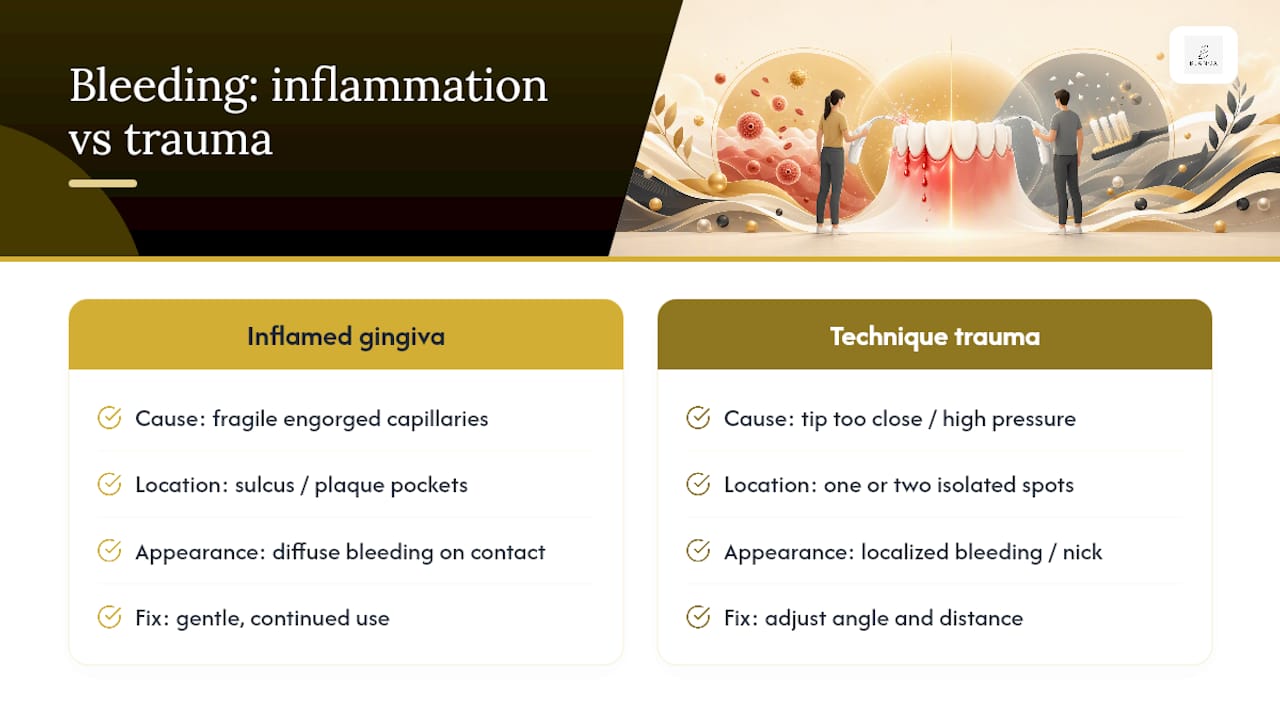
Pro Tip: If bleeding shows up at the same one or two spots every time, check your tip angle there first. Isolated bleeding usually points to technique, not gum disease.
The reassuring part is what the evidence shows over time. A 4 week randomized controlled trial found that water flosser users had significantly lower marginal bleeding scores than people using an interdental brush, with a p-value of 0.003. A separate four-week trial found water flossing plus brushing cut whole-mouth bleeding by an average of 0.41 points, compared to 0.19 for flossing alone. Bleeding gums with a water flosser, in other words, is frequently the inflammation you’re finally starting to treat.
Common Causes of Bleeding After Water Flossing
Before you assume the worst, run through the likely culprits. Most cases trace back to one of these:
- Gingivitis from plaque buildup. This is the most common cause by far. Plaque along the gumline triggers inflammation, and inflamed tissue bleeds on contact.
- Pressure set too high. Jumping straight to a strong setting on day one is the single most avoidable mistake new users make.
- Tip too close or angled wrong. Holding the tip flush against the gumline instead of at a slight angle can irritate rather than clean.
- Rushing the routine. Skimming quickly across teeth without pausing at each interdental space increases splash-back trauma without improving cleaning.
- Recent dental work or aggressive brushing. Tissue that’s already irritated from a cleaning, extraction, or heavy-handed brushing bleeds more easily for a few days.
- Medications or health conditions. Blood thinners, some blood pressure medications, and conditions that affect clotting can all increase bleeding independent of gum health.
- Braces, implants, or periodontal pockets. These situations change how the water stream interacts with tissue and may call for a modified technique or a lower setting.
If more than one of these applies to you, start with the one you can control immediately: pressure and technique.
When Bleeding Is Normal and When to See a Dentist
Give it time before you worry, but watch for the signs that mean it’s time to call your dentist.
- Days 1 to 7: Some bleeding is expected as inflamed tissue adjusts to daily irrigation. Keep using the flosser gently.
- Days 7 to 14: Bleeding should be noticeably lighter. Clinical trials show measurable drops in bleeding indices within this window when technique and pressure are correct.
- Past 14 days with no improvement, or bleeding that’s heavy, painful, or paired with swelling and pus: Stop self-treating and book an appointment. This falls outside what home adjustments can fix.
At the dentist, expect a bleeding-on-probing assessment, periodontal charting to check pocket depth, and likely a professional cleaning to remove hardened plaque a flosser can’t touch. If bleeding is tied to a medication or health condition, your dentist may also recommend follow-up with your physician.
How to Stop and Prevent Bleeding During Water Flossing
Fixing this is mostly a matter of dialing in your settings and habits, not switching tools.
- Start low and slow. Choose the lowest pressure setting and lukewarm, not cold, water for your first week. Cold water alone can make sensitive gums react defensively.
- Get the angle right. Aim the tip at roughly 90 degrees to the gumline, with a small gap rather than direct contact, and let the water do the work.
- Slow down at each site. Pause briefly between teeth instead of sweeping quickly across your whole mouth. A proper technique guide walks through this pacing in more detail.
- Use it once daily as an adjunct to brushing, not a replacement for it. Flossers clean between teeth; toothbrushes clean the surface.
- If gums stay fragile, ask about alternating with an interdental brush for a few days while inflammation settles, based on your dentist’s advice.
- Layer in complementary care. Refine your brushing technique, use an antimicrobial mouthwash if your dentist recommends one, and book a cleaning if plaque has clearly built up.
- Reassess at 7 to 14 days. If bleeding hasn’t eased by then, lower your pressure setting further, confirm your angle, or see a dentist rather than pushing through.
Pro Tip: Increase pressure by one setting per week, not all at once. Gums adapt gradually to irrigation, and a slower ramp-up almost always means less bleeding overall.
Blanca’s Clinical View on Water Flosser Gum Care
Blancawhitening was founded by dental professionals, and our stance on bleeding gums during water flossing is grounded in that clinical background rather than guesswork.
Bleeding is data, not a verdict. It tells you where inflammation is active right now. The right response is almost never to stop cleaning that area. It’s to clean it more gently and more consistently until the tissue calms down.
A 12-week randomized controlled trial reinforces this: daily water flossing reduced gingival and sulcus bleeding indices by weeks 8 to 12 and shifted plaque bacteria away from anaerobic species linked to inflammation. Used correctly, a water flosser is an effective adjunct for gingivitis, not a risk factor for it.
Worn or damaged tips can also aggravate sensitive gums, so check ours replacement tips and our maintenance guide if your device is older than a year.
Types of Water Flosser Tips and Their Effects on Sensitive Gums
Not every tip suits every mouth, and the wrong one can make bleeding worse even at a low pressure setting.
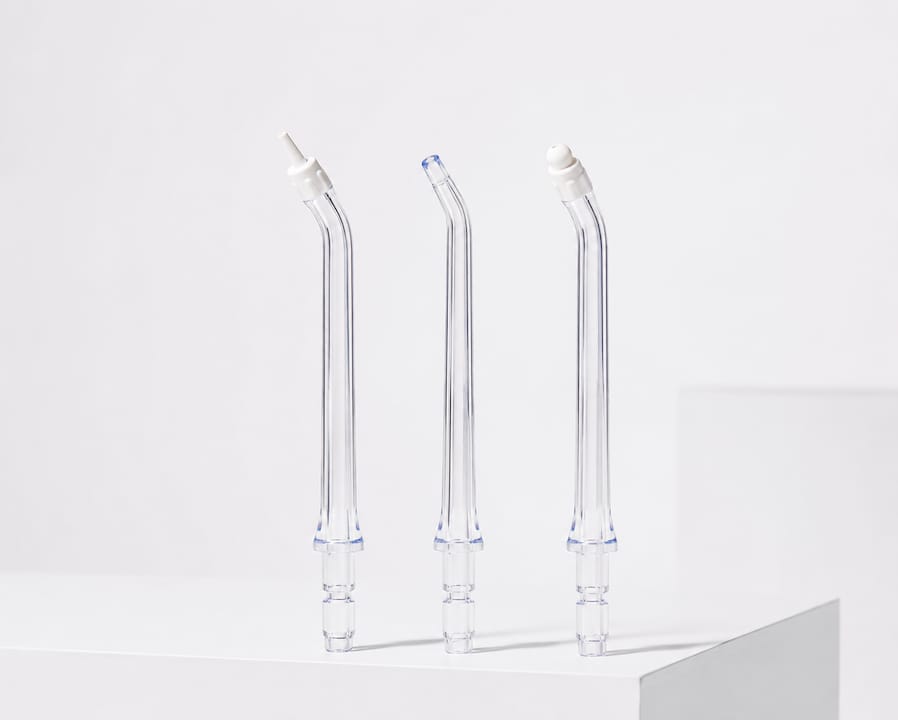
Standard jet tips deliver a focused stream and work well for most users once gums have adjusted, but they can feel sharp on inflamed tissue during the first week. Orthodontic tips use a small brush at the base to dislodge debris around brackets and wires; they’re gentler on the gumline itself since the design spreads contact rather than concentrating it. Periodontal tips have a soft, tapered rubber end built specifically for deep pockets and post-treatment gums, making them the better choice if you have diagnosed periodontal disease. Tongue-cleaning tips and plaque-seeker tips serve different purposes entirely and aren’t designed with bleeding-prone gums in mind.
If your gums bled noticeably on your first few uses, a periodontal-style tip at low pressure is worth trying before assuming the device isn’t right for you. The tip matters as much as the pressure setting, and swapping it is often a faster fix than replacing the whole flosser.
Potential Risks of Overuse or Misuse
More isn’t better with a water flosser, and using it several times a day at high pressure can work against you. Repeated high-pressure irrigation on already inflamed tissue can worsen bleeding instead of resolving it, since you’re not giving the capillaries time to recover between sessions.
Holding the tip too close, angling it to spray directly into the pocket rather than along the gumline, or lingering too long on one spot can cause localized trauma that mimics a mechanical injury rather than an inflammation response. This is where the line between “cleaning” and “damaging” tissue gets crossed, and it’s avoidable with a lower setting and a lighter touch.
Overuse also isn’t a shortcut to faster healing. Once daily is enough for most people; more frequent use doesn’t accelerate the reduction in bleeding shown in the 4-week and 12-week trials and may simply keep tissue irritated longer.
An Editorial Take: What the Evidence Actually Supports
The conventional advice on bleeding gums, “just floss more gently,” undersells what the research actually shows. The trial data is specific: measurable reductions in bleeding by 4 weeks, and further improvement by 12 weeks, tied to consistent daily use at an appropriate pressure. That’s a stronger, more concrete timeline than most consumer advice offers, and it deserves to replace the vague reassurance most people get.
What’s overrated is the instinct to abandon water flossing at the first sign of blood. What’s underrated is technique, specifically pressure and angle, which fixes more bleeding cases than switching tools ever will. If there’s one priority for a new or sensitive user, it’s this: start low, hold steady for two weeks, and judge results against that timeline instead of your first three uses. Evidence, not anxiety, should set the bar for whether something’s wrong.
— Blanca
A Practical Next Step for Sensitive Gums
If you’re rebuilding your routine around gentler, more consistent care, the BLANCA water flosser was built by dental professionals with adjustable pressure settings designed for exactly this kind of transition, low enough to start slow, strong enough to grow with you as your gums recover.
Keep it running well with our water flosser replacement tips so a worn tip never undoes your progress. Pairing it with the right brushing habits matters too; browse the Blanca oral care collection for toothbrushes and floss that support the same gentle, plaque-focused routine. If bleeding persists past two weeks despite correct technique, check your product support resources and get in touch with your dental professional rather than waiting it out longer.
Sources
The clinical claims in this guide come from peer-reviewed trials and established health authorities:
- Efficacy of a water flosser compared to an interdental brush on gingival bleeding and gingival abrasion: A 4 week randomized controlled trial - PMC
- Efficacy of water flossing on clinical parameters of inflammation and plaque: A four-week randomized controlled trial | Journal of Dental Hygiene
- Effects of water flossing on gingival inflammation and supragingival plaque microbiota: a 12-week randomized controlled trial | Clinical Oral Investigations
Feel free to share these with your dentist if you want a second opinion on your specific case.
This article is general information, not a substitute for advice from a qualified doctor. Consult a qualified healthcare professional about your own circumstances before acting on anything here.