

4–12 Weeks to Less Bleeding: Water Flossers and Recession in Canada
Daily use of a properly adjusted water flosser does not cause gum recession, and when used correctly, it reduces the inflammation and bleeding that drive further recession. Multiple randomized controlled trials show meaningful drops in bleeding on probing and gingival inflammation within four to twelve weeks, with no evidence of increased recession when people follow instructions. Devices like the BLANCA Water Flosser are built around that same clinician-informed logic: control pressure, protect the tissue, and let it do the work.
TL;DR:
- Properly used water flossers do not cause gum recession and help reduce inflammation and bleeding within four to twelve weeks.
- Instructed technique with low pressure, proper angling, and consistent daily use are key to achieving benefits without irritation or damage.
- Clinical studies show no increase in recession or abrasion after four weeks of correct water flosser use, even when compared to interdental brushes.
- Water flossers disrupt harmful biofilm and shift plaque composition toward a less inflammatory bacterial profile, lowering overall gum inflammation.
- People with active periodontal disease, recent oral surgery, or delicate tissue should consult a dentist before starting daily water flossing.
Table of Contents
- Water Flosser Gum Recession: What the Clinical Trials Show
- How Pulsating Water Actually Protects Your Gums
- When Water Flossing Can Irritate Gums Instead of Helping Them
- How to Use a Water Flosser Without Irritating Your Gums
- When Home Care Isn’t Enough: Signs You Need a Dentist
- Why Blancawhitening’s Guidance Is Grounded in Clinical Evidence
- What the Research Actually Tells Us About Water Flossers and Recession
- Choosing a Water Flosser That’s Gentle on Sensitive Gums
- Key Studies and Resources on Water Flossing and Gum Health
- Sources
- FAQ
Water Flosser Gum Recession: What the Clinical Trials Show
Concern about water flosser gum recession makes sense on the surface. Aiming a jet of water at your gumline sounds like it could push tissue back over time. The trial data says otherwise, and it says so repeatedly.
A four-week randomized controlled trial published in the Journal of Dental Hygiene compared a pulsating water flosser against dental floss and a microbubble device. The water flosser group showed greater reductions in whole-mouth bleeding on probing (BOP) and modified gingival index (MGI), and researchers reported no adverse events throughout the course of the study. A separate 12-week RCT found adjunctive water flossing reduced gingival inflammation and sulcus bleeding while shifting the supragingival plaque microbiota toward a less anaerobic, more aerobic profile. No participant developed new recession during either study.
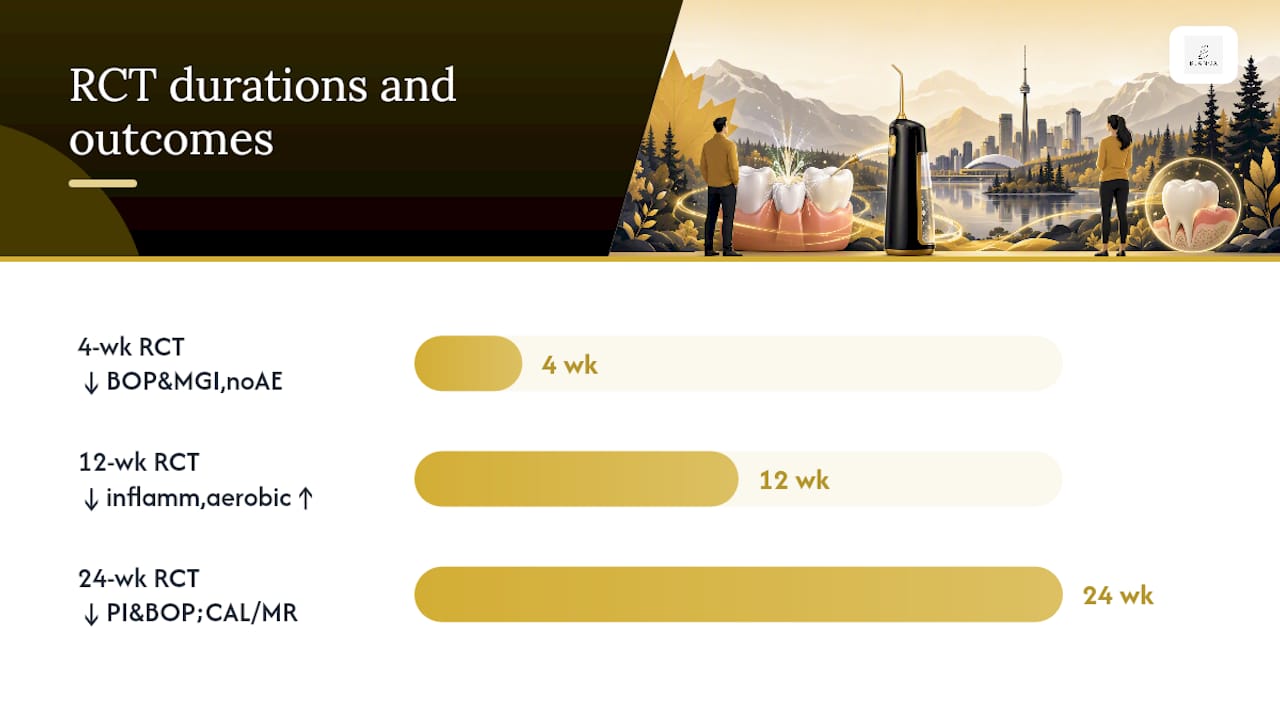
Longer studies tell a similar story. A six-month RCT in patients with bonded orthodontic retainers, a group especially prone to plaque buildup around fixed wires, found significantly lower plaque, bleeding, and gingival index scores at three and six months. Clinical attachment level and marginal recession stayed stable throughout.
Trials typically track a consistent set of measures:
- BOP (bleeding on probing): the percentage of sites that bleed when gently probed, an early inflammation marker
- GI (gingival index): a visual score of gum color, texture, and swelling
- PI (plaque index): how much soft plaque coats the tooth surface
- MR (marginal recession): how far the gumline has shifted from baseline
- CAL (clinical attachment level): the depth of tissue attachment along the root
A separate short-term study measuring gingival bleeding and abrasion directly compared water flossers to interdental brushes over four weeks and reported no increase in gingival abrasion in either group. That is the specific outcome most people searching for reassurance actually want to see: not just “gums improved,” but “gums were not damaged.”
How Pulsating Water Actually Protects Your Gums
The mechanism is mechanical before it is chemical. A pulsating water stream disrupts biofilm, the sticky bacterial layer that hardens into plaque along the gumline and between teeth where a brush cannot reach. Breaking up that biofilm daily denies bacteria the stable environment they need to multiply.
That disruption changes the makeup of what is left behind. The 12-week trial referenced above found reduced levels of Prevotella, a bacterial genus associated with anaerobic, oxygen-poor conditions and linked to bad breath and gum disease. Less anaerobic bacteria generally means a calmer, less inflamed gumline.
Inflammation is the real threat to your gum tissue, not the water pressure itself. Chronic inflammation is what breaks down the collagen and attachment fibers that hold gum tissue against the tooth root, and that breakdown is what eventually shows up as recession. Lower BOP and GI scores are a preview of the outcome that matters most.
- Reduces bacterial load in hard-to-reach interproximal spaces
- Shifts plaque composition toward a less inflammatory profile
- Lowers the daily inflammatory burden that contributes to tissue loss over time
When Water Flossing Can Irritate Gums Instead of Helping Them
Irritation happens from misuse, not from the tool itself. Aiming the tip directly and repeatedly at one spot on high pressure, holding it too close, or angling it into the gum rather than along the sulcus can cause temporary soreness. Even so, the trials using instructed technique consistently reported no increase in gingival abrasion after four weeks of daily use.
A few groups should get clearance from a dentist or periodontist before starting:
- People with active, untreated periodontitis and deep pockets
- Anyone within four to six weeks of oral surgery, grafting, or implant placement
- Patients with a thin gingival biotype, where tissue is naturally delicate and recedes more easily under any mechanical stress
- Anyone with unexplained bleeding that predates starting a water flosser
It is worth knowing that starting a water flosser sometimes reveals gum recession that was already there. The bleeding you notice on day one is often the flosser exposing an existing problem, not creating a new one.
Pro Tip: Track bleeding for the first two weeks. A downward trend session to session is normal and expected. Bleeding that gets worse, or new pain around one specific tooth, means it is time to call your dentist rather than push through.
How to Use a Water Flosser Without Irritating Your Gums
Technique determines whether you get the clinical benefits seen in trials or just an inconsistent splash around your bathroom sink.
- Start on the lowest pressure setting. Give your gums a week to adjust before increasing intensity, and never jump straight to the highest dial position.
- Angle the tip at roughly 90 degrees to the tooth, aiming directly at the gumline rather than up into the tissue.
- Pause briefly at each interproximal space before moving to the next tooth, following the same step-by-step technique guidance each time so the habit stays consistent.
- Work in a set sequence around the mouth, upper right to upper left, then lower left to lower right, so you never skip a quadrant.
- Use it once daily, after brushing, and add an antimicrobial rinse if your dentist has recommended one for active gingivitis.
- Empty and rinse the reservoir after each use, and replace the tip every three months or sooner if the spray pattern weakens.
Pro Tip: If your gums bled the first time you used floss too, that same short adjustment window applies here. Give it ten to fourteen days before judging whether the device is working for you.
When Home Care Isn’t Enough: Signs You Need a Dentist
Water flossing is an adjunct, not a substitute for professional periodontal care. Most people see measurable improvement in bleeding and gum tone within four to twelve weeks of consistent daily use, matching the timelines in the clinical trials above.
Call your dentist or periodontist if you notice any of the following:
- Bleeding that persists or worsens past three to four weeks of consistent use
- Pus, a bad taste, or a visible abscess near the gumline
- Any tooth that feels loose or shifts position
- Recession that appears to be getting worse rather than stable
Established recession from periodontal disease sometimes needs scaling and root planing or surgical grafting to actually rebuild lost tissue. No home device reverses recession that has already occurred. It can only help protect the gum tissue you have left.
Why Blancawhitening’s Guidance Is Grounded in Clinical Evidence
BLANCA was founded by dental professionals, and that shows up in how the brand talks about tools like water flossers: as adjuncts backed by trial data, not miracle devices. Our recommendations lean on the same outcome measures periodontists use in practice, bleeding on probing, gingival index, and plaque index, rather than marketing claims that never show up in a clinical chart.
If you want the fuller picture on daily habits that support gum health beyond flossing alone, our guide on oral care habits for a brighter, healthier smile covers how brushing, rinsing, and flossing work together, and our piece on whether bleeding after water flossing is normal walks through what to expect in your first two weeks.
What the Research Actually Tells Us About Water Flossers and Recession
The conventional advice on this topic tends to split into two unhelpful camps: people who treat water flossers as a cure-all, and dentists who dismiss them out of habit because a previous generation of devices was too aggressive. Neither position matches what the recent RCTs actually show.
The real takeaway is narrower and more useful. Water flossers do not cause recession when used at moderate pressure with correct technique, and they reliably reduce the bleeding and inflammation that make existing recession worse. What they cannot do is regenerate gum tissue that periodontal disease has already destroyed. That distinction gets lost constantly in online discussion, and it is the single most important thing to understand before you buy one.
If you take one thing from the evidence, prioritize technique over the device’s marketing claims. Low pressure, correct angle, a consistent sequence around the mouth, done daily for a full four to twelve weeks before you judge results. Skip that discipline and even the best-engineered flosser will underperform its own trial data.
— Blanca
Choosing a Water Flosser That’s Gentle on Sensitive Gums
Not every water flosser handles sensitive or receding gums the same way, and the features that matter are the ones that let you control intensity precisely rather than guess. Look for a genuine low-pressure starting setting, not just a single “gentle” label, along with interchangeable tips designed for periodontal pockets versus general daily use.
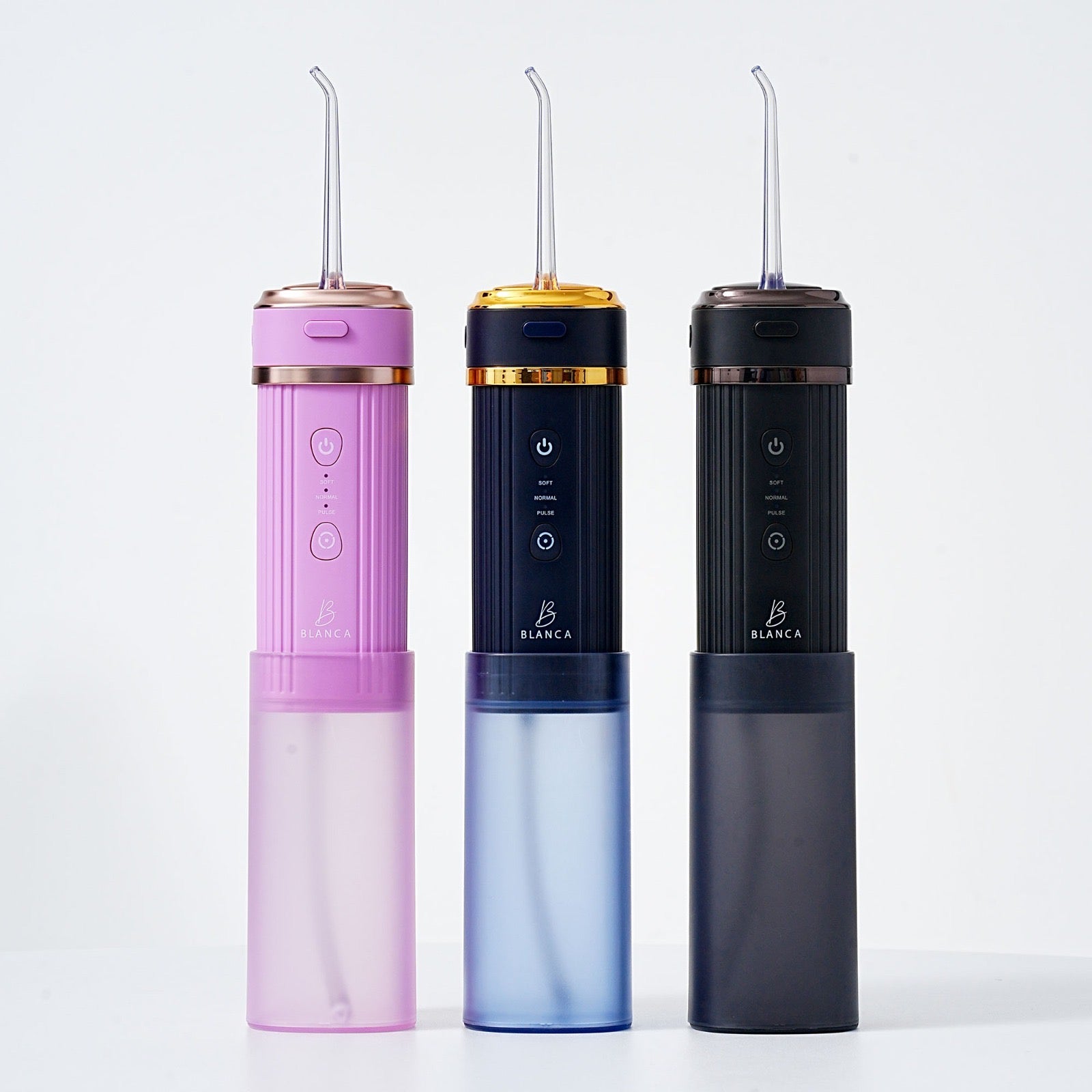
Some water flossers are built around a clinician-informed approach: adjustable pressure so you can start low and titrate up as your gums adjust, plus a tip design meant for daily use along the gumline rather than aggressive deep cleaning. If your current tip is worn down or you are just getting started, our replacement tips keep the spray pattern consistent, which matters more for gum comfort than most people realize. Browse the BLANCA oral-care collection to see the water flosser alongside the electric and manual toothbrushes we recommend pairing with it for a complete daily routine.
Key Studies and Resources on Water Flossing and Gum Health
- PubMed Central (PMC) hosts the full-text clinical trials cited throughout this article, useful if you want to read methodology in detail.
- The four-week RCT in the Journal of Dental Hygiene is the clearest short-term comparison against traditional floss.
- The 12-week trial on plaque microbiota explains the bacterial shift behind reduced inflammation.
- The six-month bonded-retainer study shows outcomes hold up over a longer, more demanding timeline.
- Our own guide on how to use a water flosser correctly translates that trial technique into a daily routine.
Sources
- Efficacy of a water flosser compared to an interdental brush on gingival bleeding and gingival abrasion: randomized controlled trial - PMC
- Effects of water flossing on gingival inflammation and supragingival plaque microbiota: a 12-week randomized controlled trial
- Efficacy of water flossing on clinical parameters of inflammation and plaque: A four-week randomized controlled trial - Journal of Dental Hygiene
- The effects of using water flosser versus interdental brush on gingival health in patients with mandibular bonded retainer - BMC Oral Health
FAQ
Why don’t some dentists recommend water flossers?
Some dentists default to traditional floss out of habit or because older device generations used pressure levels that felt uncomfortable for patients. Recent RCTs, including a four-week trial in the Journal of Dental Hygiene, show modern water flossers perform as well as or better than floss for reducing bleeding and inflammation, so that hesitation is shifting as more clinicians see the trial data.
Can I regrow gums that have already receded?
No home device, water flosser included, can regenerate gum tissue that periodontal disease has destroyed. Treatment for established recession typically requires professional care such as scaling and root planing or surgical grafting, with water flossing used afterward as an adjunct to protect the tissue you have left.
How do you flush out deep gum pockets at home?
A water flosser directed at the gumline at a 90 degree angle, held at a low to moderate pressure setting, helps disrupt bacterial buildup in shallow to moderate pockets when used daily. Pockets deeper than a few millimeters generally need professional periodontal maintenance, since home irrigation cannot reach or clean them fully.
Which water flosser works best for gums prone to recession?
Look for adjustable pressure with a genuine low starting setting, a tip designed for gentle daily gumline use, and easy tip replacement to keep the spray pattern consistent. The BLANCA Water Flosser is priced at $45 and built around that same low-to-moderate pressure control that clinical trials used to show safe, effective results.
How long before I see improvement in my gums?
Most clinical trials show measurable reductions in bleeding and gingival inflammation between four and twelve weeks of consistent daily use. Improvement is gradual, not immediate, so track bleeding week to week rather than judging results after just a few days.