

Whitening Without Sensitivity Explained: Safe Methods
Whitening without sensitivity is defined as the use of controlled, low-concentration peroxide-based agents combined with desensitizing ingredients to brighten teeth without triggering nerve pain. Approximately 78% of people experience some form of tooth sensitivity during professional whitening treatments. That number sounds alarming, but the right protocol changes everything. Sensitivity is not inevitable. With the correct product strength, application method, and pre-treatment care, you can achieve a noticeably brighter smile while keeping discomfort to a minimum. This guide covers the science behind sensitivity, the methods that reduce it, and the at-home steps that make gentle whitening techniques work for real people.
What causes sensitivity during teeth whitening?
Whitening sensitivity is a direct result of how bleaching agents interact with tooth structure. Peroxide-based agents penetrate the outer enamel layer and reach the dentin beneath. Dentin contains microscopic channels called dentinal tubules that connect directly to the tooth’s nerve. When those tubules open, the nerve becomes hyper-excitable and registers pain from temperature, pressure, or touch.
Temporary demineralization makes this worse. Whitening gels briefly soften the enamel surface, widening tubule openings and increasing nerve exposure. The good news is that this process reverses. Sensitivity after whitening typically resolves within 24 to 72 hours. People with pre-existing enamel wear or gum recession may feel discomfort for up to two weeks, because their tubules are already partially exposed before treatment begins.
Several factors raise your personal sensitivity risk:
- Thin or worn enamel from acid erosion or aggressive brushing
- Gum recession that exposes the root surface, which has no enamel layer
- Pre-existing cavities or cracks that give peroxide a direct path to the nerve
- High-concentration gels applied for too long or too frequently
- Off-the-shelf strips that contact gum tissue and cause chemical irritation
Pro Tip: Before starting any whitening treatment, check for dental issues like cavities or gum disease. Whitening over untreated problems significantly worsens sensitivity and can cause lasting damage.
Which whitening methods minimize sensitivity?
The delivery method and product concentration determine how much sensitivity you experience. Not all whitening options carry the same risk.
Concentration matters most
Low to moderate concentration gels in the 10–15% carbamide peroxide range cause less sensitivity than high-strength gels used in single sessions. Lower concentrations allow enamel to remineralize between applications, which prevents sensitivity spikes. The trade-off is time. Gradual whitening takes longer, but the results are comparable and far more comfortable.
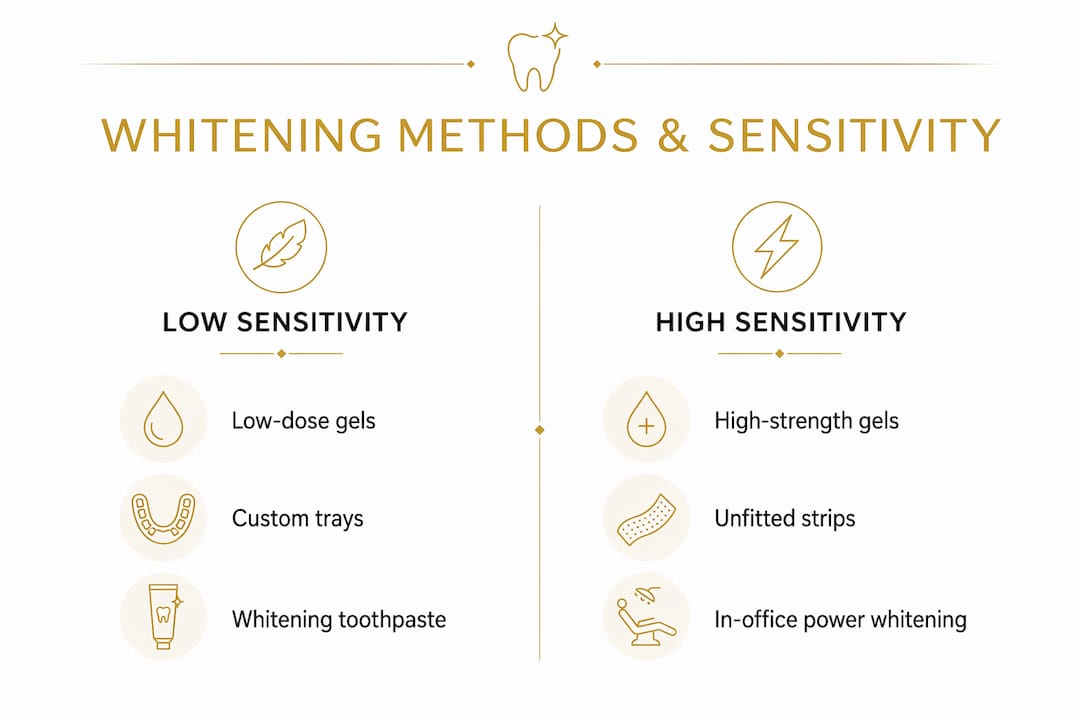
How delivery method affects sensitivity
Custom-fitted trays hold gel tightly against teeth and prevent it from spilling onto gum tissue. That precision reduces chemical burns and gum irritation significantly. Off-the-shelf strips lack this fit, so gel frequently contacts the gums and causes localized inflammation.
The table below compares common whitening methods by sensitivity risk and control level.
| Method | Concentration | Sensitivity risk | Control level |
|---|---|---|---|
| Custom tray with low-dose gel | 10–15% carbamide peroxide | Low | High |
| Over-the-counter strips | 6–10% hydrogen peroxide | Moderate | Low |
| Whitening toothpaste | Abrasive or low peroxide | Low | Very low |
| In-office professional treatment | 25–40% hydrogen peroxide | High | High (supervised) |
| DIY charcoal or baking soda | None (abrasive) | Low to moderate | Very low |
Whitening toothpastes and mouth rinses carry the lowest sensitivity risk, but they also deliver limited whitening results. They work best as maintenance tools after a primary treatment. In-office professional treatments use the highest concentrations, which is why dental supervision matters so much in those settings. For sensitive-free teeth whitening at home, a custom tray with a low-dose gel is the most controlled and comfortable option available.
How do desensitizing ingredients work?
Desensitizing whitening ingredients are the most underused tool in at-home whitening. Two compounds stand out above all others: potassium nitrate and amorphous calcium phosphate (ACP).
Potassium nitrate works by depolarizing nerve fibers. It penetrates the dentinal tubules and calms the nerve endings directly, blocking pain signals before they reach the brain. Desensitizing toothpastes containing potassium nitrate and fluoride are recommended both before and during whitening for this reason. The effect builds over time, which is why starting early matters.
Amorphous calcium phosphate (ACP) takes a different approach. It physically plugs open dentinal tubules by depositing calcium and phosphate minerals into the channels. This reduces fluid movement inside the tubule, which is the direct trigger for nerve pain. ACP also promotes enamel remineralization, helping to repair the temporary softening caused by peroxide gels.
Fluoride rounds out the trio. It strengthens enamel by forming fluorapatite, a harder mineral compound that resists acid and peroxide penetration. Using a fluoride gel or toothpaste after each whitening session accelerates enamel recovery.
Key desensitizing strategies to use during treatment:
- Apply potassium nitrate toothpaste for 1–2 weeks before starting whitening
- Use a desensitizing gel in your tray on rest days between whitening sessions
- Apply fluoride toothpaste immediately after removing whitening trays
- Consider oral health chewables that support remineralization between sessions
Pro Tip: After brushing with a potassium nitrate toothpaste, spit but do not rinse immediately. Leaving a thin layer on your teeth for a few minutes significantly improves absorption and nerve protection.
How to safely whiten teeth at home without sensitivity
A controlled protocol makes the difference between a comfortable whitening experience and two weeks of nerve pain. Follow these steps in order.
-
Get a dental check-up first. Whitening with untreated cavities or gum disease worsens discomfort and can cause lasting damage. Confirm your teeth and gums are healthy before starting.
-
Use desensitizing toothpaste for 1–2 weeks before whitening. Starting potassium nitrate toothpaste early builds a protective threshold in the nerve. This single step reduces in-treatment sensitivity more than almost any other preparation.
-
Choose a low-concentration gel. Select a product in the 10–15% carbamide peroxide range. Follow the manufacturer’s instructions for wear time. Do not extend sessions thinking it will speed up results. It will not. It will increase sensitivity.
-
Build in rest days. Taking rest days between sessions and using lower-concentration products yields similar whitening results with significantly less sensitivity. Aim for whitening sessions on alternating days, not consecutive days.
-
Keep gel away from your gums. Load trays with a small, precise amount of gel. Wipe away any overflow immediately with a cotton swab. Gum contact is one of the most common causes of irritation in at-home treatment.
-
Avoid harsh brushing during treatment. Use a soft-bristled toothbrush and gentle pressure. Aggressive brushing during an active whitening course removes the thin protective layer that forms as enamel remineralizes.
-
Follow the White Diet for 48 hours after each session. Post-whitening care includes avoiding coffee, tea, red wine, and acidic foods for at least 48 hours. These substances penetrate freshly opened tubules and stain more deeply right after whitening. Use a straw for beverages when possible.
-
Apply fluoride or a remineralizing agent after each session. This closes tubules, hardens enamel, and reduces the window of vulnerability between whitening applications.
Pro Tip: If you feel sharp sensitivity during a session, remove the tray immediately. Do not push through the pain. Stopping early and resuming the next day is far better than forcing a full session and triggering prolonged nerve irritation.
Key Takeaways
Whitening without sensitivity is achievable when you match the right concentration, delivery method, and desensitizing ingredients to your specific tooth condition.
| Point | Details |
|---|---|
| Sensitivity has a clear cause | Peroxide opens dentinal tubules and excites nerves; this process is temporary and manageable. |
| Low concentration is more effective | 10–15% carbamide peroxide gels cause less sensitivity and deliver comparable results over time. |
| Desensitizing ingredients are essential | Potassium nitrate and ACP block nerve signals and plug tubules before and during treatment. |
| Rest days protect your enamel | Alternating whitening sessions gives enamel time to remineralize and reduces sensitivity spikes. |
| Pre-treatment preparation matters | Starting desensitizing toothpaste 1–2 weeks early builds nerve tolerance before whitening begins. |
What I’ve learned from years of watching people whiten wrong
Most people who struggle with whitening sensitivity made the same mistake: they chose the strongest product available and used it every day. The logic seems sound. Stronger and faster should mean better results. Clinical experience says the opposite.
The people who get the best outcomes are the ones who slow down. They use a lower-concentration gel, build in rest days, and prepare their teeth with desensitizing toothpaste before the first application. Their results take a few extra days to appear, but they finish the course without pain and without damaging their enamel.
Sensitivity is also not uniform. Two people with identical whitening products can have completely different experiences based on enamel thickness, gum health, and existing dental work. That is why I believe whitening should be treated as a dental procedure, not a beauty product. A quick check of your gum health before starting is not excessive caution. It is the step that separates a comfortable result from a painful one.
The most overlooked piece of advice I can offer is this: do not skip the post-session fluoride. People focus entirely on the whitening gel and forget that recovery is half the process. Enamel that remineralizes fully between sessions whitens more evenly and holds results longer. Patience is not a weakness in whitening. It is the actual strategy.
— Blanca
Blancawhitening products designed for sensitive teeth
Sensitive teeth should not mean settling for a duller smile. Blancawhitening was founded by dental professionals who understood that most people need a gentler path to results, not a stronger one.
The at-home whitening collection includes low-concentration gels formulated to minimize sensitivity while delivering real results over a controlled treatment course. Every product is designed with enamel safety in mind, from the gel strength to the tray fit. For readers ready to start, the best-selling products include options specifically suited to sensitive teeth, with clear guidance on how to use them safely. Blancawhitening makes it straightforward to whiten at home without the guesswork that leads to discomfort.
FAQ
What is whitening without sensitivity?
Whitening without sensitivity refers to teeth bleaching protocols that use low-concentration peroxide gels, desensitizing ingredients like potassium nitrate, and controlled application methods to minimize nerve irritation during treatment.
How long does sensitivity after whitening last?
Sensitivity after whitening typically resolves within 24 to 72 hours. People with pre-existing enamel wear or gum recession may experience discomfort for up to two weeks.
Is whitening without sensitivity safe for everyone?
Whitening is not safe when active cavities, gum disease, or exposed roots are present. A dental check-up before starting treatment identifies these risks and prevents worsening discomfort.
What desensitizing ingredient works best during whitening?
Potassium nitrate is the most clinically supported desensitizing ingredient for whitening. It depolarizes nerve fibers to block pain signals and works best when applied for 1–2 weeks before treatment begins.
When should you avoid whitening altogether?
Avoid whitening when you have untreated dental problems, active gum inflammation, or severe enamel erosion. These conditions make the tooth far more vulnerable to peroxide penetration and can turn temporary sensitivity into lasting nerve damage.
Recommended
- Best Teeth Whitening Options for Sensitive Teeth (Science-Backed Guide – Blanca Whitening
- Questions to Ask Before Whitening Teeth: Safety Guide – Blanca Whitening
- At-Home Whitening Best Practices: Your Safe Results Guide – Blanca Whitening
- Tooth Porosity Whitening Results: What You Need to Know – Blanca Whitening