

Teeth Whitening Cost: What You Should Expect to Pay
Teeth whitening cost in the U.S. ranges from about $20 for over-the-counter strips to $1,200 or more for advanced in-office laser sessions in major metro markets. The single biggest price driver is the method you choose, which determines the peroxide concentration used and, in turn, how fast and how dramatically your teeth brighten. Dental insurance almost never covers cosmetic whitening, and FSA/HSA funds are typically off the table unless you can document a rare medical necessity.
Here’s a quick snapshot of what each tier costs:
- OTC strips, gels, and LED kits: $20–$150
- Dentist-supplied custom take-home trays: $100–$400 (gel refills $30–$80)
- Single-session in-office bleaching: $300–$800
- Laser or light-accelerated in-office (multi-session): $600–$1,200+
Table of Contents
- How do the main whitening methods compare?
- A closer look at each whitening method and what you actually get
- What actually drives the price difference between quotes?
- Will whitening actually work for your teeth?
- Safety, side effects, and how to manage sensitivity
- How to choose between at-home and professional whitening
- Why Blancawhitening is worth considering for at-home results
- Key Takeaways
- The case for starting smarter, not spending more
- Clinic-grade results at home, without the clinic price tag
- Useful sources and further reading
How do the main whitening methods compare?
The table below covers the four main categories most U.S. adults choose between. Prices reflect typical national ranges; metro areas like New York City or Los Angeles tend to run higher.
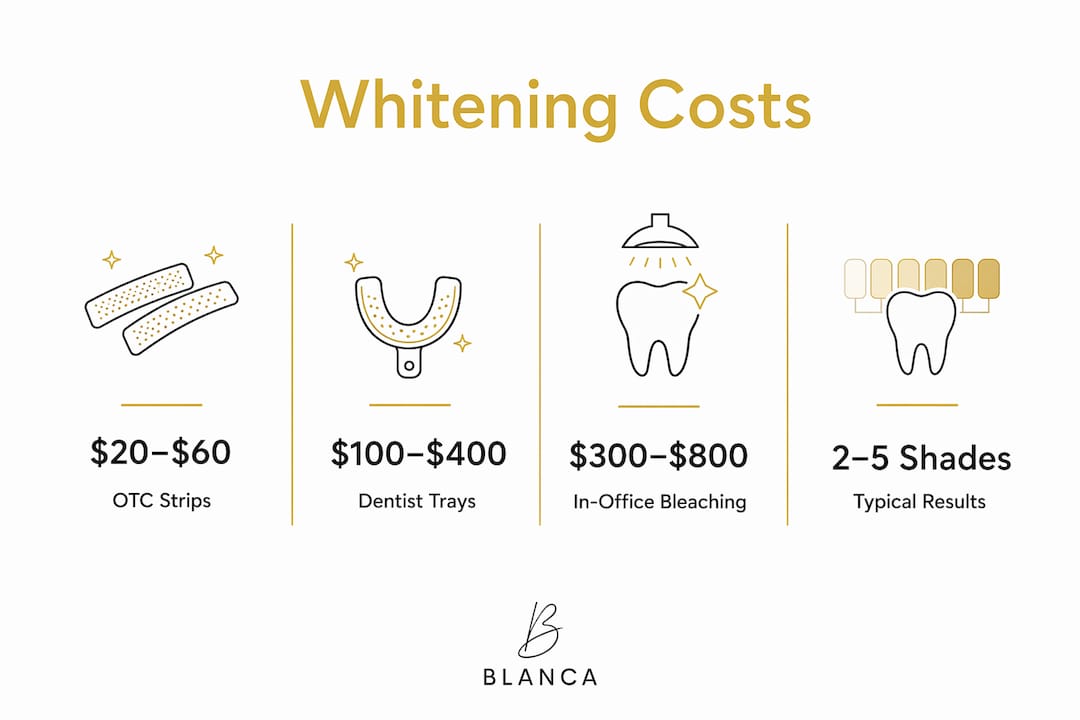
| Method | Typical U.S. price range | Typical shade change | Time to results | Main pros / cons |
|---|---|---|---|---|
| OTC strips / gels / LED kits | $20–$60 | 2–5 shades | 2–4 weeks | Low cost, convenient; slower, lower peroxide |
| Dentist take-home custom trays | $100–$400 + $30–$80 refills | 4–8 shades | 1–3 weeks | Reusable trays, strong gel; upfront cost, requires discipline |
| In-office single-session bleaching | $300–$800 | 6–10 shades | 1 visit | Fast, dramatic results; higher cost, sensitivity risk |
| Laser / light-accelerated in-office | $600–$1,200+ | 6–10 shades | 1–4 sessions | Maximum speed; multi-session total cost adds up quickly |
Quick pros/cons to keep in mind:
- OTC products work well for mild, surface-level (extrinsic) staining but rarely match professional results for deeper discoloration.
- In-office sessions deliver the fastest visible change, but multiple sessions are often needed for optimal laser results, pushing the total well above the single-visit advertised price.
A closer look at each whitening method and what you actually get
Understanding what you’re paying for at each tier makes the price comparison meaningful, not just a number on a page.
Whitening toothpaste and rinses
These products use mild abrasives and low-level peroxide or hydrogen peroxide alternatives. They remove surface staining gradually but produce minimal shade change (typically 1–2 shades at best). Cost: $5–$20. Best for maintenance after a whitening treatment, not as a primary whitening method.
OTC strips and gels
OTC whitening strips typically cost $20–$60 and can lighten teeth roughly 2–5 shades for extrinsic stains after 2–4 weeks of consistent use. Peroxide concentration is generally capped at 10–14% hydrogen peroxide or its carbamide peroxide equivalent. Results last 3–6 months with good oral hygiene.
OTC LED kits
These combine a low-concentration peroxide gel with a light device to accelerate the reaction. Retail price runs generally in the mid-cost range for OTC LED kits. The light can modestly speed up surface whitening, but the peroxide concentration remains low, so the shade improvement stays in the 2–5 shade range. Results are comparable to strips for most people.
Dentist-supplied custom take-home trays
Custom tray systems cost typically in the $100–$400 range initially and use 10–22% carbamide peroxide gel, which is significantly stronger than OTC products. You wear the trays for 30–60 minutes daily (or overnight, depending on the gel) for 1–3 weeks, achieving 4–8 shades of improvement. The trays are reusable for years; only gel refills ($30–$80) are needed for touch-ups. Over a multi-year horizon, this is often the most cost-efficient professional option.
Peroxide concentration at a glance:
- OTC products: ≤10% hydrogen peroxide (or equivalent carbamide peroxide)
- Dentist take-home gels: 10–22% carbamide peroxide
- In-office professional gels: 35–40% hydrogen peroxide
In-office single-session bleaching
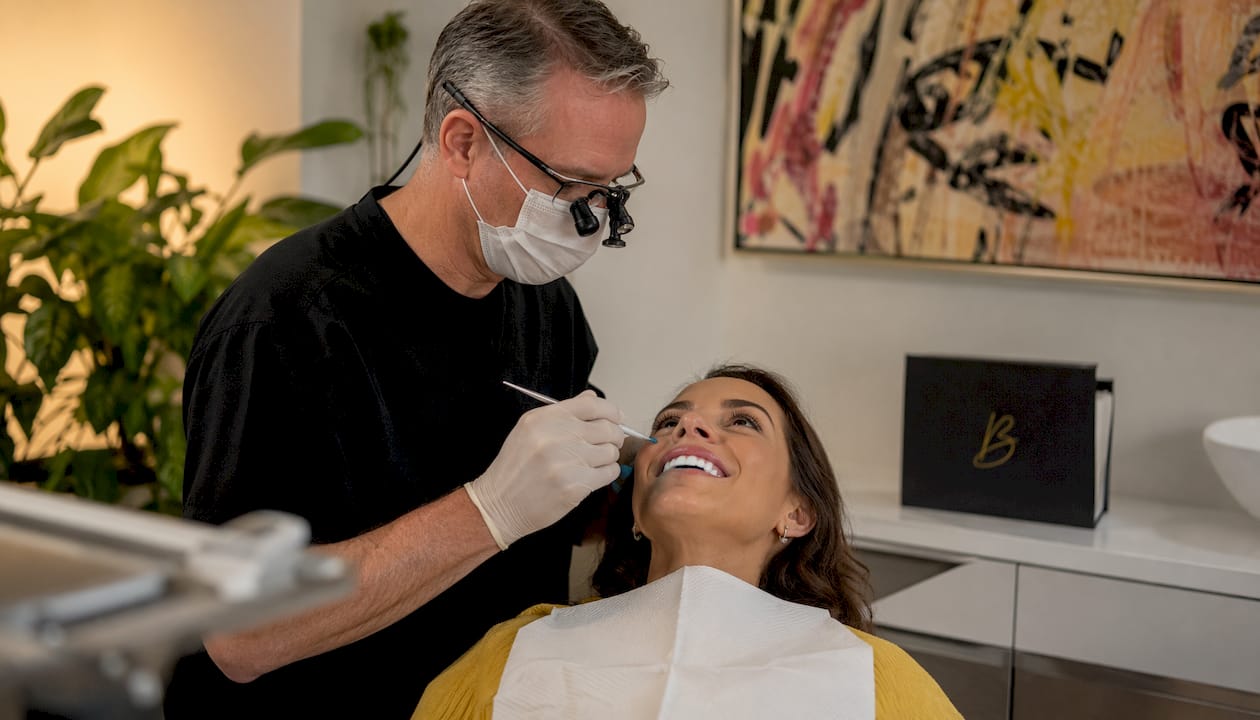
A single in-office session using a high-concentration gel (35–40% hydrogen peroxide) typically costs $300–$800 and can produce 6–10 shades of improvement in about 60–90 minutes. A national pricing aggregator reports average costs in the $395–$1,035 range depending on location and methodology. Results tend to last 6–12 months with proper maintenance.
Laser and light-accelerated in-office protocols
Laser whitening uses the same high-concentration gel as standard in-office bleaching, with a laser or specialized light to activate it faster. One session is often advertised at an attractive price, but optimal results frequently require 3–4 sessions, pushing the total cost above $1,200 in many major metro markets. In these areas, per-session fees are higher than national averages.
Internal bleaching for intrinsic stains
This is a per-tooth procedure performed by a dentist on non-vital (root-canal-treated) teeth with internal discoloration. It involves placing a bleaching agent inside the tooth itself. Cost is typically quoted per tooth and is substantially higher than standard whitening. It is not a standard whitening treatment and is only appropriate for specific clinical cases.
A note on intrinsic staining: Discoloration from tetracycline antibiotics, fluorosis, or aging-related dentin darkening often responds poorly to peroxide-based systems. If your staining is intrinsic, a dentist consultation is necessary before spending money on any whitening product, as restorative options like veneers may be the more realistic path.
| Treatment | Time to visible results | Maintenance cost |
|---|---|---|
| OTC strips / gels | 2–4 weeks | $20–$60 per box, as needed |
| Dentist take-home trays | 1–3 weeks | $30–$80 per gel refill |
| In-office single session | 1 visit (60–90 min) | Periodic in-office touch-up or home gel |
| Laser / multi-session in-office | 1–4 sessions over weeks | Periodic in-office or home maintenance |
What actually drives the price difference between quotes?
Two dentists in the same city can quote you very different numbers for what sounds like the same treatment. Here’s why, and what to confirm before you commit.
Main cost drivers:
- Method and peroxide concentration. Higher-concentration professional gels cost more to administer safely and require more clinical oversight.
- Number of visits. A single in-office session and a three-session laser protocol are not the same product, even if both are called “in-office whitening.”
- Single arch vs. both arches. Some offices quote per arch; always confirm whether the price covers upper and lower teeth.
- Clinic tier. A cosmetic dental specialist typically charges more than a general dentist for the same procedure.
- Geographic market. In major metro areas like NYC, LA, and San Francisco, in-office sessions commonly run $600–$1,200, while mid-size city averages are often $300–$500.
- Bundled vs. unbundled pricing. Tray fabrication, whitening gel, desensitizing treatment, and follow-up appointments are often billed as separate line items rather than a single bundled fee.
- Add-on services. Shade-matching photography, professional fluoride application, and custom-fit trays may appear as extras.
Before you sign off on a quote, confirm in writing:
- Is the price per arch or for both?
- How many sessions are included?
- Is desensitizing treatment included or billed separately?
- Are custom trays included, and are gel refills covered?
- What is the total cost if additional sessions are recommended?
Will whitening actually work for your teeth?
Peroxide-based whitening works by penetrating enamel and breaking apart the organic compounds that cause staining in the dentin layer beneath. Whether it works for you depends largely on the type of staining you have.
Extrinsic staining sits on or near the enamel surface and comes from dietary sources (coffee, tea, red wine, tobacco). This type responds well to peroxide bleaching at virtually every price tier. Most people with extrinsic staining see meaningful results from OTC strips, and excellent results from professional systems.
Intrinsic staining originates inside the tooth structure itself. Common causes include tetracycline antibiotic use during tooth development, fluorosis, aging-related dentin darkening, and discoloration following root canal treatment. Peroxide bleaching has limited effectiveness on intrinsic stains, and patient candidacy directly affects both outcome and cost — some cases require internal bleaching or restorative work like veneers or bonding.
Practical guidance:
- If your staining is mild and surface-level, start with a reputable OTC strip or at-home kit.
- If you’ve tried OTC products without satisfying results, consult a dentist before spending more.
- If your teeth have visible gray or brown banding (tetracycline) or white spots (fluorosis), see a dentist first — standard whitening may make the appearance uneven.
- Crowns, veneers, and composite bonding do not respond to peroxide bleaching. If you have visible restorations on front teeth, discuss this with your dentist before whitening.
Safety, side effects, and how to manage sensitivity
Tooth sensitivity and mild gum irritation are the two most common side effects of peroxide-based whitening, and both are usually temporary. Sensitivity occurs because peroxide opens microscopic channels in enamel, allowing the bleaching agent to reach the dentin layer where nerve endings are more accessible.
What’s normal:
- Mild-to-moderate tooth sensitivity during or shortly after treatment
- Temporary gum irritation from tray contact or gel overflow
- Sensitivity that fades within 24–48 hours of stopping treatment
When to stop and call your dentist:
- Sharp, lingering pain that doesn’t resolve within 48 hours
- Visible gum tissue damage or persistent white patches on gums
- Sensitivity that worsens with each session rather than improving
Practical steps to reduce sensitivity:
- Use a desensitizing toothpaste containing potassium nitrate or stannous fluoride for 1–2 weeks before starting treatment.
- Shorten daily wear time if sensitivity develops; don’t push through significant discomfort.
- Apply a fluoride gel or potassium nitrate product after each whitening session.
- Ask your dentist about professional-strength desensitizing treatment if sensitivity is severe.
Pro Tip: Ask your dentist or product provider whether desensitizing treatment is included in the quoted price before you book. Many offices bill it separately, and the added fee can be a surprise on the final invoice.
For safe at-home use, Blancawhitening’s at-home whitening best practices guide covers wear times, sensitivity management, and when to pause treatment.
How to choose between at-home and professional whitening
The right choice depends on four factors: your timeline, how many shades lighter you want to go, your sensitivity history, and your budget. Work through these in order.
Decision steps:
- Set your deadline. If you need results in 48–72 hours (a wedding, a job interview), only in-office bleaching can deliver. For a flexible timeline of 2–4 weeks, at-home options work well.
- Decide on your target shade change. A 2–4 shade improvement is achievable with quality OTC strips or at-home kits. For 6–10 shades, professional systems are the realistic path.
- Assess your sensitivity history. If you’ve had significant sensitivity with OTC products before, a dentist-supervised take-home tray with a lower-concentration gel used on a modified schedule is often more comfortable than a high-concentration in-office session.
- Set a realistic budget. OTC options generally cost less; dentist take-home trays represent moderate upfront cost; in-office treatments typically cost more.
Questions to ask before buying or booking:
- What is the active bleaching agent and its concentration?
- How many shades of improvement should I realistically expect?
- What is the total cost including trays, gel, and desensitizing?
- What does maintenance cost per year?
- Are there any red flags given my dental history (restorations, sensitivity, stain type)?
Red-flag answers to avoid: Any provider who guarantees a specific shade number without examining your teeth, or any product page that refuses to disclose peroxide concentration.
The hybrid approach makes sense for many adults: start with a dentist-supplied custom tray kit for the initial treatment, then use a quality at-home system for periodic touch-ups. This spreads the cost over time and keeps results consistent without repeated chair time. For a deeper comparison of both paths, Blancawhitening’s at-home vs. professional whitening guide walks through the trade-offs in detail.
Why Blancawhitening is worth considering for at-home results
Most OTC whitening products are formulated to the lowest common denominator: low peroxide concentrations, generic tray fits, and minimal clinical input. Blancawhitening was founded by dental professionals specifically to close that gap.
The Blancawhitening lineup includes at-home whitening strips in multiple formulations, professional-grade take-home kits, and whitening pens, all developed with clinically backed ingredients. The key difference from standard drugstore products is formulation quality and the clinical design behind the delivery system, which affects how evenly and effectively the peroxide agent contacts enamel.
Where Blancawhitening fits on the cost curve:
- Priced well below typical dentist-chair sessions and multi-session laser protocols
- Delivers professional-grade peroxide concentrations in a format designed for at-home use
- Reusable components lower the long-term cost compared with repeatedly purchasing OTC boxes
Blancawhitening is the right choice when:
- You want results closer to the dentist-tray tier without the $100–$400 upfront dental visit cost
- You have a flexible timeline (1–3 weeks) and prefer to whiten on your own schedule
- You want a dental-professional-backed formulation rather than a generic retail product
The brand also carries complementary oral care products including electric toothbrushes and water flossers, which support gum health and surface cleanliness during and after whitening. Maintaining clean enamel between whitening sessions is one of the most effective ways to extend results, and factors like stain type and oral hygiene habits directly affect how long your results last.
Key Takeaways
Professional whitening costs 10–40 times more than OTC options, but peroxide concentration and clinical oversight explain most of that gap — matching the method to your timeline and stain type is what determines real value.
| Point | Details |
|---|---|
| Cost range by method | OTC strips run $20–$60; dentist trays $100–$400; in-office sessions $300–$800, with multi-session laser protocols reaching $1,200 or more in major metros. |
| Peroxide concentration drives results | Professional gels use 35–40% hydrogen peroxide vs. ≤10% in OTC products — that gap explains the speed and shade difference. |
| Insurance rarely helps | Cosmetic whitening is almost never covered by dental insurance, and FSA/HSA funds are typically ineligible. |
| Intrinsic stains need a dentist first | Tetracycline, fluorosis, and root-canal discoloration often don’t respond to standard peroxide bleaching. |
| Blancawhitening bridges the gap | Blancawhitening’s at-home kits and strips deliver professional-grade formulations at a fraction of in-office pricing. |
The case for starting smarter, not spending more
Most adults overspend on whitening by skipping the middle tier. They buy a $25 strip kit, see modest results, then jump straight to a $600 in-office session — when a $150–$300 professional-grade at-home system would have delivered comparable long-term results at a fraction of the cost.
The two mistakes worth avoiding: buying the cheapest product and expecting dramatic results, and treating any whitening treatment as permanent. Whitening fades. Coffee, tea, and red wine will gradually restain enamel regardless of how you whitened. The adults who get the best long-term value build a simple maintenance habit: a quality at-home kit for periodic touch-ups, combined with good daily oral hygiene. That approach costs far less per year than repeated in-office sessions.
If you’re starting from scratch, a reputable at-home system with a clinically backed formulation is the most cost-efficient first step for most people. Upgrade to custom dentist trays or an in-office session if you need faster or more dramatic results, or if your staining is deeper than surface-level. The whitening maintenance guide from Blancawhitening is a practical resource for keeping results going after your initial treatment.
Clinic-grade results at home, without the clinic price tag
Blancawhitening’s at-home whitening systems give you the formulation quality of a dentist-supplied kit at a price that fits between drugstore strips and a dental chair. Developed by dental professionals and built around clinically backed peroxide concentrations, the lineup covers everything from daily whitening strips to professional-grade take-home kits and whitening pens.
For price-conscious buyers, the math is straightforward: a single in-office session costs $300–$800 and fades within months. A Blancawhitening kit delivers comparable at-home results and includes reusable components that lower your per-use cost over time. Browse the current offers and best sellers to find the right fit for your budget and timeline, or explore the full at-home whitening collection to compare kits, strips, and pens side by side. For safe at-home use, the dentist-backed guidance on home whitening is a useful companion resource.
Useful sources and further reading
The price ranges, peroxide concentration figures, and clinical claims in this article draw from the following sources. Consult your dentist for a personalized quote, as individual pricing varies by location, provider, and treatment plan.
- ADA Oral Health Topics: Whitening — The American Dental Association’s clinical overview of whitening methods, safety, and professional guidance.
- MouthHealthy.org: Teeth Whitening — ADA’s consumer-facing resource on whitening options, candidacy, and what to expect.
- PubMed: Tooth whitening safety and efficacy review — Peer-reviewed research on the safety and clinical efficacy of peroxide-based bleaching agents.
- PMC: Bleaching agents and enamel effects — Clinical study examining how different peroxide concentrations affect enamel structure and sensitivity.
- ToothCostGuide: Teeth whitening cost across all options — Aggregated U.S. price ranges for OTC, take-home, and in-office whitening methods.
- Pearl Dental Costs: National average teeth whitening cost — National pricing aggregator data with reported average cost windows and medians.
- RealDentalCosts: In-office vs. at-home vs. OTC — Market-based pricing data including metro vs. mid-size city comparisons and long-term value analysis.
- Healthline: Laser teeth whitening procedure and costs — Overview of laser whitening protocols, typical session counts, and cost considerations.
- FSAstore: FSA eligibility for teeth whitening — Definitive reference on FSA/HSA eligibility rules for cosmetic whitening expenses.
- IRS Publication 502: Medical and dental expenses — IRS guidance on which dental expenses qualify as medical deductions; confirms cosmetic whitening is generally excluded.
Price ranges in this article reflect U.S. national averages and market data from the sources above. Individual costs vary by provider, location, and treatment plan. This article is general information, not professional dental advice. Confirm current pricing and treatment suitability with a licensed dentist for your specific situation.