

Teeth Whitening Timeline for Events: Same Day to 4-Week Plans
You can see immediate whitening after one in-office session, meaningful change within one to two weeks with dentist-prescribed take-home trays, and gradual brightening over two to four weeks with strips or several weeks to months with whitening toothpaste. Your actual pace depends on stain type, product strength, and enamel condition. These are starting points, not guarantees, and individual results vary based on your teeth and habits.
TL;DR:
- In-office whitening produces visible results within 30 to 60 minutes, often completing the procedure in one to two hours.
- Take-home trays show noticeable improvement by two weeks, with subtle changes starting within days, depending on the peroxide concentration.
- Over-the-counter strips usually require three to four weeks of daily use for significant whitening, working more slowly than professional methods.
- Whitening toothpaste offers minimal change over several months and is better suited for maintenance rather than initial whitening.
- Sensitivity occurs in about one-third of users, typically resolving within a few days, and should be managed by adjusting application time or consulting a dentist.
Table of Contents
- How long does teeth whitening take to work?
- What determines how fast your teeth respond?
- What can you expect week by week?
- How long does sensitivity last, and when should you stop?
- When should you start whitening before a big event?
- What does a clinician-backed maintenance schedule look like?
- Realistic expectations matter more than speed
- Which BLANCA whitening option fits your timeline?
- Sources
How long does teeth whitening take to work?
The speed of your results depends entirely on which method you choose, and each one operates on a different clock. Understanding these schedules upfront helps you match a treatment to your actual timeline instead of guessing.
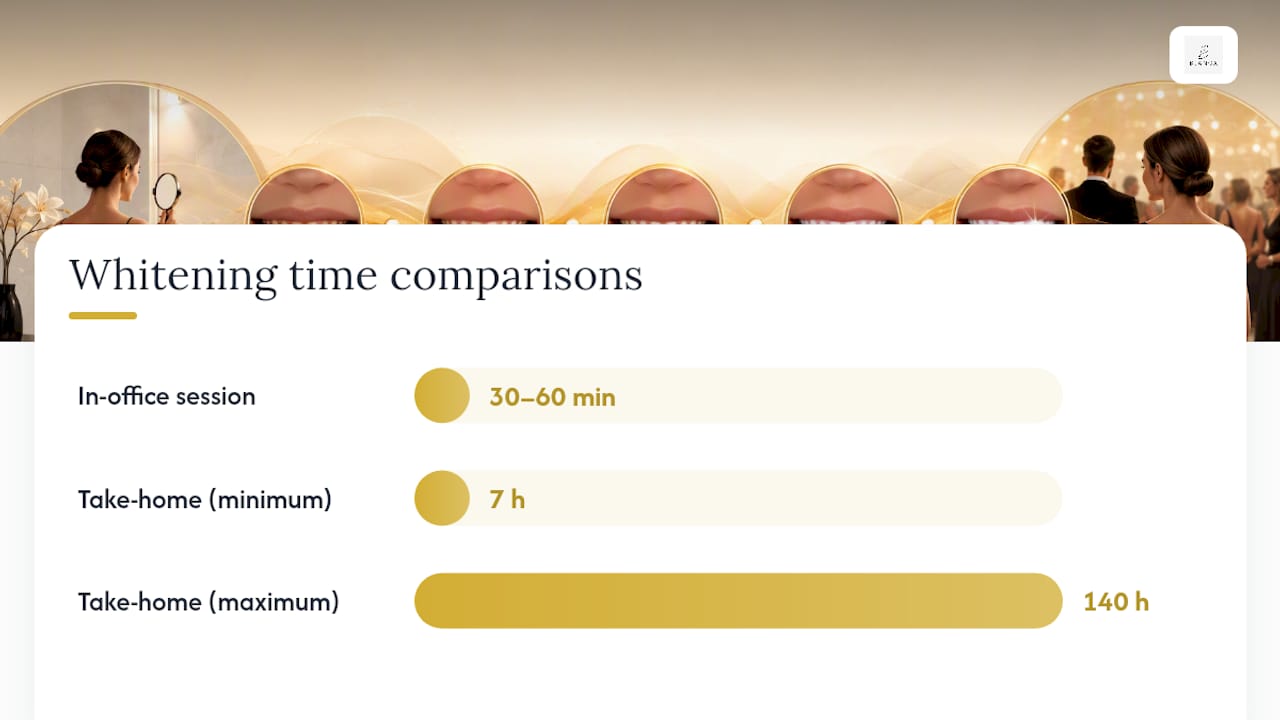
In-office whitening works fastest because it uses higher-concentration peroxide under professional supervision. A typical appointment runs 30 to 90 minutes, and many patients walk out with visibly whiter teeth the same day. A 2023 study comparing whitening systems found that in-office treatments using hydrogen peroxide can produce measurable shade change in as little as 30 to 60 minutes of active application. NHS guidance confirms in-surgery whitening is usually completed in one to two hours total.
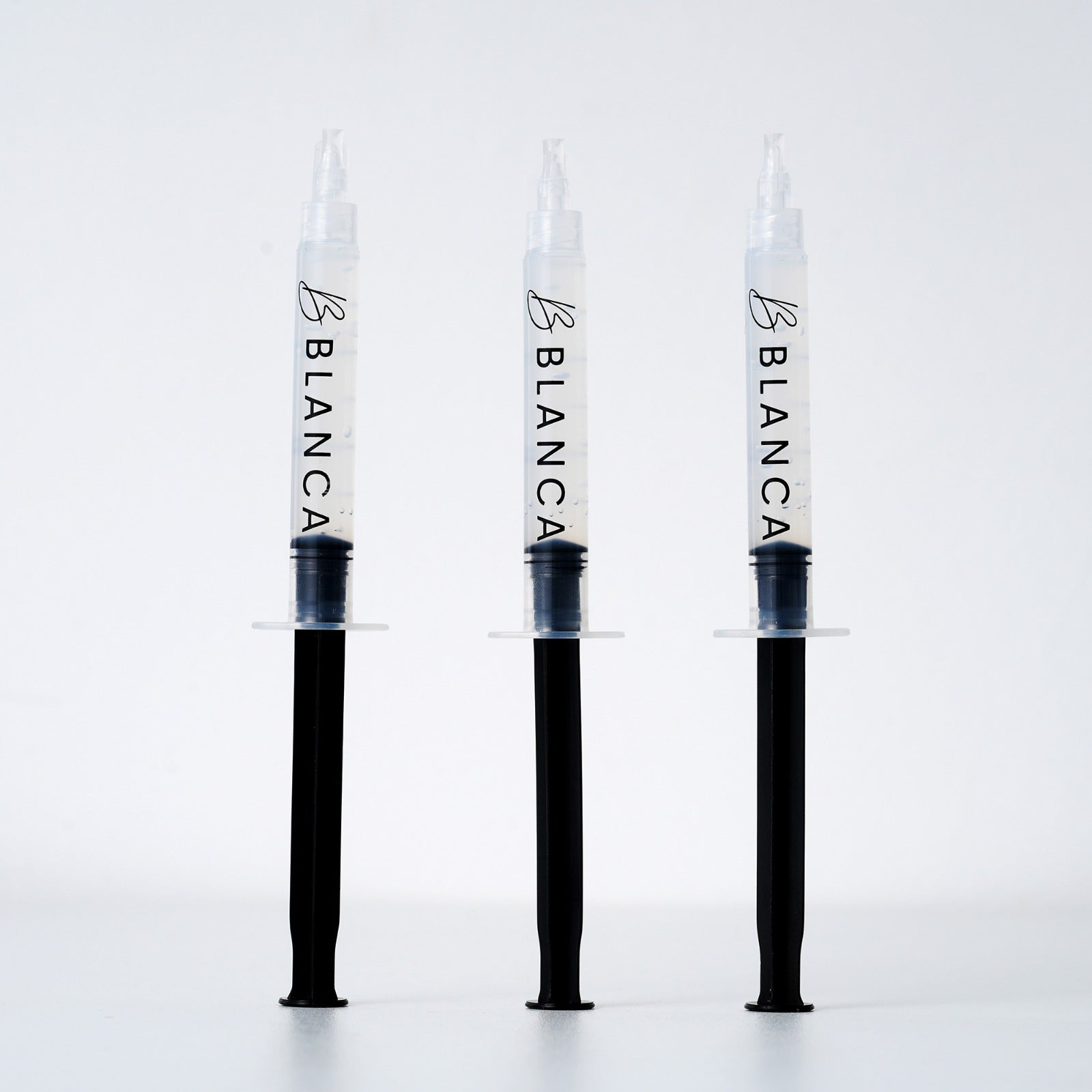
Dentist-prescribed take-home trays use custom-fitted trays with lower-concentration gel worn daily or overnight. The NHS notes these kits are typically used over a period of weeks. You’ll often notice subtle brightening within the first several days, with more meaningful change appearing around the two-week mark as the peroxide works cumulatively.
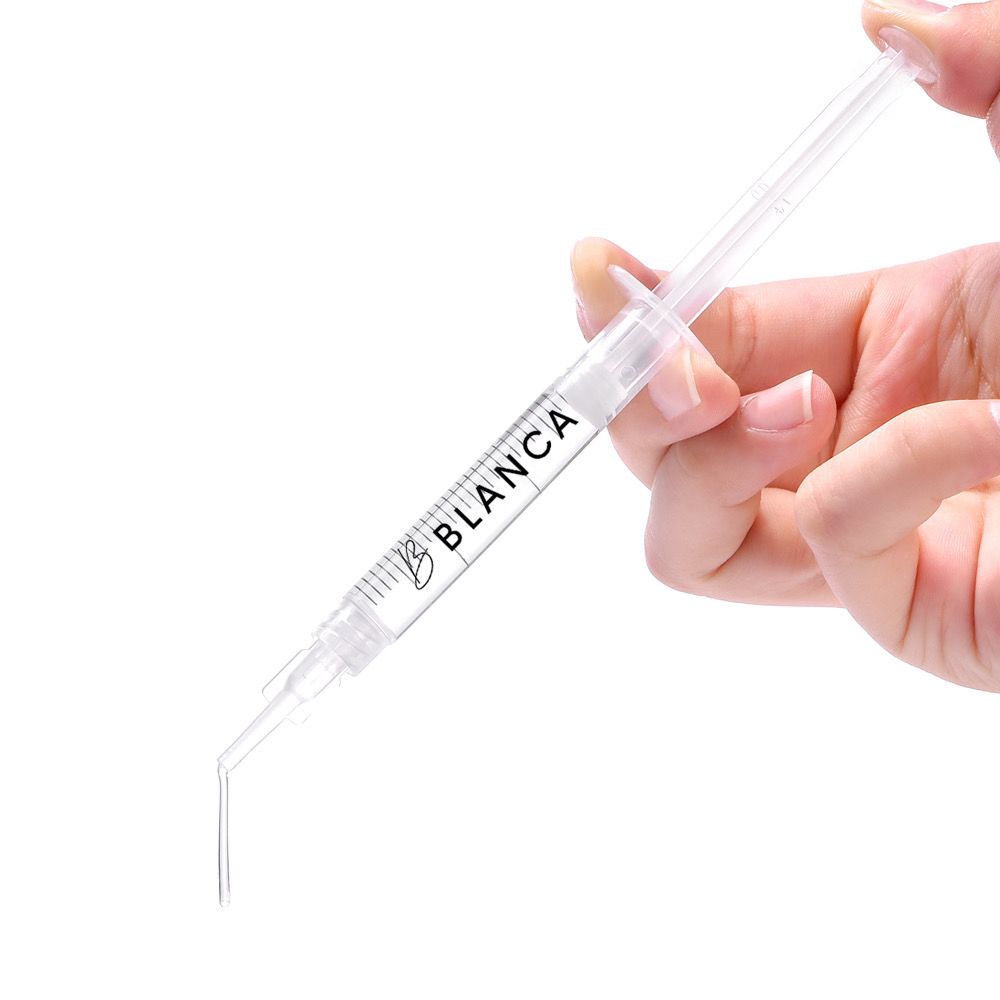
Over-the-counter strips follow a similar cumulative pattern but at a gentler pace, since they carry less active ingredient than professional products. Most people wear strips daily for 20 to 30 minutes, and Healthline notes that at-home kits generally require several weeks of consistent use before results become obvious. Expect gradual improvement over two to four weeks rather than a dramatic single-day shift.
Whitening toothpaste works the slowest of the four, relying on mild abrasives or low-dose whitening agents that polish away surface stains rather than penetrating enamel. Realistic expectations here run weeks to months, and toothpaste works best as a maintenance tool after a stronger treatment rather than a standalone whitening method.
- In-office: results visible same day, one appointment
- Take-home trays: noticeable in days, with meaningful change by two weeks
- Strips: gradual brightening over two to four weeks
- Toothpaste: subtle change over weeks to months, best for upkeep
What determines how fast your teeth respond?
Not every mouth whitens at the same rate, and the reasons come down to a handful of biological and product-related factors you can actually plan around.
Stain type matters most. Extrinsic stains sitting on the enamel surface, caused by coffee, tea, or wine, respond quickly to most whitening agents. Intrinsic stains buried deeper in the dentin, often from certain medications or aging, respond more slowly and sometimes require extended treatment or a different cosmetic approach entirely.
Concentration versus contact time creates a trade-off. Higher-peroxide products (like professional-grade gels) work faster but need shorter exposure, while lower-concentration formulas need much longer contact time to reach similar results. The same MDPI research found some take-home regimens totaled 7 to 140 hours of cumulative wear to match outcomes achieved in-office within 30 to 60 minutes.
- Enamel thickness affects how deeply whitening agents can penetrate
- Existing fillings, crowns, or veneers won’t lighten and can create shade mismatches
- Skipping days or shortening wear time slows your whole timeline
- Thinner enamel sometimes whitens faster, but often with more sensitivity
Pro Tip: If you have a mix of natural teeth and restorations, whiten your natural teeth first, then talk to your dentist about matching any visible dental work to your new shade.
What can you expect week by week?
Most people track progress against a few common checkpoints. Here’s what tends to happen at each stage with consistent, correctly-used at-home treatment:
- Day 3: Early users often notice a subtle shift, teeth feel slightly cleaner and brighter, though the change may only be obvious in good lighting or side-by-side photos.
- Day 7: A more visible difference typically emerges by the end of the first week, especially for people using daily strips or trays.
- Day 14: This is the milestone most take-home systems are built around. Two weeks of consistent use is often where the shade change becomes unmistakable to other people, not just to you.
- 1 month: Results typically stabilize. Without any maintenance, minor rebound is common as the teeth reabsorb some staining compounds. This is normal and doesn’t mean the treatment failed.
Patience matters more than intensity here. Whitening is cumulative, and consistent daily use beats sporadic overuse. Doubling up on strips or leaving trays in longer than directed won’t speed up your timeline. It mostly just raises your sensitivity risk.
How long does sensitivity last, and when should you stop?
Temporary tooth sensitivity is the most common side effect of peroxide-based whitening, and Healthline notes it typically appears within the first few days of treatment and fades within a day or two after you stop. Gum irritation can also occur if gel contacts soft tissue, usually from an ill-fitting tray or excess strip product.
Most sensitivity resolves on its own. A few adjustments make it more manageable:
- Switch to a desensitizing toothpaste a few days before starting treatment
- Shorten wear time or skip a day if sensitivity spikes
- Avoid extremely hot or cold foods for 24 to 48 hours after each session
- Rinse trays and wipe excess gel from strips immediately to limit gum contact
Stop and consult a dentist if you experience pain lasting more than a couple of days, visible sores, or areas where dentin looks exposed. A pre-treatment dental checkup catches cavities, gum disease, or existing restorations that can turn mild sensitivity into a real problem. Roughly one in three people who use peroxide-based whitening products report some degree of temporary sensitivity, which is why starting with a lower concentration or shorter wear time is often the smarter first move.
When should you start whitening before a big event?
Working backward from your event date keeps you from rushing a method that needs more time than you’ve given it. Use these lead times as your starting point, then add a buffer.
- In-office whitening: same day to one week before the event
- Dentist take-home trays: start two to four weeks ahead
- OTC strips: start three to four weeks ahead
- Whitening toothpaste: start months ahead as ongoing maintenance, not a quick fix
Build in a three-to-seven-day buffer after your last application so shade can stabilize and any sensitivity can settle before photos or a big smile moment. If you’re already behind schedule, in-office whitening or a professional-grade take-home kit is a safer accelerated option than doubling up on OTC products.
Pro Tip: Avoid coffee, red wine, and dark sauces for 48 hours after any whitening session. Freshly whitened enamel is more porous and stains more easily right after treatment.
What does a clinician-backed maintenance schedule look like?
Blancawhitening builds its at-home systems around the same wear patterns dental professionals recommend: shorter daily sessions for sensitive teeth, longer sessions for faster results when enamel tolerates it. Our recommended whitening schedule adjusts wear time based on your sensitivity history rather than a one-size-fits-all approach.
Pairing whitening with consistent daily oral care extends results and reduces new surface staining between sessions. Most people benefit from a touch-up every few months, depending on diet and habits like coffee or wine consumption.
Realistic expectations matter more than speed
Chasing the fastest possible result is often what leads people to overuse products and end up with sensitivity instead of a brighter smile. Gradual, consistent whitening works for most people, and a quick dental check beforehand catches problems that would otherwise slow you down or cause pain. Set a realistic shade goal, plan backward from your event date, and treat maintenance as part of the process rather than an afterthought. If your timeline feels tight or your teeth have restorations, a conversation with a dental professional is worth more than any shortcut.
— Blanca
Which BLANCA whitening option fits your timeline?
If you need results fast, Blancawhitening’s professional-grade whitening kits are built for shorter, higher-impact sessions, while our at-home strips suit anyone working with a two-to-four-week runway before an event.
Both options follow the same clinically informed schedules referenced throughout this article, so you’re never guessing at wear time or frequency. Browse the full at-home teeth whitening collection to compare strip and tray options by strength and session length, or check our best sellers if you want the products other customers reach for first. If you have crowns, veneers, fillings, or a history of sensitivity, talk to your dentist before starting a high-concentration product. Once you know your timeline and your teeth are cleared for treatment, choosing the right kit takes minutes.
Sources
- Treatment Durations and Whitening Outcomes of Different Tooth Whitening Systems — MDPI
- Teeth whitening - NHS
- How does teeth whitening work? — Healthline
This article is general information, not a substitute for advice from a qualified doctor. Consult a qualified healthcare professional about your own circumstances before acting on anything here.