
Teeth Whitening Training Canada: Guide for Aspiring Technicians
Professional teeth whitening certification is available to non-dental professionals in Canada through private training providers and vendor-led programs. You do not need a dental license to enroll in most courses, though you must verify your province’s scope-of-practice rules before offering paid services. Bodies like the College of Dental Hygienists of Ontario set the boundaries for regulated professionals, and private certification sits outside that framework. The BLANCA Professional Teeth Whitening Course is a Canadian-based option designed by dental professionals, and it covers the clinical, safety, and business skills you need to start seeing clients with confidence.
Before you compare any course, check it against these four criteria:
- Format clarity: Is there a hands-on practical component, or is it theory only?
- Kit included: Does the price cover a starter kit with gels, an LED light, and a gingival barrier?
- Dental-led instruction: Was the curriculum written or reviewed by a dentist or dental hygienist?
- Transparent pricing: Is the CAD price, tax, shipping, and refund policy clearly stated?
Table of Contents
- What does professional teeth whitening training actually teach you?
- What formats, durations, and prerequisites do Canadian courses offer?
- How much does a Canadian course cost, and what does a starter kit include?
- How do you pick a reputable Canadian teeth whitening course?
- Why the BLANCA Professional Teeth Whitening Course is a strong Canadian choice
- Key Takeaways
- What the industry gets wrong about teeth whitening training
- Ready to enroll in the BLANCA Professional Teeth Whitening Course?
- Where to check regulatory and clinical guidance in Canada
What does professional teeth whitening training actually teach you?
A credible course covers far more than how to apply a whitening gel. The syllabus should move through four distinct areas: clinical science, practical technique, safety protocols, and business readiness.
Clinical science grounds you in oral and dental anatomy relevant to whitening, the difference between intrinsic and extrinsic stains, and how peroxide-based agents interact with enamel and dentin. You will learn which concentrations are appropriate for different stain types and why higher hydrogen peroxide percentages are not always better.
Practical technique is where most of the real learning happens. Modules should cover paint-on application using a pen or syringe, gingival barrier placement to protect soft tissue, tray-based workflows versus lamp-assisted in-office treatments, and how to manage post-treatment sensitivity. Knowing how to isolate the gingival tissue correctly is what separates a safe treatment from one that causes irritation.
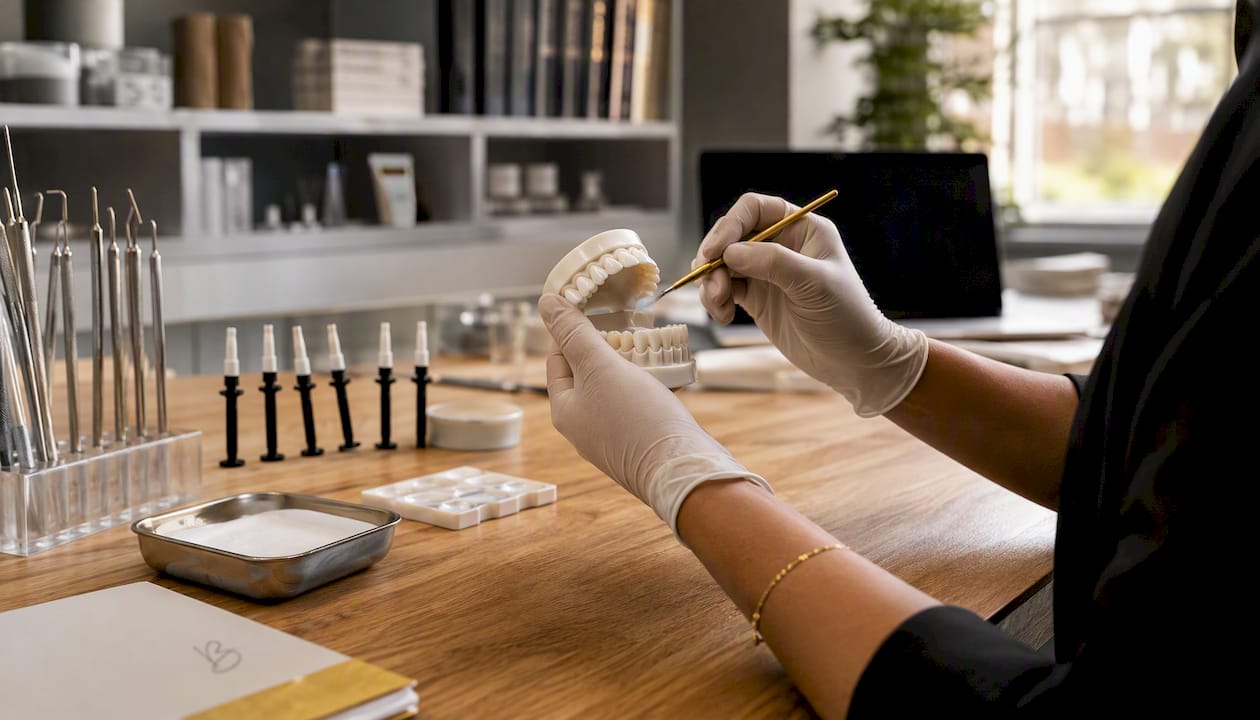
Pro Tip: Mastering isolation and the paint-on technique matters more for consistent client results than buying the most expensive LED lamp. Instructors consistently report that technique errors, not equipment limitations, are the primary cause of uneven whitening and client complaints.
Safety and sanitation should include infection control procedures, proper PPE use, cross-contamination prevention, and recordkeeping. Consent forms and post-treatment documentation are not optional extras. Reviewing sample questions providers should ask clients before treatment is a practical way to understand what thorough screening looks like.
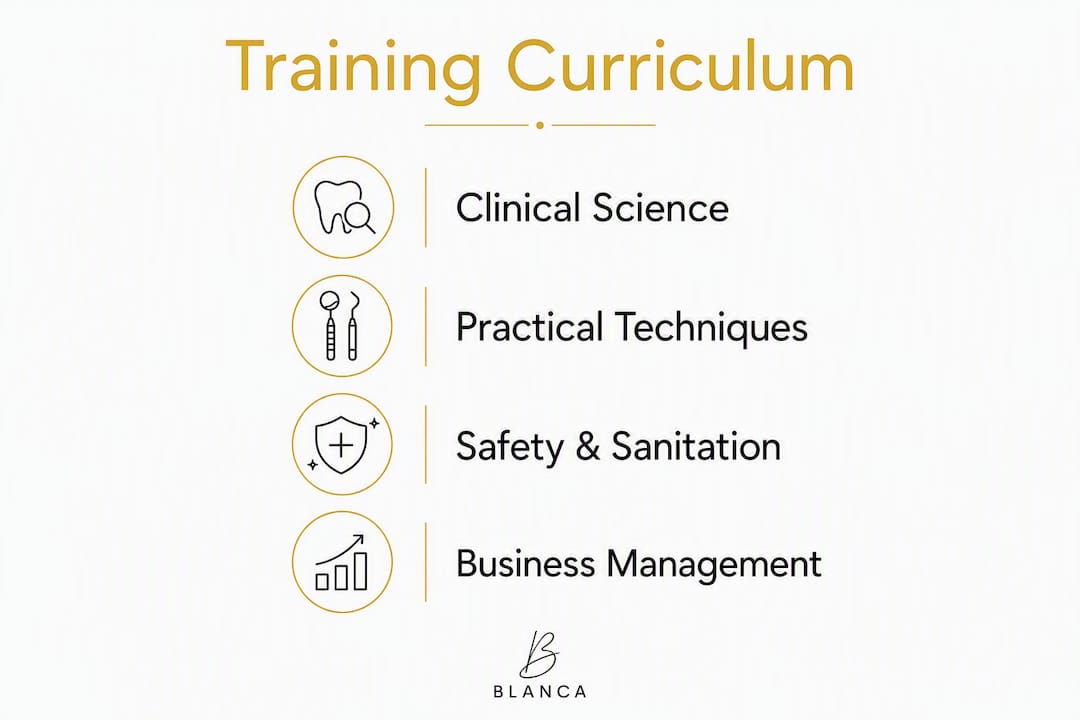
Business and client management rounds out a strong curriculum. Look for modules on intake forms, pricing strategy, aftercare instructions, basic marketing, and insurance considerations. Course pages that include marketing guidance alongside clinical training signal that the provider understands what graduates actually need to build a practice.

What formats, durations, and prerequisites do Canadian courses offer?
Canadian teeth whitening courses fall into three main formats, each suited to a different schedule and learning style.
-
Fully self-paced online modules. These cover theory only and can be completed in a few hours to a few weeks depending on your pace. They are the most flexible option but do not include supervised hands-on practice. Some providers offer lifetime access to materials so you can revisit content after you start seeing clients.
-
Hybrid online plus in-person practical. You complete theory modules online, then attend a practical session with an instructor. This is the most common format for serious practitioners. The practical day typically covers live model practice, supervised gel application, isolation technique, and kit use. You can often begin offering services the same week you complete the practical.
-
Single-day hands-on workshop. A one-day in-person session running roughly a few hours covers both theory and hands-on practice in one block. Small group sizes allow for direct instructor feedback. Graduates can start seeing clients immediately after completing the day.
Most private providers accept learners with no prior dental experience. Many state that no dental license is required to enroll, though some offer separate pathways or adjusted pricing for dental professionals who want to add whitening to their existing scope. The practical prerequisite is simply showing up prepared to work on a live model.
Regulatory note: Always check your province’s dental regulatory college and local bylaws before offering paid whitening services. Certification from a private provider does not substitute for regulated health profession licensure.
How much does a Canadian course cost, and what does a starter kit include?
Pricing varies based on format, kit size, and instructor credentials. One-day hands-on courses and small-group formats are commonly priced in the CAD$700–$1,500 range, while online-only theory courses typically cost less. Private one-on-one training and courses with larger professional kits sit at the higher end.
| Format | Typical Price Range (CAD) | Typical Kit Contents |
|---|---|---|
| Online theory only | typically below CAD$700 | Digital materials, consent form templates |
| Hybrid (online + practical) | CAD$700–$1,500 | LED light, client gels, gingival barrier, shade guide, forms |
| One-day in-person workshop | CAD$700–$1,500+ | Full starter kit (see below) |
A standard starter kit from a reputable provider typically includes:
- LED whitening light
- Client gels (10–15 applications or more, depending on the provider)
- Gingival barrier for soft-tissue isolation
- Shade guide
- Consent and aftercare forms
- Applicator pens or syringes
Many Canadian course pages list these items explicitly, and you should treat any provider that does not publish a detailed kit list as a red flag. Before you pay, confirm that the listed price includes GST/HST, any shipping charges for the kit, and the provider’s refund or cancellation policy.
How do you pick a reputable Canadian teeth whitening course?
The quality gap between courses is significant. A few direct questions will tell you almost everything you need to know before committing.
Questions to ask every provider:
- Who wrote the curriculum, and do they hold a dental or dental hygiene credential?
- How many hands-on hours are included, and what is the instructor-to-student ratio?
- What brand of gel is in the kit, and what is the peroxide concentration?
- Is post-course mentorship or a refresher session available?
- What insurance coverage do you recommend for graduates?
- What is the exact wording on the certificate of completion?
- What is the refund policy if I cannot attend the scheduled practical?
Red flags to watch for:
- No named instructor or verifiable dental credential on the course page
- Vague kit contents listed as “supplies included” with no specifics
- Pricing that seems unusually low with no breakdown of what is included
- No Canadian address, phone number, or direct contact method
- Claims that the certificate qualifies you to perform procedures reserved for regulated dental professionals
Pro Tip: Ask to see a sample consent form and the exact certificate text before you pay. A provider confident in their program will send these without hesitation. If they deflect, that tells you something important.
The evaluation framework comes down to four factors: credibility (dental-led instruction), completeness (practical hours plus ready-to-use forms), transparency (detailed CAD pricing and a sample certificate), and ongoing support (refresher access or business resources after graduation). Understanding what safety screening looks like in practice helps you assess whether a course’s clinical content is thorough or superficial.
Why the BLANCA Professional Teeth Whitening Course is a strong Canadian choice
The BLANCA Professional Teeth Whitening Course is designed and published by a Canadian dental-led brand, which means the curriculum reflects the regulatory environment and clinical standards relevant to providers operating in Canada.
What the course includes:
- Certificate of completion upon finishing the program
- Curriculum designed by dental professionals with clinical whitening experience
- Coverage of safety protocols, contraindications, isolation technique, and client management
- Access to BLANCA’s Canadian-focused guidance resources, including published safety guides and Canadian dental whitening guidelines
- Clear enrollment and contact details so you can ask questions before committing
Who it fits best: Beauty professionals, estheticians, clinic staff, and entrepreneurs who want to add professional in-office whitening to their service menu. It is also well-suited to dental support staff looking to formalize their whitening knowledge with a structured certification.
After completing the course, graduates have access to BLANCA’s product lineup for clinical-grade gels, gingival barriers, and professional whitening supplies, which means you can source your ongoing treatment materials from the same brand that trained you.
Key Takeaways
Professional teeth whitening certification in Canada is accessible, practical, and worth doing right the first time. Choosing a dental-led course with hands-on training, a complete starter kit, and transparent pricing puts you in the strongest position to serve clients safely and build a sustainable practice.
| Point | Details |
|---|---|
| Certification is available in Canada | Private providers offer courses to non-dental professionals; verify provincial scope-of-practice rules first. |
| Course format affects your start date | One-day hands-on workshops let you see clients immediately; online-only theory courses require a separate practical. |
| Starter kit contents vary widely | Confirm the kit includes an LED light, client gels, gingival barrier, shade guide, and consent forms before enrolling. |
| Dental-led instruction matters | Courses written by dentists or dental hygienists reflect clinical standards and reduce the risk of technique errors. |
| Blancawhitening offers a Canadian option | The BLANCA Professional Teeth Whitening Course is designed by dental professionals and backed by Canadian-focused guidance resources. |
What the industry gets wrong about teeth whitening training
Most people shopping for a certification course fixate on the LED lamp and the gel concentration. Those details matter, but they are not where the real risk lives. The more consequential decisions happen before you ever pick up an applicator: screening the client properly, isolating the gingival tissue correctly, and having a consent form that holds up if something goes wrong.
The market is full of courses that teach you how to run a treatment in 60 minutes but spend almost no time on contraindications. A client with active decay, exposed dentin, or certain restorations should not be whitened without dental clearance. A course that glosses over this is not just incomplete. It is a liability.
The other thing the industry underestimates is business readiness. Knowing how to whiten teeth is one skill. Knowing how to price a service, retain clients, and handle a complaint professionally is what determines whether you are still operating a year later. The best courses treat these as equally important, because they are.
If you are evaluating a course and the provider cannot show you a sample consent form, a module list with clinical hours, and a named instructor with dental credentials, keep looking. Those are not optional extras. They are the baseline.
Ready to enroll in the BLANCA Professional Teeth Whitening Course?
Earning your professional certification should not mean wading through vague course descriptions and hidden fees. The BLANCA Professional Teeth Whitening Course gives you a clear path: dental-led curriculum, a certificate of completion, and direct access to the clinical products you will use with every client.
Enrollment is straightforward. Visit the BLANCA Professional Teeth Whitening Course page to review what is included, confirm pricing in CAD, and complete your purchase. If you have questions about format, kit contents, or scheduling before you commit, BLANCA’s team is reachable directly through the site. After enrolling, you will receive confirmation and next steps for accessing course materials and, where applicable, scheduling your practical session. Graduates also get access to BLANCA’s full range of professional whitening supplies so you can stock your treatment room from day one.
Where to check regulatory and clinical guidance in Canada
Before you offer paid whitening services, confirm the rules in your province. These are the authoritative resources to consult:
- Health Canada — Check federal guidelines on cosmetic and dental products, including peroxide concentrations permitted in non-dental settings.
- BLANCA’s Canadian Dental Guidelines for Whitening — A practical overview of the Canadian regulatory context for whitening providers, updated for current standards.
Cross-reference your consent forms against provincial requirements before your first client appointment, and speak with a business insurance broker about liability coverage specific to cosmetic whitening services. These steps take a few hours and protect both your clients and your business long-term.