

Types of Professional Whitening Systems: 2026 Guide
Professional whitening systems are specialized teeth whitening treatments supervised by dental professionals to deliver safe, clinically controlled results. The types of professional whitening systems fall into three main categories: in-office treatments using 25–40% hydrogen peroxide, dentist-supervised take-home trays with 15–35% carbamide peroxide, and combination protocols that blend both methods. Each system works through chemical oxidation, where peroxide molecules penetrate enamel and alter the color of stain compounds inside the tooth. Understanding which system fits your needs, sensitivity level, and budget is the most direct path to a brighter, healthier smile.
1. Types of professional whitening systems: an overview
Professional whitening systems differ from over-the-counter products in one fundamental way: a dental professional designs the protocol around your specific dental anatomy and stain type. “Professional” does not simply mean a stronger gel. It means clinical assessment, patient-specific treatment design, and supervised application that minimizes risk to enamel and gum tissue.
The three core types of whitening treatment formats are in-office bleaching, take-home tray systems, and combination protocols. In-office bleaching delivers rapid results in a single session. Take-home trays offer gradual, controlled whitening over two to four weeks. Combination protocols use both methods to achieve deeper results and longer-lasting maintenance.
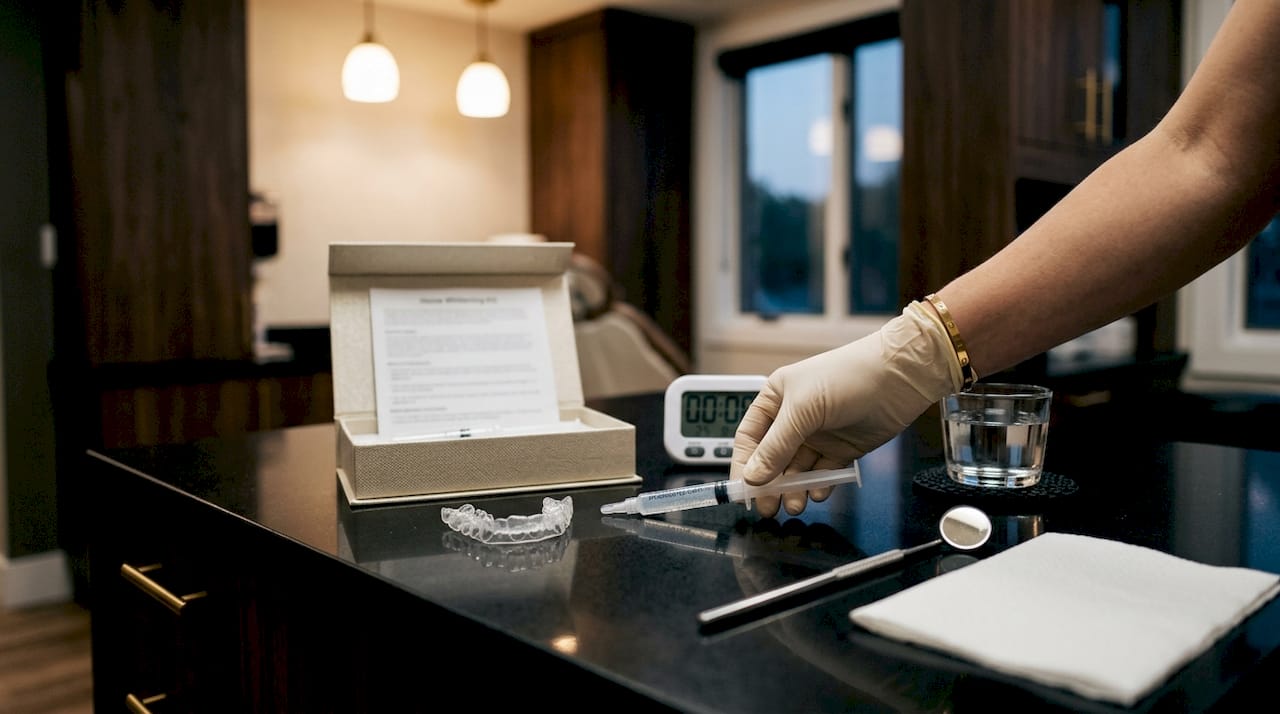
Peroxide-based chemistry is the only evidence-based method for true whitening. Abrasive “natural” remedies like charcoal or lemon juice do not whiten teeth. They erode enamel, which is irreversible.
2. In-office professional whitening
In-office whitening is the fastest of all professional teeth whitening options. A dentist applies a high-concentration hydrogen peroxide gel, typically 25–40%, directly to the teeth. The session lasts 60–90 minutes, and gum tissue is protected with a barrier before the gel is placed.
Results from a single in-office session reach 6–10 shade improvements. That level of change is not achievable with any over-the-counter product in one visit. The treatment suits people with stubborn extrinsic stains from coffee, tea, or tobacco, and anyone who needs visible results before an event.
Cost for in-office whitening typically ranges from $300 to $1,000 depending on the market and the system used. That range reflects differences in gel quality, session length, and whether light activation is included.
Key features of in-office whitening:
- Hydrogen peroxide concentration: 25–40%
- Session length: 60–90 minutes
- Expected results: 6–10 shade improvement in one visit
- Gum protection: mandatory barrier applied before treatment
- Sensitivity management: desensitizing agents applied before or after
Pro Tip: Ask your dentist to apply a potassium nitrate or sodium fluoride desensitizer before the session. Clinical evidence confirms these agents reduce post-treatment sensitivity without reducing whitening efficacy.
3. Dentist-supervised take-home tray whitening
Take-home tray systems are the most widely used of all types of dental whitening for people with tooth sensitivity or gum recession. A dentist takes impressions of your teeth and fabricates custom-fitted trays. You fill the trays with a carbamide peroxide gel at home and wear them for a prescribed period each day.
Custom-fitted trays reduce gum irritation and produce more even results than generic over-the-counter strips. The precise fit keeps the gel in contact with tooth surfaces and away from soft tissue. That controlled contact is what makes the results more consistent.
Carbamide peroxide concentrations in take-home systems range from 15–35%. The gel works more gradually than in-office hydrogen peroxide, which is actually an advantage for people with sensitive teeth. Results typically reach 4–8 shade improvement over a two-to-four-week treatment course.
Cost for dentist-supervised take-home trays ranges from $150 to $600, with gel refills available for maintenance. That makes them a strong long-term value compared to repeat in-office visits.
Benefits of take-home tray whitening:
- Carbamide peroxide concentration: 15–35%
- Treatment duration: 2–4 weeks with daily use
- Expected results: 4–8 shade improvement
- Custom tray fit: minimizes gum contact and irritation
- Flexibility: wear at home on your own schedule
- Refillable: gel cartridges available for touch-ups
Pro Tip: For sensitive teeth, start with a lower carbamide peroxide concentration and shorter wear times. Gradual saturation over several weeks produces stable results with less discomfort than rushing the process.
4. Combination professional whitening protocols
Combination protocols represent the best clinically tested whitening systems for people with deep or stubborn stains. The approach pairs an in-office session to quickly lift surface and mid-layer stains with a custom take-home tray system for ongoing maintenance and deeper penetration over time.
Clinical guidelines recommend combination protocols for intrinsic stains, which are discolorations that originate inside the tooth structure rather than on the surface. These stains do not respond fully to a single in-office session. The take-home phase allows peroxide to work gradually through the enamel and into the dentin layer.
Combination packages typically cost between $500 and $1,200. That investment reflects the depth of treatment and the longer-lasting results compared to either method alone.
Advantages of combination protocols:
- Faster initial results from the in-office phase
- Deeper bleaching through extended take-home use
- Better outcomes for intrinsic and tetracycline stains
- Custom trays available for long-term maintenance and touch-ups
- Sensitivity managed across both phases with desensitizing agents
For the deepest intrinsic stains, such as tetracycline discoloration, refrigerated gel systems with extended tray wear protocols can lighten teeth up to 16 shades. These advanced systems require longer treatment timelines but address cases that standard in-office methods cannot resolve.
5. Comparing professional whitening systems: efficacy, safety, and cost
Choosing between professional whitening options comes down to four factors: how fast you need results, how sensitive your teeth are, what type of stains you have, and your budget. The table below compares the three main systems across these dimensions.
| Feature | In-office whitening | Take-home tray system | Combination protocol |
|---|---|---|---|
| Peroxide type | Hydrogen peroxide 25–40% | Carbamide peroxide 15–35% | Both |
| Treatment duration | 60–90 minutes | 2–4 weeks | 4–6 weeks total |
| Shade improvement | 6–10 shades | 4–8 shades | Up to 16 shades (advanced) |
| Cost range | $300–$1,000 | $150–$600 | $500–$1,200 |
| Best for | Immediate results, extrinsic stains | Sensitivity, gum recession, gradual control | Intrinsic stains, long-term results |
| Sensitivity risk | Higher (short-term) | Lower (gradual) | Managed across both phases |
Dentist supervision ensures that gel concentrations and protocols match your individual dental anatomy. Without that assessment, high-concentration gels applied incorrectly can damage enamel or irritate exposed root surfaces. Professional oversight is not optional for safe whitening.
One common misconception involves LED or laser light activation during in-office sessions. Light activation provides minimal clinical benefit. The quality and freshness of the peroxide gel determine whitening effectiveness, not the light source.
6. What to consider when choosing a professional whitening system
The right whitening system depends on your dental health, not just your preference for speed. A dental assessment before any treatment is the non-negotiable first step. Whitening on teeth with untreated decay or exposed roots causes pain and can worsen existing damage.
Key selection criteria:
- Stain type: Extrinsic stains (coffee, wine, tobacco) respond well to in-office treatment. Intrinsic stains need combination or extended tray protocols.
- Sensitivity level: People with pre-existing sensitivity or gum recession do better with lower-concentration take-home systems.
- Speed of results: In-office whitening delivers visible change in one appointment. Take-home trays require daily commitment over weeks.
- Budget: Take-home trays offer the lowest entry cost. Combination protocols cost more upfront but reduce the need for repeat in-office visits.
- Lifestyle fit: Take-home trays work around your schedule. In-office treatment requires a single dedicated appointment.
- Dental restorations: Crowns, veneers, and bonding do not respond to peroxide. A dentist must assess whether whitening will create color mismatches before you begin.
Enamel health is the most important long-term consideration. Moderate peroxide concentrations (25–35%) are as effective as higher concentrations and reduce post-treatment sensitivity. Chasing the highest concentration available is not the path to better results.
Key takeaways
The most effective professional whitening system is the one matched to your stain type, sensitivity level, and lifestyle, not the one with the highest peroxide concentration.
| Point | Details |
|---|---|
| Three core system types | In-office, take-home trays, and combination protocols each suit different needs and budgets. |
| Peroxide drives results | Hydrogen and carbamide peroxide are the only evidence-based whitening agents; abrasive alternatives damage enamel. |
| Custom trays reduce sensitivity | Dentist-fabricated trays keep gel on teeth and away from gums, producing more even and comfortable results. |
| Light activation is secondary | LED or laser activation adds minimal clinical benefit; gel quality determines whitening efficacy. |
| Dental assessment is mandatory | Professional evaluation before treatment prevents enamel damage and ensures the protocol fits your dental anatomy. |
What I’ve learned from watching patients choose the wrong system
The most common mistake I see is people choosing a whitening system based on speed alone. They book an in-office session expecting a dramatic result, and they get one. But three months later, the stains are back because nothing in their routine changed, and they have no take-home maintenance plan.
The patients who get the best long-term results are almost always the ones who start with a dental assessment, use custom trays for the gradual phase, and treat the in-office session as a boost rather than a complete solution. Combination protocols are not just for severe cases. They are the most sensible approach for anyone who wants results that actually last.
I also want to address the LED light question directly. The marketing around light-activated whitening is persuasive, but the clinical evidence does not support the claims. The light does not meaningfully accelerate the peroxide reaction. What matters is the freshness and concentration of the gel, and whether the tray fits well enough to keep it in contact with the tooth surface.
The other thing worth saying plainly: skip the charcoal toothpaste and the lemon juice hacks. They are not whitening. They are abrasion. Once enamel is gone, it does not grow back. A proper whitening schedule built around peroxide-based products and regular dental follow-ups will always outperform any shortcut.
— Blanca
Professional-grade whitening from Blancawhitening
Blancawhitening was founded by dental professionals who wanted to make clinically backed whitening accessible without a dentist’s office visit. Every product in the at-home whitening collection is formulated with peroxide-based agents that align with professional whitening standards, so you get real results without guessing at concentrations or application methods.
Whether you are starting your first whitening treatment or maintaining results from an in-office session, Blancawhitening’s best-selling whitening systems give you the tools to do it safely at home. The full product range includes whitening kits, strips, and oral care accessories designed to support your results long after the initial treatment. If you want in-office whitening services backed by hydrogen peroxide protocols, Fundamental Skin offers professional treatments as a trusted partner.
FAQ
What are the main types of professional whitening systems?
The three main types are in-office bleaching with 25–40% hydrogen peroxide, dentist-supervised take-home trays with 15–35% carbamide peroxide, and combination protocols that use both methods for deeper or longer-lasting results.
How much does professional teeth whitening cost?
In-office whitening costs $300–$1,000, take-home tray systems cost $150–$600, and combination packages range from $500–$1,200 depending on the market and system used.
Is LED light activation worth it for whitening?
Clinical evidence shows LED or laser light activation provides minimal whitening benefit. The quality and freshness of the peroxide gel are the primary factors that determine how effective the treatment is.
Which whitening system is best for sensitive teeth?
Take-home tray systems with lower carbamide peroxide concentrations are best for sensitive teeth. Custom-fitted trays reduce gum contact and allow gradual peroxide saturation, which produces stable results with less discomfort.
Do I need a dental exam before professional whitening?
A dental assessment before whitening is required for safe treatment. Whitening on teeth with untreated decay, exposed roots, or certain restorations can cause pain or uneven color results that a professional evaluation will catch in advance.