

Baking Soda Teeth Whitening: Safe At-Home Steps
Baking soda can whiten teeth, but only the surface kind of staining — the extrinsic discoloration caused by coffee, tea, and tobacco. It works as a mild abrasive that polishes away those deposits, not as a bleaching agent that changes the underlying color of your enamel or dentin. The critical caveat: use it no more than once or twice a week, and always follow up with a fluoride toothpaste to protect the enamel you just cleaned.
Before you try it:
- Mix a small amount with water to form a paste and brush gently for no more than two minutes.
- Follow immediately with a fluoride toothpaste or fluoride rinse to help remineralize your enamel.
Table of Contents
- How baking soda whitens teeth and what it can’t change
- How to use baking soda for whitening safely, step by step
- Mixing baking soda with hydrogen peroxide or regular toothpaste
- How often to use baking soda and when you’ll see results
- Risks, side effects, and who should avoid baking-soda whitening
- Safer alternatives and professional whitening options
- What dental experts and the research say
- Key Takeaways
- The case for caution over convenience
- Brighter results without the guesswork
- Useful sources
How baking soda whitens teeth and what it can’t change
Baking soda (sodium bicarbonate) removes stains through two mechanisms. First, its fine crystalline particles act as a mild abrasive, physically scrubbing surface deposits off enamel. Second, it is alkaline, which helps neutralize the acidic environment that allows certain stains — particularly those from tannin-rich drinks like coffee and tea — to bond more stubbornly to enamel.
What it cannot do is bleach. Intrinsic discoloration, the kind caused by tetracycline antibiotics, internal tooth trauma, or natural aging of the dentin layer beneath the enamel, sits inside the tooth structure. No amount of surface polishing reaches it. Clinical trials show that baking-soda-containing toothpastes reduce plaque and help remove extrinsic stains when formulated and used properly, but the effect is limited to what sits on the surface.
The American Dental Association’s MouthHealthy resource is direct on this point: baking soda can remove surface stains, but acidic DIY remedies like lemon juice are harmful and should be avoided entirely.
How to use baking soda for whitening safely, step by step
The method matters as much as the ingredient. Follow these steps to get the benefit without accelerating enamel wear.
- Load a soft-bristle brush. Apply the paste to a soft-bristle manual toothbrush. Stiff bristles combined with an abrasive paste increase the risk of enamel and gum damage.
Dental experts advise soft-bristle brushes, gentle circular motion, a two-minute limit, and following with fluoride toothpaste after using any baking-soda-based paste.
Pro Tip: If you use an electric toothbrush, switch to a manual one for baking-soda sessions. Research notes limited clinical data on DIY abrasive pastes used with powered brushes, and combining them may accelerate enamel wear.
Mixing baking soda with hydrogen peroxide or regular toothpaste
Adding hydrogen peroxide to a baking-soda paste introduces a genuine bleaching agent, which is why many people try it. The combination can be more effective on surface stains than baking soda alone, but the safety of the result depends almost entirely on the peroxide concentration you use.
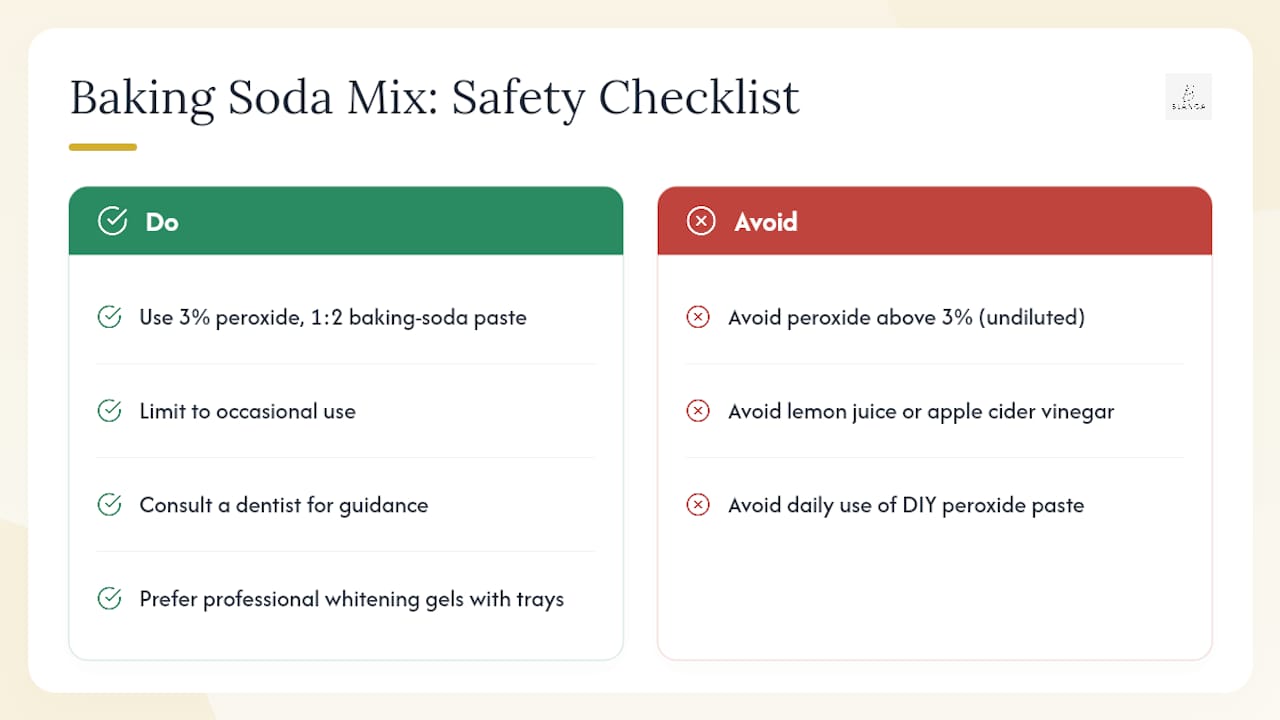
A common DIY ratio is one part 3% hydrogen peroxide (the standard drugstore concentration) mixed with two parts baking soda to form a paste. At 3%, the peroxide is diluted enough to be relatively low-risk for occasional use. Healthline notes that hydrogen peroxide can help remove stains, but concentration matters and consulting a dentist for guidance is recommended. The concern is that higher concentrations increase the risk of enamel damage and soft-tissue irritation.
Avoid these combinations entirely: undiluted hydrogen peroxide (above 3% from the drugstore shelf), any acidic additive like lemon juice or apple cider vinegar, and daily use of any DIY peroxide paste. Dietary acids weaken enamel and make it more susceptible to damage from abrasive agents — layering an acid with an abrasive is a reliable way to accelerate wear.
Professional whitening gels are a safer route when you want a peroxide-based result. They use controlled concentrations and are applied with custom-fitted trays that protect gum tissue, something a homemade paste cannot replicate.
Mixing baking soda into your regular toothpaste is lower-risk than a peroxide paste, but it dilutes the fluoride content of your toothpaste and adds abrasion. If you want the benefits of both, look for a commercially formulated baking-soda toothpaste that already balances abrasion level and fluoride concentration.
How often to use baking soda and when you’ll see results
Once or twice a week is the upper limit most dental professionals recommend for a baking-soda paste. Daily use is where enamel erosion risk climbs, because the abrasive action accumulates faster than enamel can recover.
For realistic expectations:
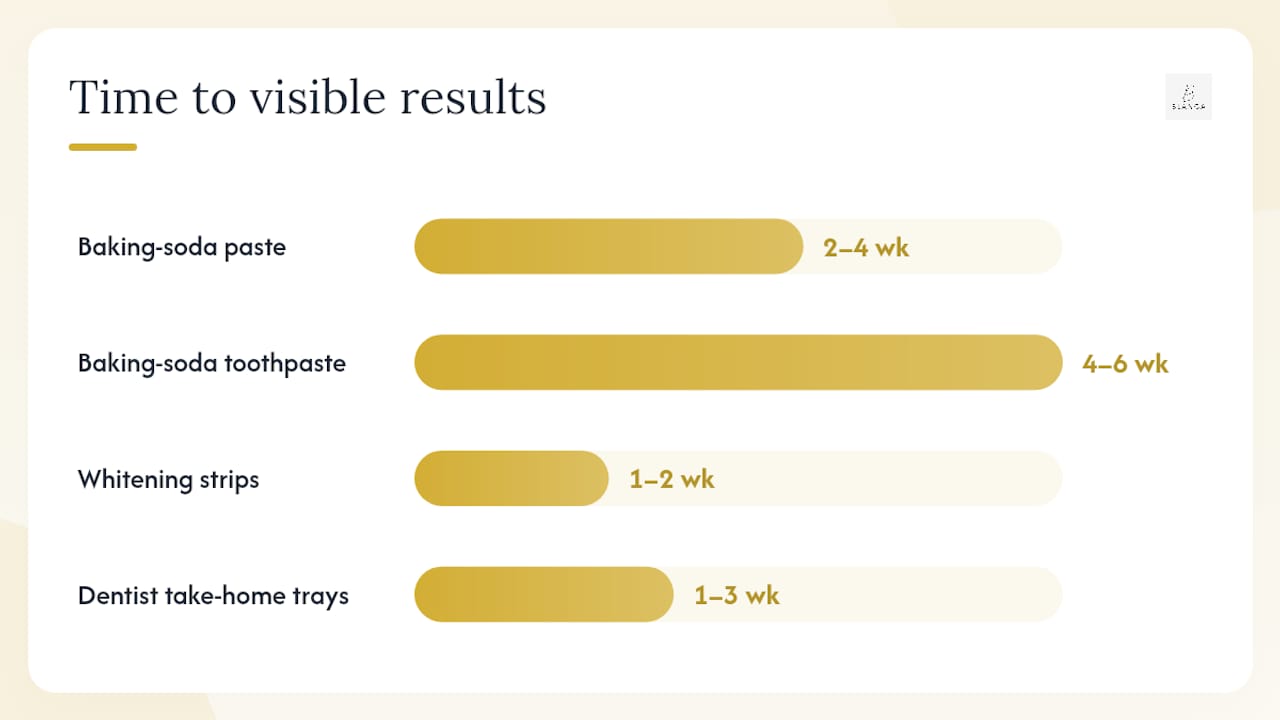
- Surface stains: — Light coffee or tea staining can show visible improvement within two to four weeks of once-weekly use.
Stop using baking soda and consult a dentist if you notice increased tooth sensitivity, visible changes in enamel texture, or gum irritation that persists after a session. Those are signs the abrasion is outpacing your enamel’s tolerance. For a broader look at at-home versus professional whitening, the comparison is worth reading before committing to any routine.
Risks, side effects, and who should avoid baking-soda whitening
Enamel loss from abrasive misuse is irreversible. Even when the whitening effect looks appealing in the short term, thinning enamel increases both staining and sensitivity over time, which is the opposite of the goal. Verywell Health reports that baking soda is low-abrasion compared with many other abrasives, but it lacks fluoride and swallowing large amounts poses a systemic risk.
Common side effects from overuse include:
- Tooth sensitivity, especially to cold or sweet foods
- Gum irritation or mild bleeding at the gumline
- Gradual enamel thinning, which makes teeth appear more yellow (the dentin beneath shows through)
Who should avoid DIY baking-soda or peroxide pastes: people with exposed root surfaces (roots lack the enamel layer that protects the crown), children whose enamel is still developing, anyone with active gum disease or open sores in the mouth, and those who are pregnant and have not consulted their dentist. If you have crowns, veneers, or bonding, baking soda will not whiten those restorations and may roughen their surface over time.
For a deeper look at overuse whitening risks and enamel protection, that resource covers the full picture.
Safer alternatives and professional whitening options
Baking soda sits at the low-risk, low-effect end of the whitening spectrum. Here is how it compares with other options.
| Option | Effectiveness | Risk level | Time to visible results |
|---|---|---|---|
| Baking-soda paste (DIY) | Low (extrinsic stains only) | Low to moderate with overuse | 2–4 weeks |
| Baking-soda toothpaste (commercial) | Low to moderate | Low | 4–6 weeks |
| ADA-accepted whitening strips | Moderate | Low when used as directed | 1–2 weeks |
| Dentist-dispensed take-home trays | Moderate to high | Low with supervision | 1–3 weeks |
| In-office professional bleaching | High | Low with professional oversight | 1–2 sessions |
ADA-accepted whitening strips use low concentrations of peroxide in a format that limits gum contact, making them a practical step up from baking soda for people who want more noticeable results without a dentist visit. When discoloration is intrinsic, or when surface staining is severe, professional bleaching is the appropriate choice. A dentist can assess whether the discoloration is extrinsic or intrinsic before you spend time and money on a method that will not work for your specific situation. See the professional vs. at-home whitening guide for a full breakdown.
What dental experts and the research say
The clinical picture on baking soda is consistent: it is a legitimate mild abrasive with a real but limited role in oral care, and it is not a substitute for fluoride toothpaste or professional bleaching.
| Source | Key finding |
|---|---|
| ADA / MouthHealthy | Baking soda removes surface stains; acidic DIY additives (lemon, vinegar) are harmful |
| PMC clinical trials | Baking-soda toothpastes reduce plaque and extrinsic stain formation vs. non-baking-soda formulas |
| PMC whitening safety review | Staying within recommended peroxide concentrations is critical; overuse causes sensitivity and enamel problems |
| PMC powered-brush study | Limited data on DIY abrasive pastes with electric brushes; may accelerate enamel wear |
| UR Medicine | DIY whitening lacks dosage precision; professional gels allow controlled application to a target shade |
“DIY whitening lacks the precision of professional treatment. Without controlled concentrations and proper application, you risk enamel erosion, gum irritation, and damage that a dentist then has to correct.” — UR Medicine Health Matters
A PMC review of whitening agent safety reinforces this: staying within manufacturer- or dentist-recommended peroxide concentrations is the single most important variable in avoiding sensitivity and enamel problems. The review does not endorse uncontrolled DIY peroxide use.
This article is general information, not professional dental advice. Confirm any whitening approach with your dentist, particularly if you have existing dental work, sensitivity, or gum concerns.
Key Takeaways
Baking soda whitens surface stains effectively when used once or twice a week with a soft-bristle brush, followed by fluoride toothpaste, but it cannot bleach intrinsic discoloration and causes irreversible enamel damage if overused.
| Point | Details |
|---|---|
| Extrinsic stains only | Baking soda removes coffee, tea, and tobacco deposits; it cannot change intrinsic tooth color. |
| Frequency limit | Use no more than once or twice a week to avoid cumulative enamel abrasion. |
| Fluoride follow-up is required | Always brush with fluoride toothpaste after a baking-soda session to remineralize enamel. |
| Stop if sensitivity increases | Persistent sensitivity, gum irritation, or enamel texture changes are signals to stop and see a dentist. |
| Blancawhitening’s approach | Blancawhitening offers clinically formulated at-home whitening strips and oral-care essentials designed to balance effective whitening with enamel protection. |
The case for caution over convenience
The appeal of baking soda is obvious: it costs almost nothing, it is already in most kitchens, and it genuinely does something. That combination makes it easy to overestimate what it can deliver and underestimate what it can cost your enamel over time.
What most articles skip is the compounding problem. A person who uses a baking-soda paste twice a week, adds peroxide “for a boost,” and then brushes with an electric toothbrush is stacking three abrasive or chemical stressors on enamel that cannot regenerate. Each individual step might seem minor. Together, they can thin enamel faster than the whitening effect is worth, leaving teeth more sensitive and more prone to staining in the long run.
The smarter approach is to treat baking soda as an occasional polish, not a whitening system. Use it sparingly, protect your enamel with fluoride every single time, and be honest about what it can realistically achieve. For anything beyond light surface staining, a professionally formulated product or a dentist visit will get you further without the risk.
Brighter results without the guesswork
If you want more noticeable whitening than baking soda can deliver, Blancawhitening’s at-home whitening strips use controlled peroxide concentrations formulated by dental professionals, so you get a real bleaching effect without the enamel risk that comes from unregulated DIY pastes. Every product in the line is designed with long-term oral health in mind, not just a short-term result.
Pair whitening strips with Blancawhitening’s oral care essentials, including fluoride-compatible toothbrushes and flossers, to build the kind of daily routine that protects enamel while keeping your smile bright. Browse the full collection and find the right starting point for your whitening goals.
Useful sources
- Natural teeth whitening | MouthHealthy (American Dental Association)
- Hydrogen peroxide for teeth whitening | Healthline
- Brushing teeth with baking soda: Safety and effectiveness | Verywell Health
- Is It OK to Brush Your Teeth with Baking Soda and Hydrogen Peroxide? | Meadows Family Dentistry
- DIY Teeth Whitening: Too Good to Be True? | UR Medicine
- PMC article noting limited data on powered-brush + abrasive pastes