

30 Minutes Is the Limit for Whitening Strips, Dentists Say
Most whitening strips are safe to wear for about half an hour per application, though some formulas call for shorter or longer times depending on the product. The one rule that matters more than any general range: follow the manufacturer’s instructions on your specific box, because formulations vary widely. Wearing strips longer than directed does not whiten teeth faster. It mainly raises your risk of tooth sensitivity and gum irritation.
TL;DR:
- Using whitening strips for longer than the recommended time does not increase whitening and significantly raises the risk of tooth sensitivity and gum irritation.
- Higher-strength, fast-acting formulas typically need 5 to 15 minutes, while lower-strength, extended-wear, or overnight products require 20 to 60 minutes; ignoring these guidelines offers no extra benefit.
- Overexposure to peroxide gel reaches nerve endings in teeth, causing sensitivity that usually subsides within days, with warning signs including pain when consuming cold fluids or gum discomfort.
- To reduce sensitivity, switch to lower-peroxide formulas, shorten wear time, space out applications, and use sensitivity-calming ingredients like potassium nitrate, along with proper aftercare.
- Most whitening courses last 7 to 20 days with daily use, producing early results within a week, and touch-ups every few months help maintain brightness without overexposing teeth.
Table of Contents
- How Wear Time Changes by Strip Strength and Formula
- The Real Risk of Leaving Strips On Too Long
- Cutting Sensitivity Without Cutting Results
- How Often to Apply Strips and When You’ll See Results
- Getting the Timing and Application Right
- When to Skip Strips and Call Your Dentist Instead
- What Dental Professionals Want You to Know Before You Start
- Why Consistency Beats a Longer Session Every Time
- Which Blancawhitening Products Fit a Safe Wear-Time Routine
- Sources
- FAQ
How Wear Time Changes by Strip Strength and Formula
Whitening strip instructions are not interchangeable across brands, and that is by design. A strip loaded with a higher hydrogen peroxide concentration works faster, so it is built for a shorter application window. A gentler, lower-concentration formula needs more contact time to produce a similar effect. That is why “how long do whitening strips take” does not have one universal answer. It depends entirely on what is in the gel.
Here is roughly how the major categories break down:
- Express or fast-acting strips: 5 to 15 minutes, higher peroxide concentration, faster results but a higher chance of sensitivity if overused
- Standard strips: 20 to 30 minutes, the most common wear time on the market
- Extended-wear formulas: up to 60 minutes, typically lower peroxide concentration to allow the longer sit time
- Overnight strips: worn for hours while sleeping, but only when the packaging explicitly says the product is designed for overnight use
Healthline’s overview of whitening strips confirms this same pattern: most products land around 30 minutes, with express formulas trimmed down and higher-strength products sometimes extended. If your box says 30 minutes, wearing the strip for 45 minutes does not give you 50 percent more whitening. It just gives your gums and enamel more exposure to peroxide than the formula was built to handle.
The Real Risk of Leaving Strips On Too Long
Peroxide gel works by diffusing through your enamel into the dentin layer underneath, where it breaks apart the compounds that cause staining. Enamel has microscopic channels that let this happen, and those same channels also let peroxide reach the nerve endings inside your teeth when exposure runs too long. That is the mechanism behind whitening sensitivity: not damage to the tooth structure itself, but temporary nerve irritation.
Clinical research on peroxide-based whitening shows sensitivity is a common side effect that usually starts during treatment and resolves within a few days of stopping. Gum irritation follows a similar pattern when gel makes direct contact with soft tissue, which happens more easily the longer a strip sits or shifts out of place.
Overexposure to peroxide gel does not speed up whitening. It plateaus. Once the active ingredient has worked through the available staining compounds in a session, extra minutes on your teeth mainly add risk, not results, according to dental guidance from Aspen Dental.
Signs you have gone past your limit:
- A sharp, electric-feeling zing when you drink something cold
- Gums that look red, feel raw, or sting where the strip touched them
- Discomfort that lingers for hours instead of fading soon after removal
If any of these show up, stop that day’s session and dial back the wear time or frequency going forward.
Cutting Sensitivity Without Cutting Results
You do not have to choose between comfort and a brighter smile. A few adjustments usually solve the problem without sacrificing your results.
- Switch to a lower-peroxide formula. Gentler concentrations still whiten, just more gradually, and they carry less sensitivity risk.
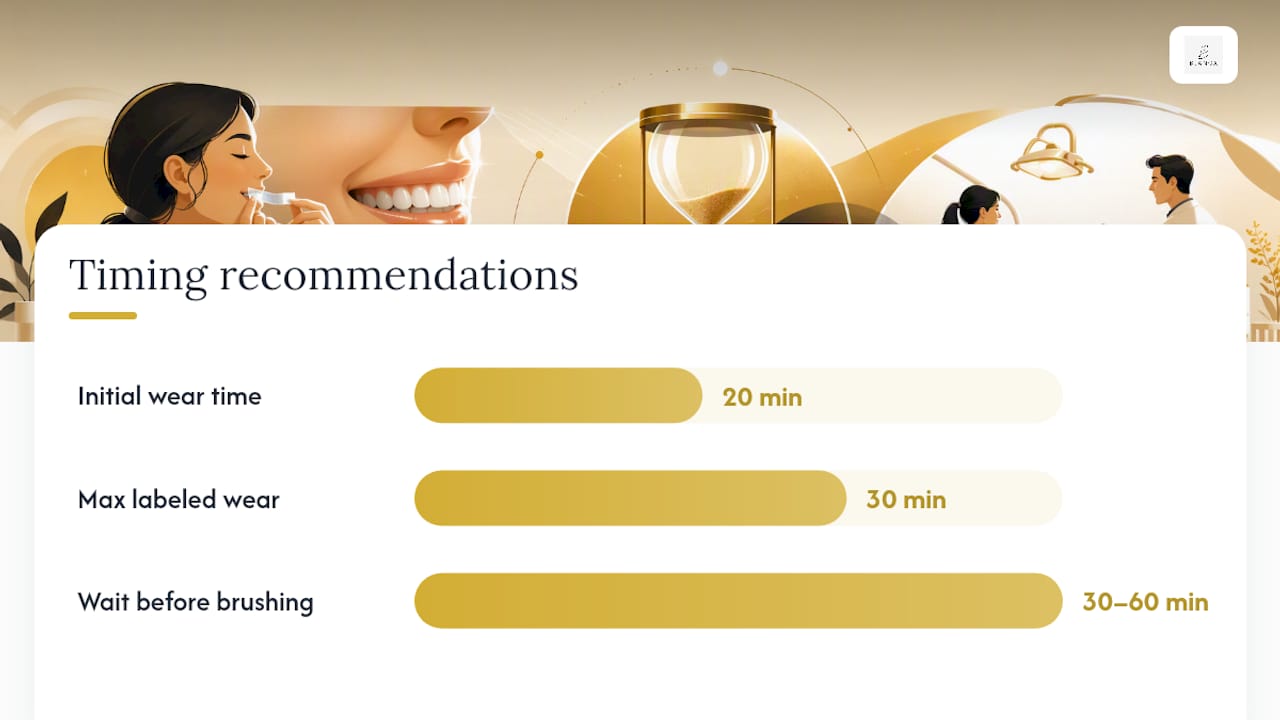
- Shorten your wear time within the labeled range. If your box allows 20 to 30 minutes, start at 20 and see how your teeth respond before extending.
- Space out applications. Moving from twice daily to once daily, or from daily to every other day, gives your teeth recovery time between sessions.
- Look for potassium nitrate in the formula. This ingredient calms nerve activity inside the tooth and is a standard addition in sensitivity-conscious whitening products, according to Health.
Aftercare matters just as much as the adjustments above. Wait 30 to 60 minutes after removing a strip before you brush, since enamel needs time to re-harden after peroxide exposure. Skip ice water, coffee, and anything acidic right after a session, and reach for a desensitizing toothpaste if your teeth feel tender on treatment days.
Pro Tip: Keep a small notebook or notes app entry logging which day you noticed sensitivity and how long you wore the strip that day. Patterns show up fast, and that log makes it much easier to find your personal comfort threshold.
If sensitivity persists after these changes, pause your whitening course entirely and check in with your dentist before resuming.
How Often to Apply Strips and When You’ll See Results
Most whitening strip courses run once a day for 7 to 20 days, depending on the product and how much of a shade change you are after. Twice-daily schedules exist for express formulas, but they are the exception, not the rule, and they raise your cumulative peroxide exposure fast.
Timelines tend to follow a predictable curve:
- Days 3 to 7: first visible lightening, often noticeable to you before anyone else spots it
- Days 10 to 21: the fuller result most people are chasing, according to reporting on whitening strip timelines
- After the course: results typically hold for several months before staining habits (coffee, red wine, tobacco) start to creep back in
Once you finish a course, plan on a touch-up application every few months rather than restarting a full multi-week regimen. Short maintenance sessions preserve your shade without repeating the same wear-time exposure your teeth already went through. For more on stretching those results, Blancawhitening’s guide to making whitening last longer covers the habits that matter most after your last strip comes off.
Getting the Timing and Application Right
The steps around your strip matter almost as much as the strip itself. A rushed application or bad timing around brushing can undercut an otherwise perfect routine.
- Wait roughly 30 minutes after brushing before applying a strip. Toothpaste residue and fresh brushing can make gums more reactive to peroxide contact.
- Dry your teeth briefly before application. A quick pass with a napkin helps the strip adhere instead of sliding.
- Smooth out air bubbles as you press the strip on, working from the center outward so the gel makes even contact with enamel rather than pooling.
- Set a timer the moment the strip is on. Do not estimate. Consistent, accurate timing is what keeps your sessions inside the safe range.
- Avoid talking or clamping your mouth shut more than necessary, since excess movement can shift the strip onto your gums.
- Wait another 30 minutes after removal before brushing or eating anything that stains.
On the overnight question: do not sleep with strips on unless the packaging explicitly labels the product for overnight use. Regular daytime strips left on for hours while you sleep sit far outside their intended exposure window, and that is exactly the scenario that produces the sharpest sensitivity spikes. For a full walkthrough of the process, Blancawhitening’s guide to safe strip application breaks down each step in more detail.
When to Skip Strips and Call Your Dentist Instead
Whitening strips are not the right tool for every mouth. If you have active gum disease, receding gums, exposed tooth roots, or untreated cavities, peroxide gel can reach sensitive areas it was never meant to touch. A known allergy to peroxide is a clear stop sign, and pregnant or nursing patients should check with a dentist before starting any whitening routine.
Strips also will not whiten crowns, veneers, or bonding, since those materials do not respond to peroxide the way natural enamel does. Using strips with existing restorations can leave you with an uneven, patchy result instead of a uniform shade. Watch for severe gum irritation, blistering, or bleeding that does not stop. Any of those warrants stopping immediately and getting a professional opinion rather than waiting it out.
What Dental Professionals Want You to Know Before You Start
Manufacturer instructions exist because every formula balances effectiveness against safety differently, and that balance shifts with peroxide concentration. A few habits keep that balance in your favor.
- Check the expiration date before opening a box. Expired gel loses potency and can whiten unevenly.
- Time your wait to brush both before and after application, not just one side of it.
- If sensitivity shows up, treat it as a signal to adjust frequency or formula, not something to push through.
- Reach for a desensitizing toothpaste during your course if your teeth run sensitive even at baseline.
None of this requires a premium product to get right. It requires reading your own box and respecting what it says.
Why Consistency Beats a Longer Session Every Time
The most common mistake we see is treating wear time like a dial you can turn up for faster results. It does not work that way. Peroxide gel has a working window, and once it is spent, extra minutes on your teeth mainly increase your odds of sensitivity without buying you a brighter shade.
A modest, steady shade improvement over a full course beats a single overextended session that leaves your gums raw for two days. If you have crowns, veneers, gum recession, or any condition on the contraindication list, a quick conversation with your dentist before you start will save you a lot of guesswork. For everyone else, the formula is simple: pick the product built for your sensitivity level, respect its printed wear time, and let the course run its full length.
— Blanca
Which Blancawhitening Products Fit a Safe Wear-Time Routine
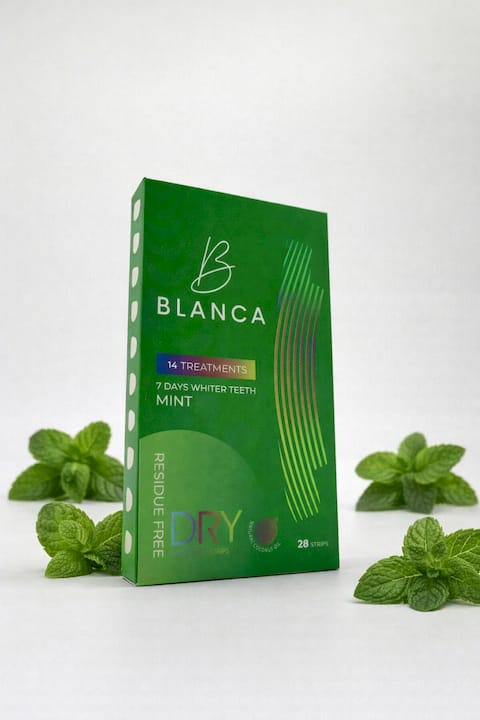
If you are ready to start a course without guessing at timing, Blancawhitening’s flavored whitening strips are formulated with clearly labeled wear times, so you are never left estimating how long is too long.
Unlike generic strips that leave you cross-referencing forums for the right duration, Blancawhitening’s at-home lineup, including the flavored whitening strips, at-home whitening gel, and gel whitening pen, was built by dental professionals with sensitivity in mind from the formulation stage, not as an afterthought. If sensitivity is a bigger concern for you than speed, pairing your strips with gentler oral care from the Blancawhitening oral care collection can help keep your daily routine comfortable while your course runs its full length. Dental professionals exploring in-office options can also look into the Official Certification Masterclass for 299 CAD. Browse the whitening collection and pick the formula that matches your sensitivity level and schedule.
Sources
The claims in this guide draw on a mix of clinical research and dental patient education, worth reading directly if you want more depth.
- Do Whitening Strips Work? Benefits, Risks, And Results - Healthline
- Teeth whitening strips - Aspen Dental
- PubMed: Clinical studies on whitening sensitivity
- Whitening strips - Medical News Today
This article is general information, not a substitute for advice from a qualified doctor. Consult a qualified healthcare professional about your own circumstances before acting on anything here.
FAQ
What Happens if You Leave Whitening Strips on Longer Than 30 Minutes?
You risk tooth sensitivity and gum irritation without gaining extra whitening, since peroxide gel plateaus once it has worked through available staining compounds in a session.
Do I Brush My Teeth After Whitening Strips?
Wait about 30 minutes before brushing, since enamel needs time to re-harden after peroxide exposure, and the same wait applies before applying a strip after brushing.
How Do I Get the Most Out of Whitening Strips?
Stick to your product’s labeled wear time, apply once daily for the full recommended course (typically 7 to 20 days), and avoid stain-causing food or drink right after removal; consistency across the full course matters more than any single longer session.
Can I Close My Mouth With Whitening Strips On?
Yes, but avoid talking or clamping down repeatedly, since excess movement can shift the strip and let gel touch your gums, which is a common cause of irritation.