

How to Store Teeth Whitening Products Correctly
Storing teeth whitening products correctly is the single most reliable way to preserve their potency and protect your results. Whitening gels rely on chemically active ingredients, primarily peroxide-based agents or PAP+ (phthalimidoperoxycaproic acid) compounds, that begin breaking down the moment they meet heat, light, moisture, or air. The difference between a gel that whitens in five days and one that barely works after two weeks often comes down to where you kept it. Understanding proper whitening product storage, including the science behind ingredient stability, helps you get full value from every kit you buy.
How to store teeth whitening products correctly: temperature is everything
Temperature is the most critical factor in whitening gel stability. Peroxide-based gels store best at 35°F–46°F (2°C–8°C), which means refrigeration is not optional for these formulas. It is the standard recommended by dental professionals for maintaining active ingredient concentration over time.
PAP+ formulas behave differently. PAP+ gels remain stable at room temperatures up to 86°F (30°C) because the active oxygen they release is triggered only by contact with tooth moisture and pH, not ambient warmth. This distinction matters. Refrigerating a PAP+ gel is not harmful, but it is not required. Refrigerating a peroxide gel is non-negotiable.
Heat spikes are the most underestimated threat. Even brief heat exposure during shipping or storage can instantly neutralize active peroxide agents. A gel left in a hot car for an afternoon may look identical but deliver almost no whitening effect. This is why transport conditions during shipping can drastically affect product stability, and why insulated packaging matters when ordering online.
Freezing is equally damaging. Freezing whitening gel causes the water and peroxide components to crystallize and separate, destroying the formula’s consistency and making it difficult to apply evenly. A gel that has been frozen and thawed will feel grainy or watery and will not perform as intended.
- Keep peroxide gels in the refrigerator at 35°F–46°F at all times.
- Store PAP+ gels at room temperature, away from direct heat sources.
- Never leave any whitening kit in a car, near a window, or on a sunny countertop.
- Avoid freezing all whitening gel formats, including strips and syringes.
Pro Tip: Place your peroxide gel in a small sealed container before refrigerating it. This protects it from absorbing food odors and prevents accidental moisture exposure from condensation.
How does light, humidity, and air exposure affect whitening products?
Light, humidity, and air are three separate threats, and each one degrades whitening gels through a different mechanism. Knowing how each works helps you choose the right storage spot and handle your products correctly between uses.
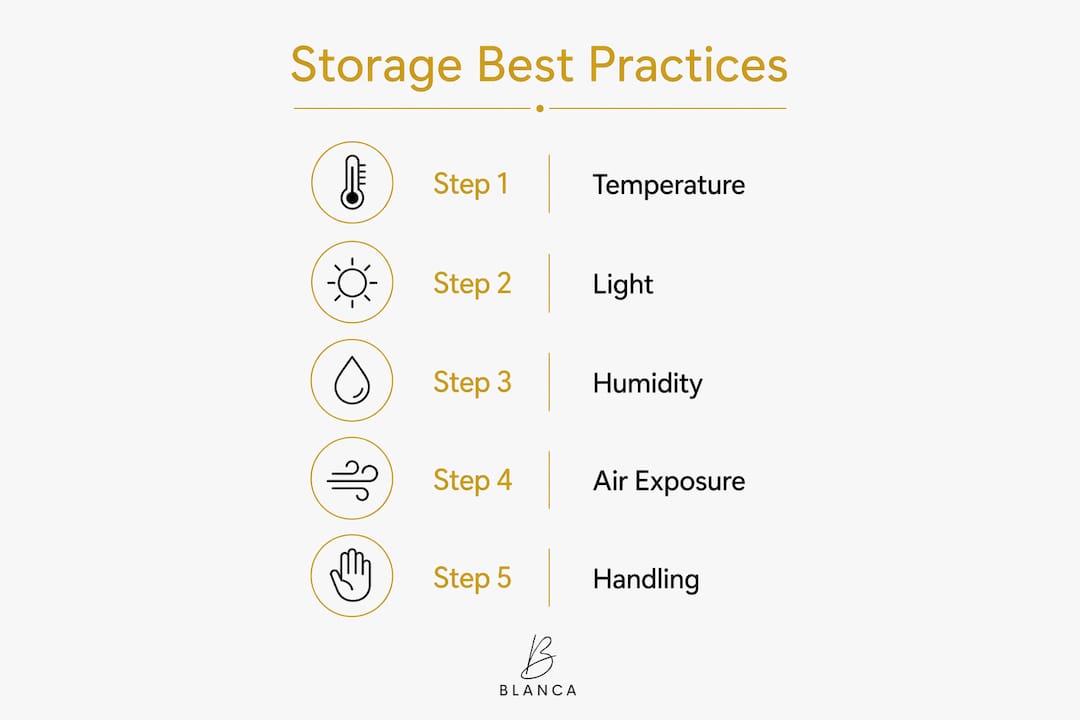
Light breaks down active ingredients fast
UV and visible light accelerate peroxide oxidation. This is why professional whitening gels come in opaque syringes designed to block light exposure. Repacking gel into a clear container or leaving a syringe on a bright countertop causes rapid chemical breakdown. The gel does not change color immediately, so the damage is invisible until you notice your results are weaker than expected.
Humidity alters gel texture and concentration
Bathrooms are the worst storage location for whitening products. Storing whitening gels in bathrooms exposes them to fluctuating humidity and heat that accelerates degradation, even when the packaging appears sealed. Steam from showers raises ambient moisture levels, which can penetrate loosely capped syringes and dilute the gel’s active concentration. A bedroom drawer or a dedicated shelf in a cool, dry room is a far better option.
Air exposure triggers oxidation
Every time you open a syringe or strip package, oxygen enters and begins reacting with the peroxide. Air exposure increases gel oxidation and reduces effective peroxide concentration with each use. The fix is simple but requires consistency.
Follow these steps to minimize air exposure:
- Cap syringes immediately after dispensing the gel. Do not leave them open while you prepare your tray.
- Squeeze out only the amount you need. Excess gel left in an open syringe degrades faster.
- Store strips in their original sealed foil pouches until the moment you apply them.
- Use vacuum-sealed or induction-sealed syringes when available, as these formats limit oxygen contact from the first use.
- Return all products to their original opaque packaging after each session.
What are common mistakes when storing teeth whitening kits?
The most common storage mistake is treating whitening gels like ordinary toiletries. Many people store whitening gel like regular toiletries, placing them in medicine cabinets or on bathroom shelves without considering temperature or humidity. This habit quietly degrades the product before the expiration date printed on the label.
A second frequent error is leaving trays and syringes exposed after use. Whitening trays collect saliva and bacteria if left open on a counter. Gel syringes left uncapped lose potency within hours. Both issues are easy to prevent with a simple post-session routine: rinse the tray, dry it, cap the syringe, and return everything to its storage container.
Ignoring expiration dates is another mistake that costs results. Even unopened syringes degrade faster in variable humidity and temperature environments. An unopened product stored poorly can expire ahead of its labeled date. Checking the expiration date before each use takes seconds and prevents wasted effort.
Traveling with whitening kits introduces additional risk. Heat inside checked luggage, pressure changes, and inconsistent temperatures can all affect gel stability. Pack whitening products in your carry-on, use a small insulated pouch, and keep them away from electronics that generate heat.
- Do not store whitening kits in the bathroom, even in a cabinet.
- Cap all syringes immediately after use and store them upright.
- Check expiration dates before every whitening session.
- Store trays in a clean, dry case, separate from gel syringes.
- When traveling, use an insulated pouch and keep products in your carry-on.
Pro Tip: Label your whitening kit container with the date you opened it. Peroxide-based gels typically last 12–18 months unopened; once opened, plan to use them within the timeframe your product label specifies.
How do you identify and handle degraded or expired whitening products?
Degraded whitening gel gives clear physical signals before you ever apply it. Signs of degradation include yellowing or browning of the gel, a thinner or clumpy consistency, and an unusual or foul odor. Any one of these signs means the active ingredient has broken down and the product will not deliver reliable results.
Potency loss is the primary risk of using expired gel. Using whitening gels past their expiry date is generally safe but ineffective. The peroxide has already oxidized into water and oxygen, leaving little active agent behind. The major risk is not toxicity but wasted time and, in some cases, mild irritation from residual byproducts. You can learn more about whitening product safety from professional cosmetic dentistry resources that outline how to identify unusable products by changes in color, smell, and texture.
Knowing when to replace a product protects both your results and your comfort. Replace any whitening gel that shows color change, texture change, or unusual odor, regardless of the printed expiration date. If a product was stored in a bathroom or left in a hot car, treat it as compromised even if it looks normal. Proper storage from the moment of purchase extends gel potency more reliably than any attempt to salvage a degraded product.
- Yellowed or browned gel: discard immediately.
- Watery or clumpy texture: the formula has separated; do not use.
- Foul or chemical odor: the peroxide has broken down; replace the product.
- No visible change but stored improperly: treat as compromised and replace.
Key Takeaways
Storing whitening products correctly, specifically keeping peroxide gels refrigerated and PAP+ gels in a cool, dry place away from light and air, is the most reliable way to preserve potency and get consistent results.
| Point | Details |
|---|---|
| Temperature by formula type | Refrigerate peroxide gels at 35°F–46°F; store PAP+ gels at room temperature up to 86°F. |
| Avoid light and humidity | Keep all whitening products in opaque, sealed packaging away from bathrooms and sunny surfaces. |
| Seal after every use | Cap syringes immediately after dispensing to prevent oxidation and potency loss. |
| Recognize degradation signs | Discard gel that shows yellowing, texture changes, or unusual odor, even before the expiration date. |
| Never freeze whitening gel | Freezing separates water and peroxide components, destroying consistency and effectiveness. |
What I’ve learned from years of watching people store whitening products wrong
Most people who are disappointed with their whitening results blame the product. The real culprit is almost always storage. I have seen this pattern repeatedly: someone buys a quality peroxide kit, leaves it in the bathroom cabinet for a month, and then wonders why their teeth look the same after two weeks of use. The gel was compromised before they ever opened it.
The insight that changes behavior is understanding that peroxide is a reactive molecule. It does not sit quietly waiting to be used. It reacts with heat, light, and air constantly. Every hour outside of a refrigerator costs you a small fraction of its potency. That loss is invisible and cumulative.
The second thing I want people to understand is that PAP+ formulas genuinely do not need refrigeration. Treating every whitening product the same way leads to unnecessary complexity. Read the label, identify your formula type, and store accordingly. Blancawhitening products include clear storage guidance for exactly this reason. Understanding the differences between PAP+ and peroxide formulas is the foundation of using any whitening kit correctly.
My practical advice: set a reminder to check your whitening kit every 30 days. Confirm the cap is tight, the gel looks normal, and the storage location has not changed. That 30-second check prevents the most common causes of poor results.
— Blanca
Blancawhitening products, storage guidance included
Blancawhitening was built by dental professionals who know that a great whitening product only delivers results when it is stored and used correctly. Every product in the at-home whitening collection comes with clear storage instructions tailored to its specific formula, whether peroxide-based or PAP+. You do not have to guess. The guidance is built into the product experience. Blancawhitening also offers whitening best practices to help you get the most from every session, from application technique to post-treatment care. If you are ready to start with a kit designed for safe, consistent results, browse the full collection and find the right fit for your routine.
FAQ
How long do teeth whitening gels last in storage?
Peroxide-based formulas typically last 12–18 months unopened when refrigerated properly. PAP+ formulas remain stable for up to 24 months at room temperature.
Does whitening gel need to be refrigerated?
Peroxide-based gels require refrigeration at 35°F–46°F to maintain potency. PAP+ gels do not require refrigeration and stay stable at room temperature up to 86°F.
Can you freeze whitening gel to make it last longer?
No. Freezing causes the water and peroxide components to crystallize and separate, which destroys the gel’s consistency and makes it ineffective.
Where is the worst place to store whitening products?
The bathroom is the worst storage location. Fluctuating humidity and heat from showers accelerate degradation, even in sealed packaging.
Is it safe to use expired whitening gel?
Using expired gel is generally not harmful, but the active peroxide has broken down and the product will deliver little to no whitening effect. Replace expired products for reliable results.