

Eating Before and After Teeth Whitening: 2026 Guide
Timing your meals around teeth whitening is one of the most practical things you can do to protect your results. For at-home strips and trays, wait 1–3 hours before eating after treatment; after professional in-office whitening, dental professionals recommend holding off on pigmented or acidic foods for 24–48 hours. During that window, stick to plain water and light-colored, low-acid foods. Here is what that looks like in practice:
- Immediately after treatment: Water only for the first 60 minutes.
- 1–3 hours post-treatment (at-home): Light, non-staining foods are acceptable if needed.
- 24–48 hours post-treatment (in-office): Follow the white diet strictly, meaning no coffee, tea, red wine, berries, or dark sauces.
- 48–72 hours: Enamel begins to remineralize and stain risk drops; you can cautiously reintroduce more foods.
- Up to two weeks: Rinsing with water after pigmented foods is still a smart habit.
The reason these windows matter comes down to enamel biology. Peroxide-based whitening agents temporarily open microscopic pores in the enamel surface, making teeth more absorbent and more sensitive. Saliva gradually closes those pores through remineralization, but that process takes time. What you eat and drink during that period directly affects how evenly the whitening holds.
How long should you wait to eat normally after whitening?
The answer depends on the treatment method. Professional in-office whitening uses a high concentration of hydrogen peroxide, which creates a longer period of enamel vulnerability. At-home trays and strips use lower concentrations of carbamide peroxide, so the recovery window is shorter.

| Treatment type | Wait before eating | Strict white diet | Gradual reintroduction |
|---|---|---|---|
| Professional in-office | 30–60 minutes (water only) | 48 hours | After 48–72 hours |
| At-home trays (custom/OTC) | 30 minutes after removing trays | Throughout course + 48 hrs after final session | After 48 hours post-final session |
| Whitening strips | 1–3 hours | 24–48 hours | After 48–72 hours |
Enamel porosity peaks immediately after treatment and stays elevated for roughly 48 hours. During this phase, pigment molecules can seep into the enamel surface before saliva has had a chance to remineralize it. Understanding tooth porosity and whitening helps explain why the first two days matter so much more than any day after.
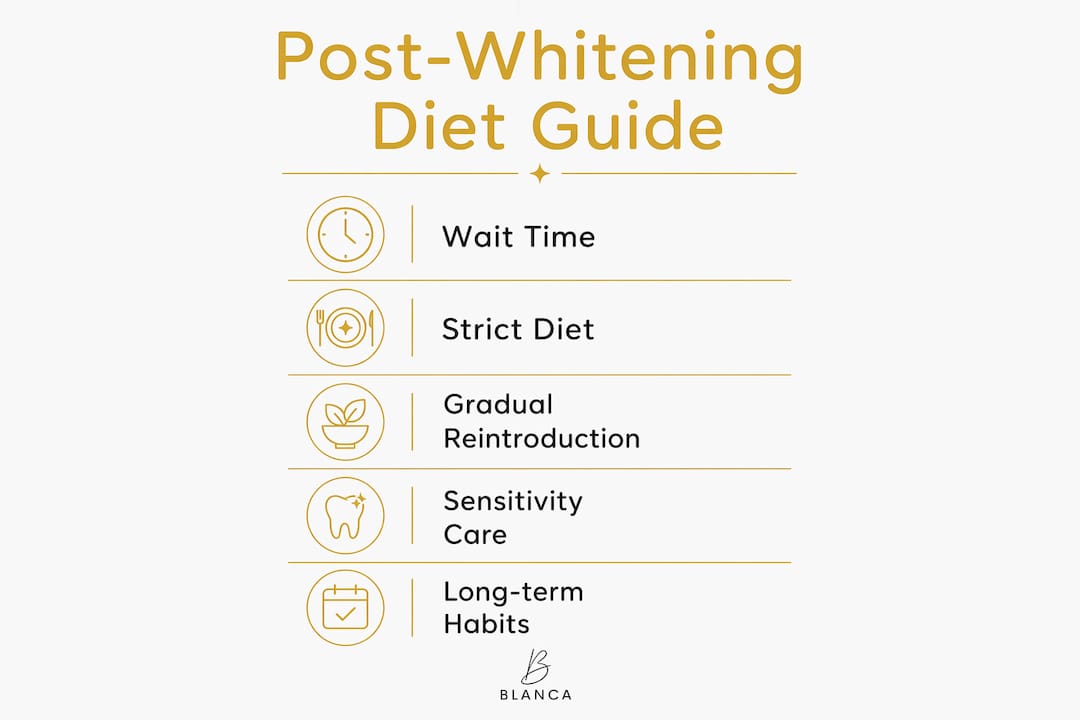
For at-home tray users, the sensitivity window effectively resets with each session. Following the white diet throughout the entire treatment course, plus 48 hours after the final session, gives enamel the best chance to stabilize fully before normal eating resumes.
What foods and drinks should you avoid after whitening?
The most damaging choices after whitening combine chromogens (color pigments), tannins, and acids. Coffee, tea, red wine, dark sauces, berries, citrus fruits, and carbonated sodas all fall into this category and pose the highest staining and sensitivity risk during the first 24–48 hours.
- Dark beverages: Coffee, black tea, red wine, cola, and dark grape juice contain tannins and chromogens that can visibly stain enamel within hours of treatment.
- Acidic foods and drinks: Citrus fruits, tomato-based sauces, vinegar dressings, and pickled foods weaken enamel that is already in a compromised state, intensifying sensitivity and making it more receptive to staining.
- Highly pigmented foods: Berries, beets, soy sauce, balsamic vinegar, dark chocolate, curry, and turmeric all contain potent chromogens. Even small amounts can leave noticeable marks during the 48-hour window.
- Temperature extremes: Hot soups, iced drinks, and frozen foods can trigger sensitivity and cause uneven color absorption when enamel is still porous.
- Sugary or sticky snacks: Candy and chewy foods cling to enamel and increase the risk of discoloration and decay.
Social situations can make this tricky. At a dinner party or work event, ask for water with lemon on the side rather than squeezing it directly into your glass, choose white wine over red if you drink alcohol, and rinse with plain water after anything remotely pigmented. A little preparation goes a long way toward protecting your results without drawing attention to your restrictions.
What can you safely eat and drink after whitening?
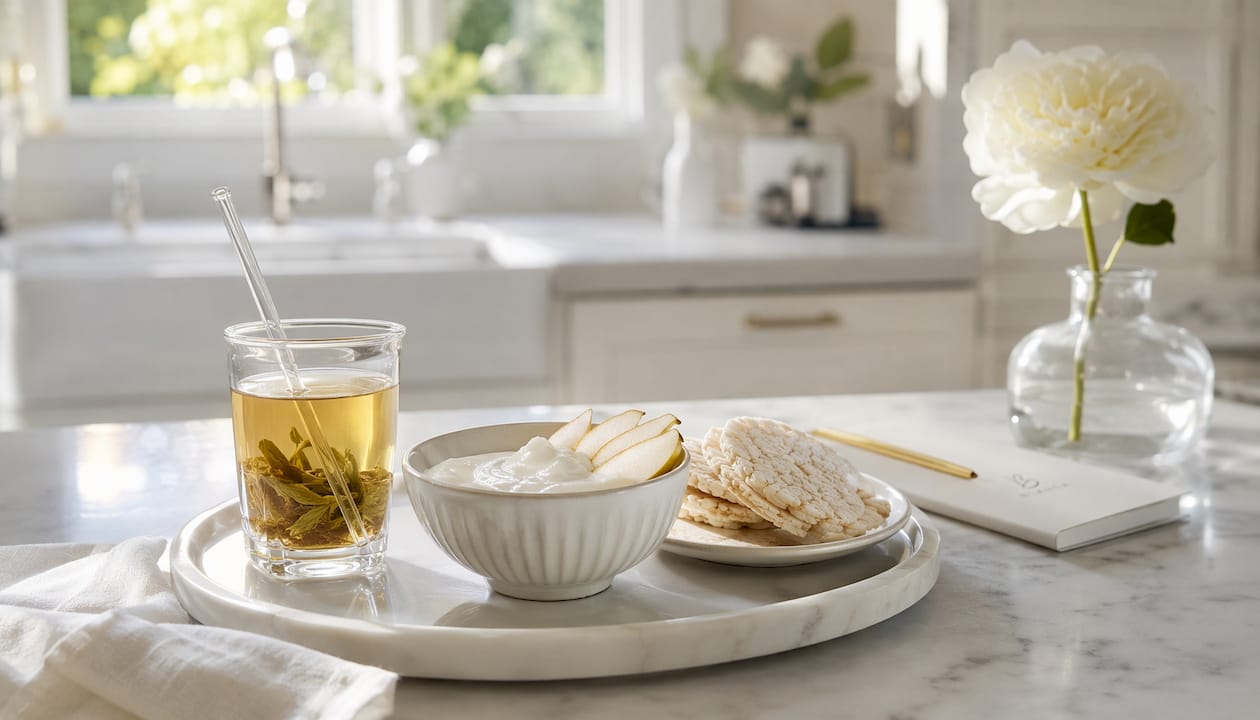
Light-colored, low-acid, non-pigmented foods are your best allies during the post-whitening window. They nourish you without introducing the chromogens or acids that threaten fresh results.
Proteins:
- Skinless chicken breast, turkey breast, white fish (cod, tilapia, halibut), tofu, and egg whites
- Scrambled eggs with a light cheese are also safe; skip dark marinades, soy sauce, and heavy spice rubs
Dairy:
- Plain yogurt, white cheeses (mozzarella, ricotta, cream cheese, cottage cheese), and milk
- Dairy contains casein and calcium, which actively support enamel remineralization, making it one of the best food categories after whitening
Grains and starches:
- White rice, plain pasta, white bread, flour tortillas, plain oatmeal, and cream of wheat
- Avoid whole-grain or dark rye breads for the first 48 hours due to their tannin content
Fruits and vegetables:
- Bananas, pears, peeled apples, white grapes, cauliflower, potatoes (without skin), peeled cucumber, celery, and mushrooms
- Avoid berries, tomatoes, beets, and any deeply pigmented produce
Beverages:
- Water is the safest choice immediately after whitening; it rinses away residual gel, supports saliva flow, and aids enamel rehydration without introducing pigments or acids
- Milk and plain coconut water are also fine; flavored or carbonated drinks should be avoided initially
Pro Tip: If coffee is non-negotiable after the 48-hour mark, drink it through a straw to minimize contact with enamel, then rinse with plain water right afterward.
How to manage sensitivity after whitening
Sensitivity after whitening is common and usually temporary, but the right habits during the first 24–48 hours can reduce how intense it feels. The main triggers are temperature extremes, acidic foods, and eating too soon after treatment.
- Stick to room-temperature or slightly cool foods for the first 24 hours; avoid hot soups, iced drinks, and anything frozen.
- Skip citrus, vinegar, and carbonated drinks, which can amplify the stinging sensation on porous enamel.
- Eat slowly and chew gently; rushing a meal when teeth are sensitive can make discomfort linger longer than it needs to.
- Drink plain water throughout the day to keep saliva flowing, which naturally neutralizes residual peroxide and supports enamel recovery.
For those managing whitening with sensitive teeth, the gradual introduction of foods matters just as much as which foods you choose. Starting with softer textures and room-temperature options before moving to anything crunchy or cold gives enamel time to stabilize.
Pro Tip: Wait about 20 to 30 minutes after eating before applying whitening strips. This allows saliva levels to normalize and reduces the risk of gum irritation from residual food particles and excess moisture.
Long-term habits that protect your whitening results
Maintaining your results beyond the first 48–72 hours comes down to consistent daily habits rather than any single product or rule.
- Moderate high-stain foods: You do not need to eliminate coffee or red wine permanently, but rinsing with water after consuming them and avoiding them right before bed reduces cumulative staining.
- Use a whitening-compatible toothpaste: A low-abrasion formula with fluoride supports enamel health without stripping the surface. Blancawhitening’s oral care collection includes options designed specifically for post-whitening maintenance.
- Drink through a straw: For dark beverages, a straw keeps pigmented liquid away from the front enamel surface.
- Brush and floss consistently: Plaque buildup accelerates staining. An electric toothbrush, such as the Blanca electric toothbrush, removes plaque more thoroughly than manual brushing and supports long-term brightness.
- Schedule touch-up sessions: At-home whitening strips used periodically can extend results significantly, especially for those who regularly consume coffee or tea.
For a structured approach to spacing out treatments, Blancawhitening’s guide on whitening schedule recommendations covers timing intervals that protect enamel while keeping your smile consistently bright.
Common mistakes that undermine whitening results
Most whitening setbacks are avoidable. These are the errors that dental professionals see most often.
- Eating staining foods too soon: Consuming coffee, berries, or dark sauces within the first hour after treatment is the fastest way to undo results. Enamel is at peak porosity right after whitening and absorbs pigments almost immediately.
- Applying strips right after meals: Applying whitening strips immediately after eating causes gum irritation and lowers treatment effectiveness because saliva dilution and food residue prevent even gel contact.
- Ignoring sensitivity signals: Pushing through discomfort by eating hot or acidic foods too soon does not speed recovery. It prolongs sensitivity and can cause uneven color that looks like whitening failure.
- Skipping the white diet mid-course: For at-home tray treatments spread over 7–14 days, abandoning the white diet partway through undermines the cumulative effect of each session.
- Overusing whitening products: More frequent applications do not produce faster results; they increase sensitivity and risk enamel damage. Blancawhitening’s resource on overuse whitening risks explains where the line is.
- Brushing immediately after removing trays: Wait at least 30 minutes. Enamel is temporarily softened after treatment, and brushing too soon can abrade the surface.
What the science says about eating timing and whitening efficacy
The clinical picture on post-whitening diet is more nuanced than the strict “white diet only” advice you may have heard. A 2024 meta-analysis found no statistically significant difference in color stability one month after whitening between patients who followed a strict white diet and those who did not, with results showing p-values of 0.90 for in-office treatments and 0.27 for at-home treatments. That finding does not mean diet is irrelevant; it suggests the strict version may be more protective than strictly necessary for long-term color stability, while still being the safest approach during the acute vulnerability window.
What the research does consistently support is the enamel porosity model. Peroxide-based agents temporarily open microscopic channels in the enamel, and saliva remineralization closes them over 48–72 hours. During that window, pigment molecules can settle into the surface before the pores close. Dental professionals recommend the white diet not because color stability one month out is dramatically different, but because the first 48 hours represent the period of highest staining risk and the easiest opportunity to protect your investment.
The practical takeaway from practitioners is straightforward: follow the white diet strictly for the first 48 hours, then ease back into normal eating gradually. Patients who invest in professional treatments and want the longest-lasting results often extend cautious eating habits to a full two weeks, particularly around the worst offenders like coffee and red wine. Blancawhitening’s clinical approach to whitening combines these evidence-backed timing guidelines with enamel-safe formulations designed to support both effective whitening and long-term oral health.
Ready to protect your results with the right products?
Getting the timing right is only half the equation. Having the right products on hand makes it much easier to maintain your results day after day. Blancawhitening’s at-home whitening range is formulated by dental professionals to deliver effective brightening while respecting enamel health, and the best-selling collection includes everything from whitening strips to water flossers designed for post-whitening care. For those looking for a deal, the current promotions page lists active offers across the full product line.
For professional whitening care with expert guidance on post-treatment eating and sensitivity, Fundamental Skin’s whitening services offer a complementary in-clinic option worth exploring.
Key Takeaways
Eating the right foods at the right time after whitening is the single most effective way to protect your results and reduce sensitivity during the critical 48-hour window.
| Point | Details |
|---|---|
| Wait before eating | At-home strips require 1–3 hours; professional in-office whitening requires 24–48 hours before eating pigmented or acidic foods. |
| Follow the white diet | Stick to light-colored, low-acid, non-pigmented foods for at least 48 hours post-treatment. |
| Avoid temperature extremes | Hot and cold foods trigger sensitivity and uneven color during the first 24 hours. |
| Apply strips correctly | Wait 20–30 minutes after eating before applying whitening strips to reduce gum irritation and improve gel contact. |
| Maintain long-term habits | Rinsing after staining foods, using a whitening-compatible toothpaste, and scheduling touch-ups extend results beyond the initial treatment. |