

How to Use a Whitening Pen: Safe, Simple Steps
To use a whitening pen correctly, brush and floss first, dry your front teeth, then paint a thin coat of gel on the visible surfaces of your smile and hold your lips away from your teeth for the time your product recommends before eating or drinking anything that could stain. That’s the whole method. The details that keep it safe and effective are just as simple.
- Prep: Brush for two minutes, floss, then dry your front teeth with a tissue or let them air dry for better contact.
- Apply: Twist or click the pen to dispense a small amount and brush thin, even strokes onto the front surfaces only, never the gums.
- Wait and protect: Hold your mouth open for the recommended set time, then skip coffee, wine, or dark sauces for at least 30 to 60 minutes. Stop and rinse if you feel gum irritation.
Key Takeaways
The safest, most effective way to use a whitening pen is a thin, precise application on dry front teeth, held for the product’s recommended time, followed by avoiding staining foods and drinks.
| Point | Details |
|---|---|
| Prep matters | Brush, floss, and dry your front teeth before applying gel for better contact and less irritation. |
| Less gel is better | A thin, even coat on visible surfaces beats a heavy layer that risks touching the gums. |
| Results are gradual | Expect about 2 to 3 shades of change with consistent use, not a strip-level transformation. |
| Respect the schedule | Stick to the recommended consecutive-day limit and shift to maintenance mode afterward. |
| Know your stop signals | Persistent sensitivity, gum pain, or recent dental work call for a dentist’s advice before continuing. |
| Choose the right tool | The BLANCA Gel Whitening Pen is built for precise touch-ups and maintenance within this exact routine. |
Table of Contents
- Whitening Pen How to Use: The Full Application Routine
- How Does a Whitening Pen Actually Brighten Teeth?
- Is It Safe to Use a Whitening Pen Every Day?
- What Are the Most Common Whitening Pen Mistakes?
- How Often Should You Use a Whitening Pen?
- How Should You Store and Dispose of a Whitening Pen?
- When Should You See a Dentist Instead of Using a Pen?
- A Note From Blanca on Safe Whitening Practices
- Where the BLANCA Gel Whitening Pen Fits Your Routine
- Sources
Whitening Pen How to Use: The Full Application Routine
Getting a whitening pen application right comes down to timing and restraint. Too much gel or the wrong prep undoes the benefit and irritates soft tissue for no reason.
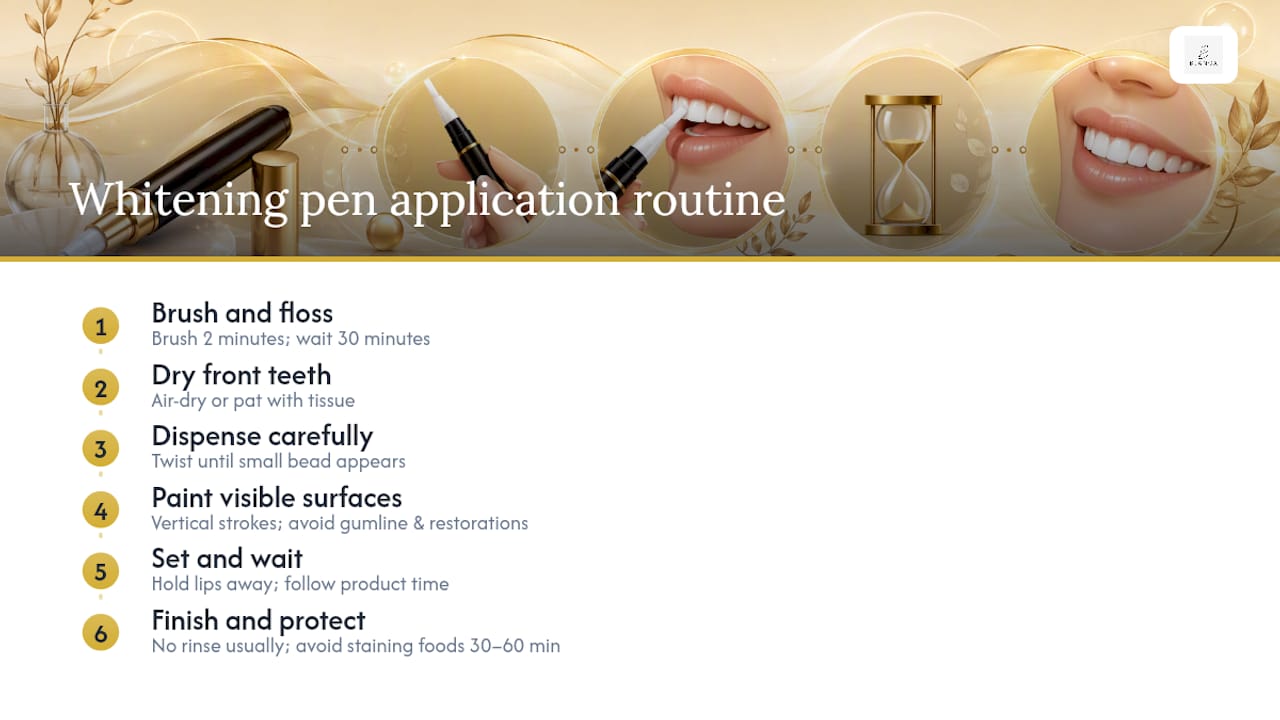
1. Brush and floss, then wait. Brush for a full two minutes and floss to clear food particles from between your teeth. Give it about 30 minutes after brushing before you apply the gel. This short gap lets your gums settle and reduces the odds of irritation from combining fresh brushing with an active whitening agent, a step Cleveland Clinic recommends as standard practice.
2. Dry your front teeth. Moisture dilutes the gel and weakens its grip on enamel. A few seconds of air drying, or a gentle pat with a tissue, makes a real difference in how evenly the product sits on the tooth surface.
3. Dispense carefully. Twist or click the pen’s base until a small bead of gel appears at the brush tip. You want a modest amount. If gel is dripping off the brush, you’ve dispensed too much.
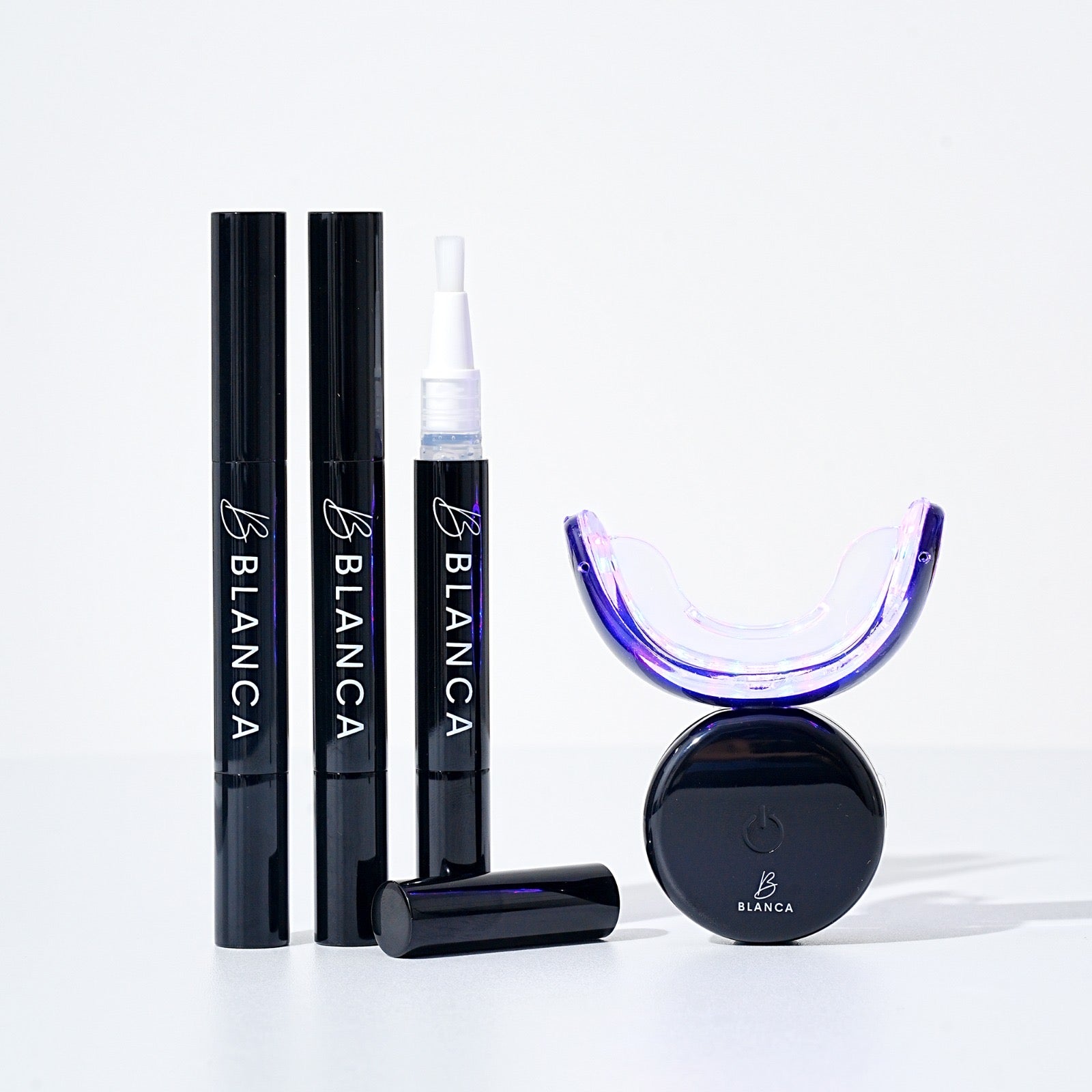
4. Apply in thin, controlled strokes. Open wide and keep your lips pulled back from your teeth. Paint the gel in vertical strokes across the front, visible surfaces only, the ones that show when you smile. Avoid your gumline and any spots where you have crowns, veneers, or composite fillings, since peroxide doesn’t whiten restorative materials and can irritate exposed tissue nearby.
5. Set and wait. Hold your lips away from your teeth for the time your product specifies, often around one minute. If gel touches your gums or runs, wipe it away immediately with a tissue rather than letting it sit.
6. Finish and protect your results. Most pens don’t require rinsing, but check your product’s instructions since formulas vary. Afterward, avoid coffee, tea, red wine, berries, and tomato sauce for 30 to 60 minutes while your enamel is most receptive to new staining.
If coverage looks uneven, a light second pass on missed spots is fine, as long as you haven’t exceeded the product’s daily allowance.
Pro Tip: Apply in front of a mirror with good lighting. Uneven coverage is the number one reason people think their pen “isn’t working,” when really only half the visible tooth surface got treated.
How Does a Whitening Pen Actually Brighten Teeth?
Whitening pens typically use hydrogen peroxide or carbamide peroxide as the active ingredient. Once applied, the peroxide breaks down into reactive oxygen molecules that penetrate the enamel and dentin, where they oxidize and break apart the compounds responsible for staining, according to McGill University’s Office for Science and Society. Carbamide peroxide releases its active oxygen more slowly than hydrogen peroxide, which is part of why some formulations feel gentler.
Two factors drive how much whitening you actually see:
- Concentration: Higher peroxide levels whiten faster but raise sensitivity risk.
- Contact time: The longer the gel stays on the tooth, the more stain-breaking reactions occur.
Pens use short contact times and lower concentrations than strips, by design. Whitening pens generally deliver about 2 to 3 shades of change, while strips can produce roughly 5 to 7 shades, according to the Canadian Dental Association. That trade-off is the whole point: pens are precision tools for touch-ups, not a substitute for a full whitening course.
Is It Safe to Use a Whitening Pen Every Day?
Used correctly, whitening pens are low-risk, but a few precautions matter more than people expect.
- Keep gel off your gums and lips. Contact causes a mild bleaching burn that looks white and feels tender for a day or two.
- Watch for tooth sensitivity. Mild tingling is common; sharp or lasting pain means you should stop and give your teeth a break.
- Skip whitening if you have open sores, recent dental work, or are pregnant. Ask your dentist first in any of these cases.
- Use minimal gel and blot excess immediately with a tissue rather than letting it spread.
Research on enamel surface changes after bleaching exposure supports sticking closely to product instructions rather than layering on extra applications, since enamel structure can be affected under certain conditions. Overuse is where most whitening complaints come from, not the products themselves.
Pro Tip: If you notice gum contact mid-application, don’t panic, just rinse with water and wipe the area. Isolated, brief contact rarely causes lasting harm; it’s repeated, unaddressed contact that leads to irritation.
For more on avoiding tender gums altogether, see our guide on preventing gum irritation while whitening.
What Are the Most Common Whitening Pen Mistakes?
Most disappointing results trace back to a handful of avoidable habits rather than the product itself.
- Apply thin, even coats and target visibly stained spots rather than coating every tooth uniformly.
- Use pens as touch-ups after a full whitening treatment, not as your only whitening method.
- Store your pen somewhere cool and dry, away from direct sunlight, to keep the gel stable.
The most frequent mistakes: using too much gel per application, painting over the gumline, expecting strip-level results from one pen session, and applying gel over visible fillings or crowns without checking with a dentist first.
Pro Tip: If your enamel is naturally sensitive, pair your pen routine with a desensitizing toothpaste for a week beforehand, or whiten every other day instead of daily.
How Often Should You Use a Whitening Pen?
Most brands recommend daily application for about 7 to 10 days, then a maintenance schedule of a few times per week. Because whitening pens produce modest, gradual results (typically 2 to 3 shades) compared with the larger shifts strips can achieve, patience matters more than frequency here, per the Canadian Dental Association’s position statement.
- Don’t exceed the consecutive-day limit printed on your packaging.
- If sensitivity climbs or results plateau after a full course, pause rather than pushing through.
How Should You Store and Dispose of a Whitening Pen?
Keep your pen in a cool, dry spot away from sunlight, and never freeze it. Store it out of reach of children and pets; if swallowed, contact poison control or a dentist right away. Check the label for shelf life, and dispose of empty pens with regular household waste once fully used.
When Should You See a Dentist Instead of Using a Pen?
Stop over-the-counter whitening and call your dentist if sensitivity or gum pain persists beyond a couple of days, if new discoloration doesn’t respond to standard products, or if you’ve had recent restorative or surgical dental work. Anyone with crowns, veneers, or composite fillings should ask a dentist before applying peroxide near those areas, since restorative materials don’t respond to bleaching agents the way natural enamel does.
Persistent staining, structural dental work, or unexplained discoloration are signals your case needs a professional evaluation, not another round of at-home gel.
Our safety checklist before whitening walks through the exact questions worth raising with your dentist beforehand.
A Note From Blanca on Safe Whitening Practices
The steps in this guide reflect what dental professionals on our team consistently emphasize: preparation, restraint, and realistic expectations produce the safest outcomes. We built our products around those same principles. Follow your product’s printed instructions closely, and when your situation involves restorations, sensitivity, or uncertainty, a dentist’s evaluation is worth more than any guide.
Where the BLANCA Gel Whitening Pen Fits Your Routine
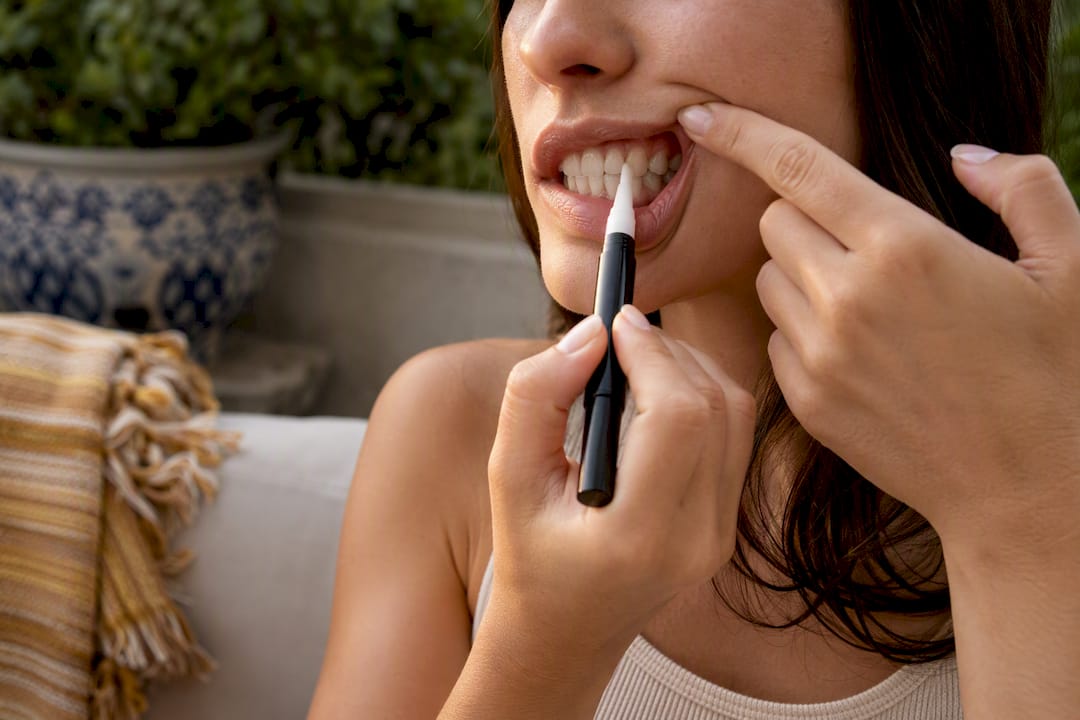
The BLANCA Gel Whitening Pen was designed around exactly the routine above: a precision brush applicator for controlled, thin-layer strokes, a formulation sized for touch-ups rather than heavy daily saturation, and a compact size that travels well for maintenance between fuller whitening sessions.
Its packaging spells out the same safety points covered here, recommended contact time, a suggested schedule, and guidance on avoiding gum contact, so you’re never guessing at dosage or frequency. If you’ve already completed a whitening treatment and want to maintain your shade, or you just need to touch up a few spots before an event, this pen is built for that job specifically, not for chasing dramatic single-session change. Visit our whitening products page to see current options and pick up a pen for your next touch-up.
Sources
- Canadian Dental Association — Tooth Bleaching (position statement)
- Cleveland Clinic — How to whiten teeth
- McGill University — How does peroxide whiten teeth?
- Operative Dentistry — Enamel surface changes after exposure to bleaching