

Wait 4–6 Weeks Before Whitening: Dentist Led Plan for Braces Patients
Whitening strips are usually a poor match for fixed braces because they only bleach the enamel they touch, leaving the enamel under brackets and wires untreated. That mismatch creates blotchy, uneven color once the hardware comes off. The safer path is to focus on hygiene now, talk to your orthodontist before trying anything else, and save bleaching for after removal. A dentist-led option like Blancawhitening fits well once your teeth are cleared for whitening.
TL;DR:
- Whitening strips should only be used after orthodontic brackets are removed, as they can cause uneven results and damage enamel underneath braces.
- Professional in-office or custom tray whitening is safer and more effective post-braces, with custom trays providing even coverage and minimizing risks.
- Maintaining excellent oral hygiene during treatment with brushes, flossers, and regular cleanings is the best way to prevent stains while braces are on.
- Waiting four to six weeks after debonding before whitening allows enamel to recover and reduces the chance of noticeable white spots or uneven color.
- Whitening around braces can worsen white spot lesions by increasing contrast, so consult your dentist before bleaching if spots are present.
Table of Contents
- Safe Paths for Brighter Teeth During Orthodontic Treatment
- Why Whitening Strips Usually Underperform with Fixed Braces
- Professional Options: In-Office Whitening vs. Custom Take-Home Trays
- Keeping Teeth Bright While Braces Are Still On
- How Long Should You Wait After Braces Come Off?
- Risks and Special Cases Worth Knowing About
- A Dentist-Led Protocol for After Your Braces Come Off
- The Safest Path to an Even, White Smile
- Why We Push Back on Quick Fixes for Braces Patients
- Blancawhitening’s Post-Braces Lineup, and Where to Start
- Sources
Safe Paths for Brighter Teeth During Orthodontic Treatment
You have three realistic routes while you’re figuring out whitening with braces, and they’re not equal in speed or safety.
- Prevention and maintenance during braces: the lowest-risk option, focused on stopping new stains rather than removing old ones.
- Supervised in-office or dentist-tray whitening: reserved for specific clinical situations, done under a professional’s direct control.
- Delaying whitening until after braces come off: the route most orthodontists recommend for the vast majority of patients.
Speed favors in-office work, evenness favors waiting until after removal, and risk favors prevention. Supervised in-treatment whitening is occasionally considered for someone with an urgent event, but it’s the exception, not a default plan.
Why Whitening Strips Usually Underperform with Fixed Braces
Peroxide-based whitening strips work by making direct contact with enamel, letting the bleaching agent penetrate the tooth surface evenly across the whole visible tooth. That full-surface contact is what produces a uniform shade change.
Brackets and wires get in the way. Any enamel sitting under a bracket stays completely untouched, while the enamel around it lightens normally. The result is a checkerboard of light and dark patches that becomes obvious the moment your braces come off.
A narrative review of whitening during active fixed orthodontic treatment found that bracket coverage is one of the main reasons results turn out uneven, alongside possible changes to enamel and a risk of loosening the bracket bond itself. Practical fallout from using strips anyway tends to include:
- Patchy shade differences once brackets are removed.
- Gum or soft-tissue irritation from strips that don’t fit well around hardware.
- A temptation to overapply strips trying to compensate for the areas that seem duller.
Consumer clinic guidance consistently discourages home bleaching products during active bracket treatment for these same reasons.
Professional Options: In-Office Whitening vs. Custom Take-Home Trays
Two supervised paths exist for people with orthodontic history, and they serve different moments in treatment.

In-office whitening puts a dentist in direct control of application and concentration. It’s fast, and in select cases it can be done while braces are still on. But the same narrative review notes this still carries a risk of uneven shade and possible effects on bracket adhesion, which is exactly why it’s not offered casually.
Custom take-home trays, molded specifically to your teeth by a dentist, are the better fit once brackets are off. Because a dentist-fitted tray delivers gel across every tooth surface evenly, there’s no checkerboard effect left behind by strips.
- In-office whitening: fastest, clinician-controlled, occasionally used during treatment under strict supervision.
- Custom trays: even coverage, typically used after brackets are removed, considered the safer take-home route.
Pro Tip: Ask your orthodontist to flag any white spots at your debonding appointment. A custom tray fitting is the moment to address them, before you start any bleaching.
Keeping Teeth Bright While Braces Are Still On
You don’t need to bleach to protect your smile during treatment. The goal is simpler: stop new stains from forming around brackets in the first place.
- Use interdental brushes and a water flosser daily to clear plaque that builds up around wires and brackets, where a regular brush can’t reach.
- Switch to an electric toothbrush for more consistent plaque removal along the bracket line.
- Use a gentle polishing toothpaste for surface stains from coffee or tea, since it lifts stains without any bleaching agent.
- Book professional cleanings on schedule. Regular cleanings remove buildup that would otherwise turn into permanent discoloration.
- Skip strips, pens, and other bleaching products entirely until your orthodontist clears you.
Clinics that specialize in orthodontics consistently point to rigorous hygiene as the most effective stain prevention tool available during treatment, more effective than any bleaching product could be with brackets in the way. Good habits now also mean less bleaching work later.
How Long Should You Wait After Braces Come Off?
Most orthodontic clinics recommend waiting 4 to 6 weeks after debonding before starting any whitening treatment, though some allow as little as two weeks depending on enamel condition.
That window isn’t arbitrary. Enamel needs time to rehydrate after the drying effect of wearing brackets for months, and soft tissue around the gumline needs to settle.
- Waiting reduces the odds of uneven results caused by enamel that hasn’t fully recovered.
- It gives your dentist a clean look at your teeth to catch white spot lesions before you bleach over them.
- The wait period is a good time to schedule a cleaning and address any structural concerns first.
Our guide on whitening after braces walks through what that timeline looks like in practice.
Risks and Special Cases Worth Knowing About
White spot lesions look similar to surface stains, but they’re not the same thing. A white spot is enamel demineralization, a structural change beneath the surface, while a stain sits on top of the enamel.
Whitening a tooth that has an underlying white spot lesion can make that lesion more visible, not less, because bleaching increases the contrast between demineralized and healthy enamel. Some cases need remineralization treatment or microabrasion before whitening is even considered.
Bleaching around active brackets also carries a real risk to the bond holding your hardware in place. If you notice sensitivity, new white spots, or you’re considering whitening before braces are off, talk to your dentist first. Our side effects guide covers what typical sensitivity looks like versus something worth flagging.
A Dentist-Led Protocol for After Your Braces Come Off
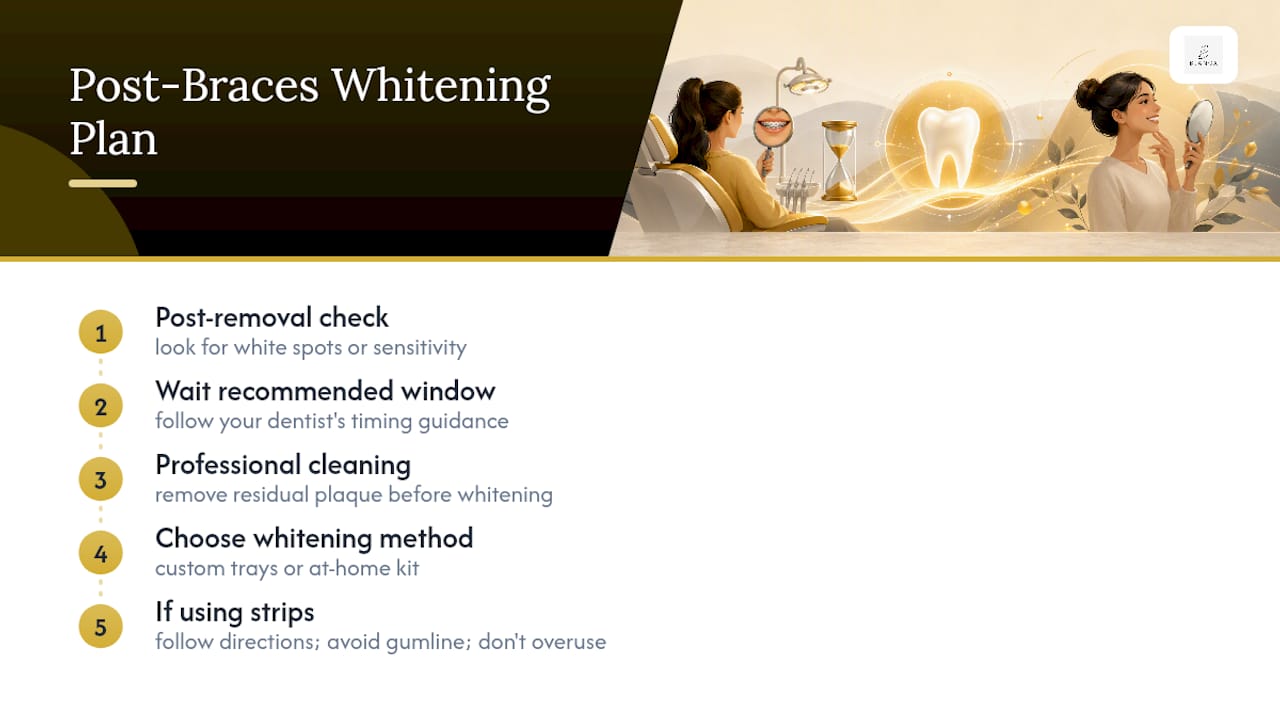
Once your orthodontist clears your teeth, the path forward is straightforward. Get a post-removal check for white spots or sensitivity, wait the recommended window, and book a professional cleaning to clear residual plaque. From there, choose either custom trays or a well-designed at-home kit.
If you go the at-home route, apply strips exactly as directed, keep them off the gumline to limit irritation, and don’t exceed the recommended frequency even if results feel slow. Our guide on using whitening strips safely covers application details step by step. Blancawhitening was built by dental professionals specifically with this kind of post-orthodontic timeline in mind.
The Safest Path to an Even, White Smile
Focus on hygiene while braces are on. Skip over-the-counter strips until brackets are off. Wait the recommended weeks after removal, and see your dentist about any white spots or sensitivity before you bleach. Once you’re cleared, a dentist-designed regimen like Blancawhitening gives you the even result strips can’t deliver around hardware.
Why We Push Back on Quick Fixes for Braces Patients
We built Blancawhitening around a simple frustration: too many people reach for whatever whitening product is on the shelf without knowing it can backfire with orthodontic hardware in the mix. The evidence on in-treatment whitening is genuinely thin, and that gap gets glossed over by marketing that treats every mouth the same.
Our stance is dentist-informed, not dentist-replacing: talk to your orthodontist about your specific case, then use products designed for the timeline you’re actually on. Our safety questions guide is built for exactly that conversation.
— Blanca
Blancawhitening’s Post-Braces Lineup, and Where to Start
Once your dentist gives you the green light, Blancawhitening gives you a full toolkit built for exactly this stage, not a generic one-size-fits-all strip box. Our at-home whitening collection is formulated for even coverage on teeth that have just come out of brackets, without the guesswork of picking a random drugstore option.
Pair whitening with maintenance that actually protects the result. Our electric toothbrush and oral care collection, including water flossers, help clear the plaque buildup that dulls a fresh whitening job within weeks. If you’re not sure which kit fits your timeline, our best sellers page is a solid place to compare options. Browse the whitening collection now and plan your first treatment for right after your dentist clears you.
This article is general information, not a substitute for advice from a qualified doctor. Consult a qualified healthcare professional about your own circumstances before acting on anything here.
Sources
- Effectiveness of dental whitening in patients with active fixed orthodontic treatment: a narrative review
- Brighten your smile after braces: Ortho South’s guide to whitening success
- Should I Whiten My Teeth After Orthodontic Treatment? Gluck Orthodontics Explains When to Brighten Your Smile and How to Prevent Staining During Braces