

Teeth Whitening for Teens: A Parent's Safety Guide
Teeth whitening for teens can be safe when a dentist supervises it, but unsupervised, high-peroxide products are not the way to start. The American Academy of Pediatric Dentistry recommends professional oversight for any teen whitening treatment, and clinical reviews report that 33% to 50% of patients experience some transient sensitivity or gum irritation during treatment, mild, temporary, but worth planning around.
Here’s what to do first:
- Schedule a dental evaluation before buying anything.
- Treat any cavities or gum issues before whitening begins.
- Ask about dentist-prescribed, low-concentration options rather than retail kits.
Pro Tip: Book the cleaning first. Removing surface stain during a routine cleaning sometimes solves the discoloration problem entirely, no bleaching agent needed.
If your teen has healthy, fully erupted adult teeth and no active dental issues, a supervised whitening plan, including dentist-friendly at-home systems like the ones Blancawhitening designs for sensitive teeth, can be a reasonable next step once a dentist signs off.
Key Takeaways
Teeth whitening for teens works safely when a dentist evaluates the teeth first and supervises a low-concentration, custom-fitted treatment plan rather than an unsupervised retail product.
| Point | Details |
|---|---|
| See a dentist first | A full exam rules out cavities, gum disease, and intrinsic causes before any whitening begins. |
| Expect some sensitivity | Clinical reviews report 33% to 50% of patients get transient sensitivity or gum irritation. |
| Wait for adult teeth | Most dentists recommend delaying whitening until baby teeth are gone, often around age 14. |
| Choose custom trays | Dentist-fitted trays with 10% carbamide peroxide reduce gum irritation compared to generic kits. |
| Skip DIY hacks | Charcoal, lemon, and acidic home recipes can damage immature enamel; avoid them entirely. |
| Consider dentist-approved options | Blancawhitening offers low-sensitivity, dentist-friendly at-home kits to use alongside professional guidance. |
Table of Contents
- Why Your Teen’s Teeth Might Look Discolored
- Is Teeth Whitening Safe for Teenagers?
- What Age Is Right for Teeth Whitening?
- What Happens During a Pre-Whitening Dental Exam
- Teeth Whitening Options for Teens: What’s Safe and What to Skip
- Your Teen’s Whitening Starter Plan and How to Maintain It
- Questions to Ask the Dentist and Warning Signs to Watch For
- What the Clinical Evidence Actually Shows
- Our Take: Skip the Shortcuts, Trust the Process
- How Blancawhitening Supports Dentist-Guided Whitening at Home
- Frequently Asked Questions
- Sources
Why Your Teen’s Teeth Might Look Discolored
Not all discoloration comes from the same place, and figuring out which type you’re dealing with determines whether whitening will even work. Extrinsic stains sit on the enamel surface and come from what your teen eats, drinks, or uses daily:
- Coffee, tea, and dark sodas
- Sports drinks and fruit juices
- Berries and tomato-based sauces
- Certain mouth rinses and tobacco products
These stains usually respond well to a professional cleaning or mild whitening. Intrinsic discoloration is different. It originates inside the tooth, from trauma, tetracycline exposure, fluorosis, or a developmental defect in the enamel itself, and surface whitening products won’t touch it.
One warning sign parents often miss: a single dark tooth among otherwise normal ones. That pattern usually points to nerve damage or past trauma, not diet, and it needs a dental work-up before anyone reaches for a whitening gel.
Is Teeth Whitening Safe for Teenagers?
Yes, in most cases, when a dentist oversees it. The most common side effects are transient tooth sensitivity and mild gum (gingival) irritation, and both typically resolve once treatment stops or the concentration is adjusted.
The numbers back this up but also call for caution. Clinical reviews put the rate of transient sensitivity or gingival irritation at 33% to 50% across whitening patients generally. For a teenager, that discomfort can feel more alarming than it does for an adult who’s whitened before and knows what to expect.
Several factors raise the odds of a bad reaction:
- High peroxide concentration in over-the-counter products
- Ill-fitting, one-size trays that let gel touch the gums
- Untreated cavities or exposed dentin
- Overuse, longer wear times than recommended
You can reduce risk substantially with a few adjustments. Dentist supervision, custom-fitted trays instead of generic ones, lower-concentration formulas such as 10% carbamide peroxide, shorter daily contact time, and a desensitizing toothpaste before and after sessions all help meaningfully.
Pro Tip: If your teen reports sensitivity on day one, don’t push through it. Cut the wear time in half before abandoning treatment altogether, many mild reactions settle once the mouth adjusts.
Stop treatment and call the dentist if you see persistent pain, bleeding gums, visible enamel changes, or irritation that doesn’t fade within a day or two.
What Age Is Right for Teeth Whitening?
There’s no single legal cutoff that applies everywhere, but most pediatric dentists wait until the mixed dentition stage is finished, meaning all baby teeth are gone and adult teeth have fully erupted. Nationwide Children’s Hospital generally points to around age 14 as a reasonable starting point, though clinical judgment on a case-by-case basis matters more than a birthday.
The concern with whitening too early isn’t just aesthetics. If baby teeth are still present alongside new adult teeth, whitening creates a visible shade mismatch that looks worse, not better. Adolescent enamel and dentin are also still maturing, which is part of why professional guidance matters here.
Dentists commonly advise delaying whitening when any of these apply:
- Active tooth decay or untreated cavities
- Gum disease or inflammation
- Recent orthodontic adjustments (braces just tightened or removed)
- Primary teeth still present
- Exposed roots or open lesions
Healthychildren echoes this: wait until adult teeth are fully in, get a checkup first, and start conservatively if you proceed at all.
What Happens During a Pre-Whitening Dental Exam
A dentist won’t just glance at your teen’s smile and hand over a kit. A proper evaluation typically includes:
- A full dental exam covering all teeth and existing restorations
- Charting any fillings, crowns, or bonding that could react differently to bleaching agents
- Screening for cavities and enamel defects
- Assessing gum health and tissue sensitivity
- Vitality testing or an x-ray if a single tooth looks unusually dark
- A professional cleaning to remove surface buildup
That last step often changes the whole plan. Removing plaque and surface stain through a routine cleaning sometimes brightens teeth enough that bleaching isn’t even necessary, saving your teen from an unneeded treatment.
Bring questions to this appointment. Ask what shade guide or before-photos the office uses to track progress, and don’t hesitate to raise concerns about restorations that might respond unpredictably to whitening agents.
Teeth Whitening Options for Teens: What’s Safe and What to Skip
Once a dentist clears your teen for whitening, the method matters as much as the decision itself.
Whitening toothpaste is the gentlest option and works only on surface stain through mild abrasives, not chemical bleaching. It’s safe for daily use but won’t change the underlying tooth shade.
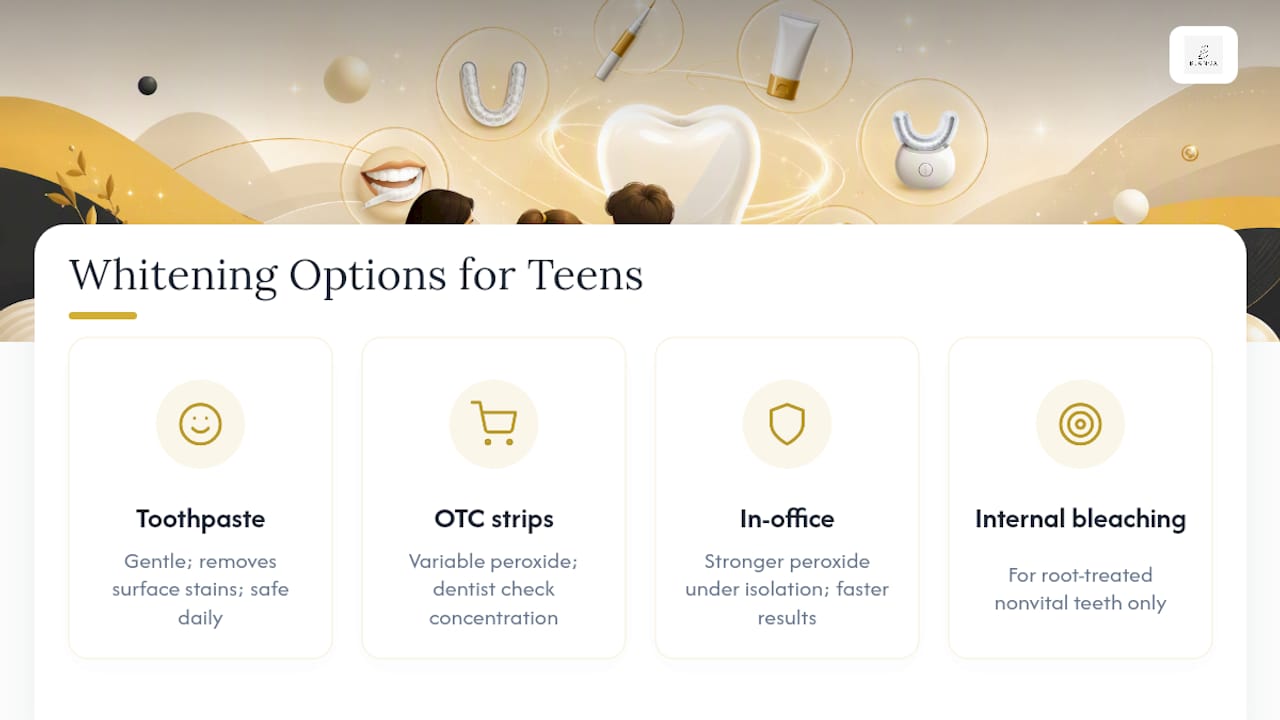
Over-the-counter strips and gels vary widely in peroxide concentration. Some are fine for teens with dentist approval; others exceed appropriate strength for younger patients. Always check the label and confirm the concentration with your dentist first.
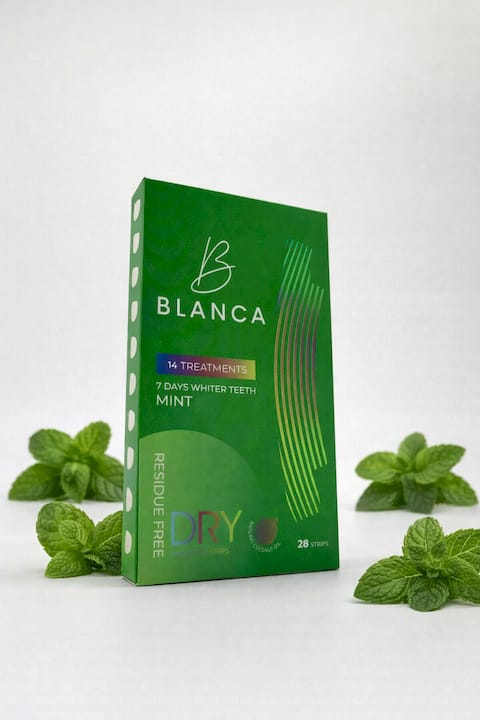
A randomized trial found this exact protocol, two hours daily for three weeks, effective in adolescents, with no meaningful increase in sensitivity risk compared to older patients in that same trial.
In-office bleaching uses stronger concentrations under professional isolation, meaning the dentist protects the gums directly during application. This is typically reserved for cases needing faster or more dramatic results.
Single-tooth internal bleaching applies only to root-treated, nonvital teeth, not a general whitening method, but relevant if your teen has one dark tooth from past trauma.
Avoid retail salon whitening bars without dental supervision and DIY recipes involving charcoal, lemon juice, or baking soda pastes. These are abrasive or acidic enough to wear down enamel that’s still maturing, and pediatric dental experts consistently discourage them.
If your teen wears braces, timing matters too. Whitening around brackets creates uneven color once braces come off, since covered enamel doesn’t bleach evenly with exposed enamel. Most dentists recommend waiting until after orthodontic treatment finishes, or focusing on a professional cleaning in the meantime.
Pro Tip: Custom trays cost more upfront than drugstore strips, but the fit matters more for teens than adults; a properly molded tray keeps gel off the gums entirely, which is where most irritation starts.
Your Teen’s Whitening Starter Plan and How to Maintain It
Once you’ve gotten dental clearance, follow a simple sequence:
- Complete a dental check and professional cleaning first.
- Discuss goals and realistic options directly with the dentist.
- Choose a dentist-prescribed at-home tray system or a supervised in-office session based on their recommendation.
- Set a follow-up appointment to check progress and plan any touch-ups.
Results won’t hold on their own. Build these daily habits into your teen’s routine to protect the investment:
- Brush twice daily with fluoride toothpaste
- Use a desensitizing toothpaste if sensitivity lingers
- Limit coffee, dark soda, and berry-heavy snacks right after treatment
- Drink dark beverages through a straw
- Keep up with regular hygienist visits
Whitening results from custom trays typically last months rather than weeks, though this varies by diet and hygiene. Most dentists suggest revisiting the topic annually, or sooner if staining returns noticeably, rather than committing to a fixed touch-up schedule.
Questions to Ask the Dentist and Warning Signs to Watch For
Bring a short list to the appointment so nothing gets lost in a quick conversation:
- Is whitening appropriate for my teen right now?
- What concentration will you use, and why?
- Will custom trays be part of the plan?
- What side effects are common, and how often do they happen?
- How will you protect the gums during treatment?
- What follow-up care is planned afterward?
Watch for these red flags once treatment starts, and stop immediately if any appear:
- Sensitivity that’s severe or doesn’t fade
- Gums that bleed and don’t heal within a day or two
- A restoration that feels loose or starts leaking
- New, unexplained tooth pain
- Any broader physical reaction
If you notice any of these, stop the whitening product and call the dentist promptly rather than waiting to see if it resolves on its own.
What the Clinical Evidence Actually Shows
Clinical reviews put transient sensitivity and gum irritation at 33% to 50% of whitening patients, and pediatric guidance from the AAPD consistently ties safe outcomes to dentist supervision rather than self-directed use.
Dental professionals emphasize that supervision isn’t a formality, it’s what separates an effective whitening plan from one applied to teeth with undiagnosed cavities or developmental defects, where bleaching would do nothing useful and could cause harm.
Our Take: Skip the Shortcuts, Trust the Process
We understand the pull toward a quick fix when your teen wants a brighter smile before a big event. But the evidence keeps pointing the same direction: a dental evaluation first, then a supervised, appropriately concentrated whitening plan, beats any social-media hack or unsupervised drugstore kit. Natural teeth whitening methods that involve charcoal or acidic pastes aren’t a shortcut worth the enamel risk. Slower and dentist-approved wins here.
How Blancawhitening Supports Dentist-Guided Whitening at Home
Blancawhitening builds its at-home systems around the same principle your dentist will emphasize: lower sensitivity through better-fitted delivery, not just stronger gel. As a dental-led brand, Blancawhitening designs whitening options for sensitive teeth that complement, rather than replace, professional care.
If your teen has been cleared for whitening, ask your dentist whether a dentist-friendly at-home kit fits their treatment plan or whether an in-office option makes more sense for their situation. A dental exam still comes first, always. Once you have that green light, browse Blancawhitening’s at-home teeth whitening collection to see which system your dentist might recommend alongside their care plan.
Frequently Asked Questions
Is teeth whitening safe for teenagers? Yes, in most cases, when a dentist evaluates the teeth first and supervises treatment. Unsupervised, high-concentration products carry more risk of sensitivity and gum irritation.
What is the ideal age for teeth whitening? Most dentists wait until all baby teeth are gone and adult teeth have fully erupted, often around age 14, though clinical judgment on a case-by-case basis matters more than age alone.
Are teeth whitening kits for adolescents different from adult kits?
What are affordable at-home options for teens? Dentist-prescribed custom trays cost more upfront than drugstore strips but reduce gum irritation significantly, making them a better value when factoring in comfort and results.
Can teens whiten teeth with braces on? It’s best to wait until after orthodontic treatment finishes, since whitening around brackets creates uneven color once braces come off.
This article is general information, not a substitute for advice from a qualified doctor. Consult a qualified healthcare professional about your own circumstances before acting on anything here.
Sources
- PubMed: clinical review on whitening side effects
- AAPD policy on bleaching
- Effect of age on the efficiency and tooth sensitivity associated with at-home tooth whitening (Heliyon trial)
- Healthychildren