

Whitening Strips While Breastfeeding: What Nursing Parents Need to Know
Using whitening strips as directed is unlikely to require you to stop breastfeeding. That’s the position of LactMed, the NIH’s authoritative drug-and-lactation database, which notes that carbamide peroxide in tooth-whitening products is unlikely to be absorbed into the bloodstream in meaningful amounts. When absorption does occur, the compound breaks down into urea and hydrogen peroxide, both of which are naturally present in human milk.
Here’s the short version of why the risk is considered low:
- Whitening strips deliver peroxide topically to enamel, not systemically.
- Active ingredients break down rapidly in oral tissues before reaching the bloodstream.
- Authoritative sources including LactMed, MotherToBaby, and the American Dental Association do not issue a blanket ban on whitening strips for breastfeeding people.
- Most clinical guidance is precautionary, not evidence of demonstrated harm.
If you have open sores, active gum disease, a known peroxide allergy, or a systemic health condition that affects how your body processes chemicals, contact your dentist, obstetrician, or pediatrician before using any whitening product.
Key Takeaways
Using whitening strips as directed while breastfeeding is unlikely to pose meaningful risk, based on the chemistry of peroxide breakdown and guidance from LactMed, MotherToBaby, and the ADA.
| Point | Details |
|---|---|
| Core safety verdict | LactMed does not recommend stopping breastfeeding when whitening strips are used as directed. |
| Why risk is low | Carbamide peroxide breaks down to urea and hydrogen peroxide, then rapidly to water and oxygen, before reaching the bloodstream. |
| Main evidence gap | No controlled studies directly measure breast milk peroxide levels after maternal whitening strip use. |
| Key precautions | Follow directions, avoid swallowing gel, skip use if you have open sores or active gum disease, and tell your dentist you’re nursing. |
| Blancawhitening option | At-home whitening strips with clear ingredient lists and usage instructions give nursing parents a transparent, dentist-informed choice. |
Table of Contents
- What authoritative sources say about teeth whitening while breastfeeding
- How whitening strips and their active ingredients behave in your body
- How other whitening methods compare for nursing parents
- How to use whitening strips more safely while breastfeeding
- When you should avoid whitening strips or call a provider
- What the research actually shows and where the evidence gaps are
- Blanca’s perspective on whitening safely while nursing
- Blancawhitening’s at-home whitening option for nursing parents
- Sources
What authoritative sources say about teeth whitening while breastfeeding
The clearest guidance comes from LactMed, maintained by the National Institutes of Health. Its entry on carbamide peroxide states that the compound is unlikely to reach the bloodstream in significant amounts when used as directed, and it does not recommend stopping breastfeeding. That’s a meaningful signal from one of the most rigorous drug-and-lactation databases available.
MotherToBaby, a service of the Organization of Teratology Information Specialists, takes a similarly measured stance. It explains the ingredients found in common whitening products, acknowledges that direct research in lactating populations is limited, and concludes that topical use as directed is unlikely to significantly enter maternal circulation or breast milk. MotherToBaby encourages following product directions carefully and reaching out to their specialists with specific questions.
The ADA’s oral health guidance for pregnancy and lactation reinforces the importance of routine dental care during this period. Rather than prohibiting whitening, the ADA recommends that patients disclose their breastfeeding status so dentists can tailor care appropriately. ACOG similarly emphasizes coordination between dental and obstetric providers across the reproductive lifespan.
ParentData, Emily Oster’s evidence-based parenting resource, reaches a straightforward conclusion: the basic chemistry and LactMed data give no chemical reason to worry about whitening strips while breastfeeding when used as directed, while noting the absence of large population studies.
How whitening strips and their active ingredients behave in your body
Most whitening strips use one of two active agents: carbamide peroxide or hydrogen peroxide. Carbamide peroxide is the more common choice in at-home strips because it releases its active component more slowly, which reduces the risk of enamel irritation during extended contact.
The metabolic pathway is straightforward. Carbamide peroxide breaks down into urea and hydrogen peroxide. Hydrogen peroxide then decomposes rapidly into water and oxygen at the tissue level. A peer-reviewed review on PubMed Central supports this biological picture, describing how hydrogen peroxide is rapidly decomposed in tissues, which limits systemic exposure from topical dental use. The body’s own enzymes, including catalase and peroxidase present in saliva and oral mucosa, drive this breakdown before meaningful amounts can enter the bloodstream.
Beyond the active ingredients, whitening strips typically contain:
- Glycerin — a humectant that keeps the strip pliable and in contact with the tooth surface.
- Carbomer — a thickening agent that holds the gel formula in place.
- Flavoring agents — often mint-based, present in trace amounts.
- Water — the base carrier for the gel.
Systemic absorption can occur through two routes: mucosal uptake through the lining of the mouth, or swallowing the product. When strips are used correctly, contact is limited to the tooth surface, and the rapid enzymatic breakdown in saliva and mucosa keeps systemic levels low. Swallowing the gel is where risk increases. Ingesting a significant amount of peroxide gel can cause gastrointestinal upset and raises the theoretical potential for greater systemic exposure.
For a deeper look at safe hydrogen peroxide use, Blancawhitening’s ingredient guide covers the chemistry in plain terms.
How other whitening methods compare for nursing parents
Not all whitening approaches carry the same profile, and understanding the differences helps you choose the path that fits your comfort level while breastfeeding.
Whitening toothpastes are the lowest-risk category. They work primarily through mild abrasives, such as hydrated silica, that polish surface stains off enamel without delivering a peroxide dose to oral tissues. Some formulas include low concentrations of hydrogen peroxide or blue covarine, a color-correcting pigment. Because contact time is brief and the product is rinsed away, systemic exposure is negligible. For nursing parents who want to maintain brightness without any peroxide exposure, a quality whitening toothpaste paired with a consistent brushing routine is a practical first step.
LED and blue-light whitening systems are marketed as accelerators for peroxide gels. The light itself does not whiten teeth; it’s intended to speed up the peroxide reaction. Evidence for meaningful acceleration in at-home settings is limited, and no specific safety data exists for lactating populations. If you choose a light-based system, the peroxide gel it uses carries the same considerations as strips.
The stronger formulation means a greater theoretical systemic load if any product is absorbed, though dentists use protective barriers to limit gum and mucosal contact. Many dental providers recommend postponing elective in-office whitening until after breastfeeding, not because harm has been demonstrated, but because the precautionary principle applies more readily when concentrations are higher.
Professional cleaning and scale-and-polish treatments carry no whitening-specific risk at all. They remove calculus and surface staining mechanically, leaving teeth noticeably cleaner and brighter without any chemical exposure. This is the option most dental providers will recommend without hesitation during lactation.
How to use whitening strips more safely while breastfeeding
If you decide to use whitening strips while nursing, a few straightforward precautions reduce any theoretical risk and help you avoid irritation.
- Follow the instructions exactly. Use the recommended strip size, apply for the stated contact time, and do not extend sessions hoping for faster results.
- Do not swallow the gel. Keep your mouth slightly open during treatment and spit out any saliva that pools rather than swallowing it.
- Avoid use if your mouth has open sores, oral ulcers, active gingivitis, or recent dental surgery. Broken mucosa increases the rate of mucosal absorption and raises the risk of irritation.
- Rinse thoroughly after removing the strips. This clears residual gel from the gum line and tooth surface.
- Watch for sensitivity or allergic reactions. Tooth sensitivity, gum irritation, or any unusual reaction is a signal to stop and consult your dentist.
- Do not exceed the recommended frequency. Overuse increases cumulative exposure and the likelihood of enamel sensitivity.
On timing: if you’re concerned about any residual product, use strips after a nursing session rather than immediately before one. This gives your body additional time to clear any trace amounts before the next feed. This is a practical, precautionary step rather than a clinical requirement.
Pro Tip: A professional scale-and-polish or a whitening toothpaste used consistently twice daily can deliver visible brightness without any peroxide exposure. Consider these as your primary option while breastfeeding, reserving strips for occasional use when you want a more noticeable result.
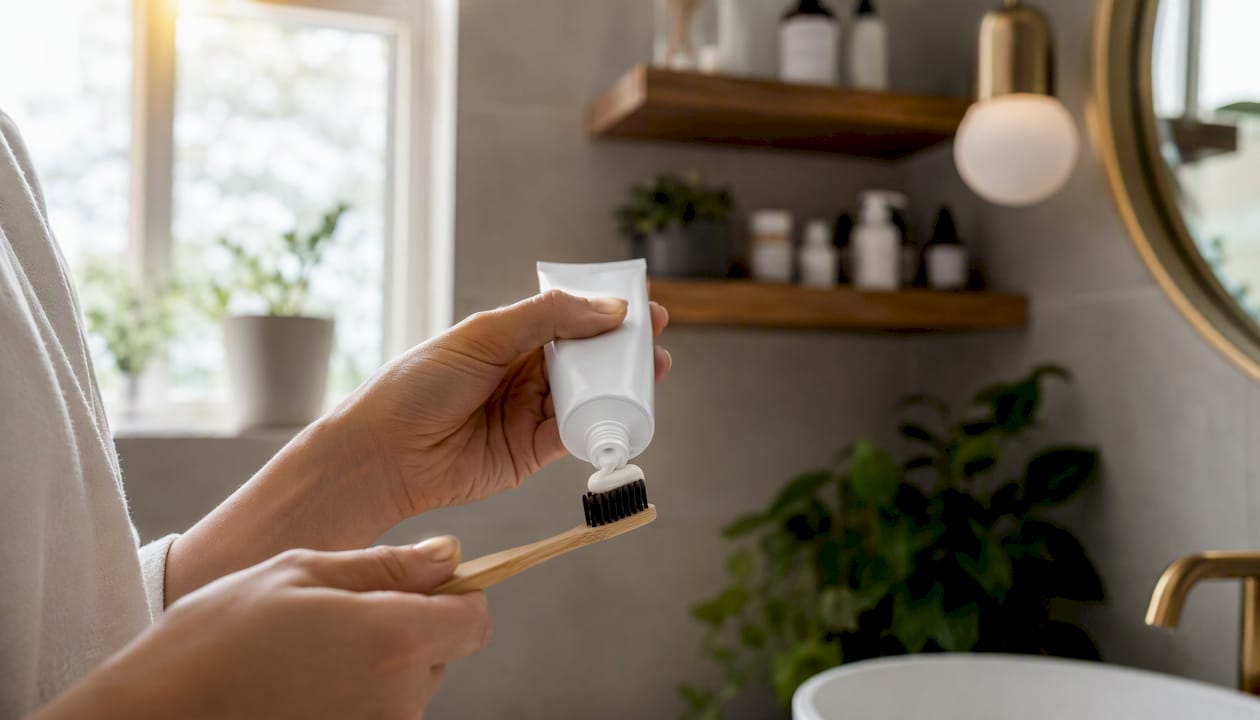
For additional oral care habits that keep your smile bright without relying on bleaching agents, Blancawhitening’s guide covers practical daily steps.
When you should avoid whitening strips or call a provider
Some situations call for pausing whitening entirely and speaking with a clinician before proceeding.
Contraindications to avoid whitening strips:
- Broken or ulcerated oral mucosa
- Active oral infection or abscess
- Severe gingivitis or periodontitis
- Known allergy to peroxide, carbomer, or any listed ingredient
Medical conditions that warrant a clinician conversation: Severe kidney disease can affect how the body clears urea, one of the breakdown products of carbamide peroxide. Certain systemic conditions that alter mucosal integrity or immune response may also change how the body handles topical peroxide. If you have any chronic health condition, discuss whitening with your physician before starting.
If significant product ingestion occurs: Contact Poison Control at 1-800-222-1222 or seek emergency care. Swallowing a small amount of residual gel is unlikely to cause serious harm, but ingesting a full strip’s worth of gel warrants prompt attention.
When to call your dentist, OB, or pediatrician: Any time you’re uncertain about a product’s ingredients, your oral health status, or how a specific health condition might interact with whitening, a brief call to your provider is the right move. The ADA recommends disclosing breastfeeding status to your dentist so care can be individualized.
What the research actually shows and where the evidence gaps are
The scientific picture on whitening strips and breastfeeding is reassuring but incomplete. Here’s what the key sources actually conclude:
- LactMed (NIH): Carbamide peroxide is unlikely to be absorbed systemically in meaningful amounts when used as directed; the compound’s breakdown products are naturally present in human milk; stopping breastfeeding is not recommended.
- MotherToBaby: Topical use as directed is unlikely to significantly enter maternal circulation or breast milk; direct research in lactating populations is limited; following product directions is advised.
- PubMed/peer-reviewed reviews: Studies on dental bleaching consistently find minimal systemic absorption from topical peroxide use, but controlled studies in breastfeeding populations are sparse.
- PMC safety assessments: Cosmetic peroxide safety reviews support cautious interpretation of topical exposures and note rapid enzymatic decomposition as the primary protective mechanism.
The central evidence gap is the absence of controlled studies that directly measure breast milk peroxide levels after maternal whitening strip use. No such study currently exists in the published literature. This is why guidance is precautionary rather than evidence of harm. The chemistry strongly suggests low risk; the direct lactation data simply hasn’t been gathered.
| Evidence Source | Key Finding | Limitation |
|---|---|---|
| LactMed (NIH) | Systemic absorption unlikely; breakdown products naturally in milk | No direct breast milk measurement studies |
| MotherToBaby | Topical use unlikely to enter circulation significantly | Limited lactation-specific research |
| Peer-reviewed peroxide reviews | Rapid tissue decomposition limits systemic exposure | Studies not conducted in breastfeeding populations |
| ParentData (Emily Oster) | No chemical reason to worry when used as directed | Absence of large population studies noted |
For the most current detail, check the LactMed carbamide peroxide entry directly, as it is updated as new evidence emerges.
Blanca’s perspective on whitening safely while nursing
The conversation around whitening strips and breastfeeding often gets framed as a binary: safe or not safe. That framing misses the nuance the evidence actually supports.
The chemistry is genuinely reassuring. Carbamide peroxide breaks down before it can reach the bloodstream in meaningful amounts, and the breakdown products are compounds your body already produces. LactMed, one of the most rigorous lactation pharmacology resources available, does not recommend stopping breastfeeding over this. That’s not a marketing claim; it’s the NIH’s own position.
At the same time, the precautionary stance many clinicians take is reasonable precisely because direct lactation studies don’t exist. Recommending caution when data is sparse is good clinical practice, not evidence of hidden danger. The two positions aren’t contradictory: the chemistry says low risk, and the clinical community says proceed carefully and disclose your status to your provider.
What this means practically: if you want to whiten while breastfeeding, use a product with clear ingredient disclosure, follow the directions, and tell your dentist you’re nursing. If you’d rather wait, a whitening toothpaste and consistent oral care routine will keep your smile in good shape until you’re ready for a stronger treatment.
Blancawhitening designs its products with clinically backed ingredients and detailed usage instructions precisely so that decisions like this one can be made with confidence rather than guesswork. Disclose your breastfeeding status to your dental provider before any professional whitening treatment, and use that conversation to get guidance tailored to your specific situation.
Blancawhitening’s at-home whitening option for nursing parents
Nursing parents who decide to whiten at home deserve a product with transparent ingredients, clear instructions, and a formulation designed with safety in mind.
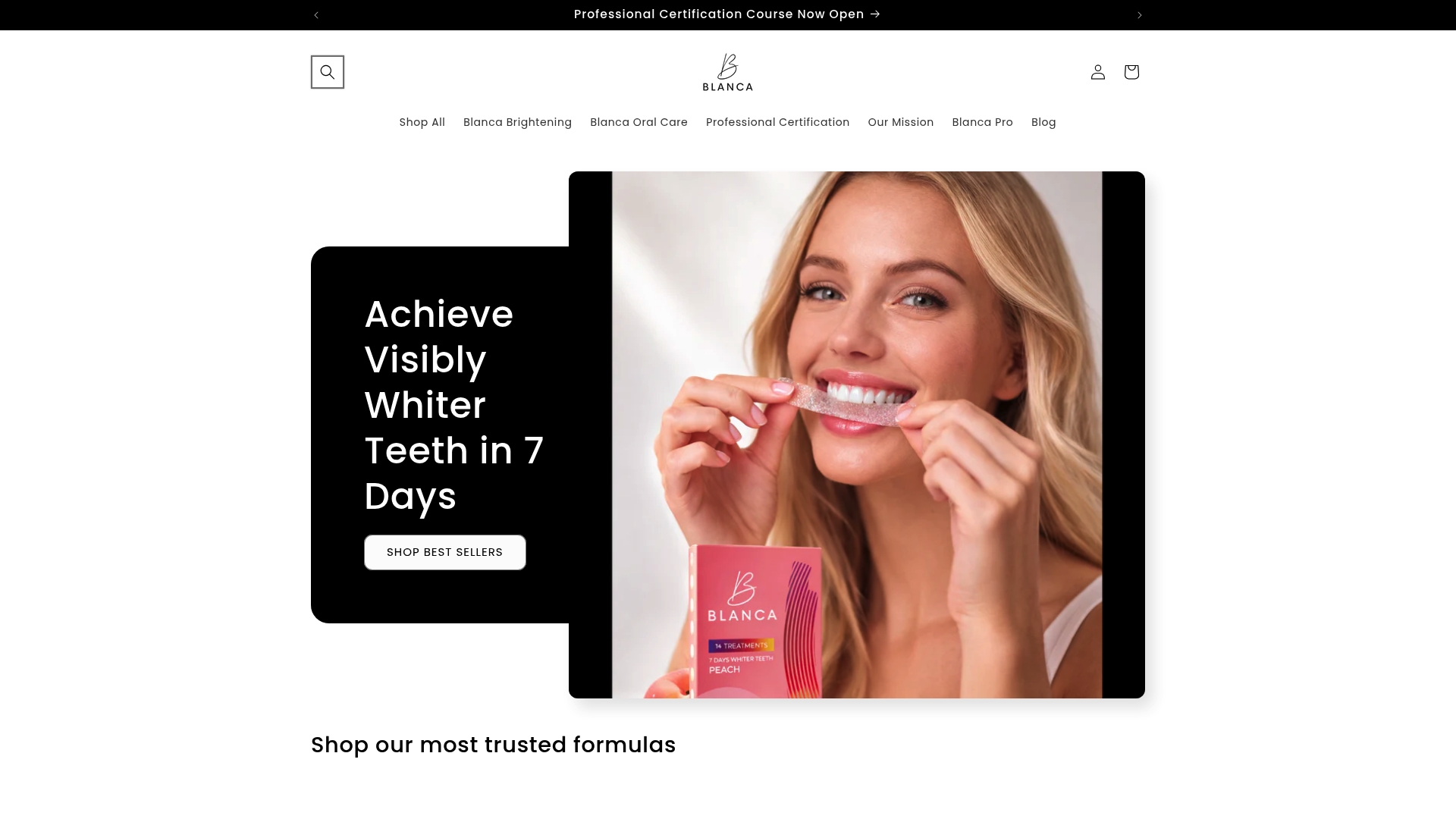
Blancawhitening’s at-home whitening strips are formulated with clinically backed peroxide concentrations, clear contact-time guidelines, and straightforward ingredient lists so you know exactly what you’re applying. The Blush Berry Flavored Whitening Strips offer a gentler sensory experience that many nursing parents find easier to use consistently. Every product comes with usage instructions designed to minimize swallowing risk and gum contact.
Before starting, disclose your breastfeeding status to your dentist. If you have questions about a specific product’s ingredients or whether it fits your situation, Blancawhitening’s customer support team can help. Visit the at-home whitening collection to review current options, or browse the best sellers for the products most recommended by dental professionals and customers alike.
Sources
The sources below are the primary references for the guidance in this article. Each is worth bookmarking for your own review.
LactMed — Carbamide Peroxide Entry The NIH’s drug-and-lactation database is the most authoritative resource for medication and chemical safety during breastfeeding. The carbamide peroxide entry covers systemic absorption, breakdown products, and the explicit recommendation not to stop breastfeeding when products are used as directed. It is updated as new evidence is published, making it the best single source to check for current guidance.
MotherToBaby — Whitening During Pregnancy and Breastfeeding The Organization of Teratology Information Specialists runs MotherToBaby, a free service that answers questions about exposures during pregnancy and lactation. Their whitening-specific article explains common ingredients, acknowledges the research gaps, and provides a practical framework for decision-making. You can also call or chat with a specialist for personalized guidance.
American Dental Association — Oral Health During Pregnancy The ADA’s pregnancy oral health topic page covers routine dental care, the importance of disclosing pregnancy and breastfeeding status, and the role of clinician judgment in elective cosmetic procedures. It’s the right reference to share with your dentist before any whitening treatment.
PubMed Central — Peroxide Metabolism Review (PMC3114665) This peer-reviewed review explains the biochemistry of hydrogen peroxide decomposition in oral tissues, providing the scientific basis for why systemic transfer from topical dental use is considered minimal.
ParentData by Emily Oster For a concise, data-oriented synthesis of the LactMed findings and the broader evidence picture, ParentData’s article on whitening strips and breastfeeding is a readable starting point that doesn’t overstate the evidence in either direction.
This article provides general information only and is not a substitute for professional medical or dental advice. Confirm current guidance with your dentist, obstetrician, or pediatrician before using any whitening product while breastfeeding.
- Carbamide Peroxide - Drugs and Lactation Database (LactMed)
- Whitening Teeth during Pregnancy or Breastfeeding? Lets Bite into the Subject! - MotherToBaby
- ADA resources: oral health topics (pregnancy)
- Is It Safe to Use Whitening Strips While Breastfeeding? | ParentData by Emily Oster
- PubMed Central article (PMC3114665)