

What's Really in Whitening Strips: An Ingredient Guide
Most whitening strips work because of one thing: peroxide. Hydrogen peroxide or carbamide peroxide (which breaks down into hydrogen peroxide) is the active bleaching agent in nearly every strip on the market, held against your teeth by a gel base of water, glycerin, and adhesive polymers.
The safety verdict is just as simple: follow the strip’s recommended contact time and keep the gel off your gums. These controls address the two most common complaints, sensitivity and gum irritation, both of which are usually temporary.
- Active ingredient: hydrogen peroxide (roughly 10 to 22%) or carbamide peroxide (roughly 3 to 15%) in over-the-counter products
- Everything else: humectants, thickening polymers, pH adjusters, and flavoring that carry the peroxide and keep the gel stable
- Top safety rule: don’t extend wear time past what the box recommends. Longer isn’t stronger, it’s just riskier.
Key Takeaways
Whitening strips whiten through peroxide oxidation, and matching concentration to contact time is what determines both results and comfort.
| Point | Details |
|---|---|
| Active ingredients are peroxide-based | Hydrogen peroxide (10-22%) or carbamide peroxide (3-15%) does the actual bleaching in most OTC strips. |
| Inactive ingredients enable delivery | Glycerin, carbomer, PVP, and PEG keep the gel stable, adhesive, and comfortable during wear. |
| Contact time drives results | Oxygen diffusion into enamel is time-limited, so strip adhesion matters as much as concentration. |
| Sensitivity is usually temporary | Gum irritation and short-term sensitivity typically resolve once contact time and gum exposure are controlled. |
| Blancawhitening states concentration clearly | Its at-home strips list peroxide percentage and application time upfront so you can match a formula to your sensitivity level. |
Table of Contents
- What Are the Ingredients in Whitening Strips? Active vs. Inactive
- Hydrogen Peroxide vs. Carbamide Peroxide: Concentration Ranges
- How Does the Peroxide in Whitening Strips Actually Work?
- Reading Past the Peroxide: What the Rest of the Formula Does
- Is It Safe? Side Effects and Ingredients to Watch
- How to Read a Whitening Strip Label in Four Steps
- Practical Tips for Whitening Without the Sensitivity
- What the Research Says About Concentration, Efficacy, and Safety
- A Dental-Led Take on Whitening Ingredients
- Choosing a Whitening Strip You Can Actually Trust
- Frequently Asked Questions
- Sources
What Are the Ingredients in Whitening Strips? Active vs. Inactive
Every whitening strip ingredient falls into one of two jobs: bleaching your teeth, or making the bleaching agent usable and comfortable on your teeth. Learning to sort a label into these two columns takes about ten seconds once you know what to look for.
Active ingredients do the actual whitening:
- Hydrogen peroxide, often specified by concentration
- Carbamide peroxide, which releases hydrogen peroxide as it breaks down
- Occasionally, non-peroxide alternatives like enzymes or mild abrasives, which polish surface stains rather than bleach beneath the enamel
Inactive ingredients support the formula:
- Water and glycerin (keep the gel moist and workable)
- Carbomer and polyvinylpyrrolidone, or PVP (thicken the gel and help it stick)
- PEG, or polyethylene glycol (dissolves and carries other ingredients)
- Acrylates copolymer (a newer adhesive polymer used in strip technology)
- Sodium saccharin and flavoring (make the taste tolerable for the full application window)
Products marketed with charcoal or enzymes instead of peroxide work through mild abrasion or protein breakdown, not oxidation, so they generally whiten more slowly and only affect surface stains.
Hydrogen Peroxide vs. Carbamide Peroxide: Concentration Ranges
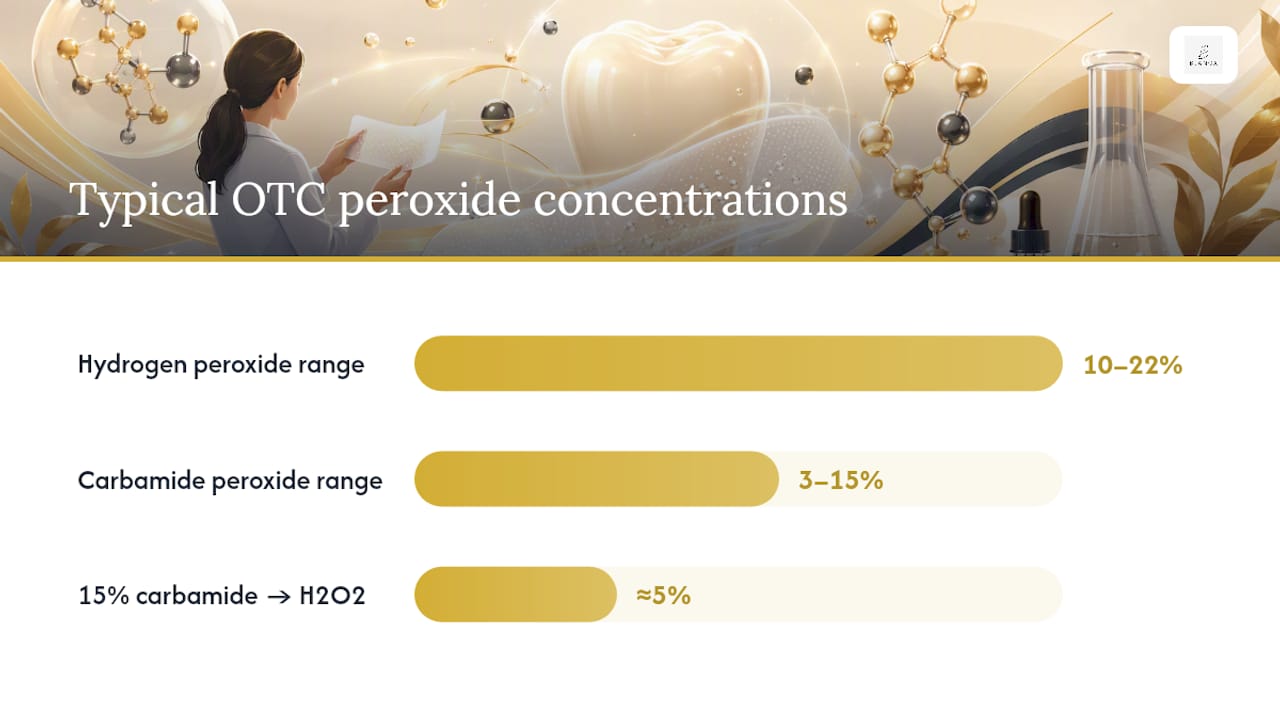
Over-the-counter strips typically use hydrogen peroxide in the 10 to 22% range or carbamide peroxide in the 3 to 15% range, according to ingredient data reported by Dimensions of Dental Hygiene. Both Crest Whitestrips and Crest 3D Whitestrips fall within these bands, which is why their formulas read differently on the box even when the whitening effect looks similar in the mirror.
Carbamide peroxide isn’t a separate chemical from hydrogen peroxide, it’s a slower-release precursor. Clinicians commonly use a rough conversion of carbamide peroxide to roughly one-third that concentration in hydrogen peroxide equivalent, which is how a PMC review frames comparisons across product types. So a strip listing 15% carbamide peroxide behaves closer to a 5% hydrogen peroxide formula, not a 15% one.
| Active Ingredient | Typical OTC Concentration | Application Time | Sensitive-Teeth Suitability | Formulation Role |
|---|---|---|---|---|
| Hydrogen peroxide | 10-22% | 5-30 minutes | Lower concentrations better tolerated | Direct oxidizing agent |
| Carbamide peroxide | 3-15% | 30 minutes to overnight | Generally milder, slower release | Breaks down into hydrogen peroxide over time |
Professional in-office treatments use peroxide concentrations well above these ranges, applied under a dentist’s supervision. That higher strength speeds results but also raises the risk profile, which is exactly why those formulas stay in a clinical setting instead of a drugstore box.
How Does the Peroxide in Whitening Strips Actually Work?
Peroxide whitens teeth by releasing oxygen radicals that break apart the pigmented molecules, called chromogens, embedded in enamel and the dentin beneath it. That oxidation reaction is the entire mechanism, no dyes, no bleach in the laundry sense, just a controlled chemical breakdown of stain molecules.
The oxygen has to diffuse into the tooth to do anything, and that diffusion is limited by time and concentration. Interrupt the contact, and you interrupt the reaction before it finishes.
That’s why dental-clinic explainers put as much emphasis on strip adhesion as they do on the percentage printed on the box. A strip that slips is a strip that underperforms, regardless of its peroxide load.
Reading Past the Peroxide: What the Rest of the Formula Does
Manufacturer ingredient lists read like a chemistry set, but each entry has a plain job. SmartLabel disclosures for Crest 3D White Whitestrips show the same pattern most strips follow:
- Glycerin and water keep the gel from drying out mid-application
- Carbomer and PVP thicken the gel so it clings to your teeth instead of running down your chin
- PEG acts as a solvent, helping the active ingredient disperse evenly through the gel
- Sodium hydroxide adjusts pH so the formula doesn’t sit too acidic against enamel
- Sodium saccharin and flavoring mask the taste of peroxide for the full wear time
- Acrylates copolymer signals a newer, stickier adhesive layer designed to hold the strip in place longer
Charcoal, coconut oil, and similar “natural alternatives to whitening strips” marketed as gentler options aren’t bleaching agents. They can polish surface stains through mild abrasion, but they don’t oxidize the deeper discoloration peroxide reaches, and some abrasive charcoal formulas raise enamel-wear concerns of their own.
Is It Safe? Side Effects and Ingredients to Watch
Sensitivity is the most reported side effect of peroxide-based strips, and it tracks closely with concentration and contact time rather than any inherent flaw in the product. Gum irritation shows up when the gel touches soft tissue directly, and temporary white spots usually reflect short-term dehydration of the enamel surface, not permanent damage.
Watch for a few specific red flags on a label or in marketing copy:
- Unusually high peroxide percentages that exceed typical OTC ranges
- Chlorine dioxide whitening claims, a formulation whose safety profile remains debated in the research literature
- Bleaching agents with no listed concentration at all
- Products borrowing skin-whitening chemicals repurposed for teeth, which have no dental safety data behind them
Pro Tip: Before your first full application, do a short patch test with a lower-concentration strip if you have a history of flavoring sensitivities or reactive gums. It’s a five-minute check that can save you a week of discomfort.
Most of these effects resolve on their own within a day or two once you stop overusing the product, and understanding what side effects to expect ahead of time makes them far less alarming when they show up.
How to Read a Whitening Strip Label in Four Steps
- Find the active ingredient and its percentage. Look specifically for “hydrogen peroxide” or “carbamide peroxide” followed by a number, not a vague phrase like “whitening complex.”
- Match the application time to that concentration. Higher percentages generally call for shorter contact windows; if a high-percentage strip recommends overnight wear, that’s a mismatch worth questioning.
- Scan the inactive ingredients for irritant flags. Look for known adhesive polymers (carbomer, PVP, acrylates copolymer) that indicate a properly engineered gel rather than a runny, poorly formulated one.
- Check for trust signals. A manufacturer that publishes a full ingredient list and mentions ADA Seal of Acceptance testing has already cleared a bar many private-label strips skip entirely.
- If any of these four elements is missing from the box or the online listing, treat that as a reason to keep looking rather than a minor oversight.
Practical Tips for Whitening Without the Sensitivity
Small habits around application matter more than most people expect, and they cost nothing extra.
Do:
- Follow the exact contact time printed on the box, not a personal estimate of how much time you have
- Wait at least 30 minutes before brushing right after removing a strip, since enamel needs time to remineralize
- Choose a lower-concentration strip and shorter initial sessions if you already know you have sensitive teeth
Don’t:
- Extend wear time to “boost” results. It raises gum contact risk without meaningfully improving whitening
- Apply strips over broken enamel, active cavities, or gum disease
Pro Tip: Pair your whitening routine with a desensitizing toothpaste containing potassium nitrate or fluoride in the days before and after treatment, and space sessions out rather than running them back to back. Reducing gum contact during application, covered in more detail in our guide to preventing gum irritation, solves most sensitivity complaints before they start.
What the Research Says About Concentration, Efficacy, and Safety
The research consensus is straightforward: OTC concentrations trade some speed for a better safety margin compared to professional treatments, and that trade-off is by design, not a compromise.
- Sensitivity and gingival irritation are the most frequently reported adverse effects, and both correlate with peroxide concentration and contact time rather than long-term enamel loss when strips are used as directed, per the PMC review of bleaching safety
- The ADA’s consumer guidance points buyers toward products with clear labeling and manufacturer testing data, treating the ADA Seal as a meaningful shortcut for vetting formulas
- Modern strip adhesives are engineered specifically to maintain uninterrupted contact, since that consistency, not raw percentage, is what separates strips that deliver visible results from ones that underperform their own label
A Dental-Led Take on Whitening Ingredients
Blancawhitening was built by dental professionals who wanted whitening formulas judged the same way a dentist would judge them: by concentration, contact time, and how the gel behaves against soft tissue, not by marketing language on a box. Most of the anxiety around whitening strips comes from not knowing what’s actually in the gel, and that’s a solvable problem once you can read a label properly.
If your sensitivity doesn’t ease up after a few sessions, or you’re dealing with stains that look deeper than surface discoloration, talk to a dentist before continuing. Ingredient knowledge helps you shop smarter, but it doesn’t replace a clinical opinion on your specific teeth.
Choosing a Whitening Strip You Can Actually Trust
Now that you know how to read a peroxide percentage and spot a well-engineered gel, the next step is finding a strip that doesn’t make you guess. Blancawhitening formulates every strip with a stated peroxide concentration, application time printed clearly on the box, and enamel-safe supporting ingredients instead of vague “whitening complex” language.
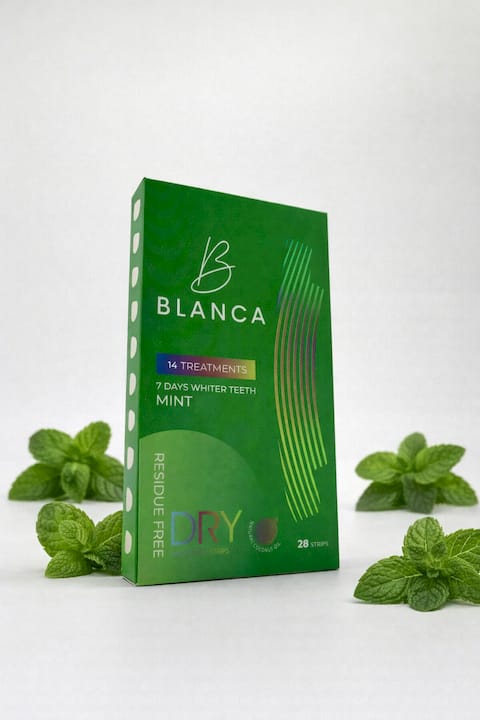
When you’re comparing options, look at three things: the active ingredient concentration, how it matches your sensitivity level, and whether the flavor and wear time fit your routine. If you have reactive gums, start with a shorter contact-time formula rather than the strongest one on the shelf. Browse the full at-home teeth whitening collection to see concentration and application details listed upfront, or check the best-selling strips if you’d rather start with what other buyers have already found effective. For an independent look at enamel-safe formulation choices beyond our own lineup, SmileFam’s ingredient guide is a useful second opinion.
Frequently Asked Questions
What are the main whitening strips ingredients I should look for on a label? Look for hydrogen peroxide or carbamide peroxide listed with a specific percentage. Everything else, glycerin, carbomer, PVP, PEG, is formulation support, not the bleaching agent itself.
How do whitening strips work at the chemical level? Peroxide releases oxygen that oxidizes chromogens, the pigmented molecules causing discoloration in enamel and dentin. Longer uninterrupted contact time allows more oxygen to diffuse into the tooth.
Are whitening strip ingredients safe for sensitive teeth? Most formulas are safe when used exactly as directed. Sensitivity and gum irritation are the most common side effects, and they’re typically tied to concentration and contact time rather than the ingredients themselves.

What’s the difference between hydrogen peroxide and carbamide peroxide in a whitening strip formula? Carbamide peroxide breaks down into hydrogen peroxide over time, so it releases more slowly. A rough clinical conversion treats carbamide peroxide as about one-third as strong as an equivalent hydrogen peroxide percentage.
Are there natural alternatives to whitening strips worth considering? Charcoal and enzyme-based products polish surface stains through abrasion rather than oxidizing deeper discoloration. They tend to work more slowly than peroxide and, in some abrasive formulas, carry their own enamel-wear concerns.
This article is general information, not a substitute for advice from a qualified doctor. Consult a qualified healthcare professional about your own circumstances before acting on anything here.
Sources
- PMC article on tooth-bleaching mechanisms and safety
- Do Teeth Whitening Strips Work? — Belmont Dental Group
- PLOS ONE article relevant to product safety and composition