

Health Canada: 30 Minute Rule for Saliva With Whitening Strips
Small amounts of saliva or foaming while wearing whitening strips are normal and usually not harmful. Avoid swallowing pooled gel on purpose, and manage overflow with a tissue or a quick swallow before it builds up. If you feel severe or persistent tooth pain, sharp gum irritation, or ulcers, stop treatment and see a dentist.
TL;DR:
- Saliva increases immediately after applying whitening strips but generally returns to normal within 30 to 60 minutes, and it does not impact the whitening process.
- Swallowing small amounts of saliva during treatment is considered safe, but swallowing gel intentionally or in large amounts should be rinsed out and monitored for symptoms.
- Proper strip placement, especially drying teeth beforehand and sealing edges, is more important for effective whitening than obsessing over saliva control.
- Lifting of the strip along the gum line can reduce contact time and whitening efficacy, but using products like a gingival barrier can minimize irritation and improve results.
- Persistent gum irritation, severe pain, or swallowing large gel amounts require stopping the treatment and consulting a healthcare professional.
Table of Contents
- Why Whitening Strips Make You Salivate and Foam
- Is It Safe to Swallow Saliva While Wearing Whitening Strips?
- Does Saliva Dilute or Weaken the Whitening Effect?
- How to Manage Saliva and Stay Comfortable During Treatment
- When to Stop: Red Flags and Aftercare
- What the Research and Dental Professionals Say
- The Real Lesson Behind All the Foam and Spit
- BLANCA Products Built for Comfortable, Controlled Whitening
- Sources
- FAQ
Why Whitening Strips Make You Salivate and Foam
Your mouth treats a whitening strip the way it treats any foreign object pressed against the teeth and gums: it produces more saliva to try to clear it. This is a reflex, not a reaction to something going wrong. The foaming you notice is a separate event. It happens when the peroxide gel on the strip meets saliva and oxygen, producing tiny bubbles as the compound breaks down. That fizzing sensation feels dramatic, but it’s a physical reaction, not a sign of tissue damage.
Most people notice both effects peak in the first few minutes of wear and then settle down.
- Saliva flow typically increases right after strip placement, then normalizes as your mouth adjusts.
- Foaming is most visible near the gum line, where the gel edge meets moist tissue.
- A study on salivary pH during hydrogen peroxide strip use found only an insignificant dip in pH during application, with levels returning to baseline within 30 to 60 minutes.
- Neither extra saliva nor foam changes how the active ingredient works on your enamel.
Is It Safe to Swallow Saliva While Wearing Whitening Strips?
Yes, in most cases. Health Canada states that incidental swallowing of small amounts of saliva during properly used at-home whitening is generally safe, provided you follow the product’s instructions. That guidance draws a clear line: swallowing the saliva that naturally collects in your mouth is different from intentionally swallowing gel that has slipped off the strip.
Peroxide exposure in saliva is very low. A crossover clinical study measuring hydrogen peroxide kinetics found that concentrations on the strip and tooth surface were the primary exposure point, while salivary and gingival levels stayed low or dropped below detection within minutes.
To keep ingestion to a minimum:
- Swallow normally rather than letting saliva pool for long stretches.
- Tilt your head slightly forward so excess saliva drains out rather than back.
- If a strip edge feels loose or gel is visibly displaced, remove it early instead of pushing through the full session.
If you swallow a noticeable amount of gel rather than just saliva, rinse your mouth with water and watch for symptoms like stomach upset or unusual mouth burning. Contact a poison control center or your dentist if anything feels off.
Does Saliva Dilute or Weaken the Whitening Effect?
Saliva has a limited effect on results when strips are applied correctly. The same crossover study on peroxide kinetics found that peroxide concentration stays the highest on the strip itself and on the tooth surface it’s touching, not in the surrounding saliva. That’s the exposure that actually bleaches enamel.
Where saliva does matter is at the edges. If a strip lifts along the gum line or corners, saliva can seep underneath and shorten the real contact time in that spot, even while the center of the strip keeps working. The Canadian Dental Association’s position on teeth bleaching backs this up: most whitening benefit comes down to peroxide contact time, not how dry your mouth stays.
| Factor | Effect on whitening | What helps |
|---|---|---|
| Peroxide on strip/tooth surface | Primary driver of whitening | Full recommended wear time |
| Peroxide in saliva | Low to undetectable within minutes | Not a meaningful factor |
| Strip edge lifting | Can reduce local contact time | Dry teeth first, press edges to seal |
| Total wear time | Directly tied to results | Follow package directions |
Drying your teeth with a tissue before application and pressing the strip firmly along the gum line does more for your results than obsessing over every drop of saliva.
How to Manage Saliva and Stay Comfortable During Treatment
A little preparation before you apply a strip prevents most of the mess and discomfort people associate with whitening.
- Prep your mouth first. Brush gently, then dry your teeth with a tissue or a few seconds of air. A dry surface helps the strip’s gel adhere instead of sliding on a film of saliva.
- Apply with care. Line the strip up so it sits on enamel, not gum tissue, then press along the edges to seal it. If a corner doesn’t sit flat, trim it or reposition rather than forcing it down.
- Manage the wear period. Lean your head slightly forward, avoid talking or chewing, and keep a tissue nearby to catch overflow instead of letting it pool. Short breaks are fine if your mouth feels full.
- Watch for early sensitivity. If your teeth or gums start stinging partway through, you can shorten that session rather than pushing to the 30-minute limit dentists recommend. A desensitizing toothpaste with potassium nitrate can also help between sessions.
Pro Tip: Apply a thin layer of lip balm just outside your lip line before putting on strips. It keeps gel from sticking to your skin if a corner shifts, without touching the tooth surface itself.
Good strip placement technique solves most saliva-related annoyances before they start.
When to Stop: Red Flags and Aftercare
Most saliva and mild tingling during whitening resolve on their own. A few symptoms mean it’s time to pause and pay attention.
- Sharp, localized tooth pain that doesn’t fade after removing the strip.
- Bleeding gums, visible ulcers, or swelling along the gum line.
- Sensitivity that lasts more than a few days after you stop using strips.
- Any large amount of gel swallowed on purpose or by accident, followed by stomach discomfort.
After a session, rinse with plain water and skip very hot or cold foods for a bit while your teeth settle. A potassium nitrate desensitizing toothpaste and spacing out future sessions both help reduce recurring sensitivity. If pain, swelling, or bleeding doesn’t ease within a day or two, see a dentist. If you suspect a significant swallow of concentrated gel, contact poison control.
What the Research and Dental Professionals Say
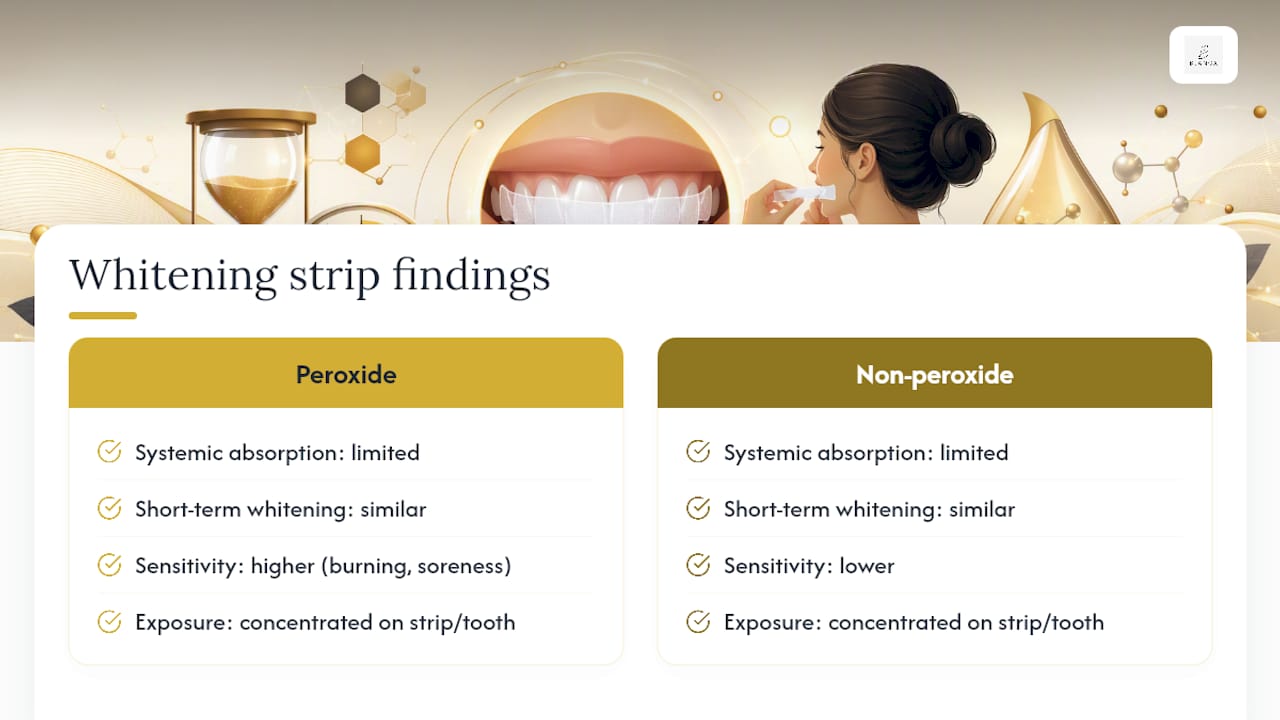
Regulatory guidance and clinical data point in the same direction: normal saliva production during whitening is expected, and swallowing it isn’t the safety concern people assume it is. Health Canada’s evidence review on peroxide-containing whitening products discusses limited systemic risk from typical at-home use, and a broader review of whitening agent safety reports that normal strip use doesn’t lead to meaningful systemic absorption.
Sensitivity is a different story from safety, and formulation matters here. A randomized, double-blind study comparing whitening strip formulations found that peroxide-based strips produced more sensitivity, burning, and soreness than a non-peroxide version over 14 days, even though both delivered similar short-term whitening.
The clinical picture is consistent: peroxide exposure concentrates on the strip and tooth surface, saliva exposure stays low, and the real variable to watch is individual sensitivity, not saliva volume.
The brand is designed with clinical expertise to inform the development of its whitening strips, gingival barrier, and application guidance.
The Real Lesson Behind All the Foam and Spit
Most of the anxiety around whitening strips traces back to one thing: people assume any unfamiliar sensation in the mouth signals a problem. Foam and extra saliva get lumped in with genuine warning signs like burning or bleeding, when they’re actually unrelated events with different causes.
The conventional advice, “just get through the recommended time,” undersells how much technique matters. Two people using the same strip can have wildly different experiences based on whether the strip sealed against dry enamel or slid over a saliva film at the gum line. That’s a placement issue, not a tolerance issue, and it’s fixable before you ever apply the strip.
If we had to pick the one habit that prevents most complaints, it’s drying your teeth thoroughly before application. Skip that step, and every other precaution, tissues, careful posture, shorter sessions, is working against a strip that never sealed properly in the first place. Fix the seal, and saliva management mostly takes care of itself.
— Blanca
BLANCA Products Built for Comfortable, Controlled Whitening
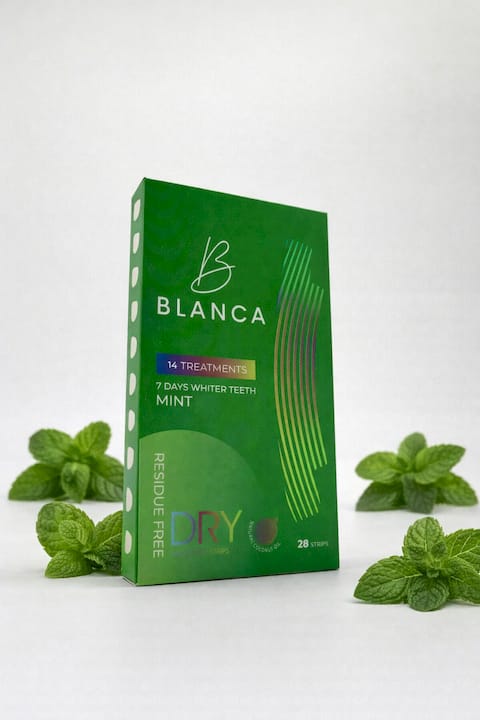
Not every strip fits every mouth the same way, and gum contact is usually where discomfort starts. Our flavored whitening strips are shaped to sit on enamel rather than overlap gum tissue, which cuts down on the irritation that drives most of the “is this normal?” questions people ask about saliva and foaming.
For readers who deal with sensitive gums or want an extra layer of protection, the BLANCA Liquid Gingival Barrier creates a physical seal between the whitening gel and soft tissue, reducing the chance of gel migrating where it shouldn’t. If strips alone feel like too much, the BLANCA Gel Whitening Pen gives you more control over placement and dose, which is useful if you’ve had edge lifting or pooling issues before. Every product ships with clear usage instructions so you can match technique to your own comfort level. Browse the current whitening lineup and pick the format that fits how your mouth actually responds to treatment.
This article is general information, not a substitute for advice from a qualified doctor. Consult a qualified healthcare professional about your own circumstances before acting on anything here.
Sources
- Safe use of home tooth‑whitening kits — Health Canada
- Clinical kinetics of hydrogen peroxide on strips vs saliva (crossover study)
- Randomized, double‑blind clinical study comparing whitening strip formulations
- Open-access review on whitening agent safety and oral exposure — NCBI PMC
FAQ
Can You Swallow Saliva When Using Whitening Strips?
Yes. Health Canada considers incidental swallowing of small amounts of saliva generally safe when strips are used as directed. Avoid intentionally swallowing pooled gel, and rinse your mouth if you swallow a noticeable amount.
Are Whitening Strips Supposed to Make You Salivate?
Yes, increased saliva is a normal foreign-body response to having a strip against your teeth and gums. It usually settles down within the first few minutes of wear and doesn’t affect how well the strip whitens.
Does Spit Affect Whitening Strips?
Not significantly, as long as the strip stays sealed against the tooth. Clinical measurements show peroxide concentrates on the strip and tooth surface rather than in saliva, so proper placement matters more than a dry mouth.
Is It Okay if Whitening Strips Touch My Gums?
Brief, light contact usually isn’t a major concern, but prolonged gum contact can cause irritation or sensitivity. Trimming strips to fit your tooth size or using a product like the BLANCA Liquid Gingival Barrier helps keep gel off soft tissue.
What Should I Do if My Gums Feel Irritated After Whitening?
Rinse with water, skip very hot or cold foods for a bit, and consider a desensitizing toothpaste with potassium nitrate. If irritation, swelling, or bleeding lasts more than a day or two, see a dentist rather than continuing treatment.