

LED Whitening Safety: 50% Sensitivity Risk and Health Canada Guidance
LED whitening is generally safe when you use it as directed, and dentists screen for a handful of clear red flags first. The light itself isn’t the risk. Nearly every documented side effect, from sensitivity to gum irritation, traces back to the peroxide gel and how long it sits against your teeth. The real caveats are untreated decay, gum disease, existing restorations, and simply overdoing it.
TL;DR:
- Mismatched light and gel combinations can create localized heat, increasing the risk of pulp irritation and gum injury during LED whitening procedures.
- The evidence on LED activation improving whitening is mixed, with some studies showing marginal benefits and others finding no difference compared to gel alone.
- Sensitivity affects nearly half of patients initially, but typically resolves within two weeks, while gum irritation arises mainly from poorly fitted trays or excess gel.
- Enamel roughness may increase more with LED activation than with gel alone, but current data comes from lab studies on extracted teeth, not clinical trials.
- Proper screening, adherence to instructions, and avoiding overuse are far more critical to safety than the type or technology of light used.
Table of Contents
- How LED Whitening Works and Where the Safety Question Comes From
- Does LED Light Actually Improve Whitening Results?
- What Are the Real Risks and Side Effects?
- In-Office vs. At-Home LED Whitening: Which Is Safer?
- How to Use LED Whitening Safely at Home
- Emerging Research: Violet LED and Enamel Roughness Findings
- When Should You Stop and See a Dentist?
- Why We Think the Safety Conversation Is Backwards
- How Blanca’s At-Home Whitening Supports Safer Results
- Sources
How LED Whitening Works and Where the Safety Question Comes From
Whitening happens through oxidation. Hydrogen peroxide or carbamide peroxide breaks down into smaller molecules that penetrate enamel and dissolve the stain compounds trapped inside, whether they came from coffee, wine, or age-related discoloration. That chemical reaction happens with or without a light.
LED devices are activators, not bleaching agents. Blue LED light (typically in the 480 to 520 nanometer range) can speed up the breakdown of certain peroxide gels, shortening the chair time needed for a given result. Violet LED, working closer to 405 to 410 nanometers, is a newer approach dentists are watching closely. UV light and lasers work through different mechanisms entirely and carry their own heat and tissue-safety profiles, which is why professional systems are engineered to match a specific light to a specific gel.
That pairing matters more than most people assume:
- Mismatched light and gel combinations can generate localized heat, which raises the risk of pulp irritation.
- Not every whitening gel is photosensitive, so some LED devices provide zero chemical benefit if paired with the wrong formula.
- Manufacturer-tested combinations are the only ones with a real safety and performance track record.
The light shortens the appointment. The gel does the actual whitening work, which is exactly why the safety profile of hydrogen peroxide whitening deserves more of your attention than the device sitting in front of your mouth.
Does LED Light Actually Improve Whitening Results?
The clinical evidence is mixed, and that matters because it tells you where to focus your safety attention. Some trials show LED activation modestly speeds up color change compared to gel alone. Others find no meaningful difference once you control for peroxide concentration and contact time. An older but frequently cited clinical and experimental report on LED-assisted tooth whitening found measurable color change with low reported sensitivity, but the authors were careful to note that results varied widely with protocol and gel strength, not the light source alone.
Sensitivity and irritation, by the numbers: A multicenter clinical study found tooth sensitivity in about 50.3% of patients after their first at-home whitening application, with gingival irritation reported in roughly 14.0% of cases. Other trials have reported gum irritation rates that vary widely depending on gel concentration and tray fit.
A few limitations are worth keeping in mind before you take any single number at face value:
- Many whitening trials are small, funded by the manufacturer whose product is being tested, or conducted entirely in vitro on extracted teeth rather than in a living mouth.
- Lab conditions rarely replicate saliva flow, gum tissue exposure, or real-world application habits.
- The variable that predicts your outcome and your risk isn’t whether a light was used. It’s peroxide concentration, how long the gel stayed in contact with your teeth, and how well your tray or strip actually fit.
The practical takeaway: LED activation can shave time off certain protocols, but it doesn’t override the fundamentals. Get those fundamentals wrong and no light will save you from sensitivity.
What Are the Real Risks and Side Effects?
Sensitivity is the most common complaint, and it happens because peroxide temporarily increases the permeability of dentin, the layer beneath your enamel that houses tiny nerve channels; clinical protocols on managing this are detailed in dentist protocols for teeth whitening sensitivity. Most people recover within a few days to two weeks after stopping treatment.
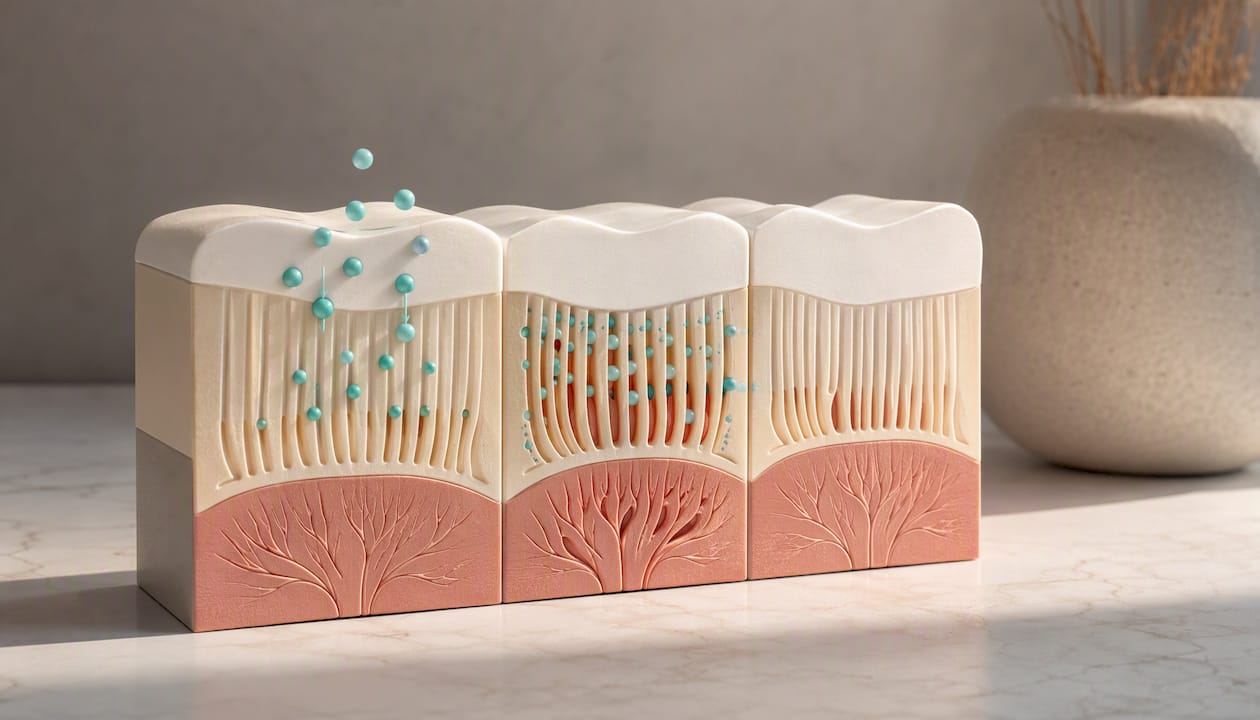
Gum irritation and chemical burns are the second most reported issue, almost always caused by gel leaking past a poorly fitted tray or a whitening strip that doesn’t sit flush against the tooth surface. Pro Tip: Wipe away any excess gel that touches your gums immediately with a dry cotton swab rather than rinsing, which can spread it further across soft tissue.
A newer concern comes from lab research on enamel texture. A 2026 in-vitro comparative study found that LED-activated bleaching increased enamel surface roughness more than bleaching without light, and more than some laser-based activation methods. Rougher enamel can theoretically make teeth more prone to future staining or plaque buildup, though this finding comes from lab conditions on extracted teeth, not a clinical trial on living patients.
A few other realities worth knowing:
- Whitening only affects natural tooth structure. Crowns, veneers, and bonded restorations don’t respond to peroxide at all, which can leave you with a visible shade mismatch if you whiten without planning around existing dental work.
- Sensitivity and gum irritation are typically reversible within days of stopping.
- Enamel roughness changes and restoration mismatches usually require a dentist’s evaluation to correct or manage going forward.
In-Office vs. At-Home LED Whitening: Which Is Safer?
A dental exam before any whitening course catches the issues that turn a routine treatment into a painful one: untreated decay, gum recession, hairline cracks, or restorations that will need color-matching afterward. This is also the core reason Health Canada’s guidance on home whitening kits recommends consulting a dentist before you start, not just reading the box instructions.
In a clinic, a dentist controls three variables you can’t easily manage at home:
- Isolation of the gums and soft tissue with a protective barrier, so peroxide only touches enamel.
- Custom-fitted trays built from an impression of your actual teeth, eliminating the gaps that let gel escape.
- Professional-strength gel dosed and timed to a specific protocol, rather than left to guesswork.
At home, the hazards cluster around three things: trays or strips that don’t fit your specific tooth shape, more gel applied than the instructions call for, and vague label language about how many days is too many. If you’re comparing professional and at-home whitening systems, check for clear concentration percentages, an explicit maximum-use window, and language that references clinical testing rather than marketing claims alone.
How to Use LED Whitening Safely at Home
- Screen yourself first. Check for visible decay, loose fillings, or gum recession, and see a dentist beforehand if you have any doubt. This single step prevents most serious complications.
- Follow the product instructions to the letter. Use the exact gel amount, session length, and total number of days specified. Resist the urge to leave strips on longer for “better results,” since overuse is the most common driver of enamel damage, not the whitening agent itself.
- Space your treatments. Wait at least three to four months between at-home whitening courses. Professionals often recommend waiting several months between higher-strength in-office sessions, based on guidance from Scientific American’s review of overuse risks.
- Stop immediately if something feels wrong. Severe pain, ulceration, or swelling means you stop treatment and call a dentist, not wait it out.
Pro Tip: Switch to a fluoride or hydroxyapatite toothpaste in the week before and after a whitening course. Both help remineralize enamel and can meaningfully cut down on rebound sensitivity.
Emerging Research: Violet LED and Enamel Roughness Findings
A 2022 in-vitro study on violet LED irradiation, working in the 405 to 410 nanometer range, found significant color change with no genotoxic effects on the cells tested. That’s a genuinely encouraging early signal, though it comes from a lab study, and clinical trials in real patients are still limited.
Meanwhile, the 2026 enamel-roughness comparison mentioned earlier raises a different question: does LED activation change enamel surface texture more than laser activation or gel alone? A few things to hold onto here:
- Lab findings on extracted teeth don’t automatically predict what happens in a living mouth with saliva, remineralization, and daily brushing at play.
- Roughness changes are a plausible mechanism for future staining, but no clinical trial has yet confirmed that link in patients.
- More research comparing activation methods head-to-head, in real clinical settings, is the clear next step.
When Should You Stop and See a Dentist?
Some symptoms need same-week attention. Severe, tooth-specific pain, visible swelling, mouth ulcers, or persistent pain isolated to one tooth are all signs to call a dentist promptly rather than waiting for the discomfort to fade on its own.
Other signs are less urgent but still worth a checkup:
- Sensitivity that lingers beyond two to four weeks after stopping treatment.
- Visible changes to enamel texture or translucency.
- A noticeable color mismatch between natural teeth and existing crowns or veneers.
A dentist’s typical response involves an exam, an X-ray if decay is suspected, treatment of any underlying issue, a desensitizing application, or simply adjusting your whitening plan going forward.
Why We Think the Safety Conversation Is Backwards
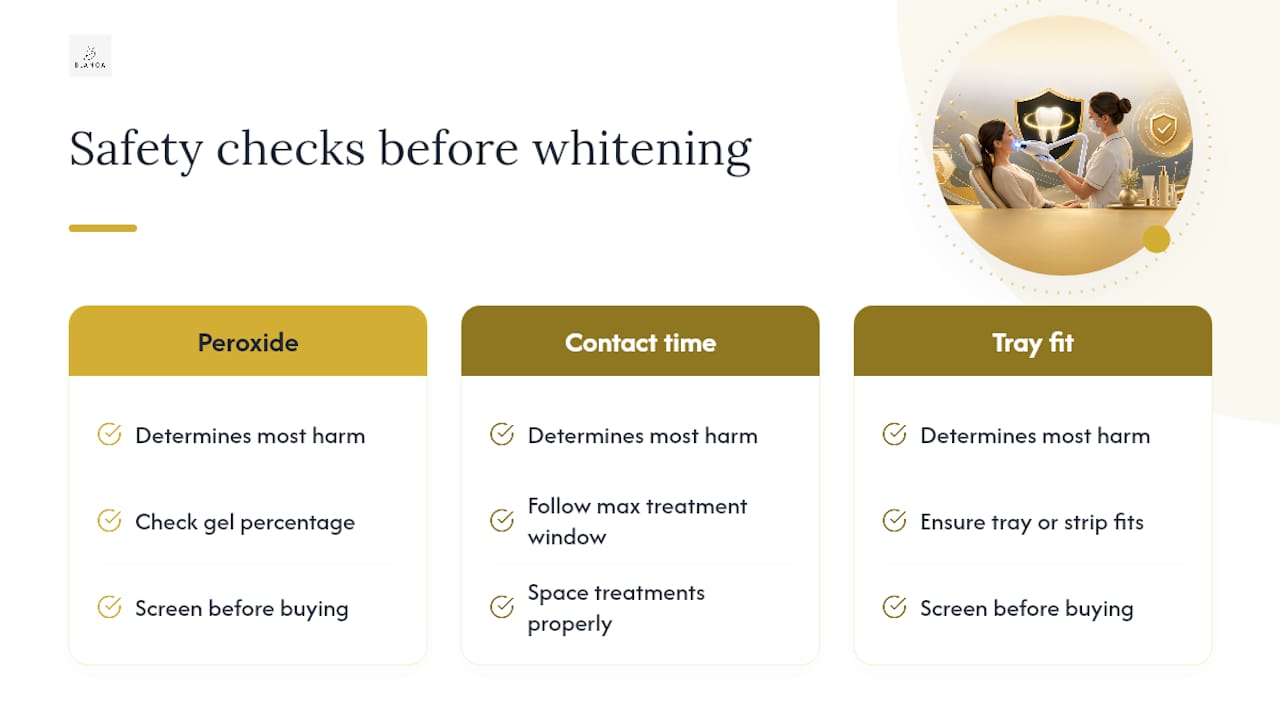
Most consumer content treats “LED” as the safety question, when the honest answer is that the light is nearly the least important variable in the room. Peroxide concentration, contact time, and fit determine almost everything that goes wrong. That’s not a minor semantic point. It changes what you should actually be checking before you buy anything: the gel’s percentage, the tray’s fit, and whether the instructions specify a maximum treatment window.
We’d also push back gently on the instinct to chase every new activation technology as an automatic upgrade. Violet LED shows real promise, and the 2022 genotoxicity findings are reassuring. But “promising in vitro” and “proven safer in your mouth over years of use” are two very different claims, and the industry sometimes blurs that line for marketing purposes. The right posture is enthusiasm paired with patience: adopt new methods once the clinical data catches up to the lab data, not before.
What doesn’t change, regardless of which light or gel wins that race, is the basic discipline of screening first, following instructions exactly, and spacing treatments properly. That’s the boring part nobody wants to write headlines about, and it’s also the part that actually prevents harm.
— Blanca
How Blanca’s At-Home Whitening Supports Safer Results
If tray fit and overuse are what actually cause most whitening problems, the fix is a product built around solving exactly those two issues. Blanca’s at-home whitening strips are designed to hug the tooth surface closely, reducing the gel-leakage issue that drives most gum irritation, and every kit ships with a clearly defined session length and course duration instead of vague “use as needed” language.
The formulas are built around enamel-safe peroxide concentrations and include sensitivity-minimizing ingredients specifically because sensitivity is the number one complaint in nearly every clinical trial on this topic. Product pages spell out usage durations and wait times before starting another course, helping users understand the two variables that matter most. Our oral care collection also covers the remineralization side of the equation, from fluoride-friendly essentials to daily maintenance tools. Browse the best-selling whitening kits and pick the option that matches your schedule and sensitivity level, then follow the included timeline exactly as printed.
Sources
- The Safe Use of Home Tooth Whitening Kits
- Clinical evaluations reporting sensitivity and gingival irritation with at-home whitening
- When Is Too Much Teeth Whitening Harmful to Oral Health? | Scientific American
- Clinical and experimental findings on LED-assisted tooth whitening (PMC article)
This article is general information, not a substitute for advice from a qualified doctor. Consult a qualified healthcare professional about your own circumstances before acting on anything here.