

Blue Light Teeth Whitening: Does It Work and Is It Safe?
Blue light teeth whitening can accelerate peroxide-based bleaching in some protocols and is generally safe for healthy teeth when used as directed. The light itself is not what whitens your teeth. Peroxide does the heavy lifting; the blue LED may help it work faster under the right conditions. According to Healthline, common side effects like temporary sensitivity and mild gum irritation are typically caused by the peroxide gel, not the light.
Here is what the evidence actually supports:
- Blue light can help, but peroxide drives results. In-vitro research published on PMC confirms that combining blue light with hydrogen peroxide reaches higher whitening values than either alone.
- Clinical results are mixed. Umbrella reviews through 2026 show that routine light activation often adds limited benefit in many in-office protocols, and moderate peroxide concentrations can match higher doses with less sensitivity.
- Safety risks are manageable. For most healthy adults, the main risks come from peroxide concentration and application errors, not from the LED light itself.
- Some people should see a dentist first. If you have active cavities, exposed root surfaces, gum disease, or significant sensitivity, get a dental evaluation before starting any whitening program.
Pro Tip: If you are new to whitening, start with a lower-peroxide at-home kit and shorter sessions before moving to stronger formulas. Your enamel will thank you.
Key Takeaways
Blue light teeth whitening works best as a peroxide accelerant, not a standalone treatment, and safety depends far more on peroxide concentration and correct application than on the light itself.
| Point | Details |
|---|---|
| Light is an accelerant, not the agent | Blue LED may speed up peroxide bleaching but cannot whiten teeth on its own. |
| Peroxide concentration drives results | Moderate concentrations (roughly 25–35%) match higher doses with less sensitivity, per the 2026 umbrella review. |
| Side effects are manageable | Temporary sensitivity and mild gum irritation are common and typically resolve within 48 hours. |
| Consult a dentist first if needed | Active cavities, gum disease, or exposed roots require professional evaluation before any whitening program. |
| Blancawhitening fits the evidence | Blancawhitening’s dental-led formulations use transparent peroxide levels and desensitizing agents aligned with the clinical checklist in this article. |
Table of Contents
- How blue light teeth whitening actually works
- What clinical trials and reviews actually show
- In-office vs. at-home: what to realistically expect
- Safety, side effects, and who should consult a dentist first
- How to use at-home blue light kits safely
- How to evaluate at-home LED kits and professional options
- Other light sources used in whitening and why blue LED dominates
- How dental professionals interpret the current evidence
- Blancawhitening’s at-home and professional options
- Sources
How blue light teeth whitening actually works
The term “blue light whitening” refers to a specific wavelength range, roughly 450–500 nanometers, in the visible blue spectrum. This is distinct from ultraviolet light, and that distinction matters for safety. Blue LED devices emit visible light, not UV radiation, which is why they have become the standard in both professional offices and consumer kits.
When a peroxide-based whitening gel sits on your teeth, it breaks down into reactive oxygen species that penetrate enamel and dentin, targeting chromophores, the colored molecules responsible for staining. What blue light does, in theory, is accelerate this process through a mechanism called photon-assisted oxidation. Photons from the LED interact with the peroxide molecules and certain chromophores, generating additional reactive species and potentially reaching stain compounds that peroxide alone might not fully break down. Think of it as giving the chemical reaction a running start.
Lab research confirms that blue light can increase the bleaching rate and final achievable color change (measured as ΔE, the numerical difference between before and after shades) when combined with hydrogen peroxide. The key phrase is “combined with.” Light alone does not whiten teeth. Without an active peroxide agent in contact with the tooth surface, the LED is doing nothing useful.
What the light does NOT control is the depth or permanence of whitening. Those outcomes depend on peroxide concentration, contact time, gel formulation, and how deeply stained the teeth are to begin with. Consumer devices also operate at lower energy densities than professional equipment, which means the photon-assisted acceleration effect may be smaller in practice than in a controlled lab setting. Protocol design, including session length and gel viscosity, determines how much of the lab benefit actually translates to your bathroom mirror.
What clinical trials and reviews actually show
The evidence on blue LED whitening is real but nuanced. Lab studies and clinical trials point in the same general direction, though the magnitude of benefit varies considerably depending on how the protocol is designed.
In-vitro findings
In controlled lab conditions, the case for light activation is reasonably strong. A sequential in-vitro study on PMC found that groups combining blue light with hydrogen peroxide reached higher ΔE values than groups using peroxide or light alone, suggesting the two modalities have complementary mechanisms. This supports the photobleaching theory: light accesses chromophores that peroxide-only protocols may leave partially intact.
Clinical trial results
Clinical results are more variable. A PMC-published clinical study of a blue LED/gel system produced a measurable immediate color change of approximately ΔE 1.8 after the LED stage, with low reported tooth and gingival sensitivity. That is a real, detectable shift, though the protocol used a relatively mild peroxide concentration, which limited the total color increase. A 2025 clinical trial of a home-use LED device with hydrogen peroxide gel reported significant brightness improvements within seven days in 30 subjects, but the short follow-up and small sample size mean those results need confirmation in larger studies.
What umbrella reviews conclude
The highest-level evidence comes from an umbrella review through January 2026 published in The Saudi Dental Journal, which synthesized systematic reviews and meta-analyses on in-office bleaching protocols. Its conclusion: moderate peroxide concentrations produce whitening outcomes comparable to higher concentrations while generating less sensitivity, and routine light activation generally shows limited additional clinical benefit across many protocols. That does not mean light never helps. It means the benefit is protocol-dependent and should not be assumed.
| Study type | Key finding | Limitation |
|---|---|---|
| In-vitro (PMC) | Light + H₂O₂ reaches higher ΔE than either alone | Lab conditions; energy density may not match consumer devices |
| Clinical LED/gel trial (PMC) | ΔE ≈ 1.8 after LED stage; low sensitivity | Mild peroxide protocol; limited total color change |
| Home LED trial (IJCPD, 2025) | Significant brightness gain in 7 days | 30 subjects; short follow-up |
| Umbrella review (2026) | Routine light activation often adds limited benefit; moderate peroxide is sufficient | Heterogeneous protocols across included studies |
The bottom line from the evidence: Blue light can contribute to whitening when the protocol is designed around it, but peroxide concentration and application quality remain the primary drivers of how white your teeth get.
In-office vs. at-home: what to realistically expect
The biggest practical difference between professional and at-home LED whitening is peroxide concentration, and that gap shapes everything else: speed, magnitude of results, sensitivity risk, and cost. Understanding the tradeoffs between these two paths helps you choose the one that fits your situation.
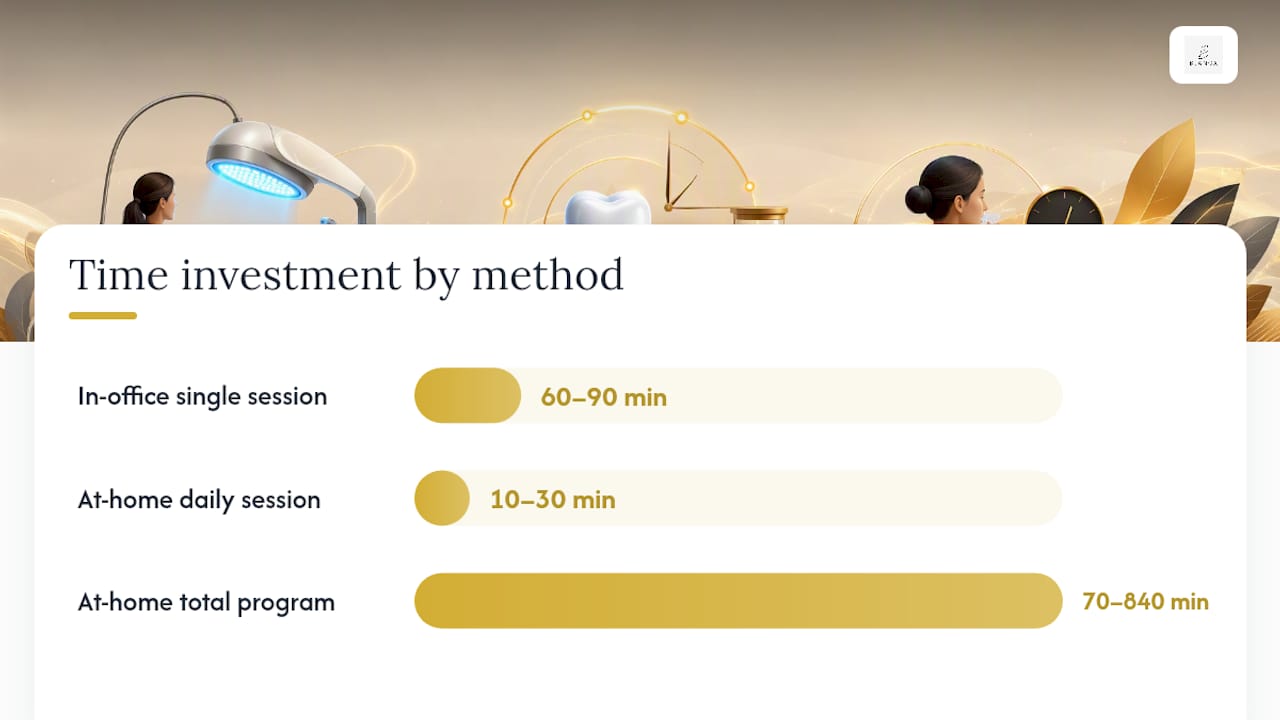
A single session usually lasts 60–90 minutes and can produce a noticeable shade change in one visit. Results can last 6–12 months with proper maintenance, though some relapse within the first few weeks as teeth rehydrate.
Sessions typically run 10–30 minutes per day over 1–4 weeks. The cumulative result can match in-office outcomes for mild-to-moderate staining, but the process is slower and requires consistency.
Relapse and maintenance follow a similar pattern for both paths. Teeth naturally re-stain from food, beverages, and aging. Most people need touch-up sessions every 3–6 months to maintain results, regardless of which method they started with.
Pros and cons at a glance:
- In-office: Faster results, higher peroxide strength, professional supervision, higher cost, more sensitivity risk in a single session.
- At-home LED kits: Lower cost, flexible schedule, lower peroxide concentration, lower single-session sensitivity, requires daily commitment over weeks.
- Sensitivity-prone users often do better with at-home kits at lower concentrations, spaced over more sessions, with desensitizing agents built into the routine.
- Time-limited users who want a visible change before an event may prefer a single in-office session.
For a detailed breakdown of what each path costs and what results to expect, the Blancawhitening cost guide covers both options clearly.
Safety, side effects, and who should consult a dentist first
For most healthy adults, blue LED whitening is well-tolerated. The Healthline review confirms that common side effects, temporary tooth sensitivity and mild gum irritation, are primarily caused by the peroxide gel, not the light. Sensitivity usually peaks during or shortly after a session and resolves within 24–48 hours.
The more important safety variable is peroxide concentration. Higher concentrations increase the likelihood of sensitivity and gingival irritation, particularly when gel contacts soft tissue. Application errors, overfilling trays, using ill-fitting mouthpieces, or exceeding recommended session times, amplify this risk significantly.
There is also a thermal consideration worth knowing. A 2026 in-vitro study in Lasers in Medical Science found that light activation can raise pulp chamber temperature, with some lab protocols recording increases that approach or exceed commonly cited pulpal safety thresholds. This finding is from the lab, not a clinical verdict, but it is a reason to follow manufacturer session times rather than extending them in the belief that more light equals more whitening.
Overuse carries its own risks. Exceeding session frequency does not proportionally improve whitening and raises the risk of cumulative enamel dehydration and nerve irritation. The Blancawhitening overuse guide explains these risks in detail.
Stop and see a dentist if you experience:
- Sharp, lingering pain during or after a session (not just brief sensitivity)
- Visible gum blanching, bleeding, or ulceration
- Uneven whitening that suggests a structural issue like a crack or exposed dentin
- Sensitivity that does not resolve within 48 hours
Who should consult a dentist before starting any whitening program:
- People with active cavities, cracked teeth, or failing restorations
- Anyone with exposed root surfaces or significant gum recession
- Those with a history of severe sensitivity
- Pregnant or breastfeeding individuals (whitening is generally deferred)
For a full breakdown of what to expect from whitening side effects, including how to manage sensitivity before it becomes a problem, Blancawhitening’s guide covers the specifics.
How to use at-home blue light kits safely
Getting good results from an at-home LED whitening kit comes down to preparation, precision, and patience. Skipping steps or pushing session times rarely speeds things up and often causes the sensitivity that makes people quit.
- Brush and floss before each session. Clean teeth allow the gel to contact enamel directly rather than sitting on plaque or food debris. Use a non-whitening toothpaste the night before if you are sensitivity-prone; whitening toothpastes can increase baseline sensitivity.
- Apply gel precisely. Load the tray or pen applicator according to the product instructions. Less is more: overfilling causes gel to contact your gums, which is the most common cause of irritation.
- Fit the mouthpiece correctly. The tray should seat snugly without gaps. If gel squeezes out onto your gums when you bite down, you have used too much. Wipe away any excess immediately with a cotton swab.
- Set a timer and stay within the recommended session length. Most at-home kits specify 10–30 minutes. Do not extend sessions hoping for faster results.
- Rinse thoroughly after removing the tray. Rinse your mouth with water, then rinse the tray. Avoid eating or drinking anything that stains (coffee, red wine, berries) for at least one hour after a session.
- Follow the recommended frequency. Most at-home programs call for daily or every-other-day sessions over 1–4 weeks. Spacing sessions allows enamel to rehydrate and reduces cumulative sensitivity.
For a complete set of at-home whitening best practices, including how to build a maintenance routine after your initial program, Blancawhitening’s guide is worth bookmarking.
Red flags during use: Stop immediately and rinse if you feel sharp pain, notice gum blanching, or see uneven whitening that was not there before. These are signals to consult a dentist before continuing.
Pro Tip: If you are sensitivity-prone, use a desensitizing toothpaste containing potassium nitrate for two weeks before starting your whitening program. It pre-loads the dentinal tubules and meaningfully reduces discomfort during sessions.
How to evaluate at-home LED kits and professional options
Not all blue light whitening products are created equal, and the gap between a well-designed kit and a poorly made one is wider than the marketing suggests. Here is what actually matters when you are choosing.
What a good at-home kit should include
- Disclosed peroxide concentration or active ingredient. If a product will not tell you what percentage of hydrogen peroxide or carbamide peroxide it contains, that is a red flag. Reputable products list this clearly.
- Evidence of clinical testing. Look for products that reference clinical studies or third-party testing, not just “dentist-approved” language with no citation.
- A well-fitting mouthpiece. Universal trays that do not conform to your arch shape allow gel to migrate to gum tissue. Custom or semi-custom trays reduce this risk.
- Auto shutoff on the LED device. This prevents accidental overexposure if you lose track of time.
- Desensitizing agents in the formula. Potassium nitrate and sodium fluoride are the most studied options for reducing whitening-related sensitivity without reducing efficacy. An umbrella review supports their use alongside moderate peroxide concentrations.
Questions to ask before in-office treatment
Before committing to a professional session, ask your dentist: What peroxide concentration will you use? What shade change is realistic for my tooth type? What sensitivity management do you offer? How long will results last given my diet and habits? These questions to ask before whitening are worth preparing in advance.
Red flags to avoid
- No ingredient list or vague “proprietary blend” language
- Claims of permanent or overnight whitening (no peroxide-based system delivers this)
- UV-based lights rather than visible blue LED (UV carries tissue damage risk and has largely been phased out of reputable products)
- Trays with no size options or adjustment mechanism
Blancawhitening’s at-home kits are formulated by dental professionals with transparent ingredient disclosure, desensitizing agents, and protocols grounded in the same clinical evidence this article covers.
Other light sources used in whitening and why blue LED dominates
Blue LED did not become the default by accident. Understanding what came before it, and what is emerging, puts the safety and efficacy picture in context.
- UV light: Early professional whitening systems used ultraviolet light to activate peroxide. UV carries a meaningful risk of soft tissue damage and DNA-level effects with repeated exposure. It has largely been phased out of reputable whitening devices in favor of visible-spectrum alternatives.
- Halogen lamps: Halogen was the professional standard before LED. It works but generates significant heat, raising concerns about pulpal temperature increases during longer sessions. The shift to LED reduced this thermal burden considerably.
- Violet light (approximately 405 nm): An emerging area of interest. A 2026 in-vitro study in Lasers in Medical Science found that violet light produced higher whitening values than blue light in that specific protocol, but also altered temperature and pH dynamics differently. Violet-light devices are not yet widely available in consumer products, and the evidence base is still developing.
- Blue LED (450–500 nm): The current standard for both professional and consumer devices. It operates in the visible spectrum, generates less heat than halogen, carries no UV risk, and is cost-effective to manufacture at the wavelengths needed for peroxide activation. Its safety profile and manufacturability are why it dominates.
The takeaway is that wavelength alone does not determine safety or efficacy. Total energy delivered, session duration, peroxide concentration, and protocol design all interact. Blue LED’s dominance reflects a practical balance of those factors, not a claim that it is the only effective option.
How dental professionals interpret the current evidence
Clinicians who work with whitening protocols regularly tend to read the evidence more conservatively than consumer marketing does. The umbrella review through 2026 is a useful anchor for understanding why.
This framing reflects what the umbrella review and clinical trial data collectively support: the peroxide formulation and protocol design are the primary levers, and light is a conditional accelerant rather than a guaranteed amplifier.
For practical decision-making: if you want the fastest single-session result and can tolerate some sensitivity, a professionally supervised in-office session with a moderate-concentration peroxide and blue LED activation is a reasonable choice. If you prefer lower sensitivity risk and more flexibility, a well-formulated at-home LED kit used consistently over 2–4 weeks can deliver comparable results for mild-to-moderate staining. The Blancawhitening professional vs. at-home guide maps these scenarios in more detail.
Blancawhitening’s perspective on safe, evidence-based whitening
At Blancawhitening, we were founded by dental professionals precisely because we saw how much confusion surrounds whitening products, and how often that confusion leads people toward products that overpromise and underdeliver. Our formulations are built around the same evidence this article covers: transparent peroxide concentrations, desensitizing agents in our gels, and protocols designed to minimize sensitivity without sacrificing results.
We believe the most responsible whitening approach starts with understanding what the science actually says, which is why we invest in educational resources alongside our products. Whether you are exploring our at-home whitening collections or looking for professional-grade options, our team is available to help you find the right fit for your teeth, your sensitivity threshold, and your goals.
Blancawhitening’s at-home and professional options
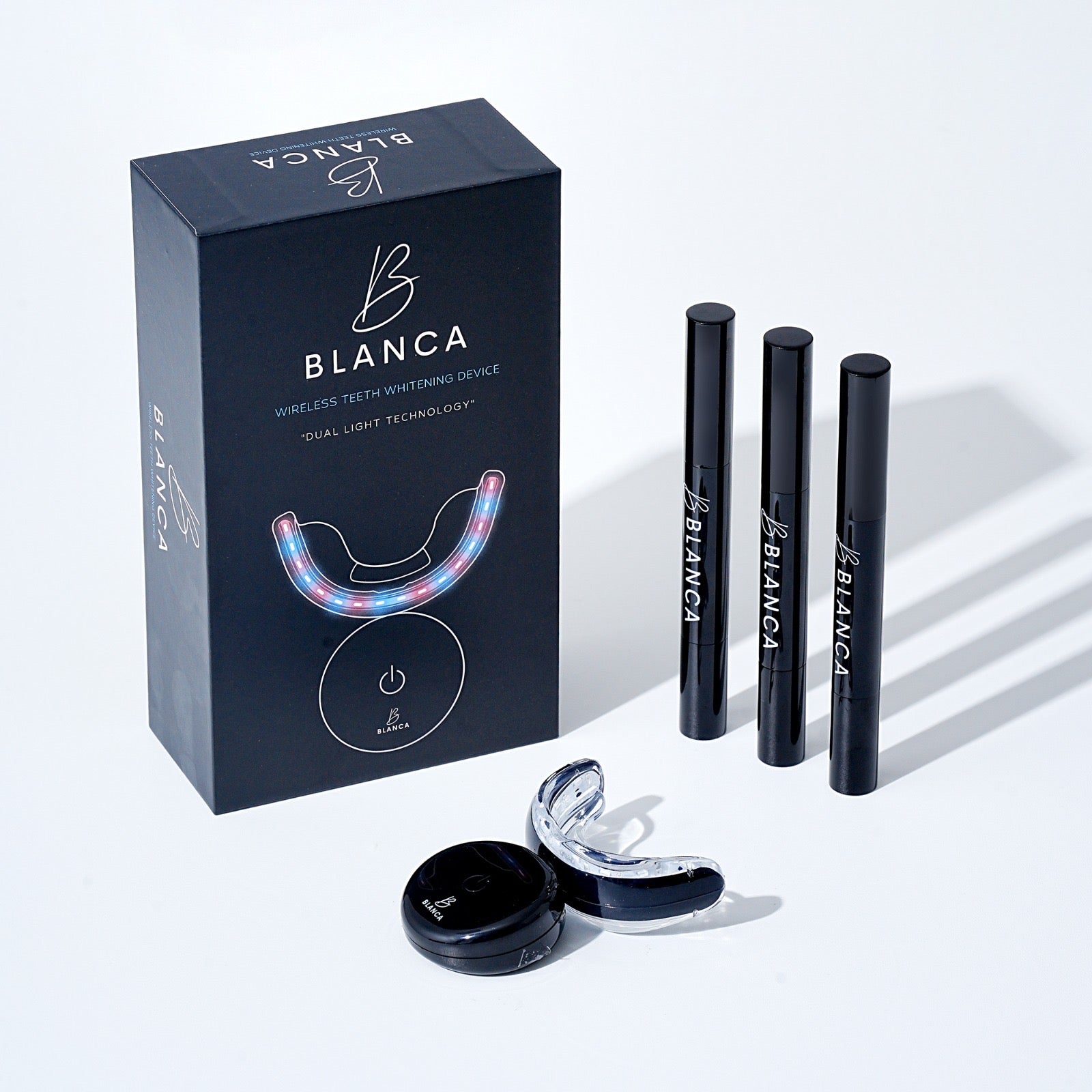
Knowing the evidence is one thing. Having a product that actually applies it is another. Blancawhitening’s at-home whitening kits are formulated with disclosed peroxide concentrations, built-in desensitizing agents, and step-by-step protocols developed by dental professionals — the same criteria this article identifies as markers of a trustworthy product.
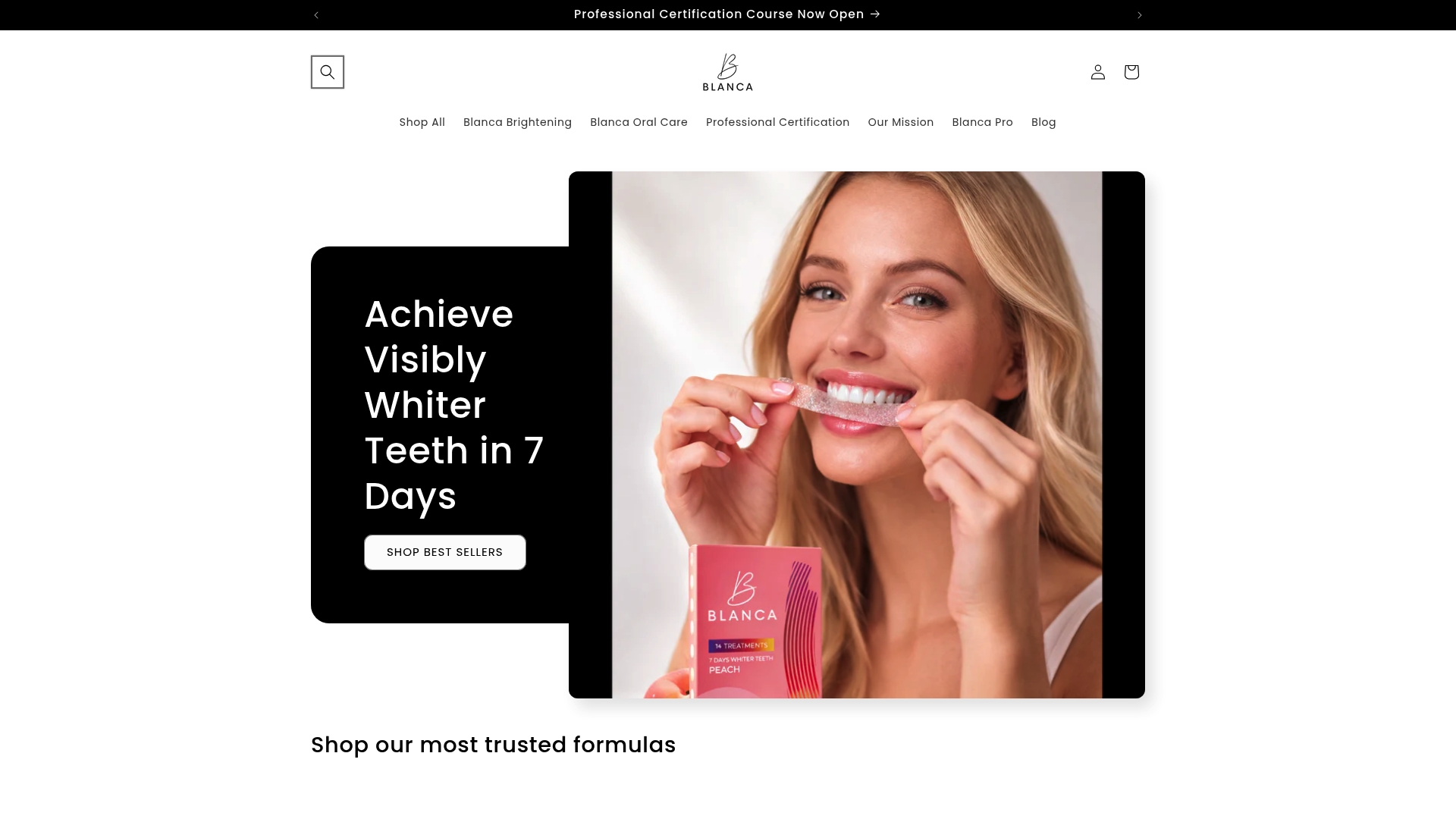
For sensitivity-prone users, Blancawhitening’s lower-concentration kits let you build up gradually, with shorter initial sessions and desensitizing support already in the formula. For users who want faster results without going into a dental office, the professional-grade at-home kits offer higher peroxide concentrations with the same safety-first design. Dental professionals can also access Blancawhitening’s clinical-grade whitening systems and certification training, which covers the protocol design and sensitivity management principles covered in this article.
Browse the current Blancawhitening offers or explore the full at-home whitening range to find the kit that matches your goals and sensitivity level.
Sources
These sources were selected for their clinical rigor, peer-review status, or recognized consumer health authority. They represent the strongest available evidence on blue light whitening mechanisms, safety, and efficacy.
- Blue Light Teeth Whitening: Is It Safe, and Does It Work? — Healthline
- Light-enhanced whitening: sequential in-vitro study - PMC
- The Whitening Effect of At-Home Light Sources and Hydrogen Peroxide Gel on Tooth Enamel — IJCPD (2025)
- In-office tooth bleaching protocols: an umbrella review — The Saudi Dental Journal (2026)
This article is general information, not a substitute for advice from a qualified doctor. Consult a qualified healthcare professional about your own circumstances before acting on anything here.