

Dentist Led Safety Rules for Whitening Strips With Invisalign in Canada
You can use whitening strips during Invisalign treatment, but only with caution: remove your aligners first, avoid placing strips over attachments, and check with your dentist before starting, since composite attachments won’t whiten the same way as your natural enamel. For many patients, waiting or choosing a dentist-supervised option is the more predictable path. The safe routine follows in the sections below.
TL;DR:
- Whitening strips should be used only after removing aligners and avoiding contact over attachments to prevent uneven results.
- Products with peroxide levels above 3% require clinical evidence of safety and a pH above 4.0, especially during orthodontic treatment.
- Waiting four to six weeks into Invisalign treatment is generally recommended to allow attachments to settle before bleaching.
- Professional or aligner-compatible whitening options provide more consistent results and better oversight during orthodontic care.
- Sensitivity is common and usually resolves within days, but persistent irritation requires professional evaluation before continuing peroxide use.
Table of Contents
- Why timing, attachments, and safety rules matter
- Step-by-step: using whitening strips safely on Invisalign
- Alternatives that offer more predictable results
- Risks, limits, and special cases to watch for
- BLANCA’s dentist-led approach to in-treatment whitening
- What the research actually supports
- How BLANCA supports your whitening decision
- Sources
- FAQ
Why timing, attachments, and safety rules matter
Whitening strips work by releasing a peroxide-based agent that lightens enamel through microscopic channels in the tooth’s surface. That process only affects natural tooth structure, not the composite attachments bonded to your teeth for Invisalign. The American Dental Association confirms that whitening works on natural teeth but will not lighten tooth-colored restorations, which means attachments can stand out once your treatment ends and the surrounding enamel is several shades brighter.
Regulation also plays a role in what lands on your teeth. In Canada, peroxide-containing whitening products are held to specific safety requirements.
- Products exceeding 3% w/w hydrogen peroxide equivalents must be backed by clinical studies before sale.
- Every approved product must maintain a pH above 4.0 to limit enamel and tissue irritation.
- Anyone experiencing irritation is directed to stop and consult a dental professional.
A pH above 4.0 and peroxide levels tied to clinical evidence are the baseline Health Canada requires for any legally sold whitening product, and it’s why sticking to labeled directions matters more during orthodontic treatment than at any other time. Your dentist can flag whether your attachment placement, gum health, or aligner wear schedule changes that calculus for you specifically.
Step-by-step: using whitening strips safely on Invisalign
If you and your dentist decide strips are appropriate, a careful routine limits the risk of uneven results or irritated gums.
- Remove your aligners completely before applying any whitening strip; never layer a strip under a tray.
- Brush and floss your teeth, and clean your aligners according to their care instructions, before reinserting them.
- Follow the manufacturer’s wear time exactly. Some products use a shorter, low-sensitivity session of around 30 minutes, while standard strips often call for 30 to 60 minutes or more; the two are not interchangeable, so check your box.
- Avoid pressing strips directly over composite attachments or visible restorations, since the material won’t respond to the gel and may trap it against your gum line.
- If your attachments sit where a strip needs to go, talk with your dentist about trimming the strip or choosing a different application method.
- Reinsert your aligners only once your teeth are clean and any excess gel has been rinsed away.
Watch for burning, sharp or lingering sensitivity, or gum tissue that stays irritated after you rinse. Any of those signs mean it’s time to stop and check in with your dentist. Once you’re finished, wait before brushing so you don’t scrub already-softened enamel, and a desensitizing toothpaste can help calm any short-term tenderness. Our guide on how to use whitening strips safely walks through the full application process in more detail.
Pro Tip: Keep a small mirror nearby during application so you can confirm the strip lines up with your gum edge before you reinsert your aligners.

Alternatives that offer more predictable results
Retail strips are not the only path to a brighter smile while you’re in aligners, and for some patients they’re not the best one.
- Aligner-optimized or dentist-prescribed gels typically use lower peroxide concentrations and a controlled viscosity designed to sit evenly across the tooth surface.
- Dentist-administered professional systems apply gel directly in-office or through a take-home kit the practice monitors, reducing the guesswork of at-home timing.
- Some clinicians use your existing aligners as bleaching trays under supervision. An in vitro study on 10% carbamide peroxide and Invisalign aligners found the material held up without excessive distortion, though it showed reduced hardness and increased surface roughness, which is why researchers recommend clinical oversight rather than unsupervised use.
- Waiting until after your aligner treatment finishes remains a reasonable choice, particularly if you have several attachments or want a single, even shade across every tooth.
Each of these routes trades a bit of convenience for more consistent, monitored results, which matters most if your case involves multiple attachments or a longer treatment timeline.
Risks, limits, and special cases to watch for
Sensitivity is the most common side effect of any peroxide-based whitening product. Sensitivity from bleaching typically starts within two to three days and resolves by about the fourth day after stopping, according to the ADA, and pausing treatment along with a desensitizing toothpaste usually settles it.
- Composite attachments and restorations won’t lighten, so expect a visible mismatch and possible touch-ups or replacement once treatment ends.
- Active decay, significant gum disease, or unresolved oral health concerns are reasons to hold off on peroxide products until your dentist clears you.
- Persistent burning, swelling, or gum tissue that doesn’t calm down within a day warrants a professional evaluation rather than continued home treatment.
BLANCA’s dentist-led approach to in-treatment whitening
It is generally recommended to wait four to six weeks into Invisalign treatment before introducing any whitening product, giving attachments time to settle and reducing the chance of an uneven result. Our dentist-led timing guide for braces and aligner patients walks through why that window matters and what to check before you start.
A few resources worth reviewing before you begin:
- Our step-by-step strip application guide for avoiding gum contact and uneven coverage.
- Practical advice on preventing gum irritation during any whitening routine.
- Timing guidance on when it’s safe to brush after whitening.
Whatever routine you choose, loop your treating dentist in first. They can see exactly where your attachments sit and how your gums are responding to the aligners themselves.
What the research actually supports

The evidence here is more encouraging than cautious dental advice sometimes suggests. Aligner material can tolerate carbamide peroxide without falling apart, and shade improvement during active treatment is achievable when the protocol is supervised. Where conventional advice falls short is in treating “wait until you’re done” as the only safe answer. That blanket rule ignores patients who are eight months into a twelve-month plan and would rather not spend another year with a duller smile.
What matters more than the calendar is attachment placement and gum health at the moment you start. A patient with few attachments and healthy gums has a very different risk profile than one with a mouth full of composite bumps. Prioritize that conversation with your dentist over any generic timeline, including the four to six week window we recommend as a starting point, not a rule that overrides your specific case.
— Blanca
How BLANCA supports your whitening decision
Whichever direction you take, BLANCA builds products around the idea that whitening should fit your treatment, not fight it. Our Flavored Whitening Strips and At-Home Teeth Whitening Gel are formulated for straightforward at-home use once your dentist gives the go-ahead, and our Professional In-Office Teeth Whitening Gel gives clinics a dentist-administered option for patients who want closer supervision during aligner treatment.
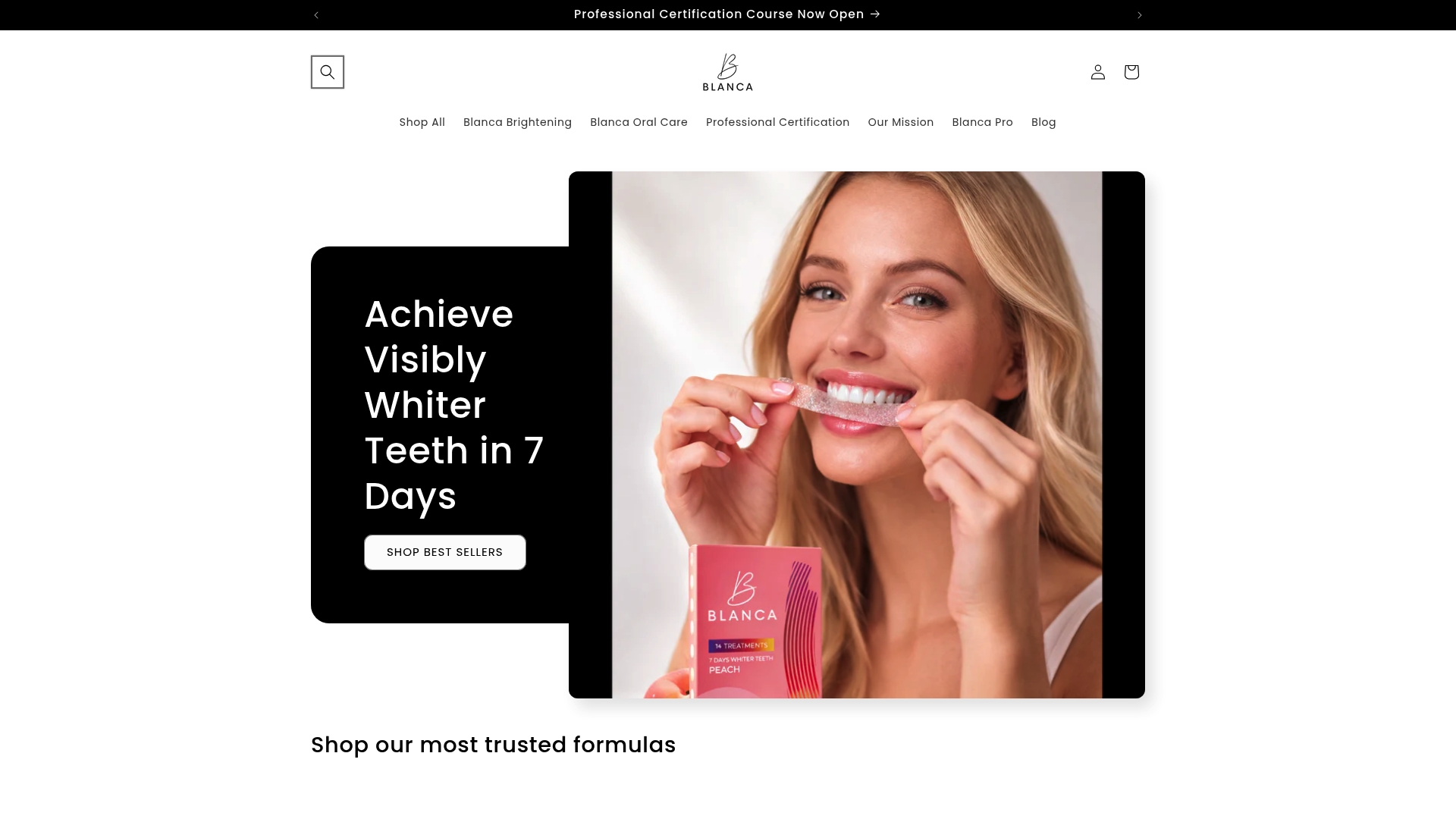
Start by discussing timing and attachment placement with your treating dentist. From there, browse BLANCA’s at-home whitening collection or ask your dental provider about our professional-grade options for a supervised approach.
Sources
- Canada
- Whitening - American Dental Association
- The Effect of 10% Carbamide Peroxide Dental Bleaching on the Physical Properties of Invisalign Aligners: An In Vitro Study - PMC
FAQ
Can I use whitening strips if I have Invisalign?
Yes, but remove your aligners first and avoid placing strips directly over composite attachments, since those won’t whiten. Check with your dentist beforehand, especially if you have several attachments or sensitive gums.
What is the 30 minute rule with Invisalign?
It refers to some whitening products designed for shorter, lower-sensitivity sessions of about 30 minutes rather than the longer 30 to 60 minute wear time standard strips require. Always follow the specific product’s labeled instructions rather than assuming one rule applies to every strip.
How do I whiten my teeth while wearing Invisalign?
Remove your aligners, clean your teeth, apply the whitening strip for its labeled time, then clean your teeth and aligners again before reinserting them. Dentist-supervised gels or using aligners as bleaching trays under clinical guidance are more predictable alternatives, as shown in research on 10% carbamide peroxide with aligner material.
Is it better to whiten teeth before or after Invisalign?
Many dentists suggest waiting several weeks into treatment or until it’s finished, since attachments don’t whiten and can create an uneven shade if you bleach too early. BLANCA’s dentist-led guidance recommends waiting four to six weeks into active treatment as a starting point, adjusted to your specific case.
Are whitening strips safe with Invisalign attachments?
They’re safe for the natural enamel around attachments, but the attachments themselves won’t lighten and may need touch-ups later. Avoiding direct strip contact with attachments and consulting your dentist helps prevent uneven results.