

Fluorosis Teeth Whitening: What Actually Works by Severity
Dental fluorosis can often be improved, but the right approach depends entirely on severity. Mild cases may respond well to bleaching alone or microabrasion combined with bleaching, while moderate-to-severe cases typically need a staged, minimally invasive sequence: bleaching first, then microabrasion, then resin infiltration, with restorative options like veneers reserved for structural defects that conservative methods cannot address. Your single most important next step is scheduling a dental assessment so a clinician can classify your fluorosis using a standardized index before any treatment begins.
Quick reference by severity:
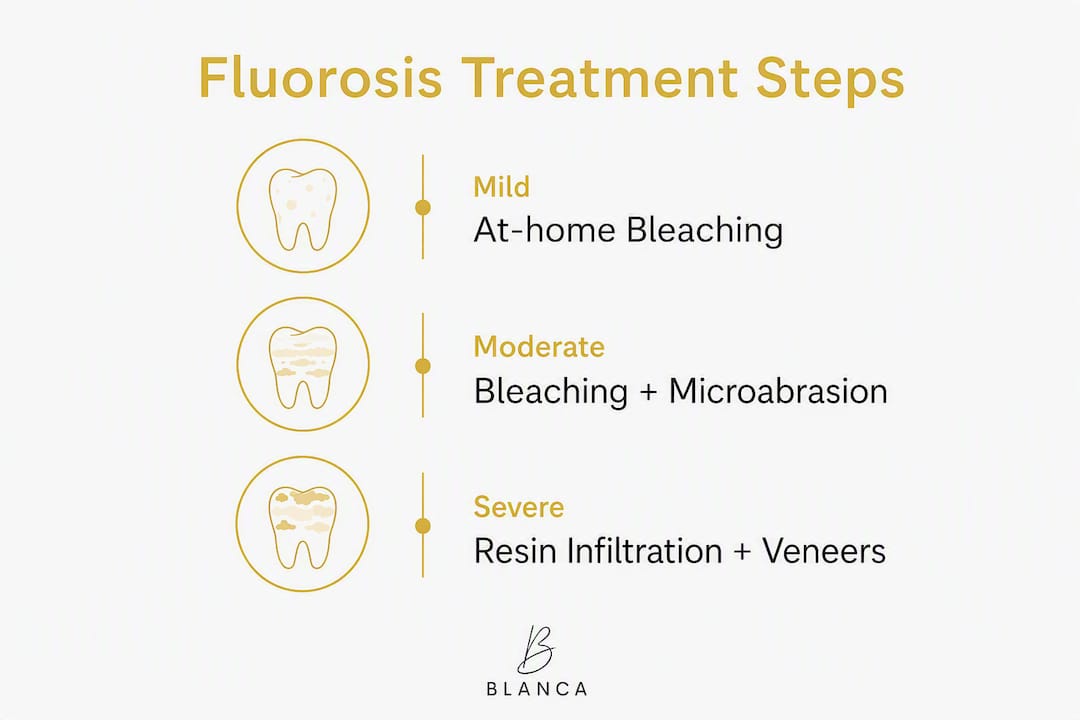
- Mild (faint white streaks, no pitting): at-home or in-office bleaching, often combined with microabrasion
- Moderate (opaque patches, some brown discoloration): staged bleaching plus microabrasion, followed by resin infiltration if contrast remains
- Severe (brown staining, surface pitting, structural loss): conservative staging first; porcelain veneers or crowns when conservative approaches fall short
Table of Contents
- Why fluorosis teeth whitening behaves differently than standard stain removal
- How clinicians classify fluorosis severity and what it means for your treatment
- Evidence-backed treatment options compared by severity
- What results to realistically expect, and what can go wrong
- How dentists decide on a protocol, and what to ask at your appointment
- Who should not start whitening for fluorosis right away
- How to maintain your results and support your smile at home
- Key Takeaways
- The case for starting conservative and staying patient
- Blancawhitening supports your smile before and after clinical care
- Useful sources and further reading
Why fluorosis teeth whitening behaves differently than standard stain removal
Dental fluorosis is caused by excess fluoride exposure during the first eight years of life, when enamel is still forming. The result is an intrinsic change within the enamel itself: white streaks, chalky opaque patches, or brown discoloration that sits inside the tooth structure rather than on its surface. That distinction matters clinically because standard whitening is designed to oxidize surface and near-surface pigments. Fluorosed enamel has a different architecture entirely.
One key reason bleaching alone often underperforms is the hypermineralized surface layer that fluorosis creates. This dense outer zone can physically block peroxide-based agents from penetrating deeply enough to reach the discolored subsurface enamel. Think of it as a barrier that needs to be addressed before the bleaching chemistry can do its job. Microabrasion removes a thin layer of this overmineralized enamel to expose the underlying substrate using a hydrochloric acid and abrasive slurry, exposing a substrate that responds far better to both bleaching and resin infiltration.
Extrinsic stains from coffee or tobacco sit on the enamel surface and respond predictably to peroxide. Fluorosis stains do not. How well your teeth respond to any whitening treatment depends heavily on where the discoloration lives within the enamel and how porous or dense that layer is. Understanding how tooth porosity affects whitening results helps explain why some fluorosis cases brighten quickly while others need multiple staged steps.
How clinicians classify fluorosis severity and what it means for your treatment
Clinicians use two main frameworks to grade fluorosis before recommending any treatment. Dean’s Fluorosis Index, the older and more widely used system, classifies teeth from “questionable” through “very severe” based on the percentage of tooth surface affected and the presence of pitting or brown staining. The Thylstrup–Fejerskov (TF) Index provides a finer-grained scale from 0 to 9, useful for research and for distinguishing cases that sit at the boundary between mild and moderate.
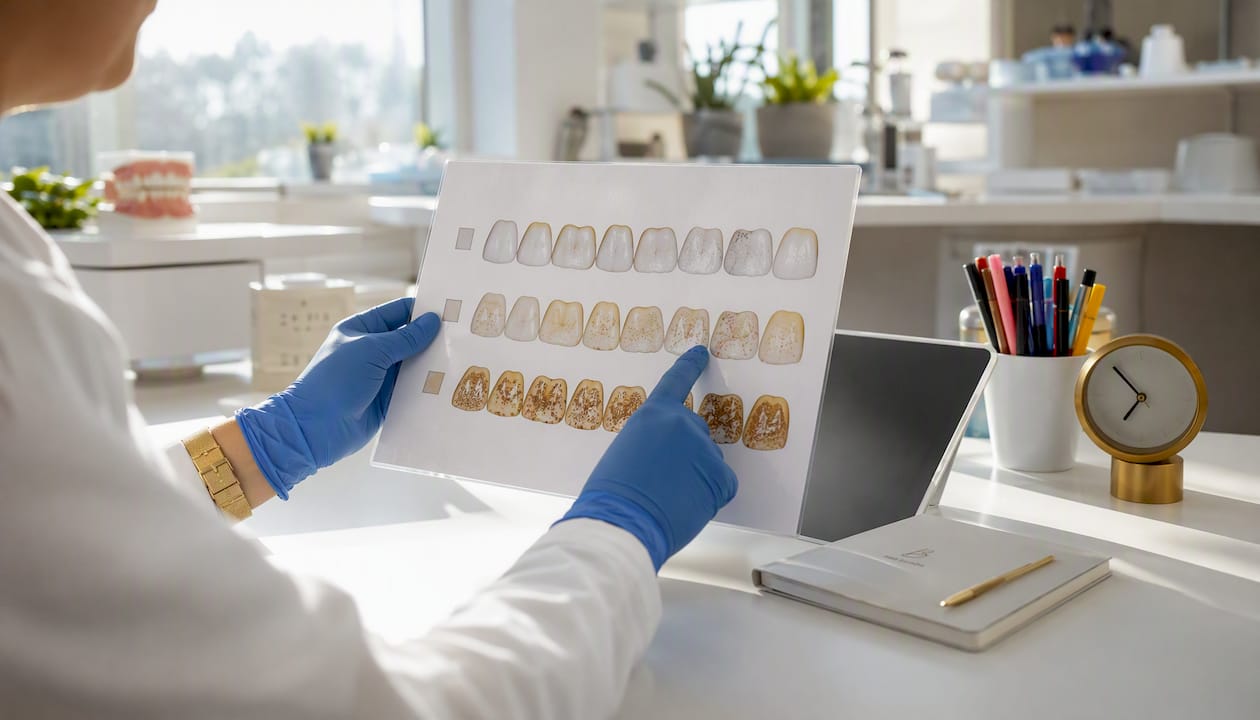
Both systems serve the same practical purpose: they give your dentist a structured way to decide whether conservative bleaching is enough or whether a staged, minimally invasive plan is needed. Clinical choice should begin with a formal severity assessment using one of these indexes before any treatment is started.
| Severity | Typical appearance | Likely treatment pathway |
|---|---|---|
| Mild | Faint white streaks or speckling on less than half the tooth surface; no pitting | At-home or in-office bleaching; microabrasion + bleaching for persistent spots |
| Moderate | Opaque white or chalky patches covering more than half the surface; possible light brown staining | Staged: bleaching → microabrasion → resin infiltration if contrast persists |
| Severe | Widespread brown or dark staining, surface pitting, possible structural enamel defects | Conservative staging first; veneers or crowns when conservative methods are insufficient |
When to seek a specialist: a general dentist can manage mild cases, but moderate-to-severe fluorosis with pitting, large opaque zones, or prior extensive restorations warrants a referral to a cosmetic or restorative dentist, or a prosthodontist for cases involving structural defects.
Evidence-backed treatment options compared by severity
The four main clinical approaches to fluorosis discoloration solutions are bleaching, microabrasion, resin infiltration, and restorations. They are not interchangeable, and they are rarely used in isolation for anything beyond the mildest presentations.
| Treatment | Effectiveness by severity | Durability | Invasiveness | Typical cost range | Visits / timeline | Sensitivity risk |
|---|---|---|---|---|---|---|
| At-home bleaching (10% carbamide peroxide) | Good for mild; limited alone for moderate/severe | Variable; touch-ups needed | Non-invasive | $150–$400 (dentist-supervised) | 2–6 weeks of nightly use | Low to moderate |
| In-office power bleaching | Moderate for mild; limited alone for intrinsic stains | Variable | Non-invasive | $1,000–$2,500 per tooth | 1–3 visits | Moderate to high |
| Microabrasion + bleaching | Good for mild; effective for moderate when combined | Good with maintenance | Minimally invasive (removes a thin layer of enamel) | $300–$800 combined | 2–4 visits | Low to moderate |
| Resin infiltration (e.g., DMG Icon) | Best for mild-to-moderate opacities | Good; may need retreatment | Non-invasive to minimally invasive | $1,000–$2,500 per tooth | 1–2 visits | Low |
| Veneers / crowns | Excellent for severe; covers all discoloration | Several years with care | Highly invasive (enamel reduction) | $1,000–$2,500+ per tooth | 2–4 visits | Moderate post-placement |
Cost ranges above reflect typical U.S. dental practice fees and vary significantly by region, provider, and case complexity.
How clinicians sequence these treatments
The typical clinical flow for moderate fluorosis starts with a two-week course of at-home bleaching using 10% carbamide peroxide to lighten the overall shade. Microabrasion follows to remove the hypermineralized surface layer, which improves penetration for the next step. Resin infiltration then masks any remaining opacities by changing the refractive index of the porous enamel zones. A staged case report using exactly this sequence reported stable results at two-year follow-up, which gives real-world support to the approach.
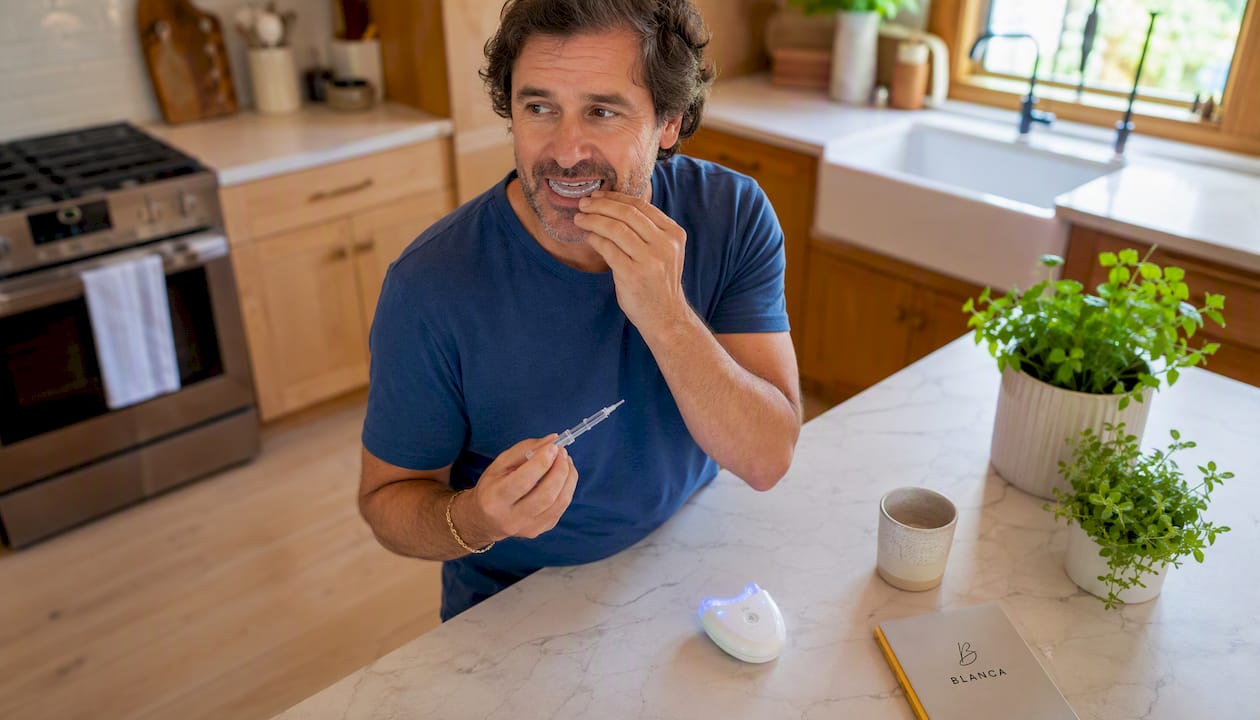
A 2019 systematic review found that resin infiltration, alone or combined with bleaching, produced greater esthetic improvement for mild-to-moderate fluorosis than bleaching alone. A separate comparative clinical study found that microabrasion combined with home bleaching delivered the best whitening outcomes for mild cases with lower post-treatment sensitivity compared to in-office power bleaching protocols.
Pro Tip: Bleaching can temporarily make fluorosis spots look more pronounced by lightening the surrounding enamel faster than the opaque zones. This contrast effect is normal and expected. Plan for it with your dentist before starting, and do not judge the result until the full staged sequence is complete and the shade has stabilized.
In-office power bleaching uses high-concentration hydrogen peroxide across multiple visits and is typically paired with desensitizing agents to manage post-treatment sensitivity. For fluorosis specifically, home bleaching protocols tend to produce less immediate sensitivity and can be an equally effective first step when combined with microabrasion or infiltration. Resin infiltration protocols may also require repeated etching cycles to reach the depth of hypomineralized zones before the low-viscosity infiltrant can mask the lesion effectively.
What results to realistically expect, and what can go wrong
Immediate shade changes after bleaching are common, but the final result takes 2–6 weeks to stabilize as the enamel rehydrates and the surrounding shade settles. For mild fluorosis, a single course of bleaching or microabrasion plus bleaching can produce a noticeably more uniform appearance. Moderate cases almost always need the full staged sequence, and some may require a second round of resin infiltration.
The contrast effect described above is the most common short-term concern. Bleaching lightens the healthy enamel around fluorosis spots before it affects the spots themselves, so the white or brown patches can look more visible for several weeks. Patients who are not warned about this sometimes stop treatment prematurely, which leaves them with a worse cosmetic result than if they had completed the sequence.
Tooth sensitivity is manageable but real. Sensitivity-minimizing whitening methods include using desensitizing toothpaste for two weeks before bleaching, choosing lower-concentration at-home formulas over in-office power bleaching, and applying fluoride varnish after microabrasion. Clinicians typically delay resin infiltration or further bleaching for 1–2 weeks after microabrasion to allow residual oxygen to dissipate and enamel surfaces to stabilize, which also improves resin polymerization and color stability.
Cost is the other variable that surprises people. A conservative bleaching-only approach for mild fluorosis may cost $150–$400 with dentist supervision. A full staged sequence including microabrasion and resin infiltration typically runs $600–$1,500 or more depending on how many teeth are involved. Veneers for severe cases can reach $1,000–$2,500 per tooth. Dental insurance rarely covers cosmetic fluorosis treatment, so out-of-pocket planning matters.
How dentists decide on a protocol, and what to ask at your appointment
A well-structured consultation for fluorosis follows a clear decision path. Understanding it helps you ask better questions and set realistic expectations before any treatment begins.
- Assess severity first. Your dentist examines all affected teeth and classifies them using Dean’s Index or the TF Index. This single step determines everything that follows.
- Try conservative bleaching for mild cases. If your fluorosis is mild, at-home 10% carbamide peroxide for two weeks is typically the starting point. It is the least invasive option and sets a baseline for how your enamel responds.
- Add microabrasion if contrast persists. For mild-to-moderate cases where bleaching alone leaves visible opacities, microabrasion removes the hypermineralized surface layer and opens the enamel to better treatment penetration.
- Consider resin infiltration if spots remain. After microabrasion and a waiting period, resin infiltration (such as DMG Icon) masks residual opacities by filling porous enamel zones and changing how light passes through them.
- Reserve veneers and crowns for severe structural defects. Evidence from randomized trials is limited for restorative options, and veneers require permanent enamel reduction. They are appropriate when conservative approaches have been exhausted or when pitting affects function.
Questions worth asking your dentist:
- Does my fluorosis severity require microabrasion before bleaching, or can we start with bleaching alone?
- Will bleaching make my spots look worse before they look better, and for how long?
- How many visits will the full sequence take, and what sensitivity should I expect at each stage?
- If I need resin infiltration, how many etching cycles are typically needed for my case?
- What maintenance will I need at home to preserve the result?
Red flags for specialist referral: large enamel defects with pitting that affects biting or chewing, extensive existing restorations on visible teeth, or a history of multiple failed whitening attempts all suggest a cosmetic or restorative dentist or prosthodontist is the right next step rather than a general practitioner.
Who should not start whitening for fluorosis right away
Not every patient is a candidate for bleaching or microabrasion at the time of their first consultation. Several conditions require resolution or specialist input before treatment begins.
Active tooth decay anywhere in the mouth needs to be treated before any whitening procedure. Bleaching agents can penetrate through cavities and cause significant pulp irritation or pain. Similarly, existing crowns, veneers, or composite restorations on visible teeth do not respond to peroxide, so bleaching the surrounding natural teeth can create a noticeable color mismatch that requires replacement of those restorations.
Pregnant and breastfeeding patients are generally advised to delay elective whitening procedures until after that period, as a precaution. Children and adolescents whose permanent teeth are still developing are not candidates for microabrasion or aggressive bleaching; treatment is typically deferred until enamel maturation is complete, usually in the mid-to-late teens.
Fluorosis-specific risks include:
- Increased spot contrast after bleaching, which is temporary but distressing if not anticipated
- Enamel loss from overly aggressive microabrasion, particularly if repeated without adequate waiting periods
- Color mismatch between natural teeth and existing restorations after bleaching, requiring restoration replacement to achieve a uniform result
- Resin polymerization failure if infiltration is attempted too soon after microabrasion, before residual oxygen clears
A pre-treatment assessment that maps all existing restorations, checks for active decay, and photographs the baseline appearance is not optional. It is the foundation of a predictable outcome. Overuse of whitening agents carries real enamel risks, and fluorosis cases require even more careful dosing than standard whitening.
How to maintain your results and support your smile at home
After clinical treatment, what you do daily determines how long the results last. Fluorosis discoloration is intrinsic and cannot return once it has been masked or removed, but the surrounding enamel can still stain, and resin infiltrant can discolor over time with heavy pigment exposure.
Daily habits that protect your results:
- Brush twice daily with a soft-bristle toothbrush and fluoride toothpaste; avoid abrasive whitening toothpastes immediately after microabrasion
- Limit coffee, tea, red wine, and dark berries in the first two weeks after any bleaching or infiltration procedure
- Avoid tobacco products entirely; smoking is one of the fastest ways to re-stain treated enamel
- Use a water flosser to clean around the gumline and between teeth without mechanical abrasion
For at-home maintenance after clinical treatment, low-concentration bleaching (10% carbamide peroxide) used periodically under dentist guidance can help keep the surrounding enamel bright and reduce visible contrast over time. Whitening maintenance between sessions typically involves touch-up strips or trays every three to six months, depending on your diet and how quickly your enamel tends to pick up staining. Desensitizing toothpaste used for one to two weeks before any touch-up session reduces sensitivity risk considerably.
A follow-up appointment at six months after your initial treatment lets your dentist assess whether any resin infiltrant needs retreatment and whether the overall shade has remained stable. For moderate or severe cases that involved multiple steps, annual check-ins are worth scheduling. Consult your dentist before starting any at-home whitening product after clinical fluorosis procedures, particularly if resin infiltration was part of your treatment plan.
At-home whitening best practices from Blancawhitening provide a clear framework for safe, effective maintenance that complements what your dentist has already done clinically.
Key Takeaways
Fluorosis requires a severity-matched, staged approach: bleaching alone rarely resolves moderate or severe cases, and skipping the assessment step is the most common reason treatments underperform.
| Point | Details |
|---|---|
| Severity determines the path | Mild cases may respond to bleaching alone; moderate cases need staged bleaching, microabrasion, and resin infiltration. |
| Resin infiltration outperforms bleaching alone | A 2019 systematic review found resin infiltration with or without bleaching produced greater esthetic improvement for mild-to-moderate fluorosis than bleaching alone. |
| Contrast effect is temporary | Bleaching can make spots look more pronounced initially; this normalizes as the full staged sequence is completed and shade stabilizes. |
| Assessment before treatment | A formal severity classification using Dean’s Index or the TF Index must precede any treatment decision. |
| Blancawhitening supports maintenance | After clinical treatment, Blancawhitening’s at-home whitening and oral care products support touch-up and daily hygiene under dentist guidance. |
The case for starting conservative and staying patient
Most people researching fluorosis whitening options arrive hoping for a single product or one-visit fix. The clinical evidence does not support that expectation for anything beyond the mildest presentations, and that gap between expectation and reality is where most treatment frustration originates.
What the research actually shows is that staged, conservative care preserves more tooth structure and produces more durable results than jumping straight to veneers. Microabrasion removes a measurable but small amount of enamel. Resin infiltration adds material rather than removing it. Bleaching works on chemistry, not mechanics. Each step is reversible or additive in a way that porcelain veneers are not, and that matters enormously when you are treating a condition that affects young adults who have decades of dental health ahead of them.
The practical advice worth taking from all of this: book a consultation, bring photos of your teeth in natural light, and ask your dentist to classify your severity before discussing any treatment. A dentist who starts with that assessment and proposes a staged plan is working from the evidence. One who jumps straight to veneers for a mild presentation, or who dismisses the contrast effect without warning you, is not.
Conservative staging is not the slow path. It is the path that keeps your options open.
Blancawhitening supports your smile before and after clinical care
Clinical treatment handles the hard work of addressing intrinsic fluorosis discoloration. What happens between appointments and after your final procedure is where Blancawhitening fits in. The Blancawhitening oral care range includes at-home whitening systems, electric toothbrushes, and water flossers designed to support the results your dentist has worked to achieve, without compromising the enamel or resin work already in place.
For mild fluorosis maintenance, periodic at-home touch-up whitening under dentist guidance keeps surrounding enamel bright and reduces visible contrast over time. The Blancawhitening electric toothbrush and water flosser make daily hygiene more thorough without the abrasion risk of manual scrubbing on recently treated enamel. Every product is formulated with long-term oral health in mind, not just short-term brightness.
Consult your dentist before starting any at-home whitening after clinical fluorosis procedures. Once you have the green light, browse the full Blancawhitening range to find the right maintenance tools for your post-treatment routine.
Useful sources and further reading
The sources below back the clinical claims in this article. Patient-facing resources are noted where they offer plain-language explanations; clinical sources are noted for readers who want to review the primary evidence.
- Interventions in management of dental fluorosis, an endemic disease: A systematic review (PMC) — The 2019 systematic review comparing bleaching, microabrasion, and resin infiltration across fluorosis severities; the primary evidence base for treatment sequencing recommendations. Best for clinicians and informed patients.
- A comparison of three whitening protocols for mild-to-moderate dental fluorosis in anterior teeth (PMC) — Comparative clinical study showing microabrasion plus home bleaching produced strong colorimetric improvements with lower sensitivity than in-office protocols. Useful for patients weighing home vs. in-office bleaching.
- Minimally Invasive Approach to Treating Moderate Dental Fluorosis: A Case Report (PMC) — Staged case report with two-year follow-up; documents the microabrasion removal depth (25–200 µm) and the clinical rationale for sequencing. Best for clinicians.
- Clinical timings after microabrasion (PMC) — Explains why a waiting period of 1–2 weeks after microabrasion is needed before bleaching or resin infiltration; relevant for patients planning multi-step treatment.
- In-office bleaching protocols and clinical notes (PMC) — Overview of high-concentration hydrogen peroxide protocols and sensitivity management strategies; useful context for in-office vs. home bleaching trade-offs.
- Fluorosis: Symptoms, Causes & Treatment (Cleveland Clinic) — Plain-language patient overview of fluorosis causes, appearance, and general treatment options. The best starting point for patients new to the topic.
- Minimal Invasive Technique for the Esthetic Management of Dental Fluorosis (PMC) — Reviews minimally invasive esthetic techniques including resin infiltration and microabrasion; useful for clinicians and patients considering non-restorative options.
- Factors affecting teeth whitening results (Woodbridge Dental Centre) — Practical clinical discussion of variables that influence whitening outcomes, including intrinsic stains and tooth porosity; accessible for patients.
This article is general information, not professional dental advice. Consult a licensed dentist to confirm the appropriate treatment for your specific case.